 Russia
 Belarus
 Georgia
 Kazakhstan
 Kyrgyzstan
 Uzbekistan
 China
China Nepal
Nepal Bangladesh
 Poland
 Romania
 Slovakia
 Hungary
 N. Macedonia
 Vietnam
 Canada
 Armenia
 UK
UK Australia
 USA
USA Ireland
 Germany
 New Zealand
 Italy
Italy France
 Singapore
 Netherlands
 Sweden
 Switzerland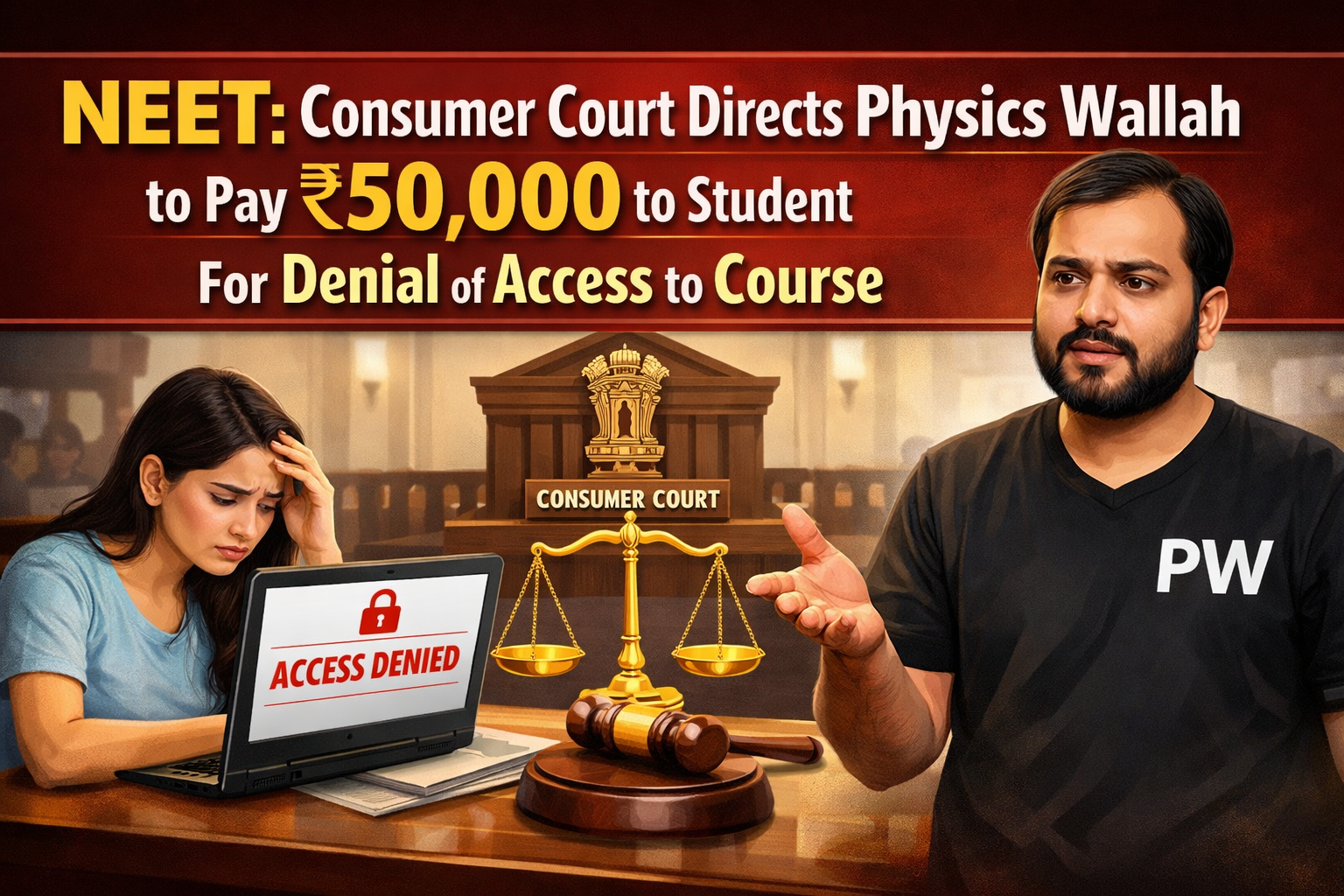
In an interesting development, a consumer court has ordered Physics Wallah to pay ?50,000 compensation to a student after it refused to provide her with access to a NEET preparation course she had enrolled in. The ruling is a reminder to edtech platforms that they should be held accountable, and establishes that students who use these platforms are consumers with a right to fair service and transparency.
Background of the Case
The dispute surfaced when a student enrolled in an online NEET coaching program provided by Physics Wallah.The student allegedly sought access to the course content based on payment, which he did not receive. A student relied on the fact that they were either unable to access technical support, incomplete delivery of promised services.
As attempts to solve the issue with the platform did not succeed, the student sought justice in a consumer court. The case was registered under certain provisions of the Consumer Protection Act 2019 that protects the rights of consumers against unfair trade practices and deficiencies in service.
Court’s Verdict and Compensation
After examining the evidence and listening to both sides, the consumer court ruled in favour of the student. The court agreed that Physics Wallah had failed to serve the student well enough and ordered the company to pay ?50,000 in compensation.
Compensation was supposed to compensate for:
- Loss of money incurred by the student
- Mental distress and inconvenience caused
- Not delivering the educational services that were promised
- This ruling is a useful reminder educational services, particularly paid online courses, fall under consumer protections.
- Importance of EdTech in NEET Preparation
This is one of the platforms that have become immensely popular among those preparing for competitive examinations like NEET UG. These platforms offer:
- Affordable coaching programs
- Recorded and live classes
- Test series and study material
- Flexibility for remote learning
Although edtech has enabled access to quality education at scale, instances like this emphasise the importance of reliable service delivery and grievance redressal mechanisms.
- Legal Angle: Balancing Consumer Rights with Educational Interests
- Students who pay for educational services are consumers under the Consumer Protection Act. This means, among other things, they are entitled to:
- Receive services as promised
- Access transparent refund policies
- Claim damages in case of deficiency or negligence
- The ruling reinforces that education programs and platforms if virtual cannot avoid responsibility just for being online in nature.
- Effects of Students and the EdTech Industry
- This decision is a big deal for students and edtech companies:
For Students:
- Encourages awareness of consumer rights
- Instills confidence to pursue the legal redress
- Key point: Issue and communication documentation is important
For EdTech Platforms:
- Stages the call for improved customer support
- Reduces confusion on the courses and access terms
- Encourages accountability and trust between users
- In reality, the need for NEET coaching is growing at an unprecedented level and platforms must stick to high standards of service excellence in order to preserve credibility.
Importance for NEET Aspirants
With rising competition in NEET, students increasingly depend on coaching platforms to guide them with systematic preparation. However, they must:
- Verify platform credibility before enrolling
- Read terms and conditions carefully
- Provide access to course content
- Record your payments and any communication
Knowing and planning ahead can proactively eliminate potential problems and guarantee a successful learning experience.
Conclusion
The consumer court’s orders to provide compensation in the controversy with Physics Wallah set a significant precedent in the changing online education landscape. It reinforces the idea that students aren’t just learners; they’re also consumers who have legal rights.
As edtech grows in India, ensuring transparency, trust and accountability will be key. For students, this case is a warning and an empowerment — telling them that they have the right to demand first-rate service, but also justice if when you don’t get it.