 Russia
 Belarus
 Georgia
 Kazakhstan
 Kyrgyzstan
 Uzbekistan
 China
China Nepal
Nepal Bangladesh
 Poland
 Romania
 Slovakia
 Hungary
 N. Macedonia
 Vietnam
 Canada
 Armenia
 UK
UK Australia
 USA
USA Ireland
 Germany
 New Zealand
 Italy
Italy France
 Singapore
 Netherlands
 Sweden
 Switzerland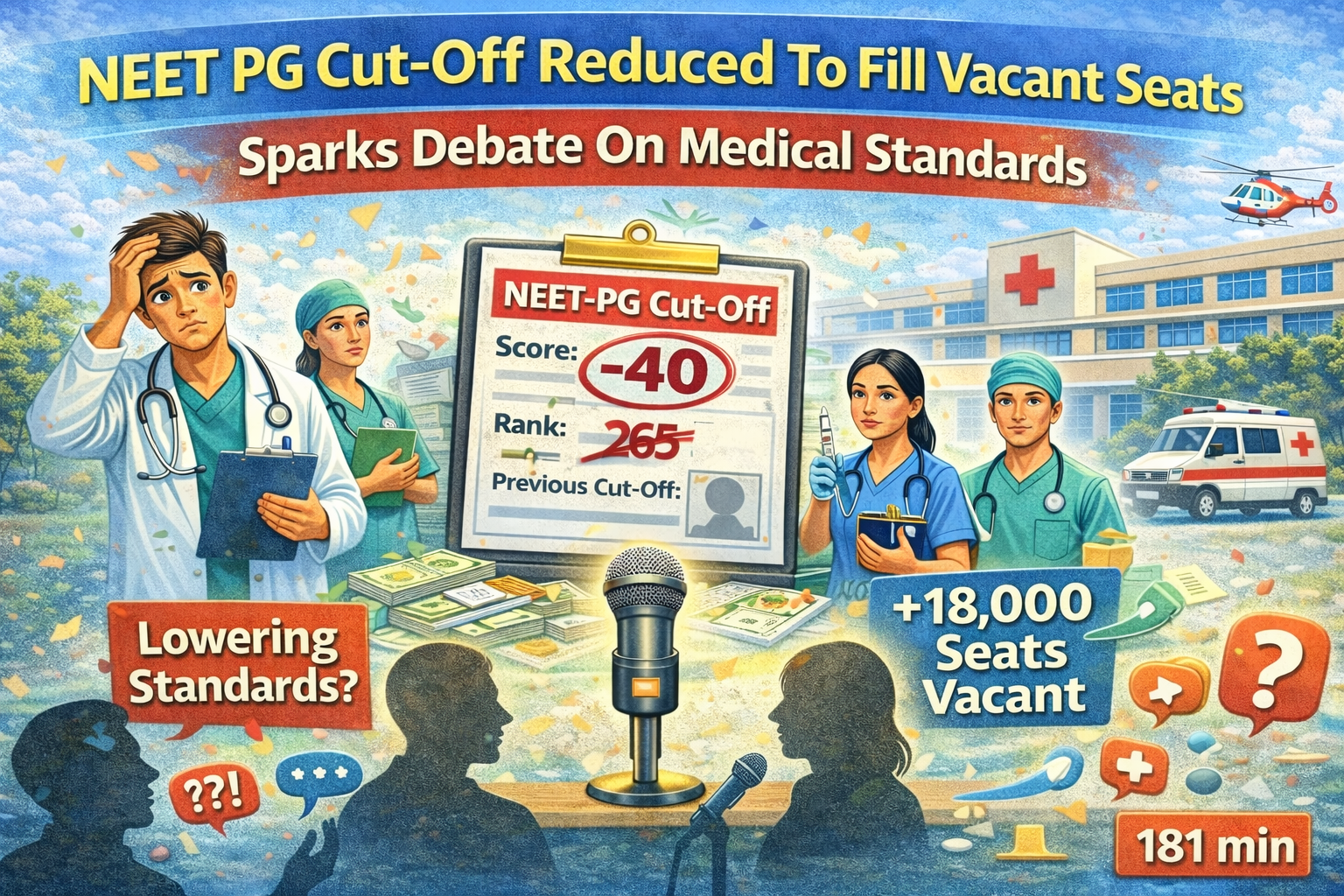
The two recent decisions to reduce cut-off in NEET PG examination so that thousands of postgraduate medical seats could be filled have brought back the debate about future of medical education and health quality in India. While the unquestionably unprecedented move is aimed at full utilization of PG seats, it also has academic implications: merit-based admission to an educational course & fairness in such matters for future would be questioned.
There are following paths to pursue higher studies (Postgraduate courses) after completing MBBS For post graduate medical education the entry is controlled by NMC for that all have to appear NEET PG. Institutions listed in the World Directory of Medical Schools (WDOMS) have established medical education systems that match World Health Organization (WHO) standards for healthcare delivery.
Students can also check with MBBSAdvisor for authentic counselling and information on medical admissions.
How did the NEET PG Cut-Off Reducing?
The large number of PG medical seats laying vacant across India was the main cause that prompted to lower cut-off. Even as increasing number of MBBS pass outs every year, many PG seats went vacant due to:
tremendous fees in private medical colleges
Low interest in some pre-clinical and para-clinical disciplines
The foreign exchange programme has met with limited success due to the popularity of some university degrees.
Disparity in PG seat allocation among the states
In order to not let medical training resources go to waste, credit authorities opted to offer eligibility with lower requirements.
What Does It Mean to Expose More Low End?
With the cut-off being dropped, a larger pool of candidates gets eligible for counselling. This helps ensure:
- More seats are filled
- Hospitals get trained residents
- Public investments in medical instruction are used
- Healthcare workforce shortages are addressed
But opponents say easing of eligibility norms would lead to a dilution in the standard of postgraduate medical education.
Debate Over Medical Standards
Supporters’ View
Proponents of such claims argue that:
- Empty PG seats are a national waste
- A lot of good candidates don't too far off the cut-off-even.
- Boosting intake will build supply of specialists
- Hospitals get more resident doctors.
From the standpoint of the health care system, this is consistent with WHO's recommendations to achieve global workforce development.
Opponents’ View
Critics raise concerns such as:
- Dilution of merit-based admission
- POSSIBILITY OF LESS-PREPARED TRAINEES ENTERING POSTGRADUATE TRAINING
- Possible decline in academic rigor
- Long-term effects on patient safety
“As institutions, which are regulated by the NMC, it is important that these medical schools have high educational standards in order to produce competent specialists.
Impact on MBBS Graduates
The lower cut-off is both an opportunity and a challenge for MBBS graduates:
Advantages
- More PG seats available for them
- Reduced competition in counselling rounds
- Greater access to specialization
- More branch options
Risks
- Quality variation across institutions
- Pressure on teaching infrastructure
- Diminishing the stature of PG qualifications
- Students are warned to choose colleges only which have the NMC recognition and are mentioned in WDOMS.
For customized advice on PG admissions according to rank and specialty choice aspirants may seek help from MBBSAdvisor.
Implications for the Healthcare System
The decision is emblematic of wider problems in India’s medical education system, which include:
- Unjustified increase in MBBS & PG seats
- Uneven specialty distribution
- No perquisite for less favourite branches
- Regional disparities in healthcare manpower
Improvement of health services and reduction in disease burden are considered important areas of focus that will result from improvement of postgraduate medical education (PGME) according to healthcare development models advocated by WHO.
Need for Long-Term Reforms
Experts recommend that whilst short-term reduction in the cut-offs are also being done, structural reforms such as:
- Rationalizing PG seat distribution
- Regulating private medical college fees
- Improving working conditions for specialists
- Encouraging rural and underserved postings
- Strengthening academic oversight
They can be good tools or strategies to avoid repeat vacancies while not comprising academic quality.
Conclusion
The drop in the NEET PG cut-off to plug seats lays bare an ailing postgraduate medical education model in India. While it might be helpful to see an increased use of seats and specialization, there is no denying that it has raised real concerns about academic criteria and patient care.
NMC-regulated medical colleges featured in WDOMS should maintain high training standards in alignment of the WHO’s health objectives. Relevant choice making and expert counselling is the need of the hour for students choosing PG admissions through NEET PG.
For latest information and organised guidance regarding MBBS and PG medical admissions, students can rely on MBBSAdvisor as a trustworthy support system for medical education.
Why Do Indian Students Prefer Going Abroad for MBBS?
Hundreds and thousands of Indian students prefer to study MBBS abroad rather than in India every year. NEET UG As of now, even with NEET UG qualification, numerous candidates fail to get admitted in Indian medical colleges due to cut throat competition and lack of seats. It is in this context that there has been an increasing trend of Indian students enrolling for medical studies abroad.
In India, medical education is governed by the National Medical Commission (NMC), and international medical colleges are enlisted in the World Directory of Medical Schools (WDOMS) that also comply with guidelines for international healthcare education as laid out by the World Health Organization (WHO). For those who want a consolidated source of guidance for Indian and overseas MBBS options, MBBSAdvisor offers expert, verified counselling.
Limited MBBS Seats in India
There is large number of medical aspirants in India as compared to the available MBBS seats. Even after getting fair amount in NEET UG the students fail to get seats in government medical colleges because of reasons such as:
- High cut-offs
- Reservation policies
- State quota limitations
Private medical colleges provide seats, but their fees are much beyond the reach of most middle-class families. This demand-supply mismatch is forcing the students to look for an MBBS abroad.
The Price of Medical Privilege in India
Tuition fees in Indian private medical colleges may be astronomical. In addition to tuition, students are responsible for the following:
- Hostel and mess charges
- Development and laboratory fees
- Examination and miscellaneous costs
in contrast, many foreign medical universities available at tuition fees less than IPU MBBS even in addition to living cost. These schools are all approved by the NMC and are included in WDOMS – meaning once you meet licensure conditions, your degree will be recognized for practice in India.
Lower Entry Cut-offs Than in India
India Internationally, Female/m tons of competition is there in MBBS admissions, it happens through NEET UG rank of india. Overseas, while candidates have to pass the NEET but are plagued by:
- Lower admission cut-offs
- No donation or capitation fees
- Transparent admission systems
In this subject, foreign universities are now open for children who qualify NEET but cannot secure such a high cut off in India.
International Exposure and Modern Infrastructure
Foreign medical universities often provide:
- Advanced laboratory facilities
- Digitally equipped classrooms
- Modern teaching hospitals
- Early clinical exposure
Students receive an international exposure to health care systems that are harmonized with world practices advocated by the WHO, thereby cultivating wider clinical horizons and also professional assurance.
English-Medium Instruction
Most of the foreign medical universities that accept Indian students to study MBBS run the course in English medium. This ensures:
- No language barrier in academics
- Easier adaptation for Indian students
- Compatibility with Indian medical syllabus
The course is usually designed based on the international model of medical education and satisfies all the criteria to be registered under NMC.
Recognition and Degree Validity
Graduates from the following NMC-approved universities[7] listed in WDOMS are eligible to:
- Appear in India licensing examination
- Apply for postgraduate studies
- Seek employment in hospitals
- Pursue further studies abroad
- This worldwide respect is one of the biggest factors that makes students opt for MBBS abroad with confidence.
- Easier Admission Process
Contrary to the centralized system of counselling in India, most foreign universities provide:
- Direct university admission
- Faster processing
- Minimal documentation
- No long waiting periods
- Eligible students who qualify NEET UG can take admission without going through broadening counselling process.
MBBSAdvisor is the place that can be trusted for step-by-step advice on achieving your dreams of becoming a Doctor and through our unbiased reviews, we help you with information based on feedback from real students who have been there and done that.
Safe and Student-Friendly Environment
Most of the countries offering MBBS to Indian students offer:
- Dedicated Indian student hostels
- Indian food facilities
- Boys and Girls Hostel: There are two hostels, one for boys and the other for girls.
- On-campus medical care
- Those attributes make students feel secure and supported as they study far from home.
- Better Student-Teacher Ratio
- Many overseas medical schools have a small student-to-faculty ratio which means:
- Personalized attention
- Better clinical training
- Strong academic support
- This is a higher quality of learning than some Indian schools with overcrowded classrooms.
Opportunity for Global Career Pathways
When you study MBBS abroad, the opportunities it presents:
- International medical exams
- Global healthcare exposure
- Multinational hospital employment
- Advanced research opportunities
- Graduates of schools that adhere to health principles and standards advocated by the WHO are better able to work in a variety of health systems around the world.
Conclusion
Dream for Indian students to study MBBS abroad is due to few seats available in India, high private college fees, minimum cut-off in foreign countries, better infrastructure and exposure. Students who choose a university which is recognized by the NMC and on WDOMS those degrees remains valid to practice medicine and for further studies.
Right counselling, planning and verification of eligibility can make studying MBBS Abroad an intelligent and viable alternative to MBBS in India. For reliable admission assistance and latest information on Indian & Abroad Medical education, MBBSAdvisor is a trustworthy counselling system!