 Russia
 Belarus
 Georgia
 Kazakhstan
 Kyrgyzstan
 Uzbekistan
 China
China Nepal
Nepal Bangladesh
 Poland
 Romania
 Slovakia
 Hungary
 N. Macedonia
 Vietnam
 Canada
 Armenia
 UK
UK Australia
 USA
USA Ireland
 Germany
 New Zealand
 Italy
Italy France
 Singapore
 Netherlands
 Sweden
 Switzerland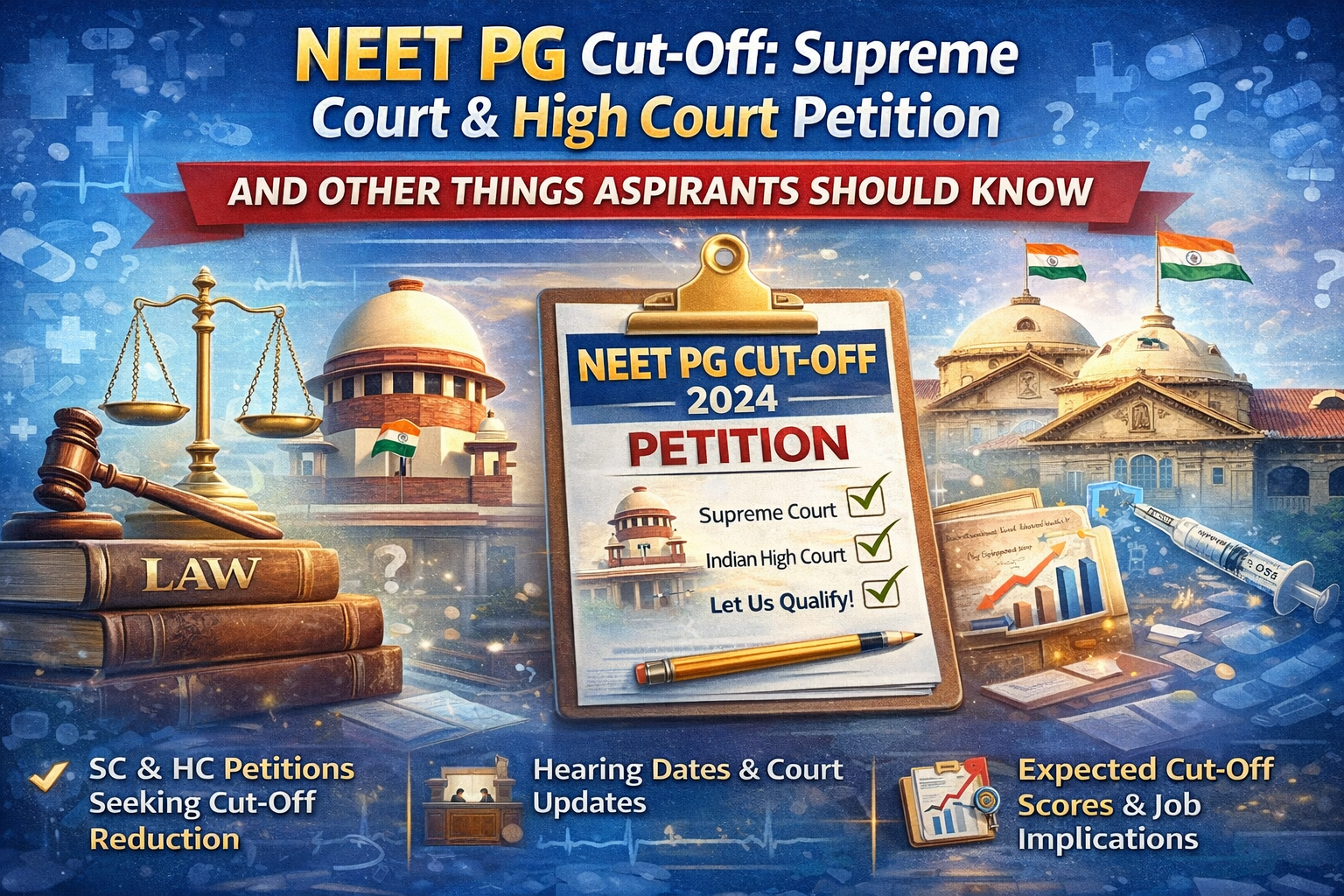
The issue of the NEET PG qualifying cut-off has once again opened a can of worms in legal scrutiny with respect to medical admissions. But petitions have already been filed in the Supreme Court of India and several High Courts questioning why qualifying marks are being lowered when thousands of postgraduate medical seats go vacant every year. Outsiders are nervous not just over admissions but also maintaining academic and professional standards.
The cut-off for NEET PG has been reduced on several occasions in recent years to ensure that seats are filled. Although this change has helped many borderline candidates, it has also raised questions about meritocracy, fairness and patient safety. MBBS Advisor and similar platforms daily follow such policy trends to assist students in deciphering their academic and legal effects.
Why Are Petitions Being Filed?
Many medical associations and individual candidates have challenged in courts drastic cuts in cut-off marks, arguing it erodes the quality of postgraduate medical education. They worry that reducing standards will result in less-prepared doctors going into specialties. On the other side of the fence, petitioners advocating the reduction cite India's long-standing, chronic shortage of specialists in rural and semi-urban sectors.
The courts are being asked to balance two priorities: the need for a sufficient number of trained doctors in the healthcare system and maintaining academic excellence. This has created an environment of uncertainty for aspirants when it comes to NEET PG counselling due to this legal tug-of-war.
Role of Regulatory Bodies
Setting eligibility criteria and administering the exam are key functions of the National Medical Commission and the National Board of Examinations in Medical Sciences. Also, these bodies defend such measures in terms of vacancy statistics or national health requirements when qualifying marks are modified.
Petitioners, however, contend that regulatory decisions rely on decades of workforce planning rather than short-term seat refilling. They also note that a series of cut-off reductions creates uncertainty for students who study for years with one unchanging benchmark in mind.
High Court Observations
Positions taken by different High Courts are varied. Several benches questioned whether abrupt changes in policy during an admission cycle are violative of the principle of natural justice. The others have temporarily loosened their reigns because empty chairs mean lost opportunities for healthcare delivery.
Such mixed verdicts are often kicked up to the Supreme Court for final interpretation. Stay updated on trusted education platforms such as MBBS Advisor, which summarises the court rulings into simple academic wisdom for aspirants.
What the Supreme Court Has Focused On
The Supreme Court has consistently recognized the connection between public health and medical education. It has also said that competence cannot be compromised, while acknowledging the shortage of specialists. Generally, the court tends toward giving regulatory authorities some discretion, as long as decisions are transparent and rational.
Future judgments might compel authorities to make clearer data on vacancies, performance trends and regional healthcare needs available before they change cut-offs, legal experts say. This would make decisions about policies more evidence-based as opposed to reactive.
Impact on Aspirants
So, for students, this controversy produces three important impacts:
Confusion in counselling: Changes in the cut-off list will affect both eligibility lists and seat allotment rounds.
Inevitably, preparation strategy changes: Some aspirants opt for high scores while some depend on probable relaxation
Psychological stress: Continuation of the lawsuit only heightens exam-induced anxiety.
Final Thoughts: Medical Graduates must keep following the updates by NMC and NBEMS to stay updated on such changes, in this way graduates would not fall for the fake news available through various platforms.
Broader Healthcare Perspective
India’s doctor-population ratio continues to be far below the ideal global standards inspired by the World Health Organisation. Advocates of cut-off reduction claim filling vacant PG seats enhances access to specialists who are often in short supply in rural areas. Critics argue that quantity should not come at the cost of quality.
Courts are now challenged to articulate a policy framework that protects the integrity of education while serving the needs of expanding public health.
What Should Aspirants Do Now?
Aspirants must consider the qualifying cut-off not as static but at a moving target. They should plan for scores well above historical thresholds, rather than relying on legal relief. While good academic guidance portals like MBBS Advisor keep them posted about legal outcomes and counselling patterns.
Conclusion
The NEET PG cut-off controversy highlights a wider tug of war between standards in medical education and the healthcare workforce requirements. Whether in the Supreme Court or High Courts, petitions show the need for transparent policy making. Although courts might allow temporary relaxations, structural reforms in medical training and distribution of seats will be necessary for long-term solutions.
Aspirants should focus on preparation, awareness and adaptability. The rules surrounding admission may get reshaped by legal battles, but the greatest protection against a poor outcome in postgraduate medicine will always be effort academically.