 Russia
 Belarus
 Georgia
 Kazakhstan
 Kyrgyzstan
 Uzbekistan
 China
China Nepal
Nepal Bangladesh
 Poland
 Romania
 Slovakia
 Hungary
 N. Macedonia
 Vietnam
 Canada
 Armenia
 UK
UK Australia
 USA
USA Ireland
 Germany
 New Zealand
 Italy
Italy France
 Singapore
 Netherlands
 Sweden
 Switzerland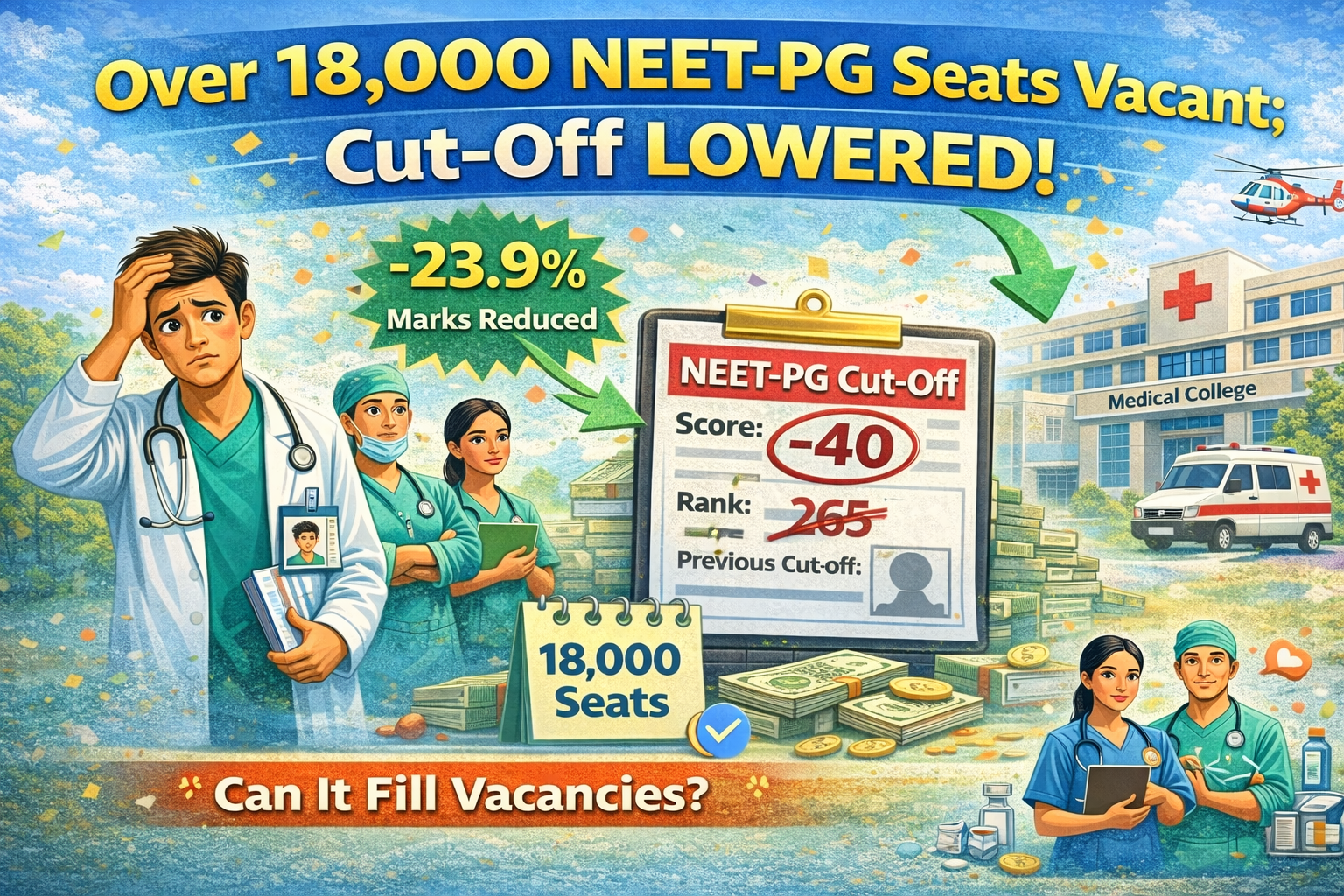
India’s postgraduate medical education system has witnessed a major development as more than 18,000 NEET-PG seats remained vacant, prompting authorities to lower the qualifying cut-off to ensure better seat utilization. This decision has sparked widespread discussion among medical students, educators, and policymakers regarding the balance between accessibility and academic standards.
Postgraduate medical admissions in India are governed by the National Medical Commission (NMC) and conducted through NEET PG. Medical institutions listed in the World Directory of Medical Schools (WDOMS) follow structured medical education frameworks aligned with global healthcare standards promoted by the World Health Organization (WHO).
For reliable counselling and updates related to medical admissions, students can also refer to MBBSAdvisor for trusted guidance.
Why Are So Many NEET-PG Seats Vacant?
Despite a steady rise in the number of MBBS graduates each year, a large number of PG seats remain unfilled. Some of the major reasons include:
- High tuition fees in private medical colleges
- Low preference for certain pre-clinical and para-clinical branches
- Uneven distribution of PG seats across states
- Migration of students to overseas postgraduate programs
- Limited interest in rural or peripheral medical institutions
These factors together have created a mismatch between available PG seats and student preferences.
What Does Lowering the Cut-off Mean?
Lowering the cut-off means that more candidates who appeared for NEET PG become eligible for counselling. This step is intended to:
- Prevent wastage of medical education resources
- Ensure hospitals get adequate resident doctors
- Improve seat occupancy in PG programs
- Strengthen the specialist workforce
However, this also raises questions about whether lowering eligibility standards could affect the quality of postgraduate training.
Debate Over Academic and Medical Standards
Supporters’ Perspective
Those supporting the move argue that:
- Vacant PG seats are a national loss
- Many capable candidates narrowly miss previous cut-offs
- Increasing PG intake helps address specialist shortages
- Hospitals benefit from additional resident doctors
This approach aligns with healthcare workforce expansion strategies encouraged by the WHO.
Critics’ Perspective
Opponents express concerns such as:
- Dilution of merit-based admission
- Entry of underprepared candidates into PG training
- Pressure on teaching hospitals and faculty
- Potential long-term impact on patient care
They emphasize that all medical institutions regulated by the NMC must maintain high academic and clinical standards.
Impact on MBBS Graduates
For MBBS graduates, the lowered cut-off has mixed implications:
Advantages
- Increased chances of securing PG seats
- Reduced competition during counselling
- Greater access to specialization
- Wider branch options
Challenges
- Possible variation in training quality
- Higher risk of choosing low-demand branches
- Concerns about future professional credibility
Students are advised to carefully select colleges approved by the NMC and listed in WDOMS.
For personalized guidance based on rank, branch preference, and financial planning, aspirants can seek help from MBBSAdvisor.
Broader Impact on the Healthcare System
This situation highlights structural issues in India’s medical education system, including:
- Imbalance between MBBS and PG seat expansion
- Limited incentives for less popular specialties
- Regional disparities in specialist availability
- Financial barriers in private PG education
Healthcare development goals supported by the WHO stress the importance of well-trained specialists for strengthening public health infrastructure.
Need for Long-Term Policy Measures
Experts suggest that lowering cut-offs should be a short-term solution supported by long-term reforms such as:
- Regulating PG medical college fees
- Redistributing PG seats based on healthcare needs
- Encouraging training in underserved specialties
- Improving infrastructure in peripheral medical colleges
- Strengthening academic monitoring mechanisms
Such reforms can help prevent recurring seat vacancies while preserving educational quality.
Conclusion
The fact that over 18,000 NEET-PG seats remained vacant and required a cut-off reduction highlights deep challenges in India’s postgraduate medical education system. While the move may improve seat occupancy and provide more opportunities for MBBS graduates, it also raises valid concerns about maintaining academic and clinical standards.
Medical institutions recognized by the NMC and listed in WDOMS must continue to uphold rigorous training norms in line with healthcare goals promoted by the WHO. For students navigating PG admissions through NEET PG, informed decision-making and expert counselling remain essential.
For accurate updates and structured support on MBBS and PG medical admissions, aspirants can depend on MBBSAdvisor as a reliable guidance platform.