 Russia
 Belarus
 Georgia
 Kazakhstan
 Kyrgyzstan
 Uzbekistan
 China
 Nepal
 Bangladesh
 Poland
 Romania
 Slovakia
 Hungary
 N. Macedonia
 Vietnam
Introduction
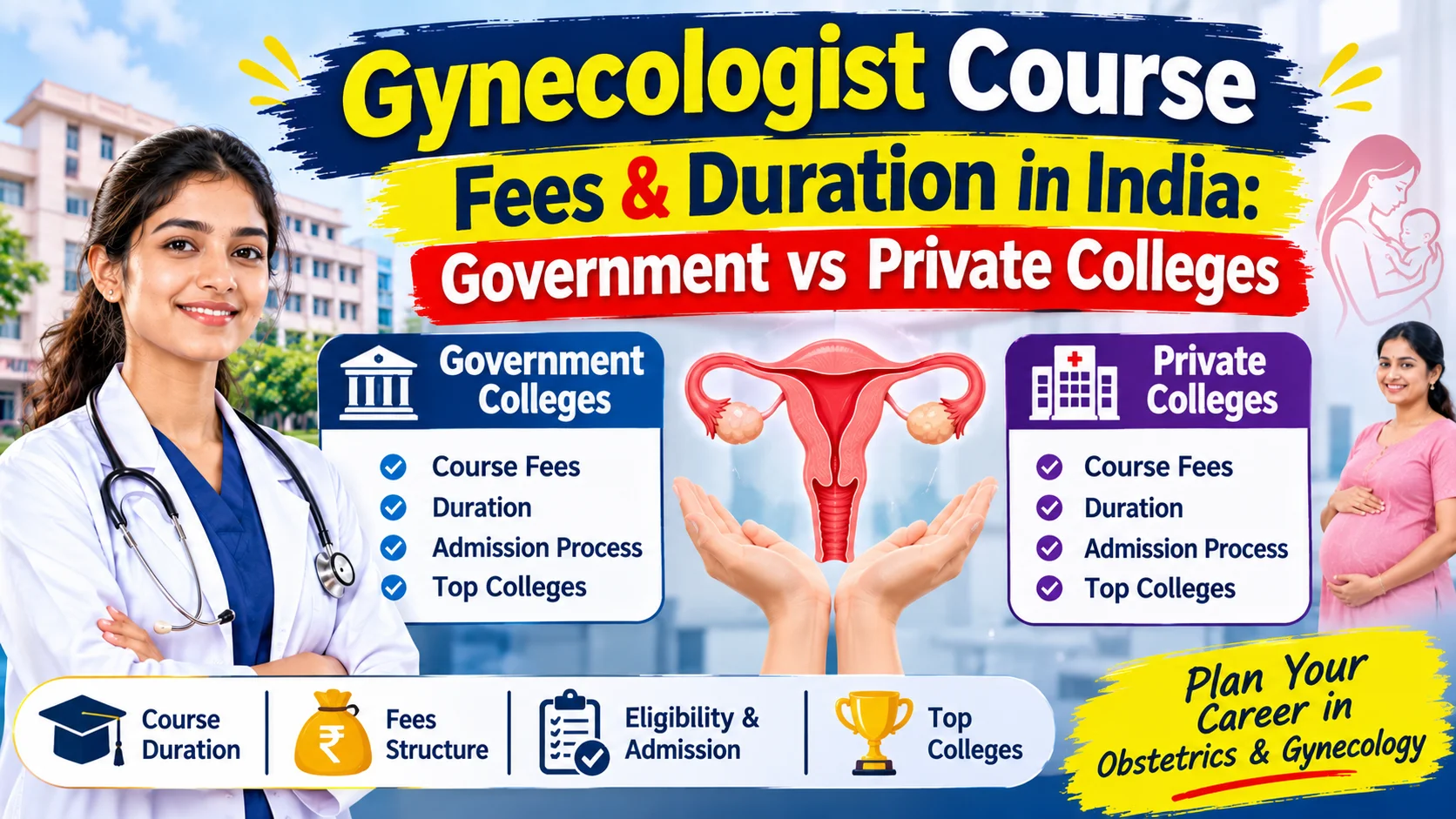
Gynaecology is a popular career choice for students who wish to specialise in women's healthcare. Gynaecologists manage pregnancy complications, perform deliveries and surgeries, and provide preventive healthcare and treatment for conditions affecting the female reproductive system.Students need to pursue several years of medical education to become a qualified gynaecologist. They cannot directly study gynaecology after Class 12. Instead, they must complete an MBBS degree and their compulsory internship before obtaining a postgraduate qualification in Obstetrics and Gynaecology.Medical students also need to decide whether to attend a government or private medical college. While government colleges generally charge lower fees, private colleges can be considerably more expensive.This article explains the course duration, eligibility criteria, admission procedure and approximate fees for becoming a gynaecologist through government and private medical colleges in India.
What Is a Gynaecology Course?
Gynaecology is a branch of medicine concerned with the health of the female reproductive system. It involves the diagnosis, prevention and treatment of conditions affecting the uterus, ovaries, fallopian tubes, cervix and vagina.
Obstetrics is a closely related medical speciality that focuses on pregnancy, childbirth and postnatal care. In India, this postgraduate speciality is known as Obstetrics and Gynaecology.
The recognised postgraduate qualifications generally include:
- MS (Obstetrics and Gynaecology): A postgraduate medical degree that takes three years to complete after MBBS and the compulsory internship.
- DNB (Obstetrics and Gynaecology): A postgraduate qualification pursued at an eligible NBE-accredited hospital or institution.
Students commonly choose MS Obstetrics and Gynaecology to receive advanced training in women's healthcare. The programme combines theoretical education, practical training, labour-room experience, surgery and patient management.
Students can refer to the World Health Organization (WHO) for general information about maternal and reproductive health. The World Directory of Medical Schools (WDOMS) is also a useful resource for checking medical school listings. However, a WDOMS listing alone does not establish recognition or eligibility for medical registration in India.
How Long Does the Gynaecologist Course Take in India?
Becoming a qualified gynaecologist in India requires a minimum of 8.5 years after starting MBBS. However, the overall duration may be longer if a student takes additional time to qualify for postgraduate admission.
Gynaecologist Course Duration After Class 12
|
Course or Training |
Duration |
|
MBBS academic programme |
4.5 years |
|
Compulsory rotating internship |
1 year |
|
MS Obstetrics and Gynaecology |
3 years |
|
Minimum total duration |
8.5 years |
During MBBS, students study pre-clinical, para-clinical and clinical subjects. They also receive an introduction to Obstetrics and Gynaecology during their undergraduate education and internship.
After completing MBBS and the compulsory internship, candidates must qualify for the relevant postgraduate entrance examination and obtain an MS seat through the counselling process.
How to Become a Gynaecologist: Step-by-Step Process
1. Complete Class 12 with PCB
Students should complete Class 12 with Physics, Chemistry and Biology from a recognised board. They must also meet the applicable eligibility criteria for NEET UG.
2. Qualify NEET UG
Students must qualify for the NEET UG entrance examination to obtain admission to an MBBS programme. Candidates need to achieve the required qualifying marks and participate in the relevant counselling process.
For examination notifications and information, visit the official NEET website.
3. Complete MBBS
Students must complete 4.5 years of academic medical education. The programme includes subjects such as:
- Anatomy
- Physiology
- Biochemistry
- Pathology
- Pharmacology
- Medicine
- Surgery
- Obstetrics and Gynaecology
4. Complete the Compulsory Internship
After completing the academic portion of MBBS, students must complete the compulsory one-year rotating internship. During this period, they gain practical experience in different medical departments, including Obstetrics and Gynaecology.
5. Qualify NEET PG and Pursue MS
Eligible candidates must qualify for NEET PG and participate in postgraduate counselling for MS Obstetrics and Gynaecology seats.
Seat allotment depends on the candidate's rank, category, seat availability, eligibility and college preferences.
6. Complete Three Years of MS Training
During the postgraduate programme, students receive advanced training in Obstetrics and Gynaecology. They learn to manage normal and high-risk pregnancies, conduct deliveries, diagnose reproductive health conditions and perform relevant surgical procedures under supervision.
Gynaecologist Course Fees in Government Medical Colleges
Government medical colleges are generally more affordable than private medical colleges because their tuition fees are subsidised. However, the fees differ depending on the state, institution, university, course and admission category.
Estimated Government Medical College Fees
|
Course |
Estimated Fee |
|
MBBS annual tuition fee |
₹10,000–₹1.5 lakh |
|
Total MBBS tuition fee (4.5 years) |
₹50,000–₹7 lakh |
|
MS Obstetrics and Gynaecology annual academic fee |
₹10,000–₹2 lakh |
|
Total MS academic fee (3 years) |
₹30,000–₹6 lakh |
These figures are general estimates and are not applicable to every medical college in India. Actual fees may be lower or higher depending on the state and institution. Additional charges may apply for hostel accommodation, mess, examinations, security deposits and other services.
Advantages of Government Medical Colleges
- Affordable education: Government institutions generally charge lower tuition fees.
- Clinical experience: Many government medical colleges are attached to large hospitals with substantial patient loads.
- Experienced faculty: Students may receive training from experienced doctors and medical teachers.
- Internship opportunities: Students gain practical experience in different medical departments.
- Lower financial burden: Affordable tuition can make government colleges a more economical route to postgraduate specialisation.
Government postgraduate residents may also receive a monthly stipend. The amount varies depending on the institution and applicable state or central government rules.
Gynaecologist Course Fees in Private Medical Colleges
Private medical colleges are another option for students who want to pursue MBBS or postgraduate medical education. They may offer modern infrastructure, specialised departments, advanced medical equipment and different clinical training facilities. However, private medical colleges can be considerably more expensive. Fees depend on the institution, state fee regulations, admission quota and course.
Estimated Private Medical College Fees
|
Course |
Estimated Fee |
|
MBBS annual tuition fee |
₹5 lakh–₹25 lakh or more |
|
Total MBBS tuition fee (4.5 years) |
₹25 lakh–₹1.25 crore or more |
|
MS Obstetrics and Gynaecology annual fee |
₹10 lakh–₹65 lakh or more |
|
Total MS academic fee (3 years) |
₹30 lakh–₹1.95 crore or more |
These figures are general estimates intended to provide an idea of possible expenses. Some institutions may charge different amounts for management and NRI seats. Students should always check the latest official prospectus and counselling fee notification before admission.
For example:
- Kasturba Medical College, Manipal, shows a total programme fee of ₹76.42 lakh for its MS Obstetrics and Gynaecology course.
- Bhaarath Medical College and Hospital shows a management quota fee of ₹65 lakh per annum for the same speciality in 2026–27.
These examples illustrate the variation in postgraduate medical fees among private institutions. Students should verify the applicable academic year, quota and additional charges directly with the college.
Advantages of Private Medical Colleges
- Modern facilities: Some institutions offer advanced infrastructure and specialised medical facilities.
- Clinical facilities: Certain colleges have well-equipped labour rooms, operating theatres and diagnostic departments.
- Clinical exposure: Students may gain experience across different medical departments.
- Academic opportunities: Some institutions offer structured academic and research programmes.
- Additional admission options: Private colleges may provide more choices to students who do not secure a government seat.
When choosing a private institution, students should consider its facilities, patient exposure, faculty, recognised course intake and total fees.
Government vs Private Gynaecologist Course Fees
The main difference between government and private medical colleges is the financial investment required. Government colleges generally charge lower fees, while private institutions can be considerably more expensive.
|
Comparison Factor |
Government College |
Private College |
|
MBBS fees |
Generally low |
Generally high |
|
MS fees |
Generally affordable |
Can be expensive |
|
Hostel fees |
Usually subsidised |
Varies by institution |
|
Clinical exposure |
Varies by hospital |
Varies by hospital |
|
Facilities |
Varies by institution |
Varies by institution |
|
Admission competition |
Usually high |
Varies by quota and college |
|
Overall cost |
Comparatively low |
Comparatively high |
Government colleges can be an attractive option because of their affordability. However, students should not select a medical college based solely on tuition fees. They should also consider clinical exposure, teaching quality, faculty supervision, infrastructure and the quality of postgraduate training.
How Much Does It Cost to Become a Gynaecologist in India?
The total cost depends on whether students complete both MBBS and postgraduate education at government or private medical colleges.
The following table provides a general overview of possible tuition expenses.
Estimated Total Tuition Cost
|
Education Route |
Total Estimated Tuition Cost |
|
Government MBBS + Government MS |
₹80,000–₹13 lakh |
|
Private MBBS + Government MS |
₹25 lakh–₹1.31 crore or more |
|
Government MBBS + Private MS |
₹30.5 lakh–₹2.02 crore or more |
|
Private MBBS + Private MS |
₹55 lakh–₹3.20 crore or more |
These are illustrative calculations based on the estimated fee ranges mentioned above. They are not guaranteed course packages or official fee quotations. Actual expenses can vary significantly.
Students should also consider additional expenses such as:
- Hostel and accommodation
- Food and daily living expenses
- Books and study materials
- Examination and university fees
- Laboratory and other institutional charges
- Travel expenses
- Medical equipment and clinical accessories
- Counselling, registration and documentation charges
Students may receive a stipend during internship or postgraduate training, which can help cover some living expenses. However, the stipend should not be considered a guaranteed reduction in tuition fees.
Eligibility Criteria for a Gynaecologist Course
Students must complete the required medical education and satisfy the applicable entrance examination and admission requirements.
Eligibility for MBBS
Candidates generally need to:
- Complete Class 12 with Physics, Chemistry and Biology or an eligible equivalent qualification.
- Meet the applicable age and eligibility requirements.
- Qualify for NEET UG.
- Obtain admission through the recognised counselling process.
Eligibility for MS Obstetrics and Gynaecology
Candidates generally need to:
- Hold a recognised MBBS degree.
- Complete the compulsory rotating internship by the applicable deadline.
- Meet the relevant medical registration requirements.
- Qualify for NEET PG and participate in postgraduate counselling.
Students should check the latest examination bulletin and counselling notifications because eligibility conditions and deadlines may change. The National Medical Commission (NMC) provides relevant medical education regulations and official information.
MS Obstetrics and Gynaecology Application Process
Students can apply for MS Obstetrics and Gynaecology through the relevant postgraduate medical admission process.
Step-by-Step Admission Process
- Complete MBBS from a recognised medical institution.
- Complete the compulsory rotating internship.
- Register for NEET PG according to the examination notification.
- Appear for and qualify in the entrance examination.
- Register for the relevant postgraduate counselling process.
- Select preferred colleges and specialities.
- Participate in the seat allotment process.
- Complete document verification and admission formalities.
- Report to the allotted medical college and begin postgraduate training.
The Medical Counselling Committee (MCC) conducts counselling for applicable All India Quota seats and specified central and deemed university seats. State authorities conduct counselling for their respective state quota and other eligible seats.
Students can also visit MBBS Advisor for additional information and guidance related to medical courses, college selection and admission planning.
What Will You Learn During MS Obstetrics and Gynaecology?
During the three-year postgraduate programme, students develop the medical knowledge, clinical judgement and practical skills required to manage women's reproductive health.
Major Areas Covered During Training
- Antenatal and postnatal care
- Normal and high-risk pregnancy management
- Labour-room management
- Normal vaginal delivery
- Caesarean section and related surgery
- Menstrual disorders
- Infertility evaluation and management
- Reproductive health and family planning
- Gynaecological infections
- Uterine and ovarian conditions
- Menopause-related health conditions
- Gynaecological emergencies
- Relevant diagnostic and surgical procedures
The amount of practical experience depends on the hospital, faculty supervision, patient availability and training facilities.
Career Options After Completing the Gynaecologist Course
After successfully completing MS Obstetrics and Gynaecology or another eligible recognised postgraduate qualification, doctors can explore different career opportunities.
1. Hospital Gynaecologist
Work as a specialist in government or private hospitals and manage pregnancy-related and gynaecological conditions.
2. Obstetrician
Specialise in pregnancy management, childbirth, maternal healthcare and delivery-related complications.
3. Private Practice
Establish or join a clinic or nursing home, subject to applicable registration and professional requirements.
4. Medical College Faculty
Pursue an academic career after meeting the relevant teaching experience and eligibility requirements.
5. Senior Resident
Work in teaching hospitals to gain further clinical and academic experience.
6. Super-Speciality or Fellowship Training
Pursue advanced training in areas such as reproductive medicine, maternal-fetal medicine, minimally invasive surgery and gynaecological oncology, subject to the eligibility requirements of the programme.
Important Things to Consider When Choosing a Medical College
Choosing the right medical college can influence the quality of postgraduate training and future career development.
Before taking admission, students should consider the following factors:
- Verify that the medical institution and course have the required recognition and permissions.
- Check the number of postgraduate seats available in Obstetrics and Gynaecology.
- Review the patient load and maternity services of the attached hospital.
- Check the availability of labour rooms, operating theatres and diagnostic facilities.
- Compare tuition fees and additional charges.
- Confirm the stipend structure for postgraduate residents.
- Consider the experience and availability of faculty members.
- Understand bond, service and discontinuation rules before admission.
Students can refer to the National Medical Commission (NMC) for relevant medical education rules and regulations. The official NEET website provides examination-related information for undergraduate admission. For general medical education and institutional research, students may also consult the World Directory of Medical Schools and World Health Organization resources.
For additional information about medical colleges and admission-related topics, students can visit MBBS Advisor.
Frequently Asked Questions (FAQs)
1. How long does it take to become a gynaecologist in India?
It takes a minimum of 8.5 years after starting MBBS. Students must complete 4.5 years of MBBS, one year of compulsory internship and three years of MS Obstetrics and Gynaecology. The duration may increase if they need additional time to prepare for and qualify for postgraduate admission.
2. What is the gynaecologist course after MBBS?
The main postgraduate degree is MS Obstetrics and Gynaecology. It is a three-year programme that provides advanced training in pregnancy management, childbirth, reproductive health and gynaecological surgery. DNB Obstetrics and Gynaecology is another postgraduate option.
3. Can I become a gynaecologist directly after Class 12?
No. Students cannot directly become specialist gynaecologists after Class 12. They must qualify for NEET UG, complete MBBS and the compulsory internship, and then obtain admission to a recognised postgraduate programme.
4. What is the MS Gynaecology fee in government colleges?
The fee varies according to the state and institution. As a general estimate, students may pay around ₹30,000–₹6 lakh for the full three-year programme. Additional charges may apply for hostel accommodation, examinations and other facilities.
5. What is the MS Obstetrics and Gynaecology fee in private colleges?
Private college fees can vary significantly. Some programmes may cost tens of lakhs, while others may exceed ₹1 crore for the complete course. Students should check the latest official fee structure for their preferred college and admission quota.
6. Is NEET PG compulsory for MS Obstetrics and Gynaecology admission?
NEET PG is the standard entrance examination for most MS Obstetrics and Gynaecology seats in India. Certain Institutes of National Importance may have separate applicable entrance examinations and admission processes, such as INI-CET.
7. Do government medical colleges provide a stipend during MS?
Government medical colleges generally provide stipends to postgraduate residents. The amount varies according to the state, institution, residency year and applicable rules. Students should confirm the current stipend details directly with their allotted college.
8. Can I become a gynaecologist after completing MBBS only?
MBBS graduates can practise within the scope permitted by their medical registration, but completing MBBS alone does not make someone a specialist gynaecologist. A recognised postgraduate qualification in Obstetrics and Gynaecology is generally required for specialist practice.
9. Which is better for MS Gynaecology: government or private college?
Both government and private colleges can provide valuable training. Government colleges are generally more affordable and may offer substantial patient exposure. Private colleges may provide modern facilities, but their fees can be considerably higher. Students should compare recognition, clinical exposure, faculty, training quality and total expenses before making a decision.
Conclusion
Becoming a gynaecologist in India requires dedication, academic preparation and extensive clinical training. Students must complete MBBS, the compulsory internship and a three-year postgraduate qualification in MS Obstetrics and Gynaecology or pursue another recognised postgraduate pathway.Government medical colleges are generally more affordable, whereas private colleges can involve a much higher financial investment. The total cost depends on the institution, state, admission quota and course fee structure.Before taking admission, students should carefully compare government and private medical colleges. Checking official fee notifications, counselling rules, course recognition, hospital facilities and clinical training opportunities can help medical aspirants make an informed decision about their future careers.