 Russia
 Belarus
 Georgia
 Kazakhstan
 Kyrgyzstan
 Uzbekistan
 China
 Nepal
 Bangladesh
 Poland
 Romania
 Slovakia
 Hungary
 N. Macedonia
 Vietnam
.webp)
Introduction
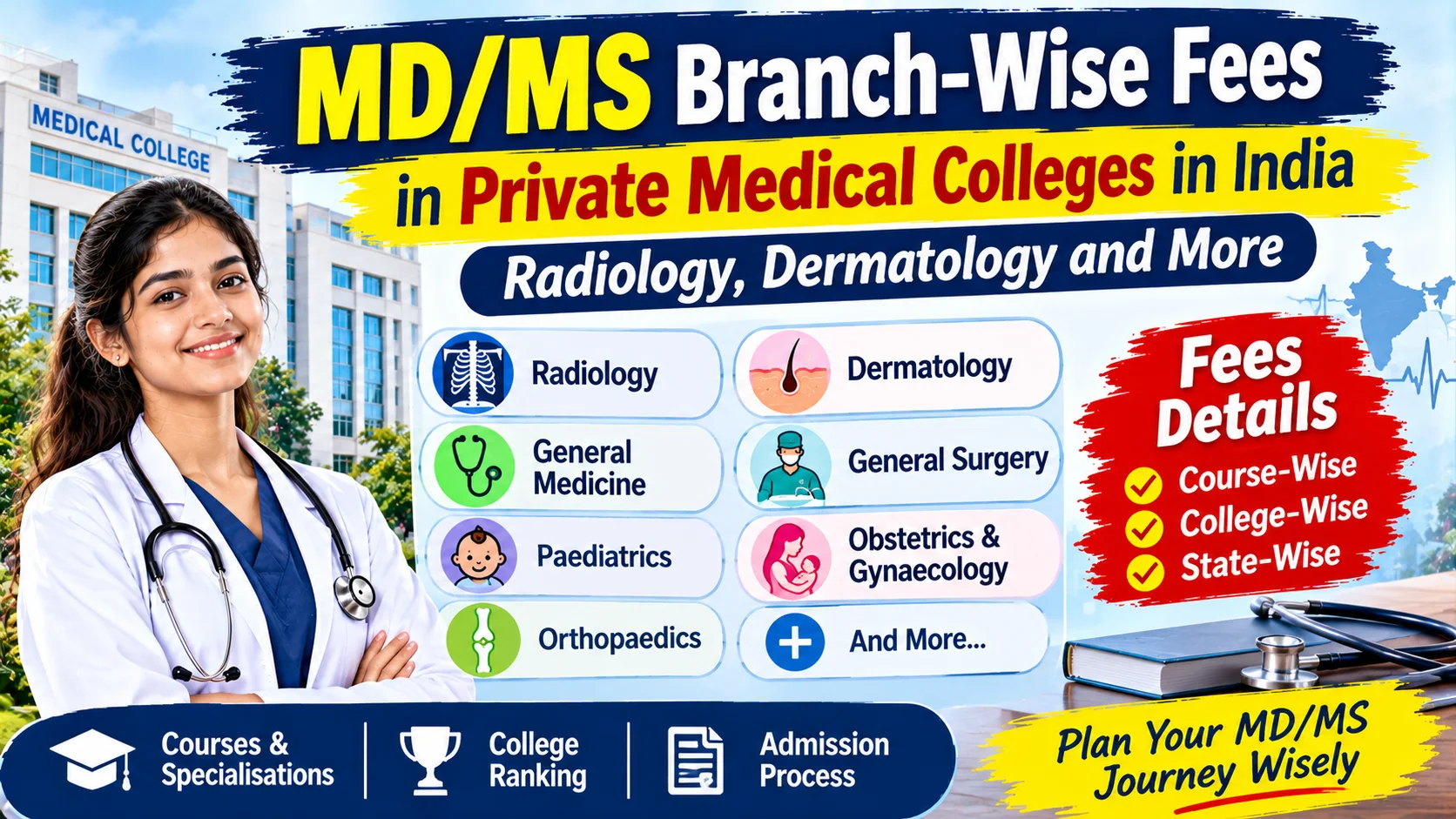
If you are looking to pursue an MD (Doctor of Medicine), you could potentially be spending a significant amount of money. After completing an MBBS degree and compulsory internship, many medical graduates choose postgraduate medical education to specialise in areas such as General Medicine, Paediatrics, Dermatology, Radiology, Anaesthesiology and Pathology.One very common question medical postgraduate applicants ask is:What is the total cost of an MD in private medical colleges in India?The cost varies depending on the college, speciality, state, admission quota and whether students require hostel accommodation. A government-quota seat in a private medical college can sometimes be more affordable than a management or NRI quota seat.Overall, there is more to consider than just the tuition fee. Students may also have to pay for hostel accommodation, admission fees, security deposits, examination fees, food, books and other expenses.This article explains what you can expect to pay for an MD at a private medical college in India and the factors you should consider before choosing an institution.
Average Cost of MD at a Private Medical College in India
As mentioned above, fees vary depending on the admission category, speciality and seat type. Below are indicative annual and three-year tuition fee ranges for 2026–27.
|
Admission Category |
Approximate Annual Tuition Fee |
Approximate 3-Year Tuition Fee |
|
State/Government Quota (Private) |
₹3–32 lakh |
₹9–96 lakh |
|
Management Quota |
₹5–69 lakh |
₹15 lakh–₹2.07 crore |
|
NRI Quota |
₹29–85 lakh |
₹87 lakh–₹2.55 crore |
These figures are general guidelines and should not be treated as fixed fees for every institution.According to a 2026 compilation of private medical college fees, the median annual fee for state-quota seats was approximately ₹9 lakh, management-quota seats approximately ₹23 lakh and NRI-quota seats approximately ₹57.5 lakh.
1. Cost of MD Depending on Speciality
The speciality you wish to pursue can have a significant impact on the overall cost. Clinical specialities that are in high demand and have limited seats can sometimes be much more expensive than non-clinical specialities. Below are examples of indicative annual fees for 2026–27.
|
MD Speciality |
Approximate Annual Fee |
|
MD General Medicine |
₹25–55 lakh |
|
MD Dermatology |
₹25–75 lakh |
|
MD Radio-Diagnosis |
₹25–70 lakh |
|
MD Paediatrics |
₹25–50 lakh |
|
MD Anaesthesiology |
₹17–36 lakh |
|
MD Psychiatry |
₹17–36 lakh |
|
MD Pathology |
₹13–15 lakh |
These are examples of fees from selected colleges and are not nationally fixed rates. For example, candidates applying for several clinical specialities at SRMS Institute of Medical Sciences, Uttar Pradesh, may pay approximately ₹25.10 lakh per year. At Sri Lakshmi Narayana Institute of Medical Sciences, the 2026–27 fee document lists approximately ₹70 lakh annually for MD Radio-Diagnosis and ₹75 lakh for MD Dermatology under the management quota. Non-clinical specialities such as Anatomy, Physiology, Biochemistry and Pharmacology can be considerably cheaper at some colleges. The actual fee depends on the institution and admission category.
2. Extra Costs Besides Tuition Fees
Apart from tuition fees, students may also need to pay for accommodation, food, registration and other expenses during their three-year MD programme. Below are the main additional costs to consider.
A. Hostel and Accommodation Costs
Many private medical colleges offer hostel facilities for postgraduate students. The charges depend on the room type, location and facilities available.
Students who prefer private accommodation should also consider:
- Monthly rent
- Electricity charges
- Internet expenses
- Local transportation
- Other household expenses
B. Food and Mess Costs
Students may also need to pay for food. This may be included in the hostel package or charged separately. Those staying outside the campus should prepare a monthly food budget based on their accommodation and eating preferences.
C. Admission and Registration Costs
Some colleges charge additional fees for:
- Admission
- Registration
- University eligibility
- Administrative services
These charges vary between institutions.
D. Security Deposit
Some colleges collect a security deposit when students are admitted. Candidates should check the conditions for receiving their money back, including any applicable deductions.
E. Books, Equipment and Other Costs
MD students may need to purchase textbooks, medical equipment, study materials and other academic resources.
Additional expenses may also arise from:
- Attending medical conferences
- Academic travel
- Research activities
- Printing and project work
- Other educational requirements
3. Example of the Total Cost of MD at a Private Medical College
Let's consider an example using the fee structure of SRMS Institute of Medical Sciences in Uttar Pradesh.
The institution lists the following approximate charges for several clinical specialities:
|
Cost Component |
Approximate Cost |
|
Annual Tuition Fee |
₹25.10 lakh |
|
Annual Hostel Fee (with Mess) |
₹3.47 lakh |
|
Annual Other Fee |
₹1.41 lakh |
|
One-Time Refundable Security Fee |
₹5 lakh |
Based on these figures, the estimated three-year expenditure would be:
|
Expense |
Approximate Three-Year Cost |
|
Three-Year Tuition Fee |
₹75.30 lakh |
|
Three-Year Hostel (with Mess) |
₹10.40 lakh |
|
Three-Year Other Fees |
₹4.24 lakh |
|
One-Time Refundable Security Fee |
₹5 lakh |
|
Total Estimated Cost |
₹94.94 lakh |
<badge color="success">Estimated total: ₹94.94 lakh</badge>
This is an example based on one college's fee structure. The refundable security deposit may be returned according to the institution's rules and conditions. Candidates should confirm the applicable fee schedule directly with the college before taking admission.
4. Are Management and NRI Quotas More Expensive?
Yes. The admission category can have a major impact on the amount students pay for their postgraduate medical education.
A. State/Government Quota
Some private medical colleges offer postgraduate seats through state counselling. These seats can be relatively affordable compared with management and NRI quota seats. Candidates are generally allotted seats according to NEET PG merit, eligibility requirements and the applicable state counselling rules.
B. Management Quota
Management quota fees are generally higher than state-quota fees. The amount depends on the college, speciality and state fee regulations. Students should check the official fee notification before selecting a management-quota seat.
C. NRI Quota
NRI quota seats can be considerably more expensive. Some colleges list their fees in Indian rupees, while others may specify fees in US dollars.For example, clinical postgraduate courses in Andhra Pradesh have different fee structures for management and NRI/institutional quota seats.When comparing the total cost over three years, students should calculate the complete financial commitment rather than considering only the first-year tuition fee.
5. How to Save Money on MD at a Private Medical College
Below are some ways to manage postgraduate medical education expenses.
- Compare Colleges: Check the official fee structures of multiple private medical colleges before filling out counselling choices.
- Check State Quota: Some colleges may offer comparatively affordable fees through state-quota seats.
- Compare Specialities: Fees can vary significantly between clinical and non-clinical branches.
- Calculate Extra Costs: Include hostel, mess, deposits, registration and examination charges in your budget.
- Check the Stipend: Find out how much stipend you will receive per month, when it will be paid and whether any conditions apply. Do not assume it will cover all your expenses.
- Read the Bond Policy: Understand service bonds, discontinuation rules and applicable penalties before accepting a seat.
6. Eligibility and Admission Requirements for MD in India
Candidates generally need to complete an MBBS degree from a recognised medical institution and fulfil the applicable internship and registration requirements.
The general admission process is as follows:
- Complete MBBS and the compulsory rotating medical internship.
- Qualify for NEET PG or the applicable entrance examination under the current admission rules.
- Register for the appropriate counselling process.
- Select preferred colleges and specialities.
- Receive a seat allotment based on merit, eligibility and seat availability.
- Complete document verification and pay the required admission fees.
For current eligibility and postgraduate medical education regulations, visit the National Medical Commission (NMC) website. Candidates can also check the Medical Counselling Committee (MCC) website for applicable All India Quota and other counselling information. Students researching medical institutions can use the World Directory of Medical Schools (WDOMS) to look up medical schools. However, a WDOMS listing by itself does not establish NMC recognition or eligibility for medical registration in India. For general information about international health and medical education, candidates can also visit the World Health Organization (WHO) website. For additional guidance on medical admissions and postgraduate education, visit MBBS Advisor.
Frequently Asked Questions (FAQs)
1. What is the total cost of MD at a private medical college in India?
The total cost depends on the college, speciality and admission category. Tuition fees can range from a few lakh rupees to more than ₹2 crore for the complete three-year course in some management and NRI quota seats. Additional expenses may apply for hostel accommodation and other services.
2. What is the average MD fee at private medical colleges?
There is no single average fee for all specialities and admission categories. According to a 2026 fee compilation, the median annual fees for state-quota seats at private colleges are approximately ₹9 lakh, management-quota seats approximately ₹23 lakh and NRI-quota seats approximately ₹57.5 lakh. Candidates should check the fees of individual colleges.
3. How long does an MD take to complete in India?
An MD broad-speciality course generally takes three years to complete after MBBS. Candidates should check the current NMC postgraduate regulations for specific course requirements.
4. What is the most expensive MD speciality at private colleges?
High-demand clinical specialities such as Dermatology, Radio-Diagnosis and General Medicine can be expensive at some private institutions. The actual fee depends on the college and admission category.
5. Are hostel fees included in MD tuition fees?
It depends on the college. Some institutions charge separately for hostel and mess facilities, while others may publish combined accommodation packages. Candidates should check the official fee structure before admission.
6. Is Management Quota more expensive?
Generally, yes. Management quota seats can be more expensive than state-quota seats at private medical colleges. The actual amount depends on state regulations and the institution.
7. Is the NRI Quota more expensive?
Yes. NRI quota seats are generally much more expensive than other admission categories. Some institutions may charge fees in foreign currency.
8. Do MD students get a stipend at private medical colleges?
Many postgraduate medical institutions provide stipends to their resident doctors. The amount and payment conditions vary between states and colleges. Candidates should check the current stipend information before joining.
9. Can I get an MD seat at a private college through NEET PG?
Yes. Eligible candidates can obtain MD seats at private medical colleges through the applicable NEET PG counselling process. Admission depends on rank, eligibility, seat availability, category and counselling rules.
10. Is the security deposit refundable?
A security deposit may be refundable if students follow the institution's rules and complete the required formalities. Candidates should read the refund conditions carefully before making payment.
11. Are MD fees the same at all private medical colleges in India?
No. Fees vary between states, colleges, specialities and admission categories. Students should check official counselling notifications and college fee documents for accurate information.
Conclusion
Overall, the total cost of pursuing an MD at a private medical college in India depends on the speciality, college and admission category. State-quota seats can be relatively affordable, whereas management and NRI quota seats may require a much larger financial investment.Before choosing a college, compare tuition fees, hostel charges, mess expenses, security deposits and other costs. It is also important to check the stipend, bond conditions, course recognition and counselling rules.By carefully comparing the complete three-year cost, medical graduates can make an informed decision about their postgraduate medical education.