 Russia
 Belarus
 Georgia
 Kazakhstan
 Kyrgyzstan
 Uzbekistan
 China
China Nepal
Nepal Bangladesh
 Poland
 Romania
 Slovakia
 Hungary
 N. Macedonia
 Vietnam
 Canada
 Armenia
 UK
UK Australia
 USA
USA Ireland
 Germany
 New Zealand
 Italy
Italy France
 Singapore
 Netherlands
 Sweden
 Switzerland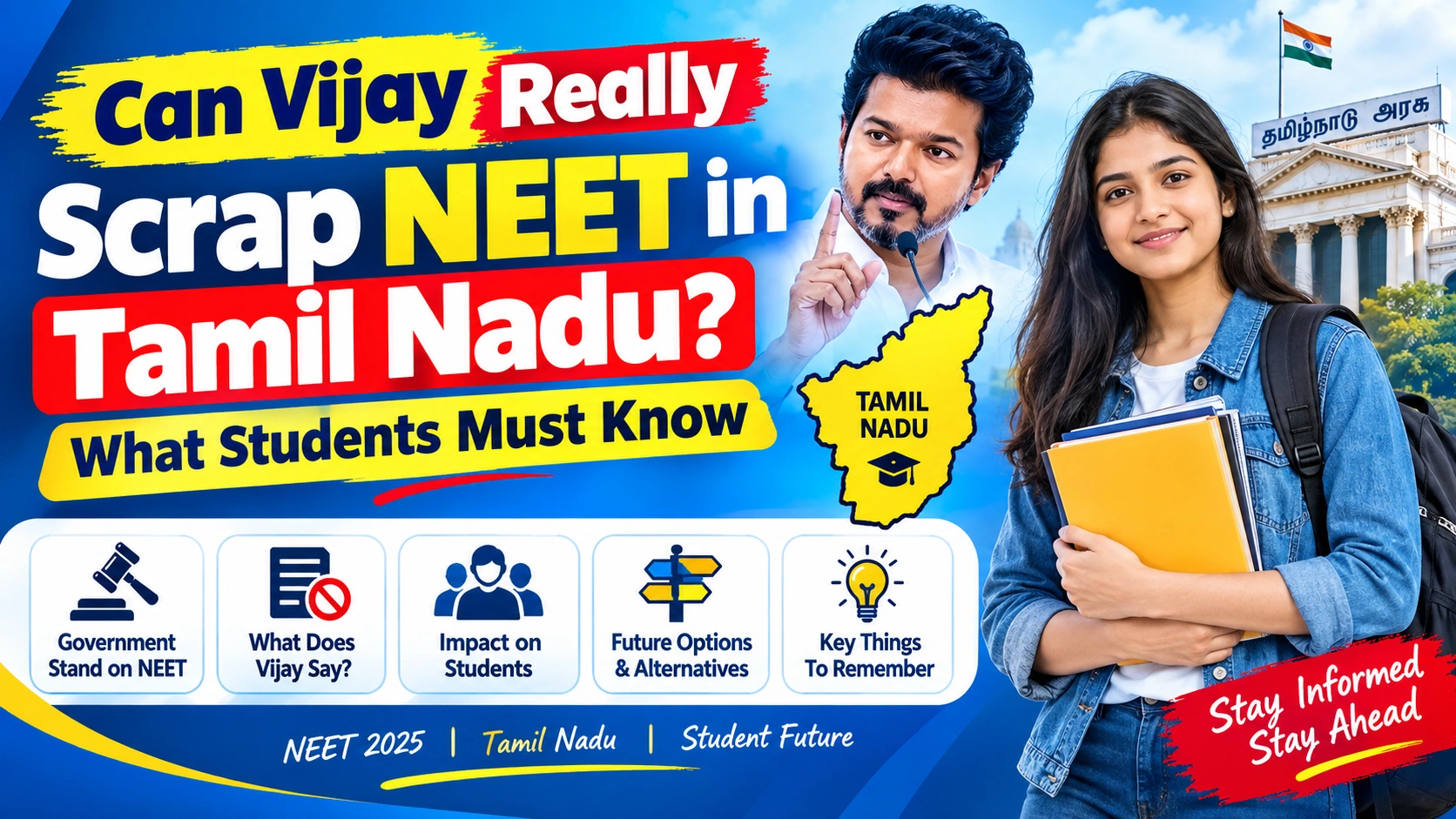
National Eligibility cum Entrance Test (NEET) has remained one of the most debated topics in Tamil Nadu’s medical education system. Since its implementation, several political leaders, student groups, and education activists in the state have raised concerns about its impact on medical admissions, especially for students from rural backgrounds and government schools. Among the strongest voices against NEET has been Tamil Nadu Chief Minister M.K. Stalin and other leaders from the state government.
The demand to remove NEET from Tamil Nadu has gained attention repeatedly, with many students and parents questioning whether the state government has power to completely cancel the examination process. However, reality is more complex. NEET is not a state-level examination but a national entrance test conducted under central regulations. Therefore, any decision regarding its removal requires legal and constitutional approval.
For students preparing for medical admission, understanding the actual situation around NEET in Tamil Nadu is extremely important. Candidates should rely on verified information related to examination, counselling process, and admission rules instead of political statements or rumours circulating online.
Students can also stay updated about medical entrance-related information through resources like MBBS Advisor, where they can find guidance related to medical education, admission processes, and career planning.
Why Is Tamil Nadu Opposing NEET?
Tamil Nadu has historically followed its own medical admission system based on Class 12 board examination marks. Before NEET was introduced, students were admitted to medical colleges through their higher secondary examination scores. Many political leaders in state argue that NEET creates additional pressure on students because it requires preparation beyond school curriculum.
major concerns raised by NEET critics in Tamil Nadu include:
- Impact on rural students: Many believe students from villages and economically weaker backgrounds may not have equal access to expensive coaching facilities.
- Dependence on coaching institutes: Critics argue that students who can afford coaching may get an advantage.
- Stress among students: competitive nature of NEET preparation has increased academic pressure among medical aspirants.
- Difference between state boards and national syllabus: Some students feel that NEET syllabus creates challenges for those studying under different education boards.
However, supporters of NEET argue that a common entrance examination creates a uniform admission system across India and reduces unfair practices in medical admissions.
Can Vijay Scrap NEET in Tamil Nadu?
Actor-turned-politician Vijay, who leads Tamilaga Vettri Kazhagam (TVK), has also expressed concerns about NEET and its impact on Tamil Nadu students. Many students and political supporters have questioned whether Vijay can remove NEET if his party comes to power in the state.
The answer is that a state government alone cannot simply cancel NEET in Tamil Nadu.
NEET is governed by national-level regulations under authority of the central government and medical education authorities. Medical admissions across India are conducted according to rules established by bodies such as the National Medical Commission (NMC).
A state government can request exemption from NEET or pass resolutions demanding changes, but implementing such changes requires approval from central government and legal authorities. Tamil Nadu has already attempted to seek exemption from NEET in the past, but the matter has faced constitutional and legal challenges.
Therefore, even if Vijay or any other political leader promises to remove NEET, process would involve:
- Approval from the central government.
- Changes in existing medical admission regulations.
- Possible legal review by courts.
- Compliance with national medical education policies.
Until such changes happen officially, NEET will continue to remain mandatory for MBBS and other undergraduate medical admissions in Tamil Nadu.
Why NEET Remains Mandatory for MBBS Admission?
NEET was introduced to create a single national-level entrance examination for medical courses across India. Before NEET, different states and private institutions followed separate admission procedures, which created concerns regarding transparency and consistency.
examination is conducted by National Testing Agency (NTA) under guidelines issued by relevant authorities. Students who wish to pursue MBBS, BDS, AYUSH, and other medical courses must qualify for NEET before participating in counselling.
official NEET information and updates are available through NEET Official Portal.
major objectives behind NEET include:
- Creating a common admission platform for medical aspirants.
- Ensuring merit-based selection.
- Reducing irregularities in medical admissions.
- Providing equal eligibility criteria across different states.
For students planning medical education in India or abroad, understanding NEET eligibility and admission rules is essential. Candidates can also explore NEET-related preparation resources through NEET Preparation Guide by MBBS Advisor.
What Happens If Tamil Nadu Gets NEET Exemption?
The possibility of Tamil Nadu receiving a NEET exemption has been discussed several times. However, even if an exemption is granted in future, it would require major policy changes.
An exemption could potentially allow Tamil Nadu to design its own medical admission system. However, such a decision would also raise questions regarding:
- Maintaining transparency in medical admissions.
- Ensuring equal opportunities for students.
- Meeting national medical education standards.
- Managing admissions for government and private medical colleges.
Medical education requires coordination between state and central authorities. Any change must ensure that quality of medical training and student selection standards remain unaffected.
Impact of NEET Debate on Tamil Nadu Medical Aspirants
Continuous discussion around removing NEET creates confusion among students preparing for medical entrance examinations. Many students wonder whether they should continue preparing for NEET or wait for political decisions.
Experts generally advise students not to stop their preparation based on uncertain announcements. Since NEET remains an official requirement for MBBS admission, candidates should continue focusing on their studies.
Students should concentrate on:
- Completing NEET syllabus.
- Practising previous year question papers.
- Improving Biology, Physics, and Chemistry concepts.
- Following official announcements from government authorities.
Candidates should avoid depending on social media rumours because changes in admission policies are announced only through official notifications.
Role of NEET for Students Planning MBBS Abroad
NEET is not only important for students seeking admission to Indian medical colleges but also for Indian students planning to study medicine abroad. According to regulations, Indian students must qualify for NEET to pursue MBBS abroad and later become eligible for medical practice in India.
Many students explore international medical universities because of factors such as affordable fees, global exposure, and availability of seats. However, choosing a foreign medical university requires careful research regarding recognition, curriculum, and eligibility.
Students interested in studying medicine overseas can explore detailed information through the MBBS Abroad Guide by MBBS Advisor.
Before selecting any foreign medical college, students should check important factors such as:
- Recognition status of university.
- Listing in the World Directory of Medical Schools (WDOMS).
- Compliance with World Health Organization (WHO) guidelines.
- Eligibility requirements for Indian students.
- Future licensing examination requirements.
What Should Tamil Nadu Students Do Now?
Until any official change is announced, Tamil Nadu students should continue preparing according to the existing NEET system. Political discussions may continue, but medical admission rules remain unchanged unless officially modified.
Students should follow a practical approach:
Focus on NEET Preparation
A strong preparation strategy remains the most reliable path for securing medical admission. Students should give importance to NCERT-based learning, regular revision, and mock tests.
Verify Information Through Official Sources
Students should check updates only from government portals, examination authorities, and recognised education platforms. False information about NEET cancellation can create unnecessary stress among aspirants.
Keep Alternative Options Open
Students who do not secure their desired rank in NEET can explore other medical education opportunities, including recognised medical universities abroad. However, they must carefully verify all eligibility and recognition requirements.
Conclusion
The question of whether Vijay can scrap NEET in Tamil Nadu depends not only on political decisions but also on constitutional procedures, central regulations, and legal approval. A state leader cannot independently remove NEET from the admission system.
For now, NEET remains compulsory for MBBS admission in Tamil Nadu, and students should continue preparing accordingly.Debate around NEET is likely to continue, but aspirants should focus on accurate information, proper preparation, and long-term career goals.
Medical education is a crucial career decision, and students should make choices based on official guidelines rather than temporary political discussions. Staying informed through reliable sources and understanding admission requirements will help students build a successful medical career.