 Russia
 Belarus
 Georgia
 Kazakhstan
 Kyrgyzstan
 Uzbekistan
 China
China Nepal
Nepal Bangladesh
 Poland
 Romania
 Slovakia
 Hungary
 N. Macedonia
 Vietnam
 Canada
 Armenia
 UK
UK Australia
 USA
USA Ireland
 Germany
 New Zealand
 Italy
Italy France
 Singapore
 Netherlands
 Sweden
 Switzerland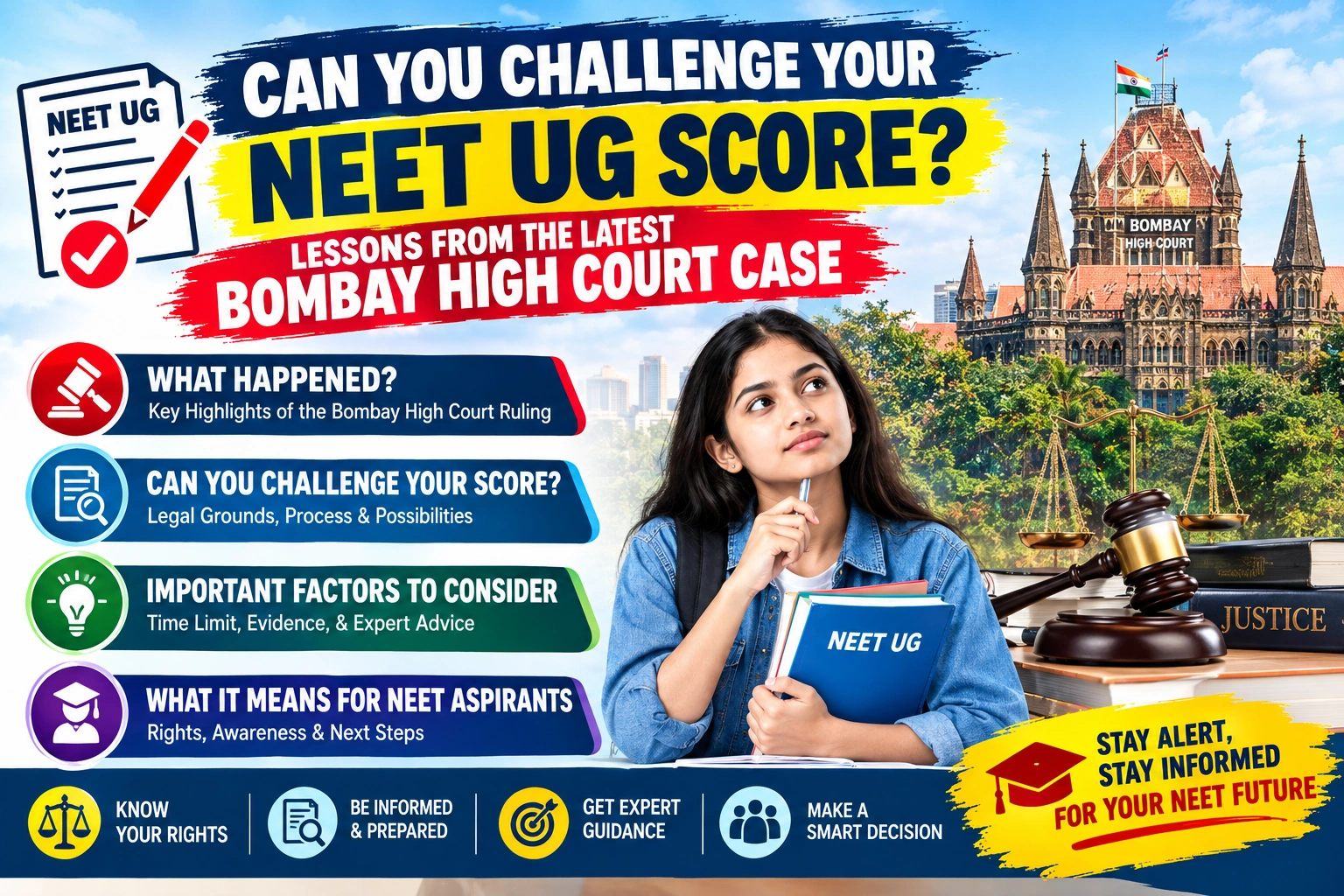
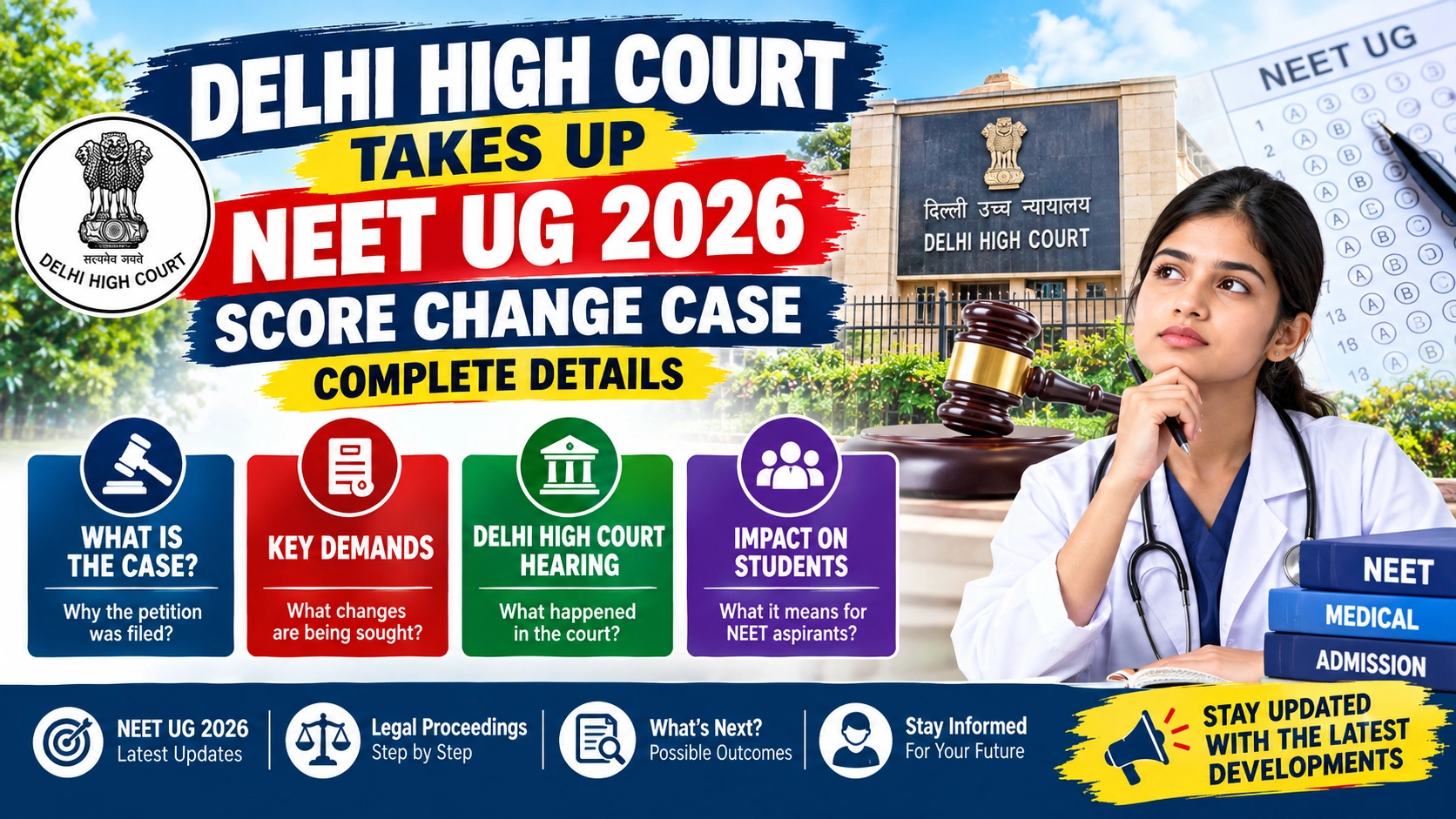
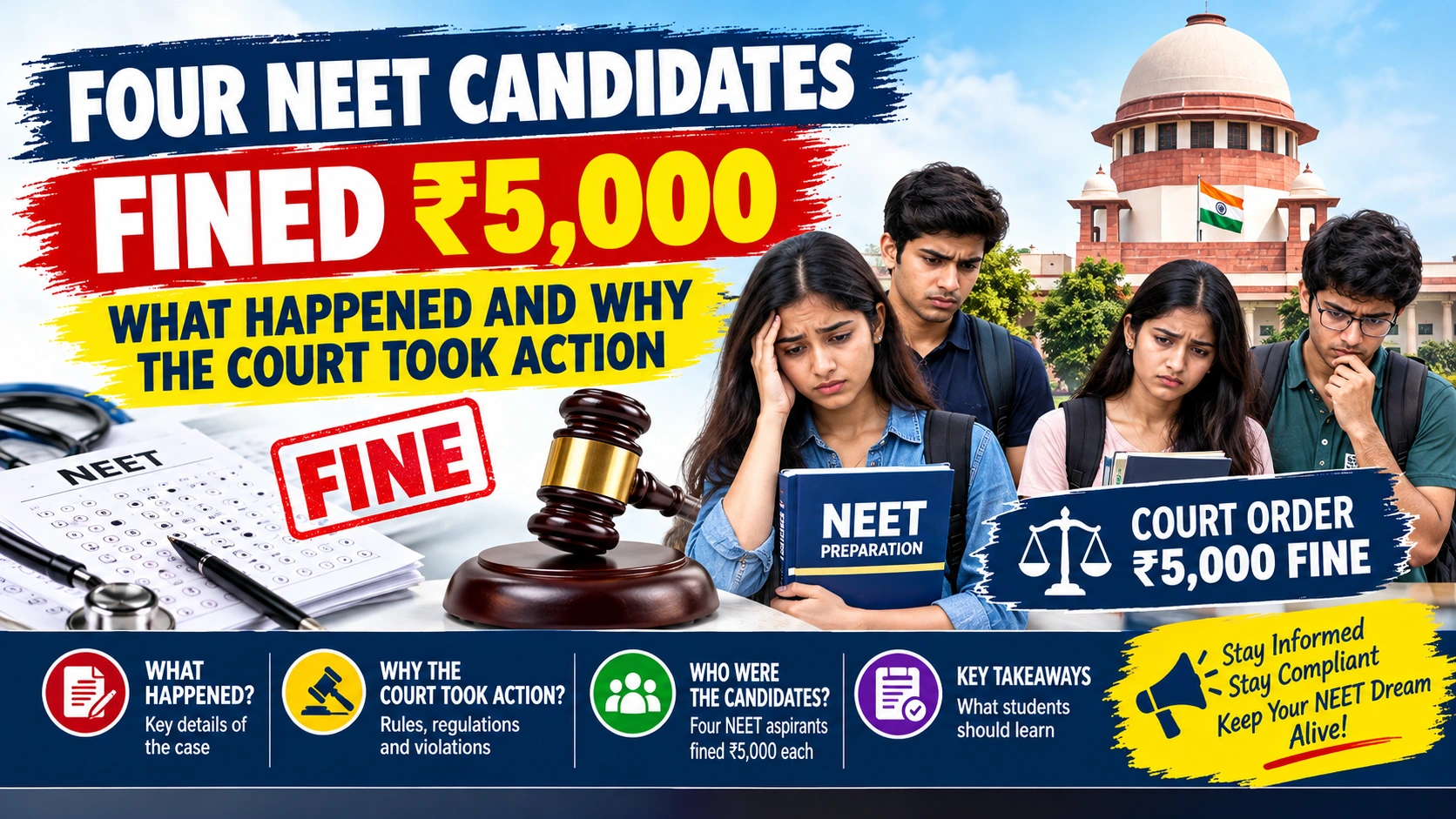
Your NEET scorecard appears on the screen. You calculate the marks again. Then once more. The number still doesn’t match what you expected from your OMR responses. What now? Yes, a NEET-UG score can be challenged, but not simply because it feels too low. A candidate needs authentic records, a specific discrepancy and proof that the official grievance process was followed within the deadline. The latest Bombay High Court case involving four NEET candidates makes that very clear. The students challenged their re-NEET results, claiming errors in the evaluation of their answer sheets. After inspecting the original OMR records, the court found that NTA’s declared marks were correct and imposed costs of ?5,000 on each petitioner. MBBS Advisor explains what this case means for any student considering a score challenge.
What Happened in the Bombay High Court Case?
Four candidates reportedly identified as Hricha, Soham, Atharva and Rahul approached the Chhatrapati Sambhajinagar Bench of the Bombay High Court after the NEET-UG re-examination results were announced. The re-examination had been conducted on June 21, 2026, and the results were declared on July 16. The petitioners alleged that their awarded marks didn’t correctly reflect the responses recorded on their OMR answer sheets. The matter was heard by a Division Bench comprising Justice N. B. Suryawanshi and Justice A. D. Shinde. Instead of deciding the case only from screenshots or photocopies, the Bench directed NTA to produce the original answer sheets. Those records were brought from Delhi in sealed packets. The judges examined them, and the candidates, their parents and lawyers were reportedly permitted to inspect the originals as well. The comparison showed no evaluation or marking discrepancy. NTA’s results matched the answers recorded on the authentic OMR sheets. The court then imposed ?5,000 in costs on each candidate.
Did the Court Punish Students for Questioning NTA?
No. This detail matters. The petitioners weren’t penalised merely because they questioned their scores. Courts can and do examine decisions made by examination authorities. If an OMR sheet belongs to another candidate, a marked response is incorrectly read or the final score doesn’t match the recorded answers, judicial relief may be available. In this case, however, the original records didn’t support the allegations. The court found that the candidates had approached it using incorrect or unsubstantiated information. That is why costs were imposed. Headlines often described the ?5,000 amount as a “fine,” but litigation cost is a more accurate description. It was not reported as a criminal conviction for filing a score challenge. Honestly, that distinction should reassure genuine candidates. The lesson isn’t “never question NTA.” The lesson is “verify your evidence before filing.”
Can a NEET Candidate Legally Challenge a Score?
Absolutely. A candidate can raise an objection through the NTA’s official process and, in suitable cases, seek judicial review. But the complaint must be specific. Saying “I expected 620 and received 570” doesn’t establish an evaluation error. A student must identify where the official record went wrong.
A score dispute usually falls into one of these categories:
|
Type of complaint |
What the candidate must check |
|
OMR response mismatch |
Whether the official scanned sheet shows a different response from the one actually marked |
|
Incorrect score calculation |
Whether NTA applied the notified marking scheme correctly |
|
Answer-key dispute |
Whether the officially accepted answer is scientifically or academically incorrect |
|
Wrong candidate record |
Whether the displayed OMR sheet or response data belongs to someone else |
|
Booklet-code mismatch |
Whether the recorded test-booklet code differs from the candidate’s booklet |
|
Missing or withheld record |
Whether NTA failed to provide the response sheet or result without a valid explanation |
Each problem needs different evidence. Don’t mix them. An answer-key objection isn’t the same as an OMR-reading dispute, and a lower-than-expected rank isn’t automatically a scoring error.
Start With the Official OMR Challenge Process
The first step normally isn’t the High Court. It is the formal NTA challenge window.After NEET, NTA generally publishes the provisional answer key, recorded responses and scanned OMR image for a limited period. Candidates can submit objections online after paying the prescribed fee. The exact amount and deadline may change each year. All notifications should be checked through the official NEET website. Don’t wait for a coaching-centre message because challenge windows can be short. In the Bombay High Court case, the candidates had reportedly raised their concerns through the OMR challenge mechanism before filing their petitions. NTA had responded. The matter moved to court only after the candidates remained dissatisfied. MBBS Advisor recommends completing every field carefully and describing the disputed response precisely. Mention the question number, booklet code, response shown by NTA, response allegedly marked and resulting score difference.
Evidence You Must Preserve
A good score challenge begins on the day NTA releases the records. Download everything. Immediately.
Keep copies of:
- NEET admit card
- Confirmation page
- Official scorecard
- Scanned OMR sheet downloaded from NTA
- Recorded-response sheet
- Provisional and final answer keys
- OMR or answer-key challenge receipt
- Payment acknowledgement
- Emails sent to and received from NTA
- Screenshots showing the date and portal status
- Any representation submitted to NTA
Store the files on your phone, computer and cloud drive. Print the main documents too. Links expire. Websites change. Memories become fuzzy. A screenshot forwarded from an unofficial channel isn’t equivalent to a document downloaded through the candidate login. If the matter reaches court, NTA can produce server records and original answer sheets. Your evidence must survive that comparison.
Recalculate the Score Before Filing a Challenge
One surprisingly common problem is a calculation mistake made by the candidate. Slow down. Under the usual NEET marking method, a correct answer receives four marks, an incorrect answer attracts a one-mark deduction and an unanswered question receives zero. The final formula is:
Total score = (Correct answers × 4) − (Incorrect answers × 1)
Suppose a student has 145 correct answers, 30 incorrect answers and five unanswered questions. The score would be:
(145 × 4) − 30 = 550
Students sometimes count only positive marks and forget the negative-marking deduction. Others use an unofficial coaching answer key that differs from the final key. A few remember marking one option, while the original OMR shows another. Stress does strange things. Use the final official answer key for the last calculation. If the arithmetic matches NTA’s result, there may be no scoring dispute left to challenge.
What If the Answer Key Is Wrong?
An academically disputed answer requires subject-based evidence, not an OMR comparison. Candidates should cite the prescribed NCERT text, a recognised academic source or another authoritative reference that directly addresses the question. A teacher’s opinion or a coaching institute’s video may help you understand the issue, but it may not carry the same evidentiary weight. Submit the answer-key objection during the designated window. NTA usually places challenges before subject experts and later publishes a final key. Courts are often cautious about substituting their own academic judgment for that of qualified expert bodies unless the error is clear and demonstrable. Very clear. Not debatable by interpretation. MBBS Advisor advises students to challenge only those questions where a recognised source supports the objection directly. Filing objections to every doubtful question wastes money and weakens attention on the strongest points.
The Risk of Edited or AI-Generated OMR Sheets
The Bombay High Court case appeared amid wider reports about altered and digitally generated OMR documents. NTA had warned candidates and parents against submitting fake or manipulated answer sheets and stated that such conduct could invite legal action. Digital editing tools can create a convincing copy within minutes. That doesn’t make the copy evidence. Never modify an OMR image, even to “make the marked answer clearer.” Don’t crop out identification details. Don’t accept a reconstructed response sheet prepared by an agent or coaching representative. If someone claims they can alter an OMR record and “build a court case,” walk away. Quickly. The original physical record and NTA’s server data will carry much greater value than an edited image. A false document can turn a valid concern into a costly legal problem.
When Should a Student Consider Court Action?
Court action may be reasonable where the candidate has exhausted the official grievance process, possesses credible evidence and faces an immediate threat to admission rights.
Examples may include:
- The official OMR image clearly doesn’t belong to the candidate
- NTA’s calculated score doesn’t match the responses visible on its own record
- A challenge was accepted but the corrected score was not reflected
- The authority failed to respond despite a documented and time-sensitive discrepancy
- A technical or administrative mistake threatens counselling eligibility
Before filing, speak with a lawyer experienced in education or examination matters. Share the complete record, not only the documents that support your preferred version. The lawyer should also consider timing. NEET counselling moves quickly, and delayed litigation may reduce the practical relief available. A technically correct petition filed after admission rounds have closed can create a much harder situation.
What Can the Court Order?
The remedy depends on the evidence and stage of admission. A court may direct NTA to produce original records, verify a response sheet, reconsider a representation or correct a result if an error is proved. In rare circumstances, it may protect a candidate’s counselling participation while the dispute is being decided. A court will not normally increase marks merely because a candidate claims to remember selecting a different option. Nor will it automatically order a nationwide re-examination for an individual scoring dispute. Relief must match the problem. One student’s OMR mismatch usually calls for individual verification, not cancellation of the examination for lakhs of candidates. This is exactly where good legal drafting matters.
Lessons From the ?5,000 Cost Order
The first lesson is simple: the original record wins. The second is that using NTA’s challenge mechanism before filing a petition is essential. It creates a paper trail and gives the agency an opportunity to respond. Third, parents should not let panic decide the next move. A surprising score can feel devastating, particularly after one or two years of preparation, but rushing into litigation on the basis of an unofficial document can make the situation worse. Fourth, social-media claims are not legal evidence. Ten viral posts repeating the same allegation don’t prove that a candidate’s individual answer sheet was evaluated incorrectly. Finally, a failed petition may carry financial consequences. The four candidates were asked to pay ?5,000 each, creating a combined cost of ?20,000. Higher costs are possible in cases involving serious misuse of the court process or fabricated material. MBBS Advisor doesn’t suggest avoiding legal remedies. It suggests using them carefully.
Does a Score Dispute Stop NEET Counselling?
Usually, no. Unless a court or counselling authority issues a specific direction, the admission process continues according to the published schedule. Candidates should register for MCC or state counselling using the available result while pursuing a grievance. Missing registration or choice filling could create another problem, even if the score dispute is later resolved. Track dates, upload the required documents and keep the counselling application active. If the score is corrected, your lawyer can advise how the revised result should be placed before the relevant authority. Candidates can follow the MBBS Advisor NEET guide for process-related information, but official deadlines must be confirmed through NTA, MCC and state counselling websites.
What Happens After a Valid NEET Result?
Once the score issue is settled, students must evaluate colleges through official sources. For Indian medical colleges, recognition and permitted intake should be checked through the National Medical Commission. The World Directory of Medical Schools is often used while researching international institutions, and the World Health Organization provides broader health-related information. Neither replaces NMC rules or guarantees that a foreign qualification will meet Indian registration requirements. Students who don’t secure an Indian seat may consider overseas education through the MBBS Abroad guide. Don’t choose a foreign university only because the NEET result was disappointing. Check fees, course duration, internship, teaching language and licensing eligibility first.
Frequently Asked Questions
Can I ask NTA to recheck my NEET score?
You can use the official OMR or answer-key challenge facility within the notified period. NEET does not usually provide conventional re-evaluation in the same way as a school board examination.
Can I approach the High Court directly?
A candidate can seek legal relief, but courts generally expect the available administrative grievance process to be used first. A lawyer should assess the urgency and evidence before filing.
What if my official OMR sheet shows the wrong response?
Download the sheet, preserve the original file and submit a question-specific challenge immediately. Keep the acknowledgement and payment receipt.
Why were the four candidates charged ?5,000 each?
The Bombay High Court found that the original OMR records matched NTA’s declared results. Costs were imposed because the petitions were based on claims that the verified documents did not support.
Can NTA take action over a fake OMR sheet?
Yes. Submitting a forged, altered or digitally fabricated document may lead to rejection of the complaint and possible legal action, depending on the facts.
Should I continue counselling during a score challenge?
Yes, unless an official order says otherwise. Complete all registrations and choice-filling steps using the current result so that you don’t lose admission opportunities because of a missed deadline.
Conclusion
A NEET result isn’t beyond question. Examination authorities can make mistakes, candidates can seek verification and courts can intervene where the evidence justifies it.But a legal petition can’t run on expectation alone. The Bombay High Court checked the original answer sheets, found that NTA’s marks were accurate and ordered each candidate to pay ?5,000. The claims failed where it mattered most—the source record. So, if your score appears wrong, don’t panic and don’t post accusations immediately. Download the official OMR sheet, calculate the marks using the final key, submit a timely challenge and keep every receipt. Then take qualified legal advice. MBBS Advisor can help you understand the NEET process and plan the next admission step, but the strongest score challenge will always begin with one thing: authentic evidence.