 Russia
 Belarus
 Georgia
 Kazakhstan
 Kyrgyzstan
 Uzbekistan
 China
China Nepal
Nepal Bangladesh
 Poland
 Romania
 Slovakia
 Hungary
 N. Macedonia
 Vietnam
 Canada
 Armenia
 UK
UK Australia
 USA
USA Ireland
 Germany
 New Zealand
 Italy
Italy France
 Singapore
 Netherlands
 Sweden
 Switzerland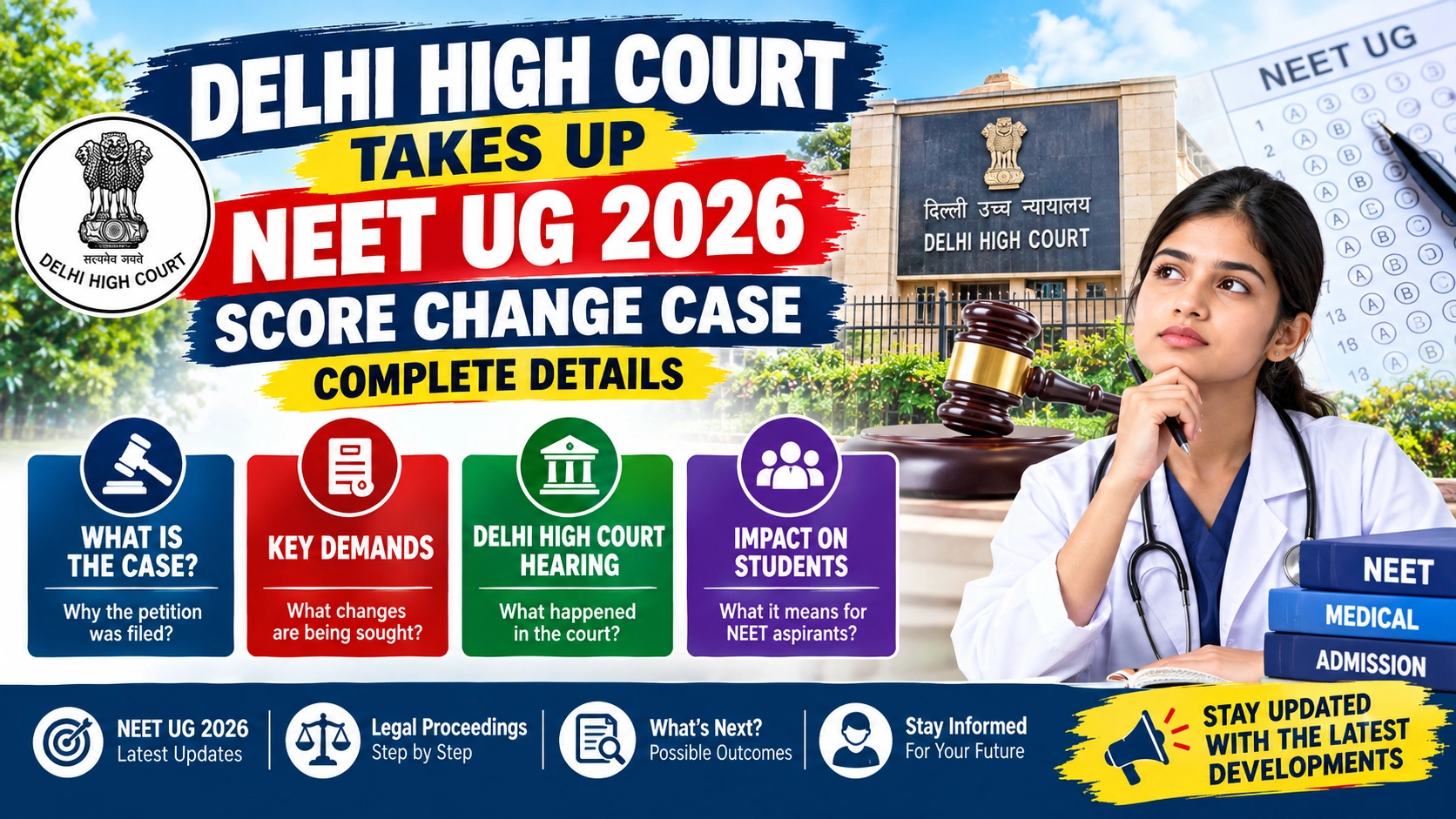
A NEET candidate logs into the official result portal and sees 650 marks. Minutes later, the score reportedly falls to 500. By the next day, it shows 135. That is the allegation now placed before the Delhi High Court. The NEET-UG 2026 aspirant has sought judicial intervention after claiming that his score changed three times within roughly 24 hours on the National Testing Agency’s portal. He has also disputed the OMR sheet displayed by NTA, saying it isn’t the physical answer sheet he filled during the examination. The court case raises a basic but serious question: can a candidate’s result change without a clear explanation or visible correction notice? MBBS Advisor breaks down the allegations, relief requested and lessons for students facing similar score disputes.
What Is the NEET-UG 2026 Score Change Case?
The petitioner appeared for the NEET-UG re-examination conducted on June 21, 2026. According to the petition, he compared his responses with the provisional and final answer keys and expected to score approximately 620 marks. When the results were declared on July 16, the candidate claims that the NTA portal initially displayed 650 marks. After he was logged out and signed in again, the score allegedly changed to 500. By the following day, the portal reportedly showed only 135 marks. Three figures. One candidate. Less than a day. The petition was filed through Advocate Vineet Jindal before the Delhi High Court. The student has sought production and preservation of his original physical OMR sheet along with the connected digital examination records so that an independent comparison can be conducted. These numbers remain the petitioner’s allegations unless confirmed through NTA’s records or a judicial finding. That distinction is essential. The High Court taking up a case doesn’t mean the court has already accepted every claim made in the petition.
What Has the Candidate Alleged?
The candidate’s complaint has two connected parts. First, he alleges that the score visible on the official portal changed from 650 to 500 and then to 135. Second, he says that the OMR sheet displayed by NTA is not the answer sheet he filled during the re-examination. If true, either issue would require a proper explanation. A score may occasionally be revised after a correction, data reconciliation or court direction, but such a change should have a documented reason and an identifiable final record. The disputed OMR sheet makes the matter more serious because NEET scores are calculated from the responses recorded on that document. If the candidate’s claim is correct and the displayed sheet isn’t his, the evaluation itself would need verification. At the same time, memory can’t replace evidence. A student may remember choosing one answer while the physical OMR shows another. That is why the petition seeks the original sheet rather than relying only on screenshots or recollection.
What Relief Has Been Sought From the Delhi High Court?
The plea doesn’t merely ask the court to award 620 or 650 marks. Instead, it reportedly requests directions requiring NTA to produce and preserve the original physical OMR sheet and all relevant examination records. That is a more legally workable request. Before deciding whether a score is wrong, the underlying records must be secured.
The petitioner is understood to have sought access to materials such as:
- The original physical OMR answer sheet
- The OMR image linked to the candidate’s application number
- Evaluation and score-calculation records
- Portal login and result-display data
- Audit logs showing whether the score was modified
- The date and time of each result update
- Records explaining any correction or revision
The court can then compare the original OMR, NTA’s digital data and the screenshots or documents submitted by the candidate. Evidence first. Decision later. MBBS Advisor sees this as the central issue in the case. The biggest question isn’t which screenshot circulated online; it is what the authenticated source records show.
Has the Delhi High Court Given a Final Decision?
Public reports initially stated that the matter was expected to come up before the Delhi High Court after the petition was filed at the end of July 2026. The widely reported material explains the allegations and the relief sought, but it does not establish a final judicial ruling on whether the candidate’s score was actually changed by NTA. Until an authenticated court order or official update confirms the outcome, students should avoid social-media posts declaring that the candidate has “won” or that NTA has been “proved guilty.” This isn’t nit-picking. A petition contains one party’s case. A judgment comes after the court examines responses, documents and arguments from the other side. NTA may produce an explanation, original records or technical data that changes how the allegations are understood. Or the evidence may support the student. Both possibilities remain open until the court records its findings.
Why Preservation of Digital Records Matters
Portal information can change. Server logs can be overwritten under routine retention policies. Even a candidate’s browser history may disappear after an update or device reset. That is why a preservation request matters. It asks NTA to retain the relevant data while the dispute is pending. Without it, an important audit trail could become harder to reconstruct later.
A useful digital record may show:
|
Record |
What it could establish |
|
Result-generation log |
The score officially calculated for the candidate |
|
Portal-display history |
Which score appeared and at what time |
|
Login record |
When the candidate accessed the result |
|
OMR mapping data |
Which answer sheet was linked to the application number |
|
Evaluation file |
How recorded responses were converted into marks |
|
Revision log |
Whether an authorised score correction occurred |
|
Download record |
Which scorecard version was issued through the portal |
Screenshots may support a complaint, but server-side evidence is generally stronger because it can identify the record generated by the official system. Honestly, examination portals should keep this information automatically. With millions of careers tied to one result, auditability shouldn’t be treated as an optional feature.
How Is a NEET Score Normally Calculated?
A candidate’s final score is based on recorded responses and the applicable answer key. Under the usual marking structure, four marks are awarded for each correct answer, one mark is deducted for an incorrect response and no mark is given for an unanswered question.
The basic calculation is:
NEET score = (Correct responses × 4) − (Incorrect responses × 1)
Suppose a candidate records 160 correct answers, 15 wrong answers and leaves five questions unanswered. The score would be:
(160 × 4) − 15 = 625
A candidate expecting around 620 and seeing 135 would naturally seek verification. Still, the expected score must be based on the official recorded responses and final answer key—not a coaching answer key or remembered selections. Students can follow examination notices through the official NEET portal. Result links, answer keys and challenge schedules published elsewhere should be cross-checked before any action is taken.
How Is This Case Different From the Bombay High Court Matter?
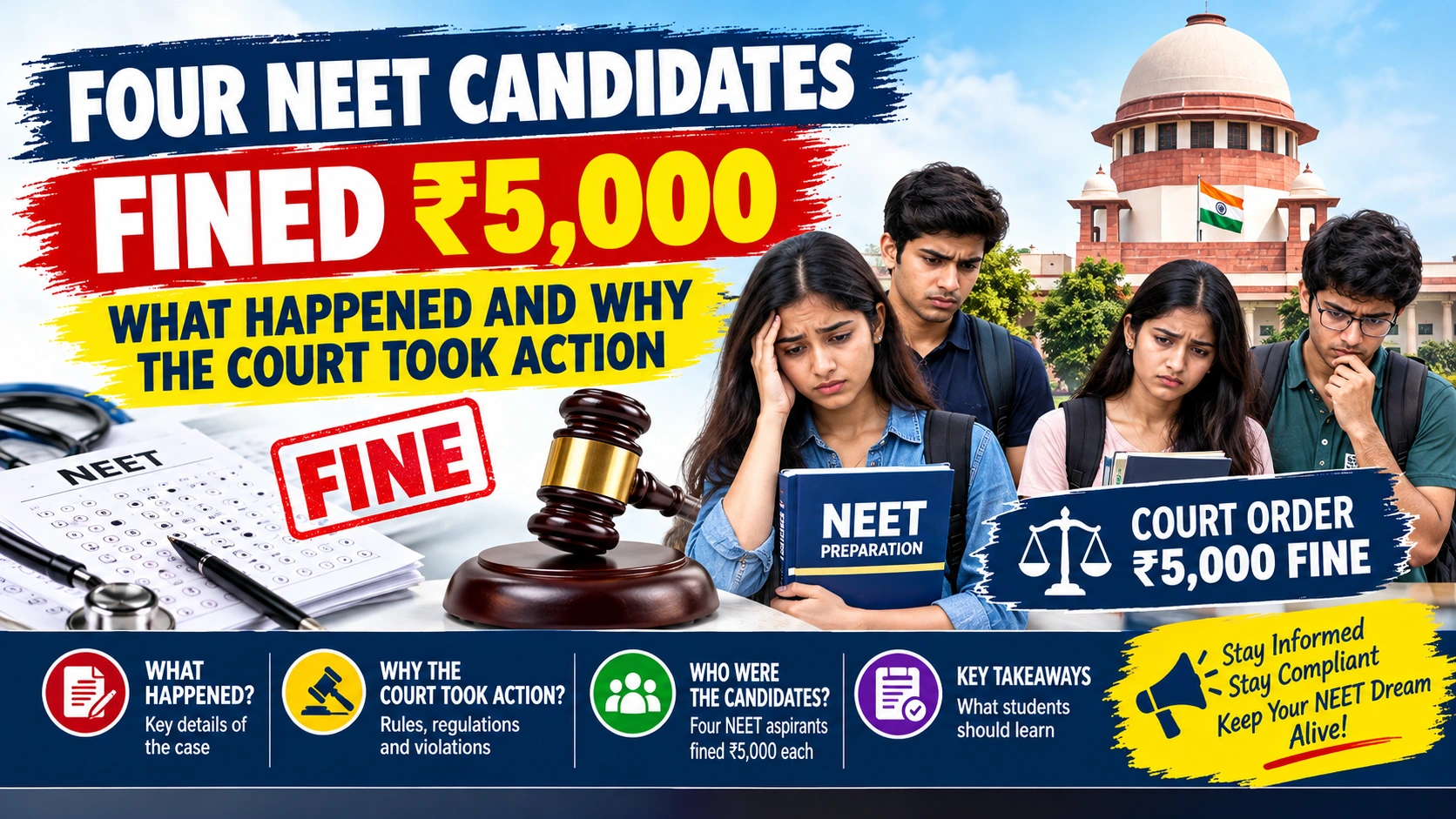
The Delhi case drew attention shortly after four other NEET candidates faced an unfavourable order from the Bombay High Court’s Chhatrapati Sambhajinagar Bench. In that matter, four candidates challenged their results and claimed discrepancies in the evaluation of their OMR sheets. The court directed that the original answer sheets be brought from Delhi in sealed packets. After examining the records, it found that NTA’s declared marks matched the responses on the original sheets. Each petitioner was ordered to pay ?5,000 in litigation costs. The Delhi petition is different because the candidate claims that the portal displayed three separate scores and disputes the identity of the OMR sheet itself. These claims require their own evidence and can’t be decided merely by referring to another case. MBBS Advisor advises readers not to assume that every NEET score complaint is false because one group of petitioners failed. Equally, one unusual screenshot doesn’t prove systematic manipulation. Each dispute must be tested against its records.
Can NTA Legally Revise a Published Score?
An examination authority may correct a result if it identifies an answer-key error, data-processing mistake, category mismatch, court-ordered revision or another genuine issue. But the correction should be documented and communicated through an official notice or candidate-specific record. A silent score change creates obvious concerns. The student’s rank, counselling eligibility and college options can all shift with the marks. For example, the difference between 650 and 500 can move a candidate across a huge rank range. A fall to 135 may even affect qualification, depending on the category and the officially declared cutoff. So this isn’t a cosmetic portal issue. If NTA argues that one or more displayed figures were temporary, cached, fraudulent or produced outside its authorised system, it would need to support that position using technical evidence. If the candidate’s screenshots and the portal audit records align, the court may ask why multiple values appeared.
What Should You Do If Your NEET Score Changes?
First, don’t refresh the page twenty times without saving evidence. Take clear screenshots showing the entire browser window, date, time, application details and official domain. Then download the scorecard. Keep the original PDF file because its metadata, file name and digital structure may assist verification later.
Follow these steps:
- Record a screen video while logging into the official portal.
- Save every version of the downloaded scorecard.
- Download the official OMR image and recorded responses.
- Calculate the score using the final answer key.
- Submit a grievance through the official NTA channel.
- Preserve the complaint number and acknowledgement.
- Send a written representation if the online process gives no answer.
- Consult an education-law advocate before approaching court.
Do not edit, crop or enhance any document. Don’t add arrows or text to the only copy you have. Make a duplicate for annotation and preserve the original untouched. The MBBS Advisor NEET guide can help students understand the result and counselling process, but a live legal dispute requires advice from a qualified lawyer.
Fake OMR Sheets Make Genuine Complaints Harder
NTA has warned candidates, parents and coaching institutes about fabricated, digitally altered and AI-generated OMR sheets or scorecards. The agency has said that submitting false documents may attract action under laws dealing with examination malpractice, information technology and criminal conduct. That warning doesn’t mean genuine candidates should remain silent. It means authenticity matters more than ever. A manipulated document can look convincing on a phone screen. Fonts, QR codes and marks can be copied. Small errors may not be visible until the file is compared with NTA’s server record. MBBS Advisor recommends downloading documents only through the candidate’s official login. If an agent claims to have “retrieved” a different OMR sheet for you, don’t submit it anywhere until its source is independently verified.
Should the Candidate Continue With Counselling?
Yes. Unless the Delhi High Court passes a specific order affecting the candidate’s result or admission status, counselling schedules will continue. The student should register on time, pay the required fees, fill choices and preserve all counselling documents using the result currently recognised by the system. Missing a deadline could create a separate admission problem even if the score dispute is later resolved. If the court subsequently orders correction of the result, the candidate may seek suitable admission relief depending on the stage of counselling and seat availability. That relief isn’t automatic. Timing will matter. This is why urgent score disputes should be raised immediately after the result. Waiting until all seats are filled makes practical correction far more difficult.
What Could the Delhi High Court Do Next?
Several outcomes are possible. The court could direct NTA to produce the original OMR sheet and electronic records. It could permit the candidate and counsel to inspect them, appoint an independent expert to review the portal logs or require NTA to file a detailed affidavit explaining the alleged score changes. If the records show an error, the court may order correction of the score and consideration of the candidate in counselling according to the revised merit position. If the original OMR and system records support NTA’s declared result, the petition may be dismissed. The court could also impose costs if it finds that the case relied on manipulated or unsupported material. There may be a technical explanation that doesn’t fully support either side’s initial version. For instance, a cached display, incorrect file mapping or third-party interference could require separate investigation. For now, any definite prediction would be guesswork.
Does the Case Affect All NEET-UG 2026 Candidates?
No immediate nationwide change follows merely from the filing or hearing of one petition. Other candidates’ results and counselling processes remain valid unless a competent authority or court issues a broader direction. Still, the case may influence how NTA maintains portal audit trails and responds to score complaints. If the High Court requires detailed production of digital records, that could set a useful standard for future examination disputes. Transparency helps both sides. Students receive verifiable answers, while NTA can defend correct results with authenticated data rather than general statements.
Medical Admission Checks After NEET
Once a valid score and rank are confirmed, candidates should verify Indian medical colleges through the National Medical Commission. Check recognition, permitted intake and the current academic year before accepting a seat. Students researching foreign universities may also consult the World Directory of Medical Schools and health resources from the World Health Organization. A directory entry doesn’t independently guarantee eligibility for Indian registration, so NMC’s prevailing foreign medical graduate rules must also be examined. Those considering an international route after NEET can read the MBBS Abroad guide. Compare the complete tuition, living costs, course length, internship arrangement, clinical language and licensing pathway before paying a deposit.
Frequently Asked Questions
What score changes has the candidate alleged?
The petitioner claims that the NTA portal first displayed 650 marks, later showed 500 and then displayed 135 marks by the following day.
What score did the student expect?
After comparing his recorded responses with the answer keys, the candidate reportedly estimated a score of approximately 620 marks.
What has the candidate asked the Delhi High Court to do?
He has sought production and preservation of the original physical OMR sheet and related examination records for independent verification.
Has the court confirmed that NTA changed the score?
The filing and reported hearing of the petition do not by themselves prove the allegation. Confirmation depends on what the original OMR sheet, portal records and court orders show.
Can a candidate challenge an OMR sheet?
Yes. Candidates can use NTA’s notified challenge mechanism and may seek legal relief where credible evidence shows a mismatch or procedural error.
Should other students stop counselling because of this case?
No. Counselling continues unless an official order changes the schedule or affects a candidate’s individual status.
Conclusion
A medical entrance result must be more than accurate. It must be capable of being verified. The Delhi High Court case raises serious allegations: three displayed scores, a disputed OMR sheet and no explanation reportedly available to the candidate at the time of filing. Whether those claims survive examination will depend on sealed physical records and digital audit data—not online opinion. Students should take the same lesson from both the Delhi and Bombay cases. Question a result if something is genuinely wrong, but arrive with original documents, timely complaints and a clear calculation. No shortcuts. MBBS Advisor will continue tracking NEET result disputes and counselling developments so aspirants can separate confirmed court action from fast-moving claims. In a case involving a change from 650 to 135, that distinction isn’t minor. It is the entire story.