
 Russia
 Belarus
 Georgia
 Kazakhstan
 Kyrgyzstan
 Uzbekistan
 China
China Nepal
Nepal Bangladesh
 Poland
 Romania
 Slovakia
 Hungary
 N. Macedonia
 Vietnam
 Canada
 Armenia
 UK
UK Australia
 USA
USA Ireland
 Germany
 New Zealand
 Italy
Italy France
 Singapore
 Netherlands
 Sweden
 Switzerland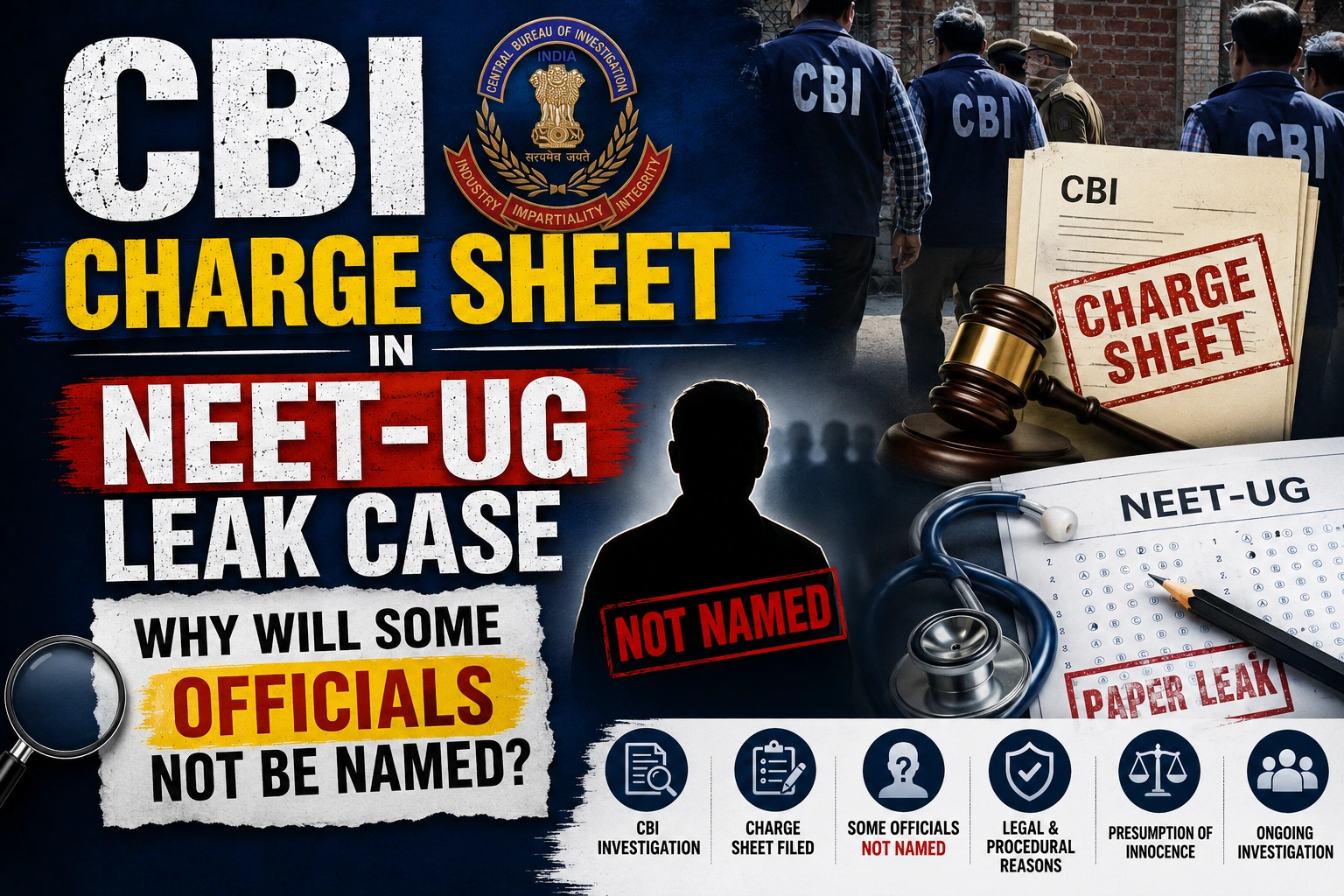
Among India’s examination-related controversies, the NEET-UG Leak Case is at the forefront. It brings the investigation into the integrity of examination processes, security and accountability. The Central Bureau of Investigation (CBI) is tasked with investigating the alleged NEET-UG paper leak, and is now reviewing the conspiracy, routes for accessing confidential examination papers, and the various links to the malpractice.
With the filing of the CBI charge sheet in the NEET-UG case, there is much speculation for students, parents, and education professionals with special focus being placed on whether examination process related senior officials will be named. Legal experts suggest that unless direct evidence for government officials’ involvement in the leak conspiracy is found, they will not be named.
The NEET-UG related crisis has impacted thousands of medical examination candidates with hopes for placement in medical programs. Additionally, candidates wishing to pursue up-to-date information on the NEET admission process, counseling, and examination may refer to NEET resources.
CBI Probe of the NEET-UG Leak Case
The NEET-UG examination is conducted by the National Testing Agency (NTA), and is among the largest of India's entry examinations for MBBS, BDS and other medical courses. Allegations of examination-related paper leaks have damaging impacts on the confidence of millions of potential candidates.
After the allegations of malpractices and paper leaks came to light, CBI initiated investigations into the multiple facets of the case. The main focus was on the candidates, middlemen and leakers, as well as those who accessed the sealed question paper.
As part of the ongoing investigation, CBI was said to have interrogated several accused persons, obtained digital evidence, enhanced the formal interrogations of the accused and investigated the financial records associated with the alleged leak syndicate. The CBI aims to substantiate the entire timeline of evidence before submitting it to the honorable court.
A charge sheet contains pieces of evidence, statements of witnesses, and the crime the accused persons have committed. However, the fact that a charge sheet has been submitted does not imply that the entire examination system will have accused persons.
Why are the Examination Officials not Accused Persons in the CBI Charge Sheet?
One of the most important questions that arises from the NEET-UG paper leak case is with regard to the examination officials who will not be named as accused persons in the CBI charge sheet.
The most plausible reason is that criminal liability requires that there be evidence of the commission of the crime. Being associated with a system or being in a top level management position is not sufficient to hold that person liable for a criminal conspiracy.
Generally, in order for a person to be named an accused, it has to be proven that the person:
- Was directly involved in the leak of the secret information.
- Assisted the criminals in obtaining the restricted examination materials.
- Participated in a plot to obstruct the examination system.
- Obtained monetary or other advantages from transnational crime.
- Purposefully breached rules to enable a crime.
If investigators fail to identify such evidence, the officials may be called in to testify, or they may not be included in the accused person list.
Engaging in massive assessments like the NEET-UG involves thousands of people from different departments. The responsibility to maintain security is divided among various layers, including authorities of the examination, partners in technology, printing, transportation, and local administration. Identifying negligence and proving criminal intent are two separate issues from a legal standpoint.
Administrative Lapse vs. Criminal Offense
The most important reason for not including officials in the charge sheet is the distinction between administrative lapses and criminal misconduct.
If a particular procedure is discovered to have been not properly performed during an investigation, it is likely to be considered an administrative failure. For example, poor monitoring, inadequate coordination, or mishandling of examination materials may warrant some action at the departmental level.
However, administrative failures may not constitute criminal failures. The investigating agency should prove that the person actively aided and abetted the crime.
For that reason, officials may be subjected to internal inquiries and may be disciplined or criticized at the level of policies without becoming accused in a criminal case.
NTA and Examination Security
The National Testing Agency has been charged with the conduct of the NEET-UG examination in India. The agency employs a number of security measures to ensure confidentiality, including regulated movement of question papers, secure storage, and system-based monitoring.
Exam procedures, eligibility, and admissions are major concerns for students preparing for medical entrance exams. MBBS Advisor is one of the platforms that provides tailored guidance for students interested in medical careers, offering information on medical education and the NEET exam.
The NEET exam is one of the most significant for admissions of prospective medical students. In addition to needing a competitive score, applicants must have guidance for selecting colleges, counseling, and other options such as studying MBBS abroad.
After the NEET-UG controversy, the exam security system came under criticism. Many experts predict the need for robust security and monitoring technologies for other future exam systems.
Legal Process After Charge Sheet is Filed
Once the charge sheet is submitted by the CBI, the case is opened to the judicial system. The court receives the evidence and then assesses the decision made by the investigation agency to see if the case is pursuable.
Defending and disputing the evidence is a right of the accused. The court hears the case and then makes a decision.
Although the charge sheet has been filed, investigations may continue. New evidence is a cause for the agency to continue their work or submit new evidence to the court.
The Reaction of Medical Students to the NEET-UG Leak
The NEET-UG leak controversy has sowed doubt among aspiring medical students. While many students who dedicated themselves to their goal are deserving of admission, the exam introduced significant stress and a lack of transparency.
NEET opens the door to the future doctors for many aspirants. It is imperative to have a just test system to guarantee that students are granted admission opportunities based on merit and on their correct performances.
There are several tools that students can use to better understand their chances of admission based on their performance, such as the NEET Rank Predictor, which predicts their potential rank.
The ongoing controversy demonstrates the value of choosing trusted sources when seeking NEET information.
Importance of Transparency in Medical Admissions
The credibility of the entrance examination and the quality of the education system becomes compromised when the admission system for a highly public based profession like medicine becomes opaque.
The National Medical Commission (NMC) is a prime authority in the regulation of the profession and manages the quality of medical education in India.
The WHO and WDOMS provide frameworks through which international medical education can be congruent with medical school transparency and recognition.
Future Steps After NEET-UG Leak Investigation
The case exemplifies the need for better control of examinations. In addition to finding the culprits of this event, it is necessary to implement preventive measures of the same.
Some of these control measures may be more thorough security procedures, strict supervision of the controlling and regulating agencies, and more modern control systems designed from new technologies and with higher responsibility.
For students, the suggestion is to look to the future and use only information that can be verified. NEET still remains the most used system for admission to medical colleges across all states in India.
Conclusion
The CBI charge sheet in the NEET-UG leak case indicates the investigation has made notable progress. The lack of naming officials has no relation to whether the examination system was working or not. It simply means there are no criminal acts without evidence of someone doing something against the law.
Officials can be subject to questioning and can be investigated or reviewed for administrative accountability, but they can only be accused of a crime when there is adequate evidence to support the claim.
The investigation has shown there is a need for transparency, safety, and justice in a systemic way for the national examinations. For millions of students who are aspiring to be medical practitioners, having a transparent NEET system is the key to protecting their future and preserving their trust in the medical educational system of India.