
 Russia
 Belarus
 Georgia
 Kazakhstan
 Kyrgyzstan
 Uzbekistan
 China
China Nepal
Nepal Bangladesh
 Poland
 Romania
 Slovakia
 Hungary
 N. Macedonia
 Vietnam
 Canada
 Armenia
 UK
UK Australia
 USA
USA Ireland
 Germany
 New Zealand
 Italy
Italy France
 Singapore
 Netherlands
 Sweden
 Switzerland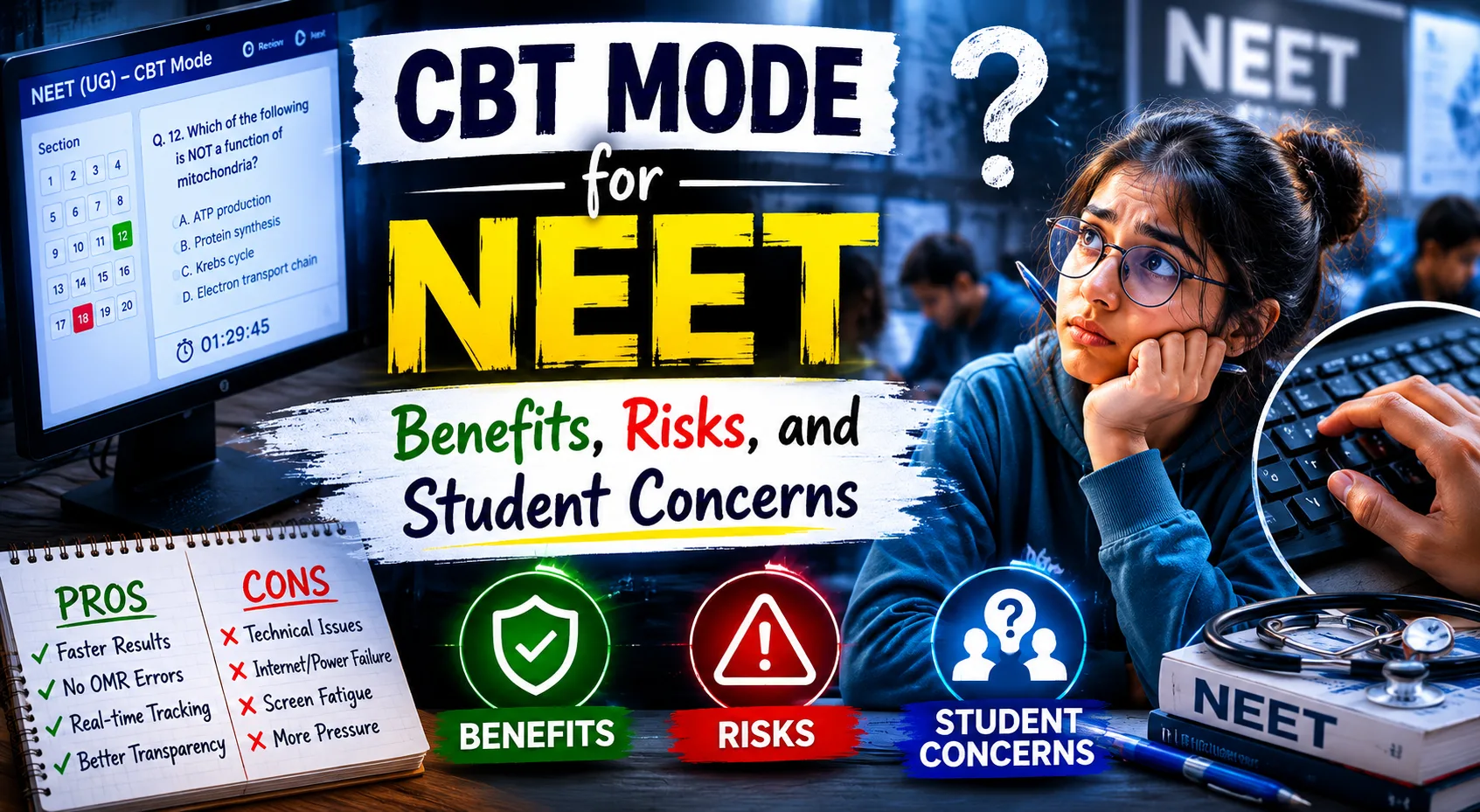
As India’s most competitive national-level medical entrance exam, hosted by the National Testing Agency (NTA) and regulated by the National Medical Commission (NMC), NEET receives over 2 million applications every year. Candidates compete for admission to medical programs including MBBS, BDS, and AYUSH, and the exam directly shapes the career prospects of medical aspirants across the country.
In recent years, however, NEET has been hit by a series of serious violations including question paper leaks, organized cheating, and impostor test-taking, which have severely damaged the exam’s transparency and public credibility. This has sparked widespread industry debate over converting NEET to the Computer-Based Test (CBT) model.
Many experts argue that CBT can greatly reduce the risk of question paper leaks and comprehensively improve exam administration security, but can CBT fully eliminate all unfair practices? The answer is far from a simple yes or no.
Problems With the Traditional Offline Exam Model
The previous offline pen-and-paper exam had to complete a full process of printing, transportation, storage, and distribution to thousands of test centers across the country.
Major Vulnerabilities in Offline Exams
Vulnerabilities existed at every stage involving:
- Printing factories
- Logistics providers
- Storage institutions
- Local exam management teams
Combined with the huge scale of over 2 million test-takers, achieving full-process transparency for the offline model was nearly impossible.
Question paper leaks not only harm the core interests of honest candidates who spent years preparing for the exam, but also continuously erode the overall public trust in India’s medical education system.
What Is Computer-Based Testing (CBT)?
CBT is an online computer-based exam that replaces traditional paper test papers. Candidates complete their exams on a secure system at designated test centers.
Currently, CBT has been successfully adopted for most major exams in India, including:
- JEE Main
- CAT
- CUET
- Banking recruitment exams
- GATE
Proving it has mature large-scale implementation feasibility.
Encrypted electronic test papers are only transmitted to test centers shortly before the exam starts, which drastically reduces the number of physical contact points for the test materials.
Core Advantage of CBT
Its first core advantage is that it eliminates the need to transport paper test papers nationwide, thus avoiding the risk of question paper leaks at the multiple nodes that plague offline exams.
Experts widely agree that this model can drive NEET to upgrade toward a safer, more transparent, and technology-enabled direction.
Core Security Advantages of CBT
This study first sorts out the core security advantages of computer-based testing (CBT).
Its technical framework enables the transmission of encrypted test papers to terminals at each test site only a few minutes before a test starts, which fully avoids the risks of human intervention across the entire chain of test paper printing, transportation and storage that plagues traditional paper-and-pencil tests, and greatly reduces the high probability of internal test question leaks.
End-Side Encryption and Tamper Protection
The system includes end-side encryption and tamper-proof mechanisms to secure examination terminals.
Randomized Question Bank Distribution
The question bank distribution logic supports random test assembly across different regions, reducing organized cheating opportunities.
Real-Time Behavior Traceback System
The behavior traceback system records real-time screen activity during tests to identify suspicious activities.
These three modules together build a security line that far outperforms that of paper-and-pencil tests.
Major Challenges in Implementing CBT for NEET
However, when this technical framework was implemented in the scenario of India’s national-level medical entrance examination NEET, it exposed a series of implementation challenges that had not been fully anticipated.
As an ultra-large-scale public recruitment examination that serves millions of test-takers from urban and rural areas every year, NEET faces several practical issues.
Uneven Network Coverage
NEET faces uneven network coverage stability across test sites across India; some test sites in remote rural areas can barely support the real-time loading of encrypted test papers.
Lack of Digital Skills
Some test-takers in less developed regions lack sufficient digital operation skills.
New Forms of Online Cheating
There is also a need to guard against the infiltration of new types of online cheating methods targeting CBT terminals.
All these practical constraints have greatly weakened the framework’s originally strong technical security advantages.
Can Any Exam System Completely Eliminate Cheating?
Finally, this study clearly puts forward that no single examination system can 100% eradicate cheating.
All technical solutions can only be adapted and adjusted to their specific implementation scenarios to narrow the feasible space for cheating, rather than achieving an absolute state of zero cheating.
Anti-Cheating Benefits of CBT
This paper focuses on India’s national competitive examinations such as the National Eligibility cum Entrance Test (NEET), and analyzes the anti-cheating value, implementation requirements, and practical pathways of introducing computer-based testing (CBT) for these assessments.
Four Major Types of Cheating Reduced by CBT
CBT can drastically reduce the risks of four core types of exam cheating:
- Physical test paper leaks
- Large-scale copying
- Organized cheating
- Test impersonation
While significantly raising the difficulty and cost of carrying out cheating.
Technology Alone Cannot Solve Every Problem
However, it is critical to guard against the cognitive misconception that “technology can solve all problems”; a single technical tool cannot resolve the systemic issue of lackluster on-the-ground implementation.
Five Non-Technical Requirements for Success
A viable solution must be paired with five non-technical prerequisites:
- Strong governance
- Transparent administration
- Strict legal accountability
- Secure infrastructure
- A formal accountability mechanism
Successful CBT Transitions in India
India has already seen three major large-scale exams successfully transition to CBT:
- JEE Main
- CAT
- National bank recruitment exams
Their practical outcomes fully confirm that properly compliant CBT can effectively improve exam security.
Proposed Hybrid Reform Pathway for NEET
In response to NEET’s need for security upgrades, this paper organizes the hybrid reform pathway proposed by education experts.
Nine Suggested Reform Measures
The reform framework lists 9 specific measures covering both technical and management dimensions.
Multiple Exam Sittings and Score Standardization
It also supplements an operational stress-reduction plan that combines multiple exam sittings with score standardization.
Role of National and Global Medical Authorities
Drawing on the regulatory functions of India’s National Medical Commission, the World Health Organization, and the World Directory of Medical Schools, this paper demonstrates the core value of a secure, transparent NEET system for upholding the global reputation of India’s medical education and guaranteeing a fair pool of qualifying applicants.
Future Technologies for Exam Security
Looking ahead to the broader digitalization trend for competitive exams, six types of cutting-edge technologies including remote AI proctoring and blockchain-based test question protection can all be adopted in the coming years.
NEET is expected to align with international standards for digital testing, while the negative emotions that past test paper leak scandals have caused among test-takers—such as anxiety and distrust—can be gradually mitigated through a robust CBT system.