
 Russia
 Belarus
 Georgia
 Kazakhstan
 Kyrgyzstan
 Uzbekistan
 China
China Nepal
Nepal Bangladesh
 Poland
 Romania
 Slovakia
 Hungary
 N. Macedonia
 Vietnam
 Canada
 Armenia
 UK
UK Australia
 USA
USA Ireland
 Germany
 New Zealand
 Italy
Italy France
 Singapore
 Netherlands
 Sweden
 Switzerland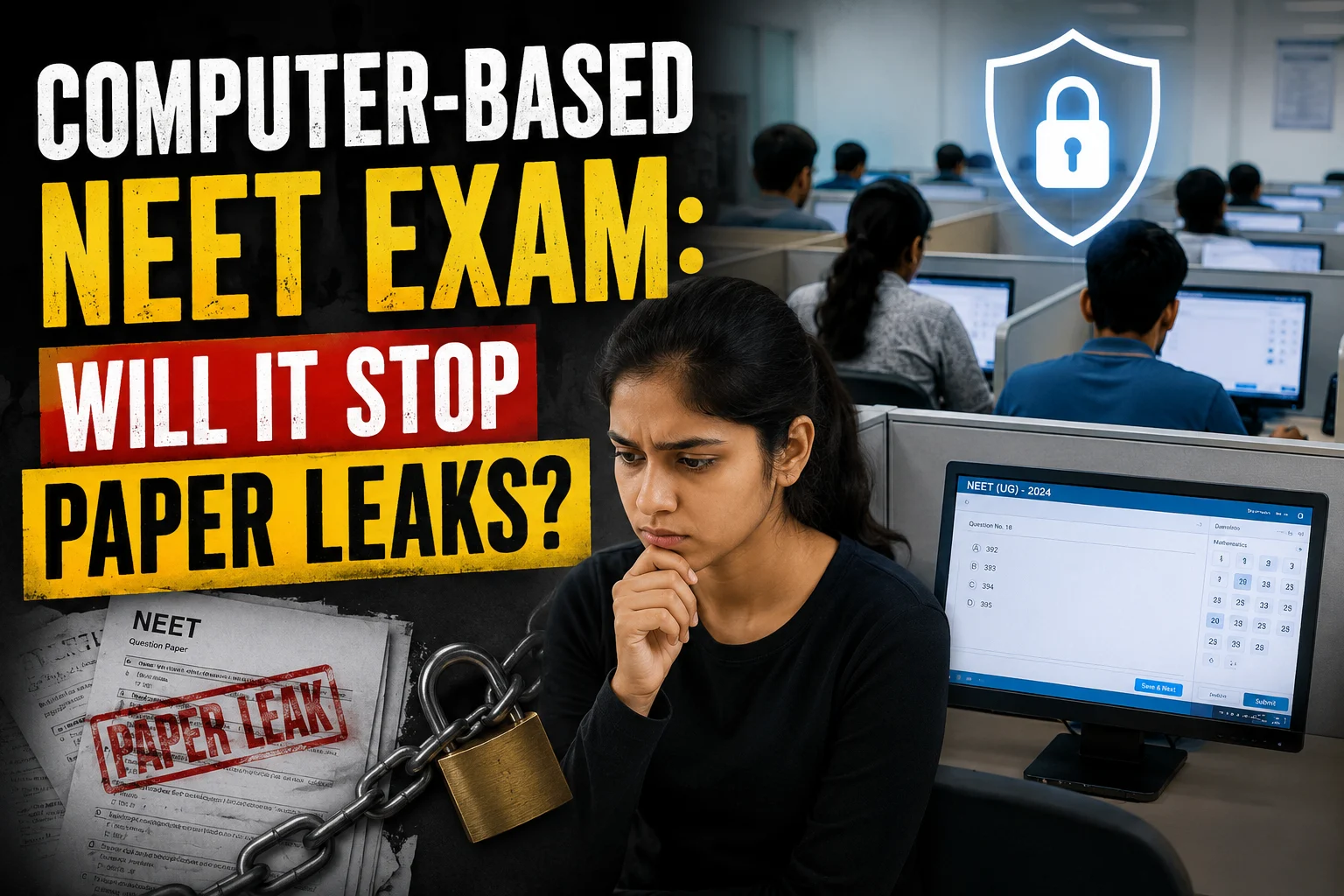
NEET is one of India’s largest and most competitive medical entrance exams, with millions of candidates sitting the test every year. In recent years, NEET has been repeatedly caught up in violations including question leaks, mass organized cheating, and proxy test-taking. These incidents have not only severely undermined the credibility of the exam itself; multiple other national-level exams across India have also been hit by organized cheating scandals one after another, driving persistent and widespread public demand for reform of the country’s exam system.
The Most Closely Watched Reform Proposal
The most closely watched reform proposal is a full shift of NEET to the CBT model, a plan that has sparked sharply divided stances for and against it:
- Supporters argue that CBT can drastically reduce the risk of question leaks and improve transparency across the entire exam process.
- Critics worry that gaps in supporting infrastructure for the new technology and India’s existing digital divide could trigger new fairness issues.
The harm of question paper leaks is far from a minor problem limited to isolated cases; it completely erodes the foundational integrity of exams, and also infringes on the college admission rights of high-achieving candidates who prepare diligently for the test.
The fully physical workflow of traditional pen-and-paper exams—from printing, transporting, and storing question papers at test centers to distributing them on exam day—carries potential security vulnerabilities at every single node. If any link in the chain fails and leads to a question leak, the fairness of the entire exam is completely destroyed.
How CBT Works and Why It Is Considered More Secure
CBT, which requires candidates to complete their responses via a computer system, replaces the traditional model of filling out OMR answer sheets. Its workflow fully automates all stages:
- Questions are displayed on screen
- Answers are selected digitally
- Submitted responses are encrypted and stored in real time
- Timekeeping and exam navigation are fully automated
India has already successfully implemented the CBT model for national-level exams in engineering, management, and civil service recruitment, so the model’s local feasibility has been verified.
Two Core Reasons CBT Can Lower Question Leak Risks
The core reasons CBT can effectively lower the risk of question leaks rely on two key mechanisms:
Elimination of Physical Question Papers
It eliminates physical question papers entirely, removing the risks of internal leaks and unauthorized access that come with moving physical materials across the entire workflow. Exam questions are only uploaded to an encrypted secure server a very short time before the exam starts, drastically shrinking the window of opportunity for bad actors to leak questions.
Question Randomization
It uses question randomization:
- The order of questions differs for every candidate
- The sequence of answer options differs for every candidate
Drawing on a large-scale question bank, the system can generate a huge number of unique test papers in real time, greatly raising the barrier to carrying out organized cheating.
Core Advantages of Applying Computer-Based Testing (CBT)
This study first sorts out three general core advantages of applying computer-based testing (CBT) to large-scale national-level exams:
Improved Grading Efficiency
It greatly improves grading efficiency and reduces error rates in manual scoring.
Reduced Risk of Question Leaks
The mechanism of randomly pulling test questions from a question bank can reduce the risk of exam question leaks from the source.
Innovative Question Formats
It can adapt to innovative question types such as audio and video items, expanding the dimensions for assessing test-takers’ abilities.
Challenges in Implementing CBT for NEET
Subsequently, this study shifts its focus to the implementation scenario of India’s national medical entrance exam NEET, and points out that converting this exam to the CBT model faces five core implementation challenges.
Digital Infrastructure Gap
The gap in digital infrastructure coverage between urban and rural areas in India remains a major obstacle.
Unstable Power Supply
The stability of power supply at remote test sites continues to be a concern.
Lack of Computer Proficiency
There is a lack of computer proficiency among a large number of test-takers.
Technical Adaptation Costs
The cost of technical adaptation for exam administration scheduling to support a test-taker scale of over one million is extremely high.
Resistance Due to Traditional Systems
Resistance to interest coordination stemming from path dependence on the traditional paper-based exam model may slow reform implementation.
Necessary Supporting Conditions for Successful CBT Implementation
This study also cites the public stance of India’s national digital information regulatory agency to add that for CBT to be successfully implemented for NEET, four necessary supporting conditions must be fully in place:
Robust Network Security
An end-to-end robust network security protection system is essential.
Transparent Exam Management
A transparent exam management mechanism that keeps traceable records of all processes must be implemented.
National Encryption Standards
A security software system that meets national encryption standards is required.
Real-Time Monitoring
A real-time continuous monitoring link that covers all test sites must be maintained.
Technology Alone Cannot Guarantee Fairness
This study specifically corrects the common cognitive misconception that “technology alone can guarantee exam fairness.”
By comparing the inherent leak risks of traditional paper-based test papers with the encrypted digital system adopted by CBT, this study emphasizes that technology cannot sustain exam fairness on its own; it must be paired with a sound governance framework and a workable accountability system.
The study completes a full-dimensional foundational analysis of NEET’s conversion to the CBT model as a whole.
Role of Global and National Medical Education Authorities
The World Directory of Medical Schools , a universal accreditation tool for the global medical education field, is used to verify the qualifications of all internationally recognized medical schools.
The entire process of India’s domestic medical education is uniformly regulated by the National Medical Commission.
At present, India is making full efforts to advance the modernization of its local medical exams, and all stakeholders’ stances, implementation plans, and potential risks related to computer-based testing (CBT) have been clearly sorted out.
Student Opinions on CBT-Based NEET
Clear divisions exist among the student population.
Supporters of CBT Highlight Four Advantages
Supporters argue that CBT has four core advantages:
- Transparent and efficient procedures
- Low cheating rates
- Strong security
- Fast score release
Opponents Raise Four Major Concerns
Opponents raise four key concerns:
- The risk of unexpected technical failures
- Insufficient computer operation skills among some test-takers
- Intensified exam anxiety
- Inherent situational disadvantages for rural test-takers
All students jointly recommend that a national-scale CBT practice test be rolled out before the official launch of the formal exam.
Hybrid Exam Model as an Alternative Solution
Some experts have proposed a hybrid exam model, to be implemented through three measures:
- Holding multiple small test sessions
- Using different versions of test papers
- Strengthening full-process exam security
This model can both ease the infrastructure pressure across the country and gradually improve exam security.
Multiple competitive exams around the world have successfully adopted multi-session CBT, proving the model’s feasibility.
Role of AI in Exam Security
AI can be applied to four scenarios for exam security:
- Identifying suspicious behavior patterns
- Detecting cheating acts
- Monitoring test-takers’ real-time movements
- Flagging abnormal answer trends
Though boundaries around ethics and privacy protection must be respected.
Previous chaos caused by exam leaks has triggered test-takers’ anxiety, distrust of the exam system, and concerns over unfair competition. Many medical test-takers obtain exam-related information through the World Health Organization guidelines and trusted educational consulting platforms such as MBBS Advisor.
Additional Supporting Reforms Suggested by Experts
Other experts have put forward five supporting reforms:
Strengthening Cybersecurity
Cybersecurity systems must be continuously upgraded and audited.
National Uniform Practice Tests
A national uniform practice test should be rolled out before official implementation.
Upgrading Rural Infrastructure
Infrastructure in remote areas must be upgraded to ensure equal access.
Combined Monitoring Systems
Combined physical and digital monitoring systems should be implemented.
Transparent Investigation Mechanisms
A rapid and transparent investigation mechanism must be established for handling complaints and suspected leaks.
Conclusion
NEET, India’s core medical exam, has a promising outlook for its digital transformation, and digital exams are expected to become the standard format for large-scale competitive exams in India.
Regarding the reform to implement computer-based testing (CBT) for India’s NEET exam, all related adjustments must follow the overarching principles of being gradual, inclusive, and cautiously planned.
Beyond preventing exam question leaks, the reform’s core goals also include:
- Guaranteeing equal opportunity
- Fair evaluation
- Transparent procedures
- Protecting test-takers’ trust
While CBT cannot completely eliminate exam fraud, it can substantially improve exam security through encryption, randomization of test questions, and digital monitoring; however, it also brings new challenges related to cybersecurity and infrastructure compatibility.
Stakeholders must never fall into the misassumption that technology can solve all problems. Supporting measures including strong administrative capacity, accountability mechanisms, cybersecurity safeguards, and equal access conditions are required.
Fairness, transparency, and test-takers’ confidence must always be prioritized, and the success of the reform hinges on the ability to balance technology application, service accessibility, and public trust.