 Russia
 Belarus
 Georgia
 Kazakhstan
 Kyrgyzstan
 Uzbekistan
 China
China Nepal
Nepal Bangladesh
 Poland
 Romania
 Slovakia
 Hungary
 N. Macedonia
 Vietnam
 Canada
 Armenia
 UK
UK Australia
 USA
USA Ireland
 Germany
 New Zealand
 Italy
Italy France
 Singapore
 Netherlands
 Sweden
 Switzerland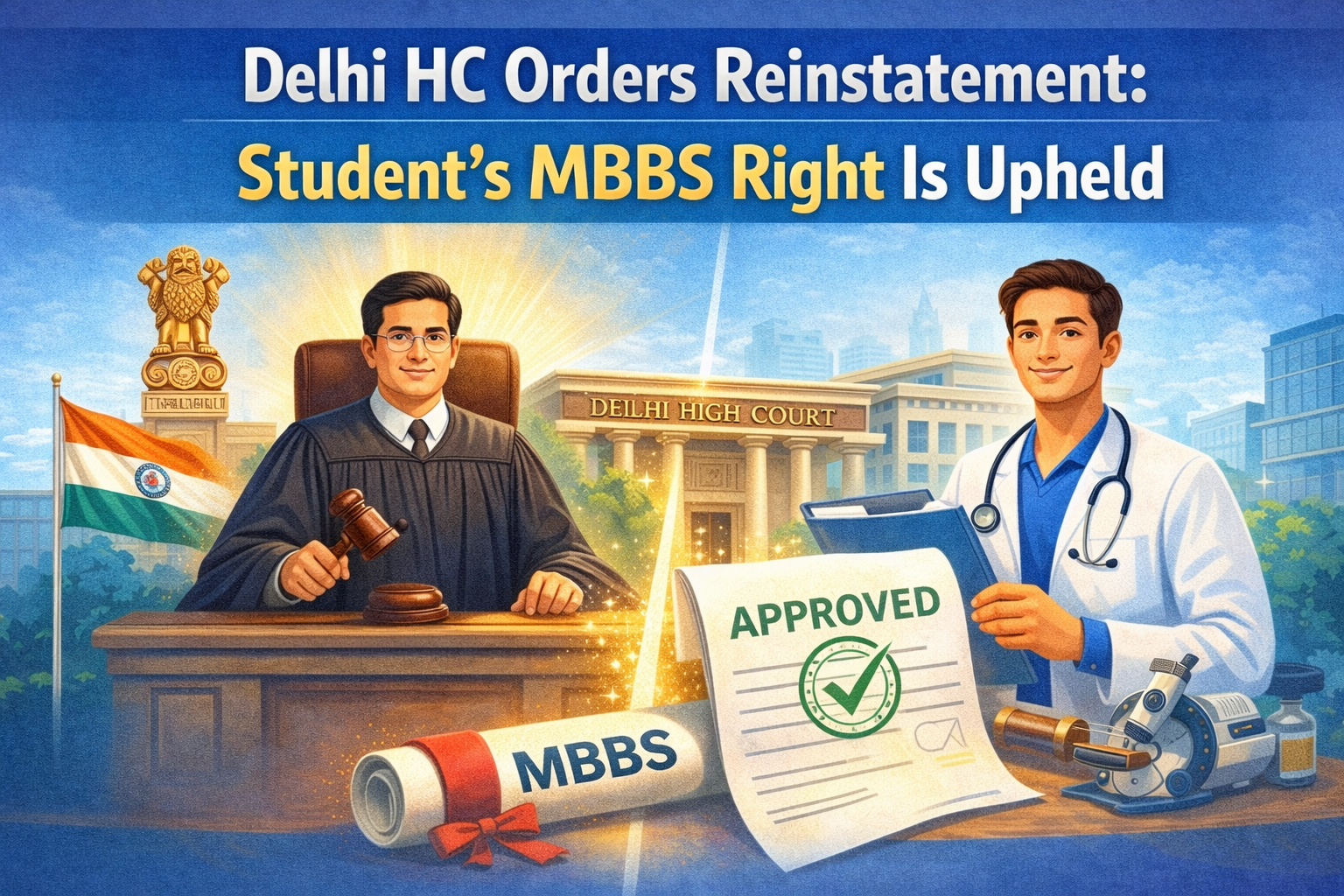
The interim order of attachment recently passed by the Delhi High Court-cum-GTU students’ re-admission has landed up becoming a ‘cause’ reverberating at the national level. How indispensable is it to protect the right of medical education (MBBS, etc.) of a meritorious candidate once admitted? This ruling reaffirms that education in general and professional courses like MBBS/MD is a matter that cannot be interfered with, arbitrarily, without there being any strong legal foundation.
This ruling could bear heavily on aspiring medicos, colleges, and regulators at a time when entrance tests and admissions are under scrutiny.
Background and Context
Medical admissions in the country are predominantly carried out through competitive exams, and NEET-UG is the gateway to secure MBBS admission under government medical colleges as well as private institutions. When a student passes the test and is admitted through proper counseling, his admission makes it a valid academic right.
In that situation, the student’s admission had been revoked for administrative reasons, while there were no findings of wrongdoing or admissions made against him. The HC took notice of the fact that such a practice impinges upon students’ academic future and professional career as well, which reflects that strong evidence has to support it, following the lawful procedure.
The order also made it amply clear that authorities in the field of education cannot take extreme steps such as cancellations unless misconduct or breach of admission rules is established.
The Right to Education and Judicial Reasoning
Although the Constitution of India does not directly recognize a right to free and compulsory education for children at the level of education beyond elementary school, the courts have repeatedly interpreted higher education as part of the right to life and human dignity. The Delhi High Court emphasised that access to professional education, such as MBBS, is required to be insulated against random acts by the authorities.
The court stressed three broad principles:
- Merit should be honoured – A student who clears the national entrance test is entitled for legitimate right to education.
- The cardinal principle of natural justice – No student should be punished without following the due procedure of law, no matter who s-he is.
- Academic progression becomes vital – The incidence of an abrupt transition, such as those brought about in a medical programme, can have a long-term impact on the career of a student.
Impact on Medical Aspirants
For the lakhs of students preparing to write the NEET every year, this decision comes as a shot in the arm. The judgment establishes the principle that even if they gain admission through due process, a student’s academic career cannot be terminated without compelling, demonstrable reasons.
Medical education involves:
- Long duration of study
- Heavy financial investment
- Emotional and academic commitment
Any unfair delay not only elongates graduation time but also influences internship, postgraduate entrance, and career plans. The court’s ruling prevents students from being unreasonably penalized because of a bureaucratic or administrative failure.
Role of Medical Regulatory Authorities
Medical schools and admissions in India are regulated by the National Medical Commission, which is the governing body that limits the utilization of the medical curriculum to licensed physicians. Institutions must adhere to the rules laid out by the commission, such as admissions policies, membership qualifications, and discipline.
This sentence also indirectly strengthens the burden of regulators to:
- Protect student interests
- Ensure transparent admission systems
- No over-punitive or too early punishments
Clear laws such as this support confidence in the framework of regulation for medical education.
Importance of Degree Recognition
A medical degree is worth only if it’s recognized and valid for registration and practice. For Indian medical graduates, recognition by the NMC is mandatory for anyone to be able to practice as a doctor.
For students who intend to pursue international careers, their college should also be listed in the World Directory of Medical Schools. This register is important for those applying to foreign licensing authorities and postgraduate studies overseas.
The following are the effects of the delayed education of a student caused by erroneous rejection:
- Eligibility for postgraduate entrance
- Internship completion
- International mobility
- Career continuity
The court’s ruling safeguards these longer-term academic and professional rights.
FMGE and Global Pathways Implications
Students studying medicine abroad also need to pass the Foreign Medical Graduate Examination to practice in India. While this case is about the admissions process of MBBS within the country, it exemplifies a golden rule – the bona fide of an academic career travelled while rightfully admitted cannot be trifled with.
Whether depending on studies in India or abroad, our students need consistent recognition and continued education to progress towards clinical practice and super-specialist training.
Need for Transparent Admission Systems
The same case also reveals the need for having:
- Clear counselling procedures
- Strong verification systems
- Fair inquiry mechanisms
Instead of aborting admissions ahead of time, schools should complete the following:
- Proper investigation
- Written justification
- Legal compliance
As a consequence of this, not only the students but also other stakeholders, including medical colleges and entrance exams, stand protected.
Guidance for Medical Aspirants
Students and parents may find medical education laws and regulations difficult to comprehend. Some of the platforms, like MBBS Advisor, assist aspirants by offering the following:
- Admission guidance
- College selection support
- Counselling updates
- Regulatory awareness
Such support helps students remain aware of their rights, responsibilities, and career when they are pursuing the MBBS course.
Broader Educational Significance
The High Court’s decision is not confined to a particular case. It marks an important precedent as a confirmation that:
- Students must never be inadvertently treated as collateral damage in administrative feuds.
- Professional education deserves to be insulated from capricious trespass.
- Legal protections also exist in educational settings.
That builds confidence in the judicial system to defend student interests.
Conclusion
The Delhi High Court’s decision to allow an MBBS student back to her course is a robust assertion of education entitlements and merit as a basis for entry into professional courses. It also affirms that when a student is admitted through legitimate means, he or she cannot be retroactively punished without evidence and due process.
However, for medical aspirants, the judgment has underscored the need to select recognised institutions through the right counselling process and also keep oneself informed about regulatory regimes, both under a new body called the National Medical Commission (NMC) and international listings such as the World Directory of Medical Schools. It also highlights the importance of well-informed mentorship platforms like MBBS Advisor in the maze of medical education.
This ruling is a win for fairness, legality, and student rights in the medical education system of India, where no academic dream will be shattered by administrations perceiving a monopoly on doing as they wish with students.