 Russia
 Belarus
 Georgia
 Kazakhstan
 Kyrgyzstan
 Uzbekistan
 China
China Nepal
Nepal Bangladesh
 Poland
 Romania
 Slovakia
 Hungary
 N. Macedonia
 Vietnam
 Canada
 Armenia
 UK
UK Australia
 USA
USA Ireland
 Germany
 New Zealand
 Italy
Italy France
 Singapore
 Netherlands
 Sweden
 Switzerland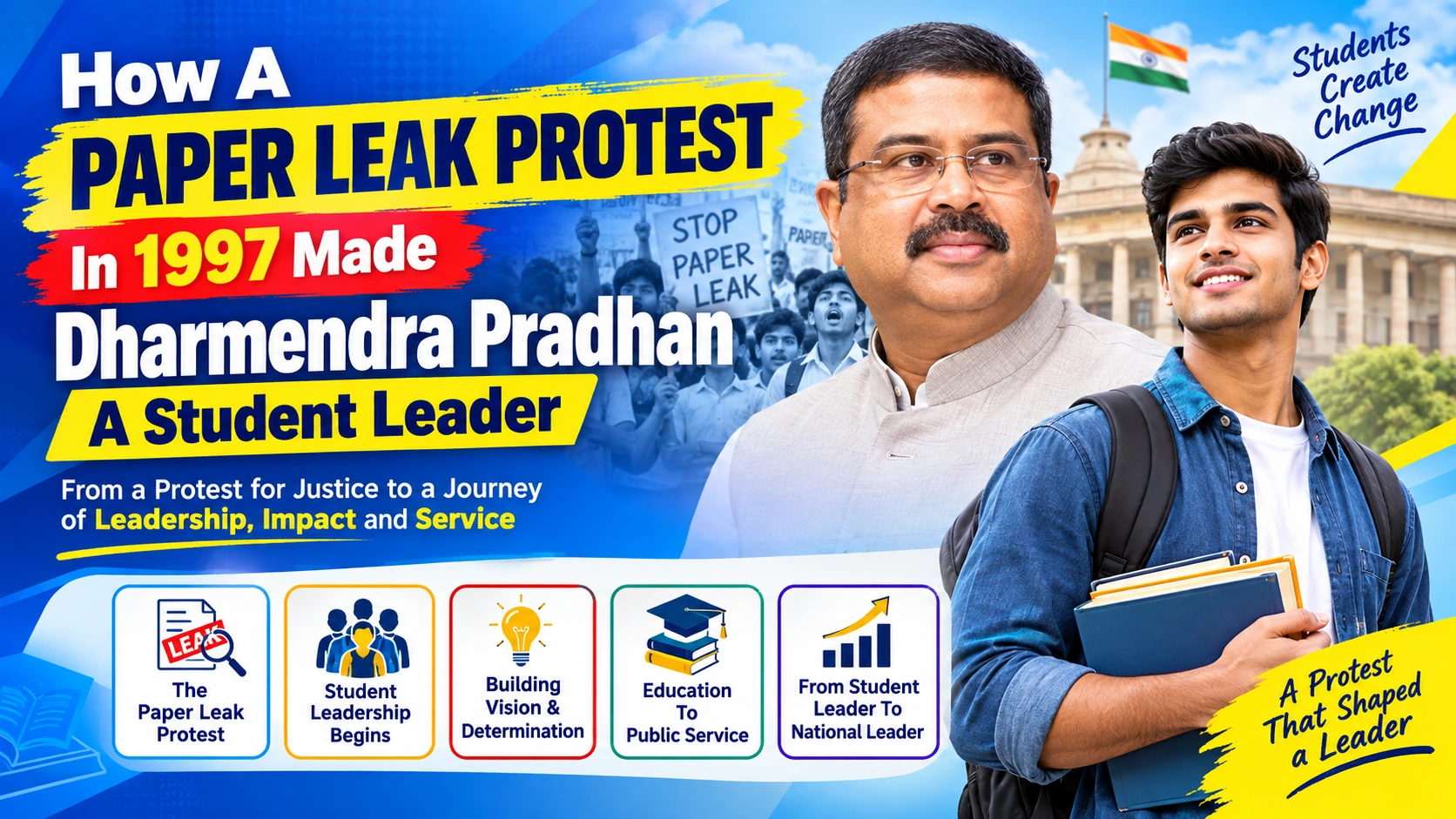
There's a kind of story that never makes it into official biographies. I was sitting with a retired Sambalpur University professor a few years ago — this was 2019, over chai at a small dhaba near the campus — and he told me something I hadn't read anywhere. He said that the students who actually change education policy in this country aren't the ones who topped their exams. They're the ones who got angry about something unjust, stood up in public, and refused to sit down. He was talking, without naming him directly, about a specific protest in 1997. About a young man named Dharmendra Pradhan.
The Paper Leak That Cracked Odisha's Academic Calm
1997 was not a quiet year for Odisha's education system. Question papers for a key examination had been leaked — an old, shameful story that Indian students know too well. Anyone who has followed NEET controversies over the last decade knows the particular rage that paper leaks generate. It isn't just about losing marks. It's about watching trust collapse in real time, watching the students who studied through power cuts and shared textbooks get betrayed by the very system that promised them a fair shot.
Dharmendra Pradhan was a student at Ravenshaw College in Cuttack then. Not a nobody. He was already involved in ABVP — the Akhil Bharatiya Vidyarthi Parishad — and had been sharpening his student politics instincts for a few years. But the paper leak gave him something different: a cause that didn't need any ideological framing. It was simply wrong, and students knew it.
What He Actually Did — And Why It Mattered More Than The Protest Itself
He led the agitation. Took it to the streets. Ravenshaw's campus in Cuttack, which I've visited twice and which carries that heavy colonial-era architecture that makes you feel like history is always just one corridor away, became a flashpoint. The protest wasn't polished. It wasn't a press conference with prepared statements. It was students genuinely furious, and Pradhan channeling that fury into organized pressure on the university administration and state officials.
I've spoken to student union leaders from that era across different states — Patna, Bhopal, Hyderabad — and what they consistently tell me is that the paper leak agitations of the late 1990s were genuinely radicalized moments. Not violent. But angry in a way that today's student protests, curated for social media, often aren't.
The aftermath mattered more than the protest itself. Pradhan emerged with a reputation — not as a troublemaker, but as someone who could mobilize, articulate student grievances, and hold his ground against administration pressure. That's the kind of credibility that student politics runs on.
From Cuttack Streets To National Education Policy
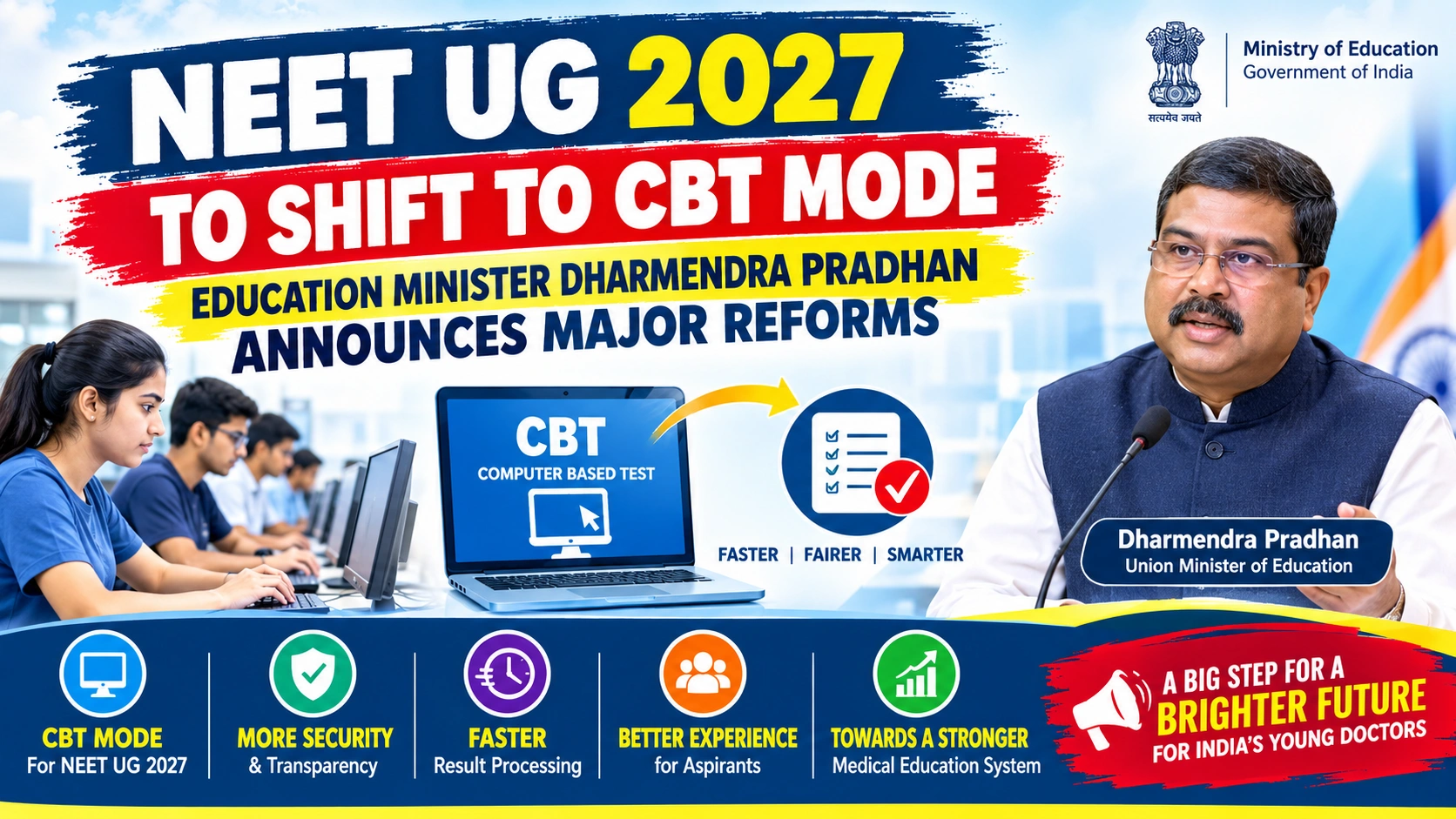
The leap from a college campus in Cuttack to eventually becoming India's Union Education Minister is not a straight line. It never is. Pradhan spent years building through BJP's organizational structure, became an MP, held several ministerial portfolios, and eventually landed the education brief — twice, under different configurations of the Modi cabinet. When he took charge of education, he brought with him a background that almost no other education minister in recent memory could claim: he had actually been on the street side of an academic injustice.
I've seen how that background sometimes informs his public responses to examination controversies. When NEET paper leak allegations resurfaced in 2024 with extraordinary intensity — the NMC system, grace marks controversy, student protests in multiple cities — Pradhan's position was complicated. He was defending the system as a minister. But anyone who tracked his 1997 history understood there was a different layer to his understanding of what examination betrayal does to students.
The NEET Connection Nobody Likes To Talk About Honestly
Here's where I'll be direct, because I think a lot of coverage on this subject skirts around an uncomfortable truth. Pradhan's student activist history doesn't automatically make him the champion of exam integrity that some of his supporters claim. I've spoken to parents outside the NEET exam centers in Lucknow and Patna in recent years — mothers who took the day off work, fathers who drove four hours — and their faith in the system was already threadbare before 2024. A minister's personal history of fighting paper leaks doesn't repair structural problems in an examination infrastructure that needs root-and-branch reform.
Not a damning verdict. Just an incomplete picture if we stop at the biography.
Why Student Politics In The 1990s Produced A Different Kind Of Leader
The 1990s were a specific kind of crucible for student politics in India. Mandal was still burning through public life. Liberalization had just arrived and nobody really knew what it meant for college graduates. Institutions like WHO and global bodies were beginning to set standards that would eventually reshape medical education — creating frameworks that organizations like WDOMS would work within for decades. Students graduating from Ravenshaw or Banaras Hindu University or Osmania in that decade were entering a world that was rewriting its own rulebook.
The leaders it produced were often shaped less by ideology than by specific grievances. A paper leak. A fee hike. A hostel closure. These small, concrete injustices are what pulled people into student politics. Pradhan's 1997 protest is a perfect example of that pattern.
I've written about student politics for over a decade now, and what I keep noticing is that the leaders who came through grievance-based agitations tend to have a different texture to their understanding of institutional failure. Whether they act on it later — that's another question entirely.
What Students Today Can Actually Take From This Story
Here's the thing that I think often gets lost when we celebrate origin stories like Pradhan's. The 1997 protest worked — to the extent it worked — because it was local, specific, and immediate. The students knew exactly what had happened, who was responsible, and what they wanted. There was no consultant involved. No media strategy meeting.
Students today navigating the consequences of examination failures — whether they're considering MBBS Abroad after a difficult NEET cycle, or trying to understand their options through platforms like MBBS Advisor — are dealing with a system of genuinely overwhelming complexity. The stakes feel higher. The pathways feel more opaque. And the gap between a student standing in Cuttack in 1997 and a student refreshing their NEET scorecard in 2024 is enormous.
The paper leak protest that shaped Pradhan didn't resolve Odisha's examination problems permanently. It pressured one administration, at one moment. That's what student agitations do. And that is, perhaps, the most honest takeaway from this story.
The Story Doesn't End With The Origin Myth
Political origin stories are seductive. They give us a clean arc — the student who fought the system eventually ran it. But I've learned to be cautious about origin myths in education journalism. They can obscure as much as they reveal.
Pradhan's 1997 protest is real, documented, and genuinely shaped his public identity. What it can't tell us is whether that identity translated into structural reforms when it mattered most — during the examination controversies that consumed his tenure. That judgment belongs to the students who took those exams, waited for those results, and are still waiting for a system that doesn't betray them.Some stories don't have clean endings. This is one of them.