 Russia
 Belarus
 Georgia
 Kazakhstan
 Kyrgyzstan
 Uzbekistan
 China
China Nepal
Nepal Bangladesh
 Poland
 Romania
 Slovakia
 Hungary
 N. Macedonia
 Vietnam
 Canada
 Armenia
 UK
UK Australia
 USA
USA Ireland
 Germany
 New Zealand
 Italy
Italy France
 Singapore
 Netherlands
 Sweden
 Switzerland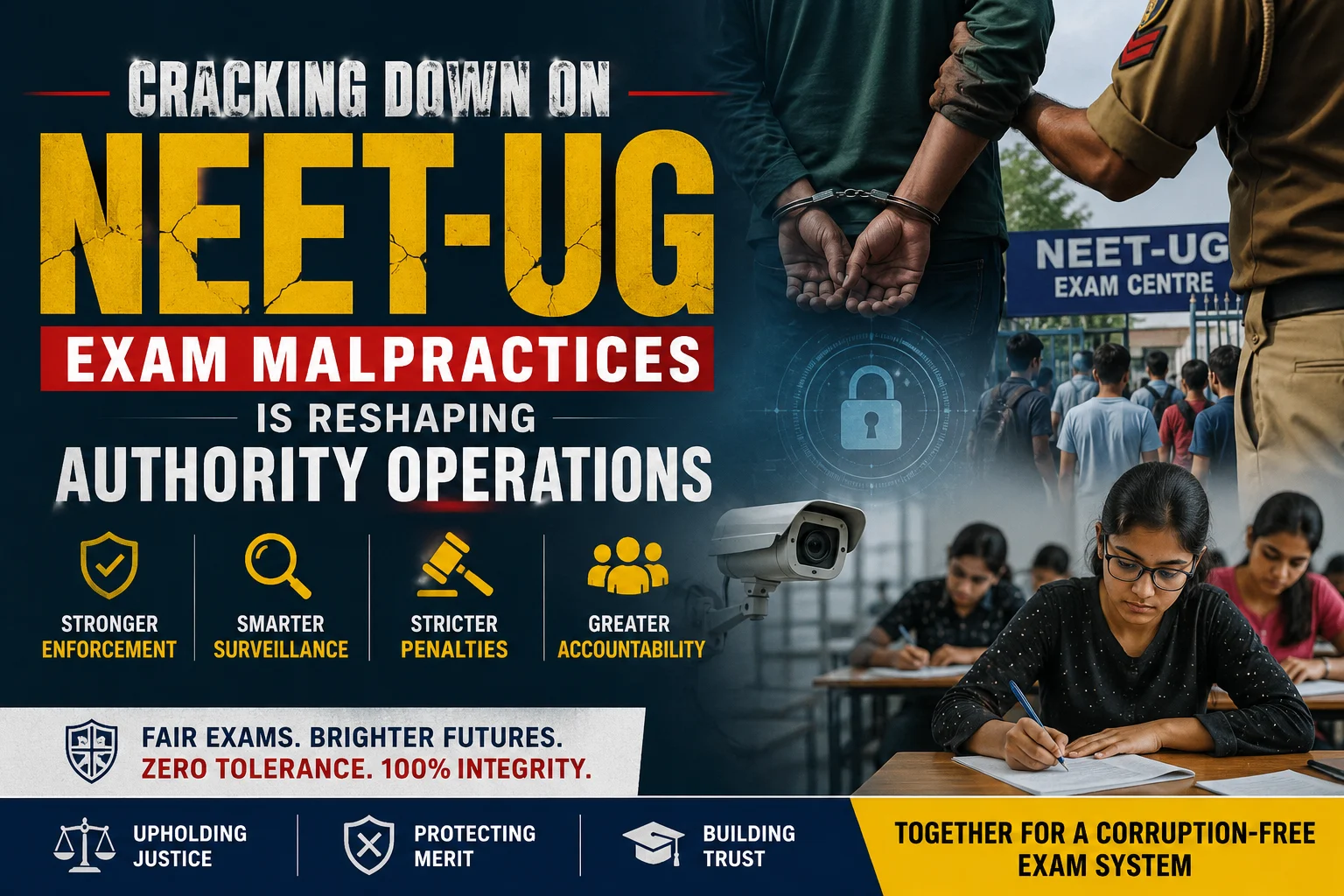
The first step for millions of medical aspirants to secure an MBBS seat is to clear the National Eligibility cum Entrance Test (NEET). Listening to concerns regarding the integrity of the NEET-UG screening process has required addressing fraud rings, impersonation, paper leaks and many other issues.
Malpractice has been met with increasingly innovative countermeasures in the past couple of years. The sophistication of the cheating is matched by the sophistication of the countermeasures in this cat and mouse game. The goal is to ensure deserving students receive the opportunity to study medicine.
The NEET guidance section provides recently updated information regarding the NEET exam. For a NEET Rank Prediction, visit NEET. MBBS Advisor also provides extensive admission guidance and counselling services.
The Challenges Presented by Growing NEET Exam Malpractices
One of the largest exam centers in the world, NEET-UG is taken by more than 20 lakh students and requires ensuring the integrity of exam centers on a massive scale.
Exam cheating tactics have changed throughout history. Traditional methods, like the use of concealed notes or impersonating another test taker, have been joined with cheating methods that involve the use of advanced technology. Some, unorganized, illegal groups have tried to take advantage of different methods, such as leaking test questions, forgery, the use of electronic devices, and illegal networks that utilize technology to communicate between different states.
This undermines the trust in the exam system and harms the honest candidates who prepare for exams for many years. Authorities have recognized this and implemented multiple, special, layered security systems to stop cheating, and bring perpetrators to justice.
Why Is Exam Cheating Important to Medical Admissions?
Because medical education has a direct effect on the healthcare system, and future doctors will have the responsibility of caring for patients, it is of the utmost importance that selected candidates be the most qualified and deserving.
If cheating on admissions is allowed:
- It will decrease trust in the medical system.
- It will create systemic cheating.
- It will reduce the deserving candidates.
- It will harm the reputation of the educational institutions.
- It will reduce the future quality of health care.
Because of this, systems like the National Medical Commission (NMC) have regulated that admissions be transparent and that selection be based on candidates' merits.
What Is New in the NEET-UG Exam Security?
Biometric Verification Systems
Biometric authentication has proven to be a good solution to exam impersonation.
Candidates undergo biometric verification of their identity before they are allowed to enter an exam hall.
This greatly diminishes the odds of a proxy candidate presenting in place of a registered candidate.
Systems that utilize biometric technology provide the examining authority with the ability to:
- Rapidly verify the identity of a candidate.
- Identify attempts at multiple registrations.
- Prevent exam impersonation.
- Secure attendance.
Biometric technology has proven to be a significant and important step in safeguarding the integrity of an exam.
AI-Driven Surveillance and Monitoring
There is greater use of AI and more advanced monitoring technologies by law enforcement to carry out abnormal activity detection.
Modern surveillance systems are able to:
- Track abnormal candidate movements.
- Recognize abnormal communication.
- Recognize behavioral anomalies.
- Identify abnormal activities for immediate review.
These technologies give case examiners a set of tools for providing oversight that did not exist before.
CCTV Coverage at All Examination Centers
Total CCTV surveillance has become a security imperative.
High-resolution filming is ensured at all times and in all places through the positioning of cameras. Filming is an advantage to the investigator when reviewing a case.
The existence of surveillance cameras reduces the likelihood of an examiner attempting to breach security.
Cybersecurity from Leaking Examination Papers
The Digital Threat
The digitization of examination systems has made security a primary concern.
Leaking examination questions can be a complex digital process and include:
- Accessing a server illegally.
- Interoffice communications.
- Encrypted communications.
- Social media posts.
- Dark web postings.
There has been an increase in protection of systems.
Secure Question Paper Management
Modern examination systems provide multiple layers of security for the confidentiality of the content of the questions.
These layers can include:
- Encrypted storage.
- Access control.
- Multi-step authentication.
- Secure transit.
- Data monitoring.
Cybersecurity experts operate as examination system experts. Together they work to secure system vulnerabilities.
Collaboration with Law Enforcement
Fraud investigations of examinations have become the prerogative of multiple authorities.
Included within the overlapping jurisdictions are:
- State police.
- Cybercrime.
- Intelligence.
- Digital Forensics.
- Investigation Specialists.
Coordinated efforts across different agencies improve the speed and efficiency of identifying and prosecuting organized cheating networks.
Legal Actions Against Cheating Networks
Stricter Penalties for Offenders
Crimes related to cheating on exams have met a tougher approach.
Those found to have participated in any exam-related malpractice face:
- Criminal charges
- Fines
- Candidature cancellation
- Future exam debarment
- Imprisonment
To develop a disincentive to participate in malfeasance for both the candidate and organized crime groups.
Targeting Organized Fraud Networks
Many exam-related malpractices are perpetrated by organized crime networks rather than individual candidates.
Frauds perpetrated by these networks include:
- Cheating through digital means
- Impersonation
- Fraudulent documents
- Financial fraud against students
- Leaking of question papers
Most authorities prefer dismantling the organized crime networks to dealing with individual offenders.
Detection of Malpractice and Suspicious Activities through Technology
Technological advancements aid the management and control of examination-related malpractices.
With the help of advanced analytics, patterns such as the following can be detected:
- Frequent registration anomalies
- Frequent score anomalies
- Suspicious behaviors in the test taking process
- Cheating-related patterns
Malpractice can be detected faster and with more accuracy when authorities adopt a data-driven approach.
Increased Vigilance during Counseling and Admission
Security does not end post-examination. Higher levels of authentication are employed during Counseling and Admission to ensure that the candidates who make it through genuinely deserve the rank.
These measures involve:
- Verification of documents
- Verification of identity
- Verification of educational credentials
- Biometric authentication
- Verification of caste certificate
This methodology eliminates the likelihood of gaining admission through fraudulent means.
For students in search of genuine admission guidance and counselling services, MBBS Advisor can be a reliable source for information on medical admission prospects in India and overseas.
The Role of Transparency in Medical Education
The key to sustaining public trust in medical admission processes is transparency.
The World Health Organization (WHO) has stressed the need for admission systems in the medical profession to be fair in order to improve the many medical systems in the world and strengthen the foundations of the profession.
The National Medical Commission (NMC) also has a role in regulating medical admissions to ensure that medical education is in the service of the needs of the country.
The fairness of any selection process is crucial for the future health care of the country.
The Need for Fair Admissions and International Recognition
The globalization of medical education means that many Indian students will be able to study medicine outside of India and many will be able to work abroad after graduation.
International recognition systems like the World Directory of Medical Schools (WDOMS) appreciate acknowledged medical schools and fair admission systems.
In a fair and reliable admission process, graduates will have stronger credentials on a global scale.
This also makes the fight against examination malpractices even more imperative.
How Students Combat Admission Scams
In conjunction with valid efforts, the best protection against bogus schemes is the vigilance of the student body.
Some of the more established dubious schemes give:
- Assurances of guaranteed admission.
- False claims to improve rank.
- Offers of leaked exams.
- Payment to accounts not affiliated with schools.
- Bogus Counseling Services.
The best way to protect against these is for students to crosscheck with trusted sources and verified systems.
For the most reliable exam updates, candidates can check the NEET website. Tools like the NEET Rank Predictor can help students estimate their rank and make more informed decisions about which counselling sessions to attend.
Ongoing Challenges
Despite the incredible progress that has been made, several challenges remain for the authorities.
These are:
- Fast changing cyber threats
- Mass exam logistics
- State crossing criminal networks
- Abuse of new technologies
- Cyber threats and social media disinformation
Technology is growing and so are threats to exam security. Systems must keep pace and improve for the authorities to maintain exam security.
Experts believe that the integrity of examinations will depend on maintaining a sustained focus on countering all the challenges through continuous investment in cyber mechanisms, digital infrastructure, and more advanced and innovative crime investigations.
Building a Culture
Although some technologies and laws are more effective, the principal determinant for long-lasting positive change remains fostering and sustaining the culture of honesty and integrity.
All key stakeholders have a role to play in promoting this culture.
The system promotes:
- Hard work
- Genuine learning
- Professionalism
- Trust
- Positive impact on health
The focus should be on creating a positive environment for honest work.
Conclusion
The NEET-UG exam is a safe example of using advanced technology with an integrated and innovative approach for fraud detection. It combines a high level of cyber security and biometric systems with artificial intelligence and a more rigorous legal framework.
As NEET remains India's foremost entry exam for medical education, preserving the examination's integrity is a national concern. Medical admissions must be merit based, and to accomplish this, regulators, police, cyber-security specialists, and educational institutions, must collaborate.
NEET candidates must understand the importance of maintaining integrity when preparing and practicing for this exam. Integrity in preparation is the most reliable and sustainable approach to establishing a career in medicine. For candidates, the future of medical education is NEET. Stay updated regarding NEET through reliable means such as MBBS Advisor, and their NEET rank predictor. Follow updates and guidance provided by NMC, WHO, and WDOMS to have a clear path for your medical education.