
 Russia
 Belarus
 Georgia
 Kazakhstan
 Kyrgyzstan
 Uzbekistan
 China
China Nepal
Nepal Bangladesh
 Poland
 Romania
 Slovakia
 Hungary
 N. Macedonia
 Vietnam
 Canada
 Armenia
 UK
UK Australia
 USA
USA Ireland
 Germany
 New Zealand
 Italy
Italy France
 Singapore
 Netherlands
 Sweden
 Switzerland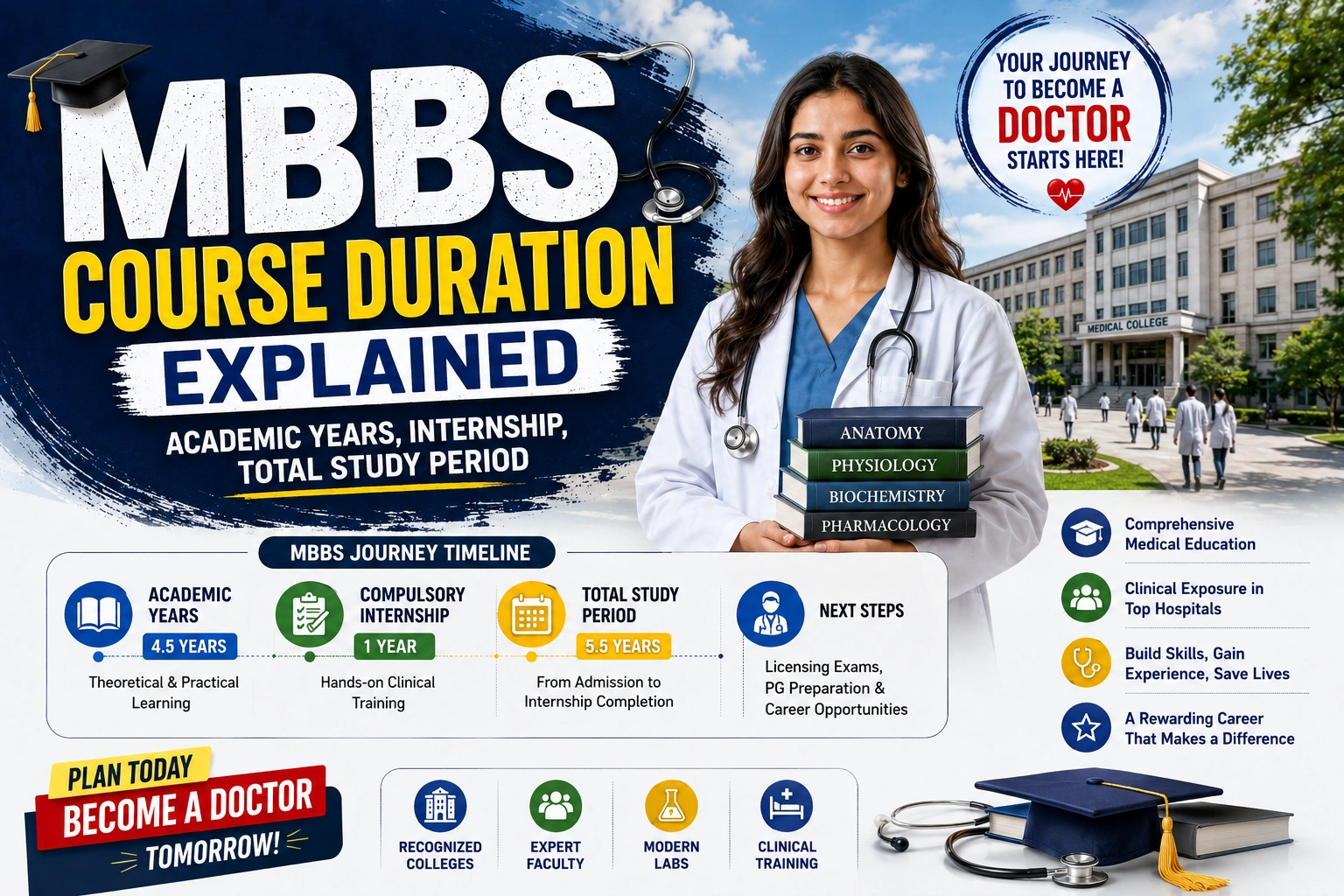
Studying to become a doctor takes years of study, training, and practice. Students need to understand the MBBS course duration if they are planning to study medicine in India or abroad, as starting the journey to become a doctor is a big commitment. Many people think the only study is in the classroom, but the journey to becoming a doctor includes training in preclinical and clinical education, as well as hospital training and a compulsory internship.
The MBBS (Bachelor of Medicine and Bachelor of Surgery) program is an in-depth education program to teach students the discipline of medicine and to give them the skills necessary to provide care to patients. The total duration of an MBBS program varies depending on the education system of each country, but, in India, the MBBS program is generally 5 years with 1 year of mandatory internship.
Aspirants can look for detailed guidance from MBBS Advisor as well, to get insights related to medical admissions and MBBS courses, along with the various career opportunities.
MBBS Course Duration in India
The typical MBBS course duration in India is 5 years and 6 months. The National Medical Commission (NMC) outlines the duration. NMC also prescribes various regulations for medical education and training in India.
The full MBBS consists of two primary parts:
- 4.5 years of medical education
- 1 year of mandatory rotating internship
Students spend these years learning the medical sciences and the theory and practice of clinical medicine. After finishing these years, students are required to complete an internship at an approved hospital to gain experience in various clinical specialties.
The period of internship provides students with the opportunity to practice the skills to confidently diagnose and treat patients, manage clinical emergencies, and understand the management of a hospital.
Breakdown of the MBBS Academic Years
1. MBBS First Year – Basics of Medical Science
The first year of the MBBS course emphasizes the basic medical sciences and the foundations of the human body.
By the end of this year, students will have their first exposure to the study of:
- Anatomy
- Physiology
- Biochemistry
Of these, Anatomy focuses on the study of the body and its organs and Anatomical systems; the study of the functions of the various organs of the body is Physiology, and Biochemistry involves the study of the chemistry of the processes and phenomena occurring in the body.
The first year of the course is very critical, as it is the bedrock of the advanced medical sciences which will be taught in the subsequent years of the course.
2. MBBS Second Year – Diseases and Therapies
In the second year, students learn more about drugs and laboratory medicine, along with the pathology of diseases. Students begin to correlate the theory with the clinical practice and the medical conditions.
This phase of the curriculum covers the following subjects:
- Pathology
- Pharmacology
- Microbiology
- Forensic Medicine
Pathology teaches the effects of and causes for medical conditions. The study of Pharmacology, on the other hand, focuses on the effects and uses of medicine. Microbiology examines the microorganisms that cause medical infections.
Students begin to learn about the ethics of medicine and how to speak with patients and how to approach the clinic.
Third Year MBBS: Learning About The Profession and Meeting Patients
The focus of the third year is on learning about the profession and meeting patients. Students begin to spend significant time in the clinics.
The core subjects are:
- Community Medicine
- Ophthalmology
- ENT
This phase teaches students about the public health system, preventive medicine, and the most prevalent clinical issues.
Community Medicine is particularly important because it concerns the obstacles to health care, the disease prevention programs, and the methods of providing health care for the community.
Final Year MBBS: Learning The Practice
The focus of the last year of study is on practicing the profession. The students learn the following subjects:
- Medicine
- Surgery
- Pediatrics
- Obstetrics and Gynecology
At this stage, there are a number of clinical postings where the students learn by watching physicians and speaking to patients.
This year of study is the last preparation the students will do before the beginning of their practice.
MBBS: The Last Year of Study and Compulsory Practice
Students are required to study for 4.5 years and complete a year of compulsory practice. The practice is an important phase of the study of medicine since it concerns learning the profession under the supervision of qualified medical practitioners.
During the internship period of the MBBS program, students work in various areas in the following departments:
- Medicine
- Surgery
- Pediatrics
- Obstetrics and Gynecology
- Emergency Medicine
- Community Medicine
An internship is a great way to practice the management of patients, documentation, decision-making, and actions that are vital in the field of medicine. Regulation also mandates that the intern practices for a given time period to be eligible to receive the final MBBS degree and registration as a medical practitioner.
Duration of MBBS Course for Indian Students Studying Abroad
Choosing an MBBS program abroad provides Indian students with options of 5- to 6-year courses in most international medical schools.
Russian, Georgian, Kazakh, Uzbek, Nepalese, Bangladeshi, and Tajik medical programs attract Indian students based on cost and the programs' worldwide recognition like WHO.
Students should always verify recognition of the medical school via the World Directory of Medical Schools (WDOMS) to ensure they meet the requisite standards.
For more information on the options for studying medicine abroad, please visit the MBBS Abroad site.
Duration of MBBS Studies After NEET
For Indian students, the first step to studying MBBS is to qualify the medical entrance exam. Most Indian students to pursue MBBS abroad need to take the NEET UG.
After doing so, students are eligible to participate in the counseling to secure admission in a medical college based on their choice and available options.
Prospective students can utilize tools, such as the NEET Rank Predictor, to estimate their anticipated rank and assess potential admission options.
The NEET qualification does not shorten the course for MBBS. It does not matter how a student gains admission (whether through government counseling, private institutes, or approved foreign institutes), the entire medical course and the internship has to be undertaken.
Factors That Influence the Rate of MBBS Program Completion
Though the MBBS Program has a defined duration, completion can be extended for a variety of reasons.
Factors that can increase the time taken to complete MBBS include:
Academic Backlogs
If students are unsuccessful at professional examinations, they may be required to clear certain subjects, which prolongs the time to graduate.
University Policies
Some universities may have their own academic calendars, exam schedules, and train their students in clinical practice separately.
Internship Completion
There are no exceptions to completing the entire internship period, and any disruption to the internship would prolong the time to complete the course.
Medical Licensing
Indian Medical Council has laid down requirements for Indian students who complete their MBBS abroad and wish to practice in India.
Duration of MBBS Compared to Other Medical Courses
It is the longest undergraduate medical degree of all other health related degrees.
In comparison to other health degrees:
- BDS takes about 5 years, which includes the internship.
- Nursing degrees are of shorter duration.
- Pharmacy courses take about 4 years.
MBBS provides the primary step to becoming a doctor, and offers options for subspecialty through further studies in medicine.
Job Prospects After Completing MBBS
Completing the MBBS degree offers a myriad of options once the degree and internship are completed.
Some frequently chosen pathways include:
- Practicing as a GP
- Preparing for MD/MS postgraduate courses
- Gaining experience working in hospitals and healthcare institutions
- Joining government healthcare services
- Pursuing options in medical research
It is common for doctors after completing their postgraduate studies to further specialize in disciplines of cardiology, neurology, surgery, pediatrics, dermatology, and radiology.
Conclusion
The duration of MBBS programs typically combines academic studies, exposure to clinical practice, and a mandatory internship. The duration of MBBS in India is about 5.5 years, while in other countries it may take around 5 to 6 years, depending on the country and the university.
It is essential to know the full duration of these programs to give medical aspirants a chance to manage their expectations and plan their studies. There are a number of stages to becoming a registered medical doctor that develop core medical practice skills.
Before embarking on the MBBS journey, students need to choose a medical school with due diligence, check the school's accreditation and recognition, and familiarize themselves with the course structures. The MBBS degree is the first step in a long and fulfilling medical career, if the degree is obtained with the intent to succeed.