 Russia
 Belarus
 Georgia
 Kazakhstan
 Kyrgyzstan
 Uzbekistan
 China
China Nepal
Nepal Bangladesh
 Poland
 Romania
 Slovakia
 Hungary
 N. Macedonia
 Vietnam
 Canada
 Armenia
 UK
UK Australia
 USA
USA Ireland
 Germany
 New Zealand
 Italy
Italy France
 Singapore
 Netherlands
 Sweden
 Switzerland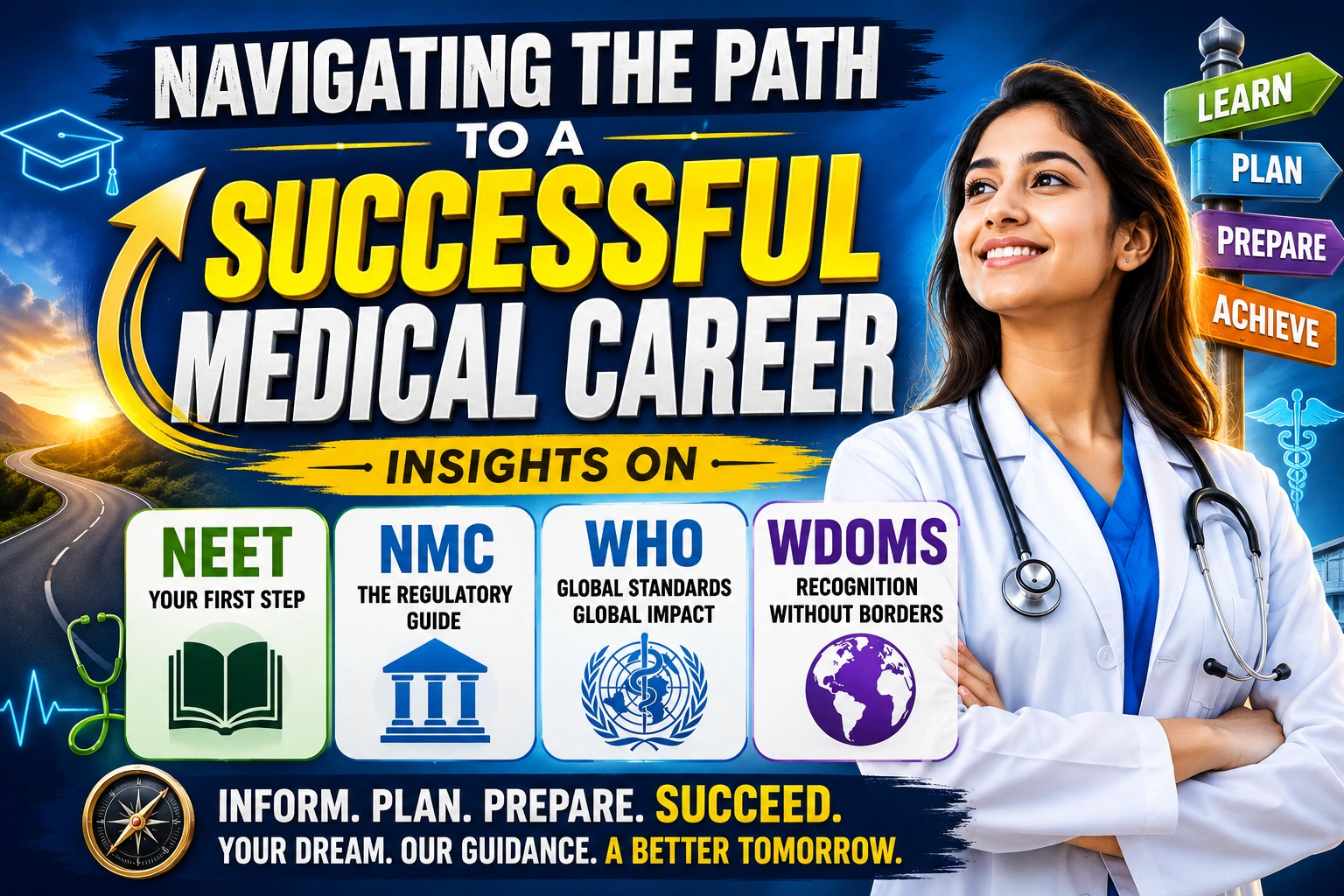
India and other nations have an organized medical journey with MBBS the target. Initiatives to develop ensuring quality medical education and accreditation of medical schools to meet global standards mean that knowledge of the testing process and key organizations is essential. Comprehensive resources such as MBBS Advisor provide such information. The site offers ample information on admission processes, counseling, and career advisory services. The NEET section of the site offers tools to gauge your readiness for the test and the NEET Rank Predictor offers tools to estimate your NEET rank, both of which can help devise an entrance test strategy. The site also offers ample resources for medical aspirants considering alternative pathways to realize their medical career.
The progressive changes to India’s medical education system, the introduction of an integrated examination system, and the introduction and update of regulatory practices have been noteworthy. The opening of the NEET (UG) 2026 provisional answer keys by the National Testing Agency (NTA) for contestants to challenge the answer keys of the NEET (UG) 2026 re-examination, is a perfect example of the above. Candidates that appeared for the re-examination on June 21, 2026, can challenge the answer keys to ensure that the examination is conducted in a fair manner. During this time critical to the student aspiring for a medical career, such measures help reinforce trust in the system.
NEET's Position in a Medical Career
NEET, or National Eligibility cum Entrance Test, is the prominent examination for medical aspirants in India. Organized by the NTA, NEET is a gateway to three medical programs - MBBS, BDS and other allied health programs - in public and private institutes across the country. NEET has consolidated many entrance exams and fulfills the vision of a single, streamlined and merit-centered medical entrance examination for India.
NEET is a test of knowledge in Physics, Chemistry and Biology. These subjects are an extension of the NCERT school syllabus for Class XI and XII. The three-hour exam consists of 180 multiple choice questions, and tests candidates’ conceptual knowledge, application of the knowledge and problem-solving ability within a time constraint. The number of applicants for NEET has crossed 20 lakh in recent years, making detailed exam preparation essential. During preparation, an invaluable resource is the NEET Rank Predictor on MBBS Advisor, which provides estimated ranks based on predicted scores and college chances.
Eligibility Criteria
The criteria for eligibility, primarily concerning the educational qualification, are not complicated. Those who have passed Class 12 with Physics, Chemistry, Biology/Biotechnology and English, and have obtained the minimum qualifying marks (50% general, with necessary relaxations for others) are eligible to apply. The minimum age for applicants is 17 years as of the admission year. Many aspiring medical students have a chance to apply, but success is dependent on preparation, including extensive practice using mock tests and revision.
2026 Exam Cycle and Re-evaluation Process
The 2026 Exam Cycle and the subsequent exam re-evaluations reinforce exam integrity. The provisional answer key challenge window is open until June 28, 2026. During this time students are encouraged to actively engage in the evaluation process. Functions that include the provision of evidence from the standard references like the NCERT textbooks, allow candidates to challenge the final answer key and receive a refund fee for the successful challenge. This process has a positive impact on the fairness of the challenge and improves the examination standards overall.
Preparation Strategies
While developing strong foundational knowledge, examine the best preparatory strategies.
- Frequent revision of practice papers.
- Evaluation of practice papers and weak areas.
- Implementation of time management.
- Coaching, self-study, or a combination of both.
- Incorporating healthy habits to reduce stress.
Websites like MBBS Advisor are great sources of information and provide continuous updates on syllabus, exam, and counseling system.
The National Medical Commission (NMC) is Responsible for Upholding the Standards of Medical Education
The National Medical Commission (NMC) was established to replace the Medical Council of India (MCI) and to provide a transparent, accountable and efficient system to medical education and practice. The NMC employs medical professionals under the Indian Ministry of Health and Family Welfare and aims to provide sufficient medical education resources and a skilled workforce to all areas of India.
Key Goals of NMC
Key goals involve fair healthcare access, building community relationships, and advancing medical education with current research. NMC co-ordinates many changes to medical curricula, including competency-based medical education (CBME), which promotes professional and ethical practice and the importance of learning throughout one’s life, as compared to the traditional curricula which used rote learning. NMC is also responsible for the National Exit Test (NEXT), which will be the integrated licensure examination for practice and entry into medical postgraduate programs.
Recognition of Medical Colleges
For some aspiring MBBS students, NMC has made the recognition of medical colleges one of the most critical benchmarks. Only institutions recognized by NMC are authorized to confer medical degrees, which directly impacts the eligibility for medical practice and further studies. NMC has made a national medical practitioners’ register to make the process of registration simpler, and to make the standards of registration and practice more ethical. This consolidated system has eliminated the inequities that existed in the prior system.
Routine evaluations of medical schools for their NMC approval are meant to ensure that schools are NMC-approved. This also applies to NMC's encouragement of advances in medical school teaching systems and faculty. Students should be aware that NMC guidelines will influence the counseling process, including matrices that serve to determine the number of seats offered, as well as fee and reservation regulations.
Modernization of NMC
The modernization of NMC has been a greatly welcomed improvement in addressing some of the issues of the former MCI, including corruption and adopting a more proactive regulatory approach. For candidates of NEET, the primary guidelines to the NMC will be to help them balance their priorities with respect to college, including the recognition, hospital, and faculty quality of the college, as these factors also define the learning experience.
World Health Organization (WHO) and Their Impact on International Health Standards
As one of the main agencies of the United Nations, the World Health Organization (WHO) has the power to influence and help create policies for International Health. New policies and initiatives have WHO helping to understand the training of health workers in relation to the specific needs of health populations. This is a lot to do with WHO’s triad of challenges: WHO works with the global community to help promote and improve primary healthcare, health equity, and supports WHO's workforce.
Traditionally, and into the present day, WHO promotes advancements in the medical field to improve the social accountability of medicine. Especially in relation to the perspectives of community health, WHO promotes practices to strengthen the reliance and integration of medicine and public health and develop the community of physicians to be more equipped to respond to the diversity of the health care challenges of the community. WHO collaborates with the World Federation for Medical Education (WFME) and other organizations to promote and develop global standards that positively impact the interests and needs of the medical community.
Importance for Indian Students
For students in India, especially those looking for opportunities to work in other countries, understanding and recognizing the frameworks of the WHO adds considerable value. WHO, as a global community of health workers, promotes the ethical integration of research and health workers and considers the continuing development of health workers. These are also the goals of the National Medical Commission (NMC) and the integration of the frameworks of WHO and NMC creates a relation for mobility and transfer opportunities for graduates of Indian medical schools internationally.
As a WHO initiative, the guidelines for health professions education emphasize a need for modern innovations in different health education training systems in relation to WHO's triad of challenges. WHO supports initiatives of modern medical education that incorporate collaborative education, use of technology in education, and education of health professionals to focus on the needs of neglected and unpopulated areas. These goals are reflected in the new practices of modern Indian medical schools.
WDOMS: Global Acknowledgment of Medical Schools
The World Directory of Medical Schools (WDOMS) contains a large listing of schools that offer undergraduate medical education. It was developed in collaboration with WFME and FAIMER (a division of Intealth). WDOMS collects details of medical schools, their contact details, the status of their schools, and the details of their programs.
Why WDOMS Matters
A listing in WDOMS provides details of a medical school, but it does not provide verified accreditation or endorsement of the medical school. WDOMS is a valuable source for many stakeholders, including students, regulators and employers. Graduates that want to take the USMLE, PLAB or want to work in other countries will look at the WDOMS listing, along with other documentation.
In India, most of the medical colleges that are recognized by the NMC are listed in the WDOMS. This helps students that want to pursue a career outside of India. Prior to WDOMS, some of the resources to look up medical schools were the WHO World Directory, IMED and Avicenna. WDOMS has a consolidated, modern listing and as of recent years has over 4,000 medical schools that are currently operating.
Candidates that want to study medicine, can use resources like the MBBS Advisor, to verify that a medical school is listed in WDOMS prior to submitting an application. This helps ensure that their degree will be recognized in other countries. WDOMS helps researchers and policy makers understand the distribution of medical schools and provides information about the quality of medical schools.
Interlinking the Ecosystem: NEET to Global Practice
NEET, NMC, WHO, and WDOMS interconnect to provide a structure for aspiring medical students. NEET enables students to access NMC-affiliated colleges, which build their programs on WHO standards. Graduates from WDOMS-listed colleges have an advantage in securing international recognition for their degrees and enjoy greater career versatility.
NEET counseling requires knowledge of state quotas, the All India Quota, and management, which are also NMC governed. NEET Rank Predictor tool helps in making decisions regarding options and decreases anxiety in choice filling. For 2026, the response to the answer key and the timing of other challenges and the release will be the key.
The medical field focuses on your development beyond exams. Empathy and communication are essential skills to pair with your academic abilities and adaptability. NMC emphasizes ethics and community medicine, with WHO focusing on global health. This combination allows students to prepare for challenges they may face in their careers.
NEET provides an ecosystem to students studying abroad and NRIs. Advisory platforms provide detailed guidance on eligibility and the documentation and visa processes.
Tips for Students to Stay Ahead
Persistence and organized studying are essential in this competitive field.
- Create subject specific study plans.
- Incorporate a study schedule.
- Solve as many varied question types as you can.
- Analyze mock exam results.
- Improve accuracy and speed.
NTA and NMC publish information on exam rules, procedures, and results. Information aggregators like MBBS Advisor publish this information and provide predictors, articles, and counseling. Develop study groups and communities to exchange knowledge and experience. However, be cautious of not spreading or looking for misleading information.
Paras focuses on the equilibrium between health and well-being. Sleep, food, and exercise are also important for sustaining concentration. Exam-related stress can be alleviated by the practice of mindfulness, especially during the recent re-exams and answering key challenges.
For those considering working abroad after their MBBS, check the WDOMS listing early and learn what other country specific license requirements may be. The WHO guidelines can be used while considering a focus area for a specialty that will align with the global workforce needs such as public health or tropical medicine.
Conclusion: Designing a Meaningful Medical Career
The medical field has unlimited potential for the fulfillment of serving others and self. Through their command of the NEET, the NMC, an appreciation of the WHO's vision for the world, WDOMS, and compliant resources such as MBBS Advisor and its NEET and rank predictors, aspiring doctors have every opportunity for informed choice at each and every step.
With the NTA continuing the transparency via Answer Key Challenges for NEET 2026, the system builds trust in its veracity. With dedication,the process can be mastered despite the difficulties. The rest of the world benefits while this healer of society fulfills the calling to strengthen the health of India.