 Russia
 Belarus
 Georgia
 Kazakhstan
 Kyrgyzstan
 Uzbekistan
 China
China Nepal
Nepal Bangladesh
 Poland
 Romania
 Slovakia
 Hungary
 N. Macedonia
 Vietnam
 Canada
 Armenia
 UK
UK Australia
 USA
USA Ireland
 Germany
 New Zealand
 Italy
Italy France
 Singapore
 Netherlands
 Sweden
 Switzerland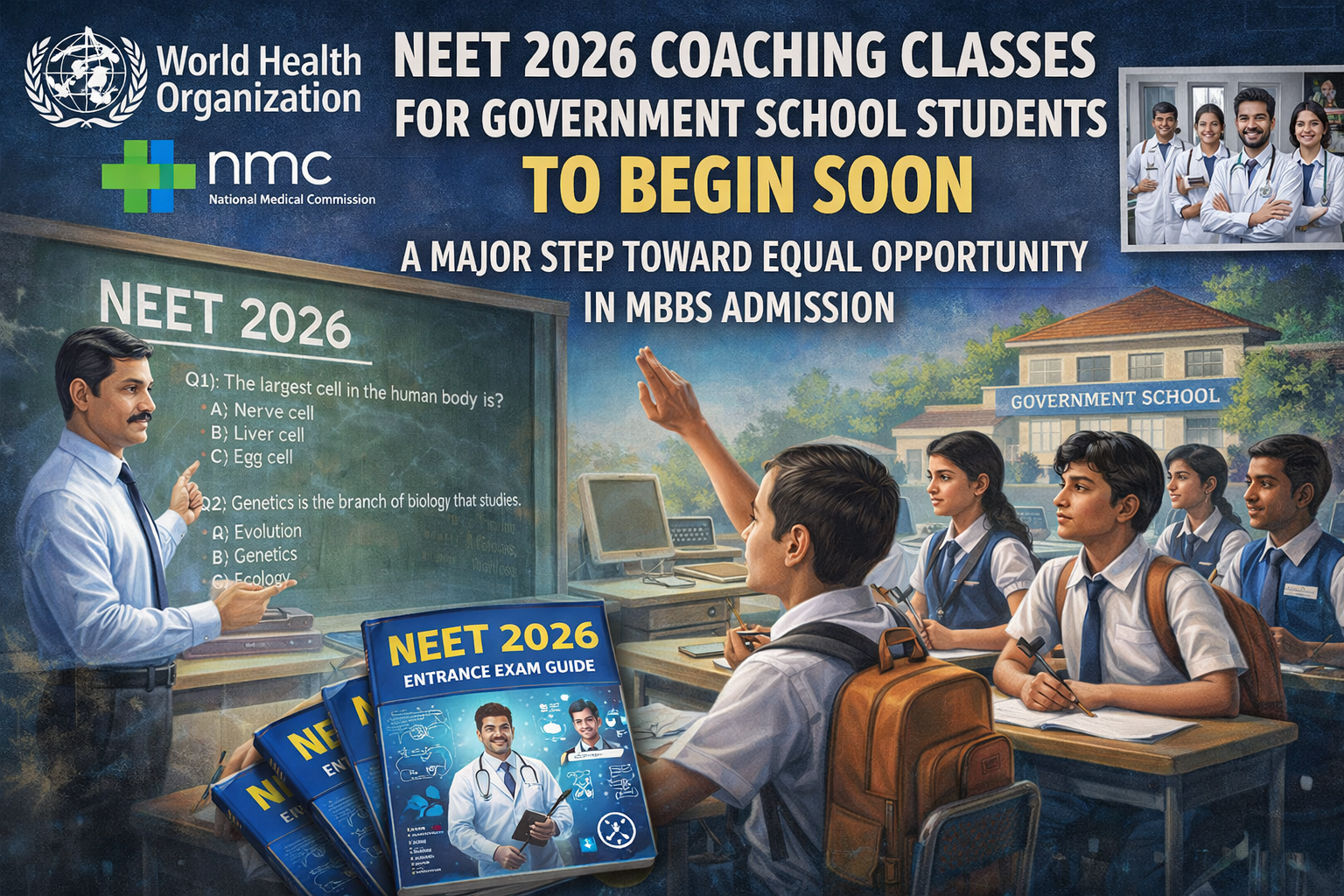
To make medical education in India more accessible and inclusive, several state governments are launching free NEET coaching for government school students. This initiative aims to bridge the gap between privileged and underprivileged aspirants by providing equal preparation opportunities for one of India’s most competitive entrance exams—NEET 2026.
This move also aligns with broader healthcare and education goals promoted by organizations like the World Health Organization (WHO) and regulatory frameworks supported by the National Medical Commission (NMC), ensuring a stronger and more inclusive future medical workforce. Recognition frameworks such as the World Directory of Medical Schools (WDOMS) further highlight the importance of quality medical education globally.
Background: Why This NEET Coaching Initiative Matters
The National Eligibility cum Entrance Test (NEET) is the national-level entrance exam required for MBBS admission in India, BDS, and other medical courses. It is conducted by the National Testing Agency (NTA).
Every year, lakhs of students compete for limited MBBS seats, making NEET highly competitive. While private coaching institutes offer structured preparation, their high fees often exclude students from government schools and economically weaker sections.
The introduction of government NEET coaching programs aims to remove this barrier and create equal access to medical careers—an objective that resonates with the healthcare equity vision encouraged by the World Health Organization.
Key Features of Free NEET Coaching Programs
The government-backed NEET coaching for government school students will include:
- Free or Subsidized Coaching:
High-quality NEET preparation at minimal or no cost - Experienced Faculty:
Guidance from trained educators and NEET experts - Complete Study Material:
Notes, MCQs, mock tests, and previous year papers - Digital Learning Support:
Online classes and recorded lectures - Regular Test Series:
Weekly and monthly assessments to improve performance
These features aim to match top coaching standards while ensuring accessibility for all.
Focus on Rural & Underserved Students
A major focus of this initiative is to support rural NEET aspirants and students from underserved regions.
Key highlights:
- Coaching centers in government schools and district hubs
- Online NEET preparation platforms
- Reduced dependency on expensive city-based coaching
This approach ensures wider reach and promotes inclusive growth in medical education, aligning with long-term goals supported by the National Medical Commission.
Role of Government & Institutions
State education departments are working with educators and institutions to implement this NEET coaching scheme effectively.
In some cases, collaborations with reputed coaching institutes are being explored. These efforts contribute to improving NEET success rates and ensuring that deserving students are not left behind due to financial limitations.
Benefits for NEET Aspirants
Equal Opportunity:
Students from all backgrounds get fair access to NEET preparation
Better Preparation:
Structured guidance improves conceptual clarity
Improved NEET Results:
Regular testing and mentoring boost performance
MBBS Career Growth:
Higher NEET scores increase chances of admission to top medical colleges recognized under frameworks like the World Directory of Medical Schools
Challenges in Implementation
Some challenges in executing this free NEET coaching initiative include:
- Maintaining uniform teaching quality
- Ensuring digital access in remote areas
- Student engagement and attendance
- Updating teaching methods as per the latest NEET pattern
Addressing these issues is crucial for long-term success.
Importance of Awareness
Awareness among students and parents is key to maximizing the impact of this initiative. Many eligible candidates may not know about these opportunities.
Schools and authorities should:
- Promote NEET coaching programs
- Conduct counseling sessions
- Guide students on MBBS admission and career paths
Conclusion
The launch of NEET coaching classes for government school students is a major step toward equal opportunity in medical education in India. By offering free access to quality preparation, this initiative can transform the future of thousands of aspiring doctors.
Aligned with global standards promoted by the World Health Organization, regulated by the National Medical Commission, and recognized through platforms like the World Directory of Medical Schools, this initiative strengthens the foundation of a more inclusive and merit-based healthcare system.