 Russia
 Belarus
 Georgia
 Kazakhstan
 Kyrgyzstan
 Uzbekistan
 China
China Nepal
Nepal Bangladesh
 Poland
 Romania
 Slovakia
 Hungary
 N. Macedonia
 Vietnam
 Canada
 Armenia
 UK
UK Australia
 USA
USA Ireland
 Germany
 New Zealand
 Italy
Italy France
 Singapore
 Netherlands
 Sweden
 Switzerland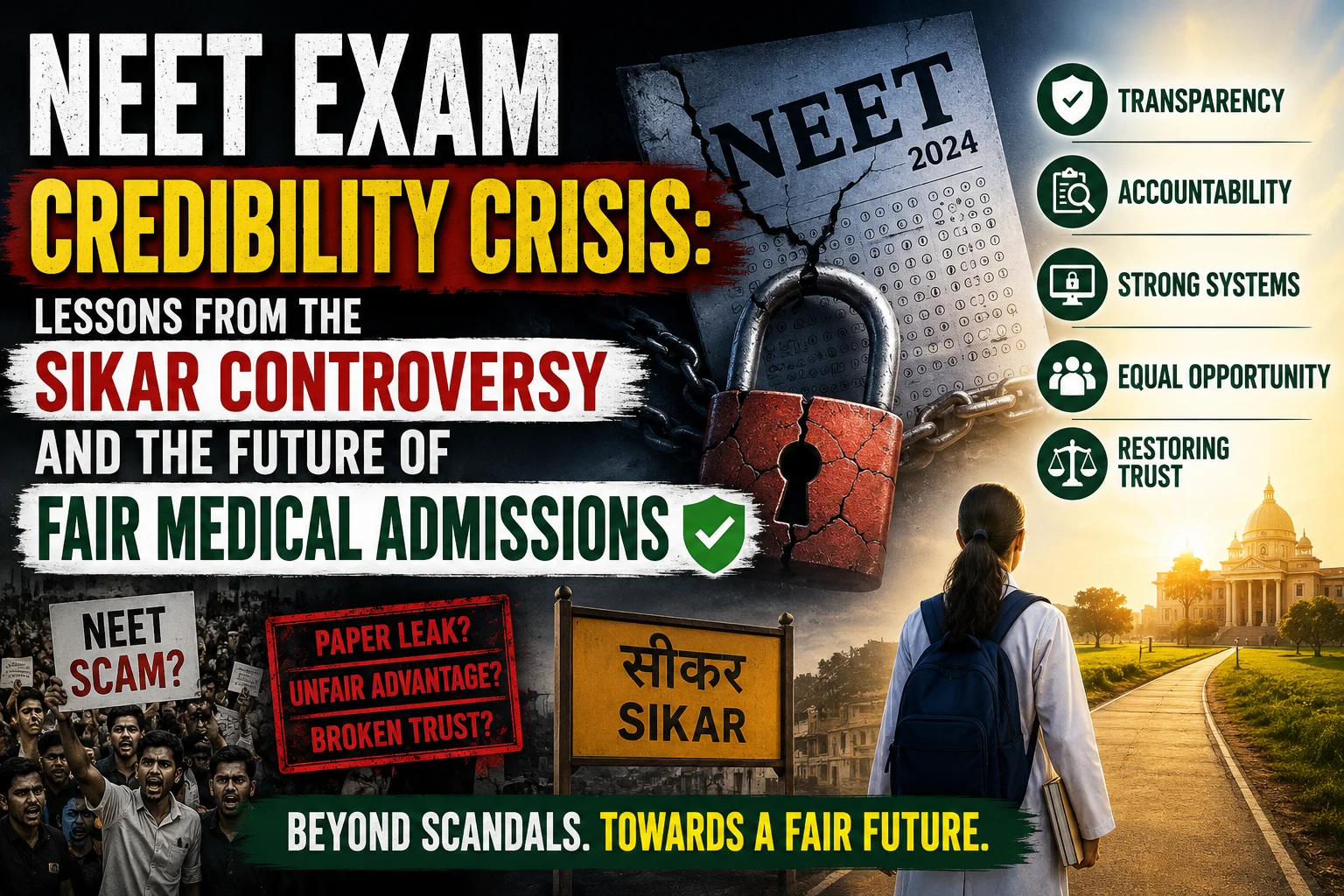
The public credibility of exams is a core pillar supporting a fair education system.
As India’s national unified medical entrance exam, NEET UG holds a central position in the country’s selection of medical talent.
Each year, more than 2 million candidates register to take the exam, and the academic prospects of hundreds of thousands of candidates pursuing medical careers are directly tied to its results.
However, for many years, exam fraud issues including paper leaks and cross-regional organized cheating networks have emerged repeatedly, continuously eroding the procedural integrity of this national unified exam.
This year’s latest NEET controversy linked to Sikar has once again pushed the issue of exam fraud to the center of national public debate.
As India’s core tutoring hub for national engineering and medical entrance exams, the upheaval in Sikar has sparked nationwide discussions across four key dimensions:
- The boundaries of tutoring culture
- Gaps in exam security
- Extreme academic pressure on candidates
- The necessity of strengthening institutional accountability
This paper sorts out the full context and timeline of this incident and extracts key lessons that hold important reference value for candidates who plan their medical careers and prepare for the NEET exam through the MBBS Advisor platform.
Why NEET Remains Vulnerable to Fraud Risks
This paper further analyzes the four inherent weaknesses that have long exposed NEET to fraud risks:
- An excessively large candidate pool
- Exam centers dispersed across the country
- Complex cross-regional exam paper transportation chains
- Profit-driven incentives created by high-stakes competition
Drawing on official investigation records, the paper reconstructs the core leads of this Sikar incident.
Local tutoring networks allegedly transmitted leaked exam content via digital platforms, with a cross-state organized criminal network operating behind the scheme.
Based on past public records, Sikar has been investigated multiple times for exam violations, and the abnormal share of top-scoring local candidates in this year’s exam became a major focus of public attention.
The Role of Digital Technology in Modern Exam Fraud
In subsequent sections, this paper conducts a focused analysis of how digital technology has transformed modern examination fraud.
The NEET exam leak case that emerged in Rajasthan’s Sikar district followed a clear modern dissemination pattern.
After obtaining handwritten exam papers, cheating networks reportedly:
- Scanned them into PDF files
- Shared them through private messaging groups
- Distributed them across multiple states within minutes
Law enforcement agencies could only trace leads by analyzing digital communication records.
Unlike traditional paper leak models that relied on physical distribution, digital networks enable rapid transmission across state boundaries and significantly increase the scale of potential damage.
Impact on Honest Candidates
Hundreds of thousands of honest test-takers who prepared diligently for the examination found themselves facing four major challenges:
- Sustained emotional stress
- Loss of trust in the examination system
- Concerns regarding rank inflation
- Anxiety about possible exam cancellation
Discussions regarding a re-examination directly affected a large number of candidates across the country.
The controversy highlighted how examination fraud impacts not only institutions but also the emotional well-being of students who have invested years of preparation.
Coaching Culture and Competitive Pressure
This incident also exposes the intense competitive culture surrounding examination preparation.
Large numbers of candidates travel to coaching hubs such as Sikar to prepare for examinations.
Many institutions use:
- Top-ranker marketing
- Performance-based advertisements
- Success-story promotions
Third-party critics argue that excessive commercialization has encouraged a stronger focus on rankings than on developing genuine academic competencies.
A special report examining Sikar’s educational ecosystem also pointed to similar concerns.
It must be emphasized that not all coaching institutions are connected to examination fraud.
However, the broader industry may benefit from stronger regulatory oversight and higher ethical standards.
Proposed Examination Security Reforms
Exam governing bodies have already discussed multiple categories of reform measures.
Exam Paper Security Measures
Four major mechanisms have been proposed:
- Multi-layer encryption systems
- Digital tracking technologies
- Secure printing procedures
- Real-time monitoring systems
Examination Center Management Reforms
Four additional measures are planned:
- Advanced CCTV monitoring
- Biometric verification systems
- AI-assisted fraud detection
- Centralized security auditing
These reforms aim to strengthen procedural integrity throughout the examination process.
The Importance of Accountability
The judicial community has emphasized that accountability mechanisms must be clearly defined.
Without effective accountability, three serious consequences may occur:
- Continued erosion of public trust
- Reduced confidence in fair competition among candidates
- Increased difficulty preventing future fraud
Clear enforcement and transparency remain essential components of examination reform.
Practical Guidelines for NEET Aspirants
Clear action guidelines have also been outlined for candidates.
Avoid Unofficial Study Materials
Candidates should firmly reject all unofficial materials, including:
- Leaked examination questions
- Paid “guaranteed pass” question banks
- Unauthorized PDFs
- Suspicious online groups
Such shortcuts create three categories of risks:
- Legal risks
- Ethical risks
- Academic risks
Focus on Genuine Preparation
NEET UG primarily evaluates conceptual understanding.
Students should therefore focus on:
- Mastering NCERT content
- Maintaining regular revision schedules
- Participating in mock examinations
- Practicing effective time management
Long-term preparation remains far more reliable than speculative shortcuts.
Managing Information During Exam Season
Every year during the NEET examination season, misinformation spreads rapidly across online platforms.
Applicants should rely on three categories of authoritative information sources:
- Official examination notifications
- Government announcements
- Verified educational guidance resources
Students may also use trusted planning platforms such as MBBS Advisor to access information related to admissions, application procedures, and medical education planning.
Integrity in Medical Education
The foundation of the medical profession is public trust.
Admission qualifications obtained through improper means not only violate the integrity of national examinations but may also create long-term concerns regarding professional competence.
This principle aligns with standards supported by:
All three bodies emphasize the importance of maintaining integrity-based admission systems.
Five Major Reform Measures Under Discussion
Currently, five major reform initiatives targeting NEET examination security are being advanced:
- Upgrading digital security protections
- Introducing independent third-party audits
- Establishing faster violation investigation mechanisms
- Improving cross-departmental law enforcement coordination
- Maintaining transparent communication during dispute resolution periods
These measures seek to restore confidence in the examination process and reduce future vulnerabilities.
Conclusion
The controversy linked to Sikar exposed important weaknesses within examination security systems, highlighted the dangers of organized cheating networks, and caused significant emotional distress for many candidates.
At the same time, it reinforced the importance of transparency, accountability, and ethical conduct throughout the admission process.
All applicants should continue to follow three essential principles:
- Strictly follow official examination guidelines
- Adhere to ethical preparation practices
- Rely only on trusted information sources
Students should also ensure that their educational planning remains aligned with the requirements of NEET and the broader standards expected within medical education.
Protecting examination integrity ultimately protects the fairness, credibility, and long-term value of India’s medical education system.