 Russia
 Belarus
 Georgia
 Kazakhstan
 Kyrgyzstan
 Uzbekistan
 China
China Nepal
Nepal Bangladesh
 Poland
 Romania
 Slovakia
 Hungary
 N. Macedonia
 Vietnam
 Canada
 Armenia
 UK
UK Australia
 USA
USA Ireland
 Germany
 New Zealand
 Italy
Italy France
 Singapore
 Netherlands
 Sweden
 Switzerland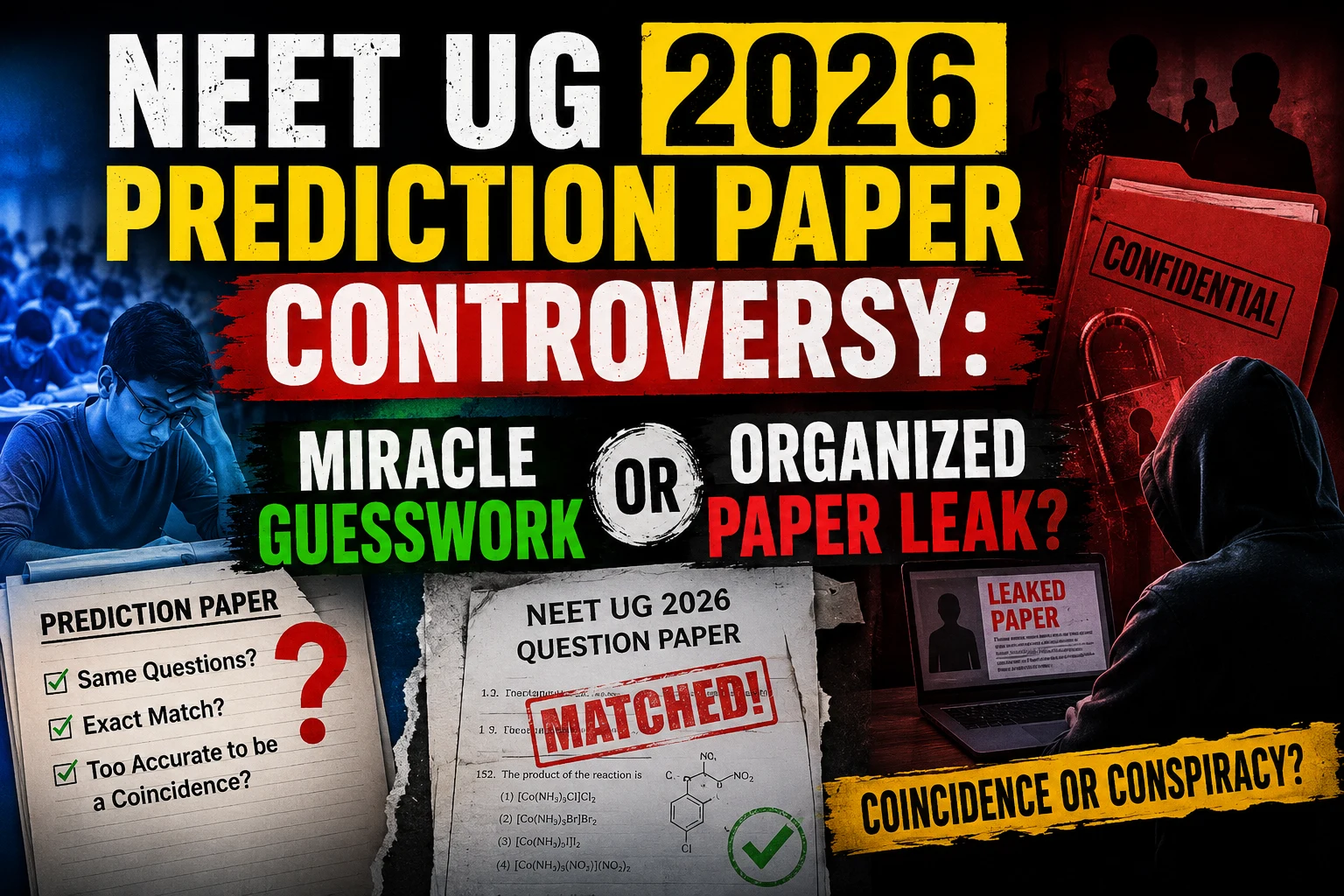
The controversy surrounding India’s 2026 NEET UG examination has rapidly evolved into one of the country’s most serious education-related crises in recent years. What initially appeared to be an unusually accurate “prediction paper” circulating among students has now triggered a nationwide investigation into possible organized exam fraud.
At the center of the controversy lies one crucial unanswered question:
Was this simply an extraordinarily accurate prediction paper created by coaching experts, or was it part of a coordinated examination leak network?
The answer could significantly impact the future of hundreds of thousands of medical aspirants across India.
How the Controversy Began
According to reports emerging from Rajasthan, the issue first gained attention shortly after the 2026 NEET examination concluded on May 3, 2026.
Students across multiple regions began reporting that prediction papers circulated before the exam contained striking similarities to the actual question paper. Many candidates claimed that substantial portions of the exam closely matched PDFs and question banks already being shared across social media platforms.
As complaints intensified, Rajasthan Police’s Special Operations Group (SOG) initiated an investigation into the matter.
The probe soon expanded beyond Rajasthan and began covering multiple states, including:
- Rajasthan
- Maharashtra
- Uttarakhand
- Other connected regions
The scale of the controversy quickly transformed it from a local investigation into a matter of national concern.
Who Is Rakesh Mandwaria?
One of the key figures linked to the controversy is reportedly Rakesh Mandwaria, a medical entrance consultant associated with Sikar, Rajasthan — a city widely known as one of India’s largest coaching and competitive-exam preparation hubs.
Authorities are now examining possible connections between:
- Coaching institutions
- Admission consultants
- Digital study material distributors
- Telegram and WhatsApp groups
- Paid prediction-paper networks
Investigators are trying to determine whether these activities crossed the line from aggressive coaching practices into illegal dissemination of confidential examination material.
Social Media’s Role in the Spread
The controversy spread rapidly because the alleged prediction papers were heavily circulated through digital channels before the examination.
Investigators are currently tracing dissemination routes involving:
- WhatsApp forwarding chains
- Telegram channels
- Private student groups
- Coaching networks
- Paid educational communities
Authorities are reportedly conducting digital forensic analysis on:
- PDF metadata
- Mobile communication records
- Transaction histories
- Group administrators
- File-sharing timelines
The investigation seeks to identify both the original source of the content and the exact timeline of its circulation.
The Core Question: Prediction or Leak?
This remains the most important unresolved issue in the entire controversy.
Experts note that coaching institutions commonly release prediction papers before competitive examinations. Because NEET follows a structured syllabus pattern, some overlap between predicted questions and actual exam content is considered normal.
However, investigators are now examining whether the overlap in this case exceeded any reasonable academic probability.
Authorities are reportedly analyzing five major factors:
- Source of the material
- Timing of circulation
- Exact question overlap percentage
- Similarity of answer options
- Financial transactions linked to distribution
Reports suggest that some materials were allegedly sold for extremely high prices, ranging into hundreds of thousands of rupees.
Escalation to the CBI
Due to the nationwide scale of the controversy and its impact on millions of students, the matter has reportedly been escalated to India’s Central Bureau of Investigation (CBI).
The CBI is now conducting a broader investigation involving:
- Cross-state coordination
- Digital forensic analysis
- Mobile phone inspections
- Financial tracking
- Social media monitoring
- Identification of institutional links
Several individuals have reportedly been questioned or detained as part of the ongoing inquiry.
Impact on Students and Families
The controversy has generated enormous stress among students and parents across India.
For most candidates, NEET represents:
- Years of preparation
- Significant financial investment
- Emotional sacrifice
- Intense academic pressure
- A life-defining career opportunity
The uncertainty surrounding the investigation has created widespread anxiety regarding:
- Fairness of rankings
- Possibility of a retest
- Counseling delays
- Admission timelines
- Merit protection
Many students fear that even if they prepared honestly, the controversy may still affect their future opportunities.
Why the Stakes Are So High
NEET is India’s only centralized undergraduate medical entrance examination and is used for admission into:
- MBBS programs
- BDS programs
- AYUSH courses
- Veterinary sciences
- Allied medical fields
Medical education standards in India are regulated by the NMC, making exam integrity critically important for the credibility of the country’s healthcare education system.
Because the examination determines the future medical workforce of the country, any compromise in fairness directly affects public trust.
Global Relevance of the Issue
India’s medical education system is also connected to broader international frameworks.
The WHO contributes to global medical education standards, while the WDOMS maintains internationally recognized medical school listings.
Growing competition and repeated controversies in domestic admissions have already pushed many Indian students toward overseas medical programs in countries through MBBS Advisor such as:
- Georgia
- Kazakhstan
- Kyrgyzstan
- Russia
- Uzbekistan
This controversy may further accelerate that trend.
Hidden Risks Inside the Coaching Ecosystem
The investigation has also highlighted deeper structural concerns within India’s massive coaching industry.
Cities like Kota and Sikar have developed enormous parallel educational ecosystems involving:
- Coaching centers
- Admission consultants
- Mock-test providers
- Digital content sellers
- Paid mentorship networks
Authorities are now examining whether some participants within this ecosystem illegally exploited student anxiety for financial gain.
Possible Reforms Being Discussed
Education experts and policymakers have already begun discussing several potential reforms aimed at preventing future controversies.
Proposed measures include:
- Stronger cybersecurity systems
- Real-time leak detection mechanisms
- Improved logistics security
- Tighter monitoring of digital communications
- Greater regulation of coaching institutions
- Enhanced transparency in examination processes
The controversy may ultimately become a turning point for how India conducts large-scale competitive examinations.
Current Investigation Status
As of now:
- Investigations remain ongoing
- No final conclusion has been announced
- Authorities continue analyzing digital evidence
- Several individuals are under scrutiny
- The NTA has urged students to trust only official updates
The key unanswered question still remains:
Were these “prediction papers” simply highly accurate coaching material, or evidence of a deliberate organized paper leak?
Conclusion
Regardless of the final legal outcome, the 2026 NEET UG controversy has already exposed serious vulnerabilities within India’s competitive examination ecosystem.
For hundreds of thousands of aspiring doctors, this issue is not merely about one examination cycle — it is about trust, fairness, merit, and the future credibility of medical education in India.
Students and parents across the country are now demanding stronger safeguards to ensure that opportunities in medical education are determined solely through honest competition and transparent evaluation.