
 Russia
 Belarus
 Georgia
 Kazakhstan
 Kyrgyzstan
 Uzbekistan
 China
China Nepal
Nepal Bangladesh
 Poland
 Romania
 Slovakia
 Hungary
 N. Macedonia
 Vietnam
 Canada
 Armenia
 UK
UK Australia
 USA
USA Ireland
 Germany
 New Zealand
 Italy
Italy France
 Singapore
 Netherlands
 Sweden
 Switzerland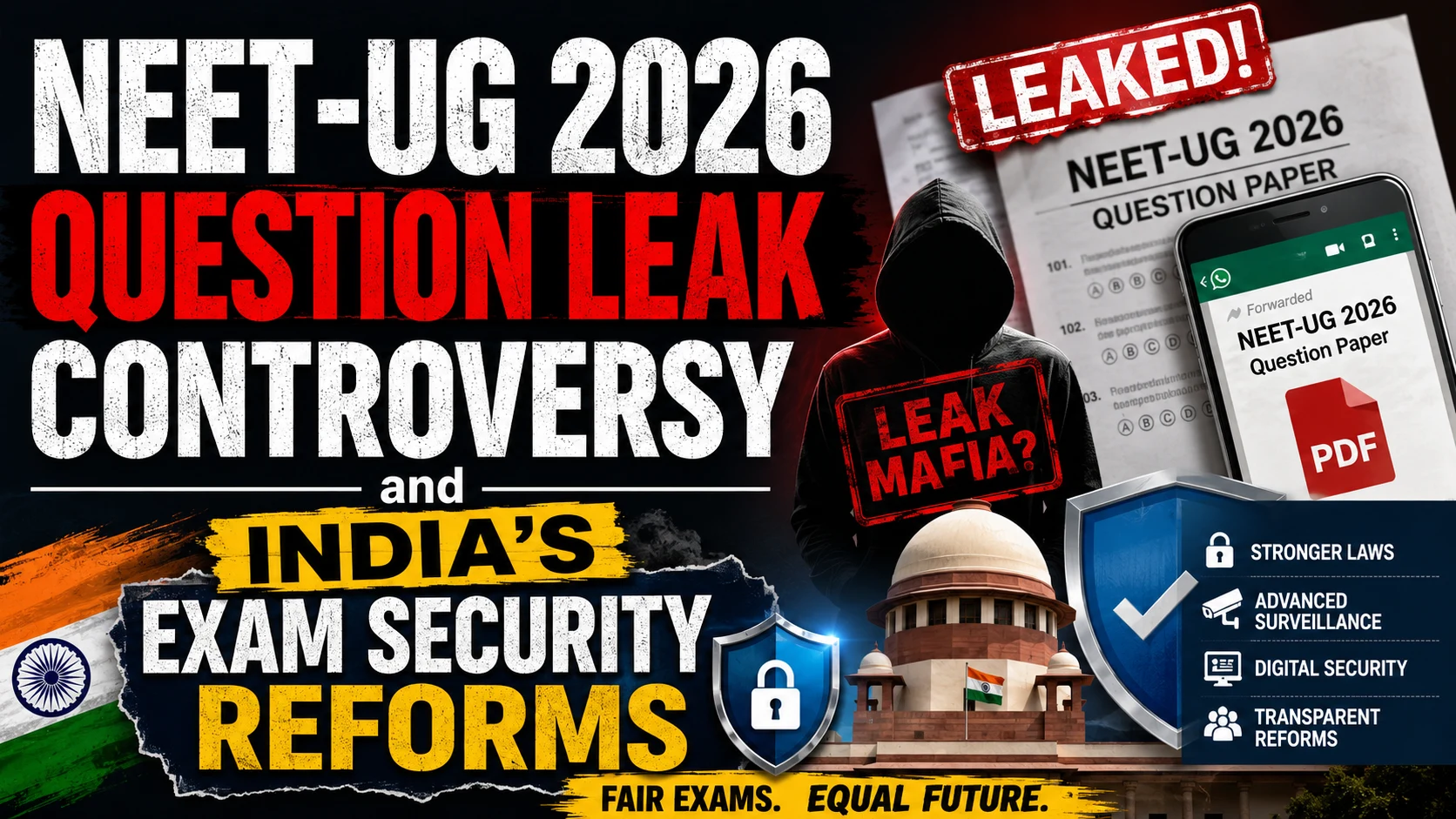
NEET-UG is India’s core national medical entrance examination. Each year, millions of test-takers compete for the limited number of MBBS admission seats at public and private medical colleges across the country, and the fairness of this exam carries the higher education hopes of countless ordinary families.
The National Eligibility cum Entrance Test (NEET) is conducted by India’s National Testing Agency (NTA) and remains central to MBBS admissions across India.
2026 NEET-UG Question Leak Incident and National Impact
The large-scale 2026 NEET-UG question leak incident completely shattered public trust in the original exam system. After multiple investigating agencies confirmed the leak was valid, Indian officials immediately canceled the original exam schedule and organized a unified re-examination.
More than 2.2 million (22 lakh) test-takers were affected.
This incident triggered:
- Nationwide protests
- Legal challenges in courts
- Political debates
- Public demand for exam system reform
Structural Weakness in Traditional Question Setting System
The controversy exposed a critical flaw in the traditional paper-setting model:
- Question setters knew the specific exam they were contributing to
- Same structure existed in other national exams like:
- NEET
- JEE
- CUET
This transparency created a vulnerability where:
- Paper setters could be targeted
- Leak attempts became easier
- Exam integrity was at risk
Government Response and Security Reform Initiative
To address these issues, India’s National Testing Agency (NTA) and the Ministry of Education launched a major security overhaul.
The most important reform:
Anonymous Question Setting System
Under this model:
- Paper setters do not know which exam their questions will be used for
- Question identity is fully anonymized
- Source-linking information is removed
This follows a “need-to-know” security principle used in high-security government systems.
Full NEET Security Overhaul Measures (7-Point System)
The anonymous question system is only one part of a larger reform package. NTA introduced 7 major security upgrades:
1. Full Isolation of Question Setters
- Complete physical and digital isolation
- No communication with external environment
2. Multi-Layer Division of Work
- No single team handles full paper lifecycle
3. Secure Question Paper Handling System
- Encrypted handling and transfer protocols
4. Restricted Access Infrastructure
- Controlled access to exam-sensitive systems
5. Monitoring and Audit Trails
- End-to-end tracking of all processes
6. Strengthened Cybersecurity Systems
- Protection against digital breaches
7. Enhanced Exam Logistics Security
- Secure transportation and handling mechanisms
Role of MBBS Advisor in Student Guidance
During this crisis, many students and parents relied on MBBS Advisor for:
- Exam updates
- MBBS admission guidance
- Study-abroad alternatives
- Policy interpretation support
It became a secondary information support system for affected aspirants.
Benefits of Anonymous Question System
Experts highlight two major advantages:
- Reduced probability of targeted leaks
- Improved end-to-end traceability of exam processes
Implementation Challenges
Despite its benefits, the reform faces key challenges:
- Coordination across multiple anonymous teams
- Building secure technical infrastructure
- Maintaining exam difficulty balance
- High cost of implementation
Long-Term Reform Direction: Computer-Based NEET
Authorities have proposed transitioning NEET to a computer-based exam system by 2027.
Expected benefits include:
- Randomized question generation
- Reduced paper leak risks
- Faster result processing
- Improved audit systems
- Enhanced exam security
Public and Expert Reactions
According to observations and education sector feedback (including platforms like MBBS Advisor), reactions are mixed:
Support:
- Stronger fairness controls
- Better transparency in process
Concerns:
- Technical readiness of system
- Adaptation challenges for students
- Digital divide issues
Impact on Medical Aspirants
The reforms affect students in two key ways:
- Improved exam integrity and fairness
- Need to adapt to evolving digital exam systems
Key Lessons from NEET-UG 2026 Incident
Experts identify five key lessons:
- Need for multi-layer security instead of single-point protection
- Importance of anonymized question systems
- Stronger cyber-security integration
- Better coordination between agencies
- Continuous reform in exam administration
Support Systems for Students
To help aspirants navigate uncertainty, structured guidance tools include:
- Core test preparation checklists
- Verified official information sources
Trusted platforms for updates:
Conclusion
The 2026 NEET-UG question leak controversy marks a turning point in India’s medical entrance exam system.
The shift toward anonymized question setting, layered security architecture, and future computer-based testing represents a structural transformation aimed at restoring trust in one of India’s most important national-level examinations.