 Russia
 Belarus
 Georgia
 Kazakhstan
 Kyrgyzstan
 Uzbekistan
 China
China Nepal
Nepal Bangladesh
 Poland
 Romania
 Slovakia
 Hungary
 N. Macedonia
 Vietnam
 Canada
 Armenia
 UK
UK Australia
 USA
USA Ireland
 Germany
 New Zealand
 Italy
Italy France
 Singapore
 Netherlands
 Sweden
 Switzerland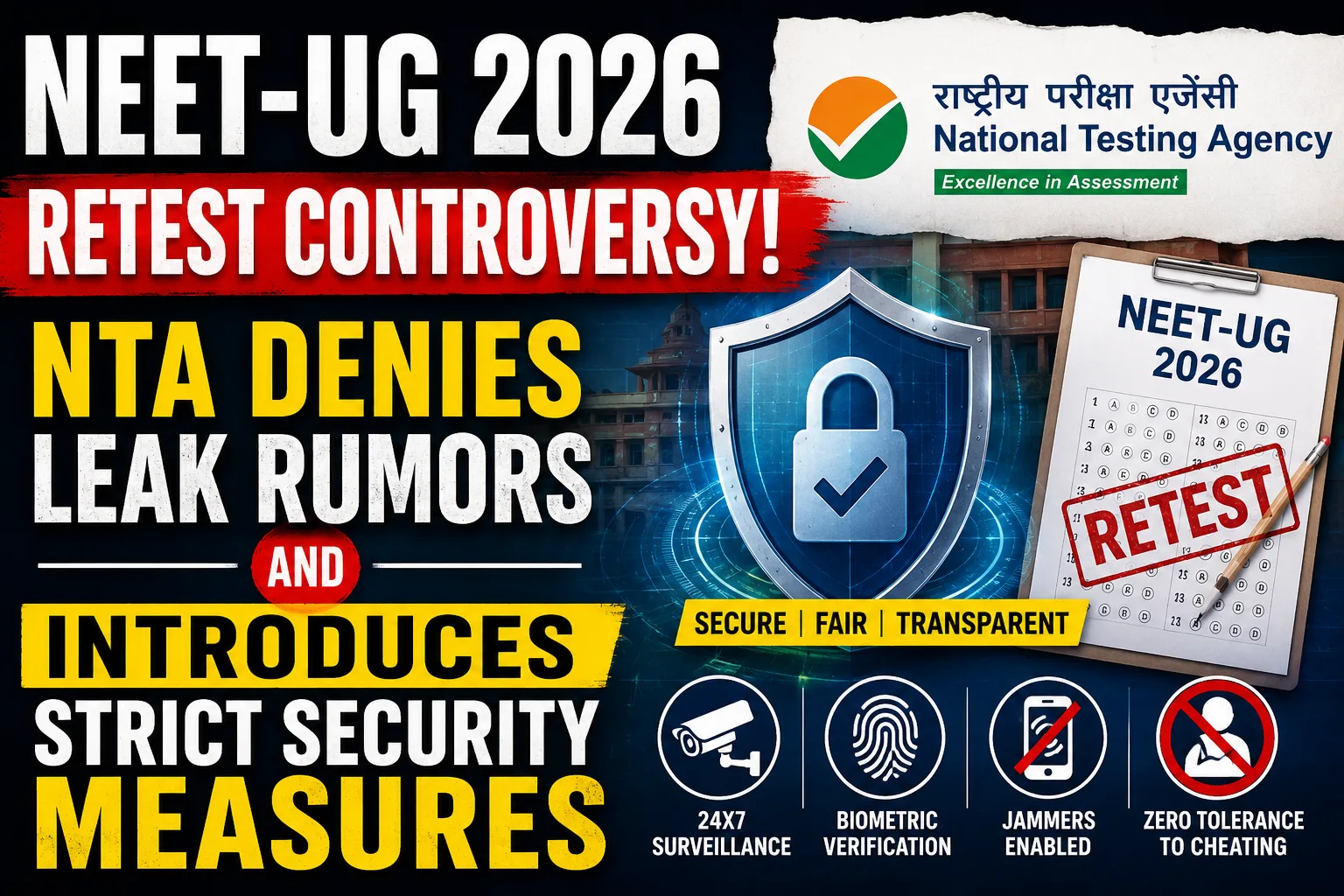
As the core threshold for undergraduate medical school admission in India, the National Eligibility cum Entrance Test for Undergraduates (NEET-UG), hosted by India’s National Testing Agency (NTA), is one of the country’s most high-profile academic events.
Every year, millions of test-takers compete for a limited number of seats for the Bachelor of Medicine and Bachelor of Surgery (MBBS) and Bachelor of Dental Surgery (BDS) degrees.
The 2026 iteration of this exam became mired in a string of controversies shortly after its first test session concluded.
Initial Exam Issues and Retest Decision
First, disputes emerged over the initial test session.
After a comprehensive investigation, officials decided to organize a retest for affected candidates.
The NTA subsequently formally announced the retest would be held on June 21, 2026, while rolling out upgraded security measures across the full testing process to safeguard the exam’s fairness and transparency.
The core goal of the retest decision was to rebuild trust among candidates, parents, and all types of educational institutions in India’s medical admissions testing system.
Fake Rumors of Question Paper Leaks Spread Online
Yet during the retest preparation phase, unsubstantiated rumors that the retest’s question papers had been leaked and were being sold for payment suddenly spread on social and instant messaging platforms, including Telegram channels.
This false information spread rapidly, triggering widespread anxiety across the entire test-taker population.
Many candidates worried that new controversies would undermine the fairness of the full admissions process.
Official Response by NTA
In response to this new wave of crises, the NTA released an official statement immediately, fully rejecting all allegations linked to question paper leaks and paid question sales.
The agency clarified that all related content was false and fraudulent, while warning that strict penalties would be imposed on individuals who created or spread such misinformation.
Third-party educational guidance platform MBBS Advisor also issued two professional advisories in sequence.
Advisory 1
Candidates must rely exclusively on official announcements and avoid unverified information circulating on social media.
Advisory 2
The platform highlighted key reasons behind rumor spread:
- High anxiety among test-takers
- Extreme competition in NEET-UG
Four Types of False Claims Debunked by NTA
India’s National Testing Agency (NTA) formally debunked four categories of misinformation related to NEET:
1. Question Paper Leakage Claims
Allegations that exam papers were leaked in advance.
2. Advance Access to Exam Content
Claims that candidates could access questions before the exam.
3. Sale of Exam Papers
Claims of illegal sale of question papers.
4. Unauthorized Distribution of Exam Material
Claims involving circulation of official exam content.
All such claims were declared false and misleading.
Strong Warning and Cybersecurity Action
NTA warned students not to trust or circulate any unofficial exam-related information.
It also stated that individuals spreading misinformation could face strict legal action.
All suspicious content and Telegram links were forwarded to cybersecurity authorities for investigation.
Cybersecurity monitoring is now a key pillar of modern exam governance.
Official Sources for NEET Information
Students are strongly advised to rely only on:
- Official NEET portal → NEET
- National Testing Agency → https://nta.ac.in/
- National Medical Commission → NMC
Security Framework for NEET-UG 2026 Retest
For the upcoming retest, NTA announced the strictest security framework in its history.
Isolation of Question Paper Team
Experts involved in:
- Question setting
- Review
- Translation
are placed under strict isolation until the exam is completed.
Multi-Layer Monitoring System
New surveillance systems have been added across all stages of the examination process.
Experts from MBBS Advisor noted that these steps could help rebuild student confidence in exam fairness.
Full-Process Exam Security Upgrades
This paper outlines five major security upgrades implemented by NTA:
1. Digital Monitoring Expansion
Full-coverage digital surveillance at exam centers.
2. Social Media Tracking
Continuous monitoring of suspicious online activity.
3. Secure Paper Transport System
Improved logistics with tighter controls.
4. Armed Escort Protection
Question papers transported under security protection.
5. GPS Tracking System
Real-time tracking throughout transportation.
Student Reactions to NTA Measures
The official clarifications have generated mixed reactions.
Positive Response
Many students welcomed the stricter security measures and transparency efforts.
Concerns
Some students remained doubtful due to past controversies, highlighting a trust gap between candidates and authorities.
Expert Guidance for Students
Education experts and MBBS Advisor recommend that students:
- Focus on preparation
- Avoid social media rumors
- Rely only on verified sources
- Ignore fake “leaked paper” claims
Experts warn that engaging with such content may lead to:
- Financial fraud
- Legal consequences
- Academic risks
Why Rumors Spread During NEET Exams
Four main causes identified:
1. High Student Anxiety
Stress increases susceptibility to misinformation.
2. High Competition
Millions competing for limited MBBS seats.
3. Rapid Social Media Spread
Fast viral circulation of unverified claims.
4. Lack of Verification
Forwarding messages without checking authenticity.
NEET-UG Importance in India
The NEET-UG exam is India’s only national-level undergraduate medical entrance test conducted for admissions into:
- MBBS
- BDS
- Allied medical programs
It directly determines the academic future of millions of students every year.
Four Key Student Concerns
Concern 1: Exam Fairness
Transparency of the examination process.
Concern 2: Paper Security
Risk of leaks or breaches.
Concern 3: Online Misinformation
False news spreading on social media.
Concern 4: Admission Pressure
High competition for medical seats.
Seven Mandatory Pre-Exam Actions
Students preparing for NEET-UG 2026 should follow these steps:
1. Track Official Updates
Follow only verified announcements.
2. Download Admit Card
Ensure exam documents are ready.
3. Avoid Rumors
Do not trust Telegram or WhatsApp leaks.
4. Revise Important Topics
Focus on high-weightage syllabus areas.
5. Practice Mock Tests
Improve speed and accuracy.
6. Maintain Routine
Healthy sleep and study balance.
7. Use Trusted Sources Only
Rely on official NEET and NTA platforms.
Long-Term Reform Suggestions
Experts propose:
Digital Monitoring Upgrades
Stronger AI-based surveillance systems.
Cybersecurity Collaboration
Closer coordination with security agencies.
Logistics Improvements
Better exam material handling systems.
Transparency Enhancement
More openness in exam administration.
Conclusion
The NEET-UG 2026 controversy reflects ongoing challenges in balancing exam security, transparency, and student trust.
While NTA has denied all leak allegations and implemented strict safeguards, students are advised to remain focused, avoid misinformation, and rely only on official sources such as:
Staying informed through verified platforms remains the most reliable way to navigate India’s medical admission process.