 Russia
 Belarus
 Georgia
 Kazakhstan
 Kyrgyzstan
 Uzbekistan
 China
China Nepal
Nepal Bangladesh
 Poland
 Romania
 Slovakia
 Hungary
 N. Macedonia
 Vietnam
 Canada
 Armenia
 UK
UK Australia
 USA
USA Ireland
 Germany
 New Zealand
 Italy
Italy France
 Singapore
 Netherlands
 Sweden
 Switzerland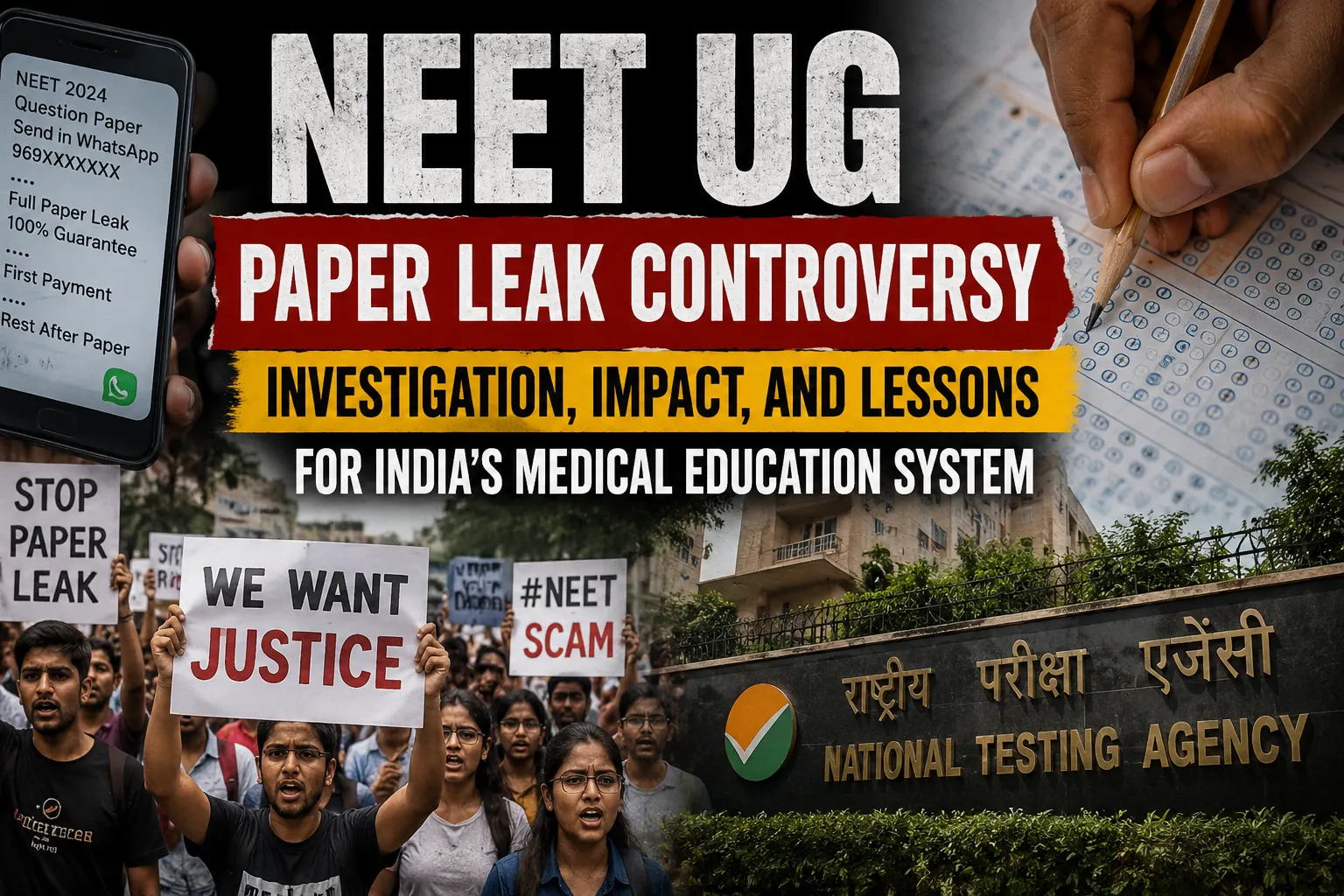
The question leak controversy surrounding India’s national NEET UG undergraduate medical entrance exam is one of the most widely debated public issues tied to the country’s education system in recent years.
According to joint media and official reports, more than several million candidates compete every year for the limited number of nationwide Bachelor of Medicine, Bachelor of Surgery (MBBS) undergraduate medical seats, with hundreds of thousands of candidates devoting themselves full-time to preparing for this highly competitive national-level exam.
This unified exam, organized under the leadership of India’s NMC, is not only the core pathway for children from ordinary families to enter the medical profession, but also upholds the public credibility of India’s entire medical education system.
The question leak allegations that emerged this year sparked widespread national concerns over the exam’s fairness, transparency, and rule-based credibility as soon as they gained public traction.
How the Investigation Began
The investigation was first launched following formal signed complaints submitted by multiple exam candidates and industry body MBBS Advisor.
Initially, the joint investigation team only linked the obtained clues to isolated, localized cheating incidents in one region.
A mysterious phone call received during the interrogation of the first group of involved persons later became the core breakthrough for the entire investigation.
What was originally classified as a small-scale, scattered cheating case was uncovered to be tied to a full-chain organized criminal network that spans multiple Indian states, operates through digital social channels such as WhatsApp, and involves dozens of hierarchically structured middlemen.
This critical phone call directly drove a full shift in the investigation’s focus, expanding the probe from only checking for loopholes at individual exam sites to a full-chain traceability investigation targeting the cross-state criminal network.
All unreleased core investigation details cited in this report draw exclusively from officially confirmed notifications, ensuring the rigor and information accuracy of this investigative report.
All facts related to the recent NEET medical exam paper leak incident are cited exclusively from public official reports released by Indian law enforcement authorities and contain no original subjective judgments from the author.
Five Core Investigation Modules
The organization and analysis of this incident proceeds in an orderly sequence across five functional modules, which fully present the full scope of the incident’s investigation and its social impacts.
1. Digital Forensics Module
The Digital Forensics Module outlines the core evidence framework for modern exam fraud investigations.
The evidence collected for this case covers:
- WhatsApp chat records
- Telegram groups
- Mobile phone logs
- Electronic documents
- Financial payment traces
Reports show that encrypted social media platforms have replaced traditional channels as the primary space for coordinating exam fraud.
The rapid transmission capacity of digital networks has greatly amplified the harm caused by exam paper leaks.
2. Cross-State Criminal Operations Module
The Cross-State Criminal Operations Module breaks down the scale and division of labor of the criminal network involved.
The states implicated in the case include:
- Rajasthan
- Maharashtra
- Haryana
- Kerala
- Bihar
- Jharkhand
Involved personnel follow clear role divisions covering four core links:
- Obtaining exam papers
- Distributing leaked content
- Coordinating financial payments
- Managing communication channels
The cross-regional nature of this operation proves that exam fraud has evolved into a sophisticated organized crime that transcends local administrative boundaries.
3. Past Investigations Module
The Past Investigations Module establishes the persistent and severe nature of this type of incident.
Past instances of similar exam fraud include:
- Stealing exam papers in advance
- Distributing standard answer keys
- Renting homestays or private venues to train candidates
- Transferring large sums of illegal funds
Past investigations have led to:
- Multiple arrests
- Recovery of core evidence
- Identification of candidates who gained unfair advantages
A core question remains to be answered by the current investigation:
Is this incident an isolated procedural flaw, or part of a much larger organized criminal system?
4. Impacts on Candidates Module
The Impacts on Candidates Module lays out the incident’s effect on public livelihoods.
The affected group consists of all medical school candidates preparing for the NEET UG exam.
The core demands of these candidates are:
- Upholding a fair competitive environment
- Safeguarding exam integrity
- Accessing reliable admissions consultation information
- Maintaining the stability of the higher education admission process
Since the incident escalated, a large number of candidates have used education consultation platforms such as MBBS Advisor to seek alternative higher education plans.
This exam fraud incident has severely undermined the public credibility of the admission system, which centers on merit-based selection.
5. Law Enforcement Actions Module
The Law Enforcement Actions Module wraps up the current progress of the investigation.
Multiple law enforcement agencies, including the Central Bureau of Investigation (CBI), have participated in this case.
To date, authorities have:
- Carried out cross-state raid searches
- Preserved digital forensic evidence
- Arrested suspected offenders
- Launched investigations into financial trails
- Reviewed communication records
The goals of future investigations are to identify all persons involved in the incident and fully map out the complete scale of the entire criminal network.
Key Breakthrough in the Investigation
This year’s exposed NEET UG question paper leak case in India saw key phone clues obtained during interrogations become the core breakthrough in its investigation.
By sorting through the communication records, digital traces, and financial transaction logs of all involved persons, the police gradually uncovered a cross-state criminal network linked to the case.
The overall scale of the investigation far exceeded initial expectations.
Six Recommended Measures to Strengthen Exam Security
To address the exam security loopholes exposed by this incident, this paper compiles six reinforcement measures proposed by industry experts.
These measures cover core areas including:
- Strengthening digital monitoring systems for exam halls
- Upgrading exam paper encryption standards
- Formulating a full-link secure transportation process for exam papers
- Deploying advanced monitoring mechanisms covering all exam sites
- Building a rapid fraud detection system
- Implementing real-time early warning functions
Regulatory Framework Supporting Medical Education
The current regulatory system for India’s medical education is jointly supported by three parties:
- The domestic NMC, which is responsible for implementing domestic regulatory rules
- The WDOMS, which provides global medical school directory standards
- The WHO, which supports internationally recognized medical education frameworks
These institutions provide unified standards that support transparency and quality assurance within medical education.
Five Core Exam Preparation Directions for Candidates
This paper also sorts out five core exam preparation directions for candidates.
1. Build a Strong NCERT-Based Knowledge Foundation
Candidates should build a knowledge system centered on the NCERT syllabus.
2. Complete Extensive Mock Tests
Students should complete a sufficient number of mock exams and practice papers.
3. Improve Time Management Skills
Effective time management training is essential for maximizing performance in the examination hall.
4. Trust Only Official Announcements
Candidates should rely exclusively on official examination notifications and avoid misinformation circulating on unofficial platforms.
5. Strengthen Admission Information Verification Skills
Students should improve their ability to screen admissions consulting information and verify institutional credentials independently.
Role of Professional Guidance
The paper also recommends that candidates use the professional higher education planning platform MBBS Advisor to organize their preparation path.
Conclusion
The NEET UG paper leak controversy has highlighted significant vulnerabilities in examination security systems while also demonstrating the importance of transparent investigations and strong regulatory oversight.
The case evolved from what initially appeared to be a localized cheating incident into a complex cross-state criminal investigation involving digital communication networks, financial transactions, and organized intermediaries.
Ultimately, only by upholding examination security, advancing transparent investigations, strengthening institutional accountability, and enforcing strict regulation can the credibility of India’s medical education system be maintained.
Students preparing for medical careers should continue focusing on academic preparation, follow official NEET announcements, verify institutional compliance, and make informed educational decisions based on reliable information sources.