
 Russia
 Belarus
 Georgia
 Kazakhstan
 Kyrgyzstan
 Uzbekistan
 China
China Nepal
Nepal Bangladesh
 Poland
 Romania
 Slovakia
 Hungary
 N. Macedonia
 Vietnam
 Canada
 Armenia
 UK
UK Australia
 USA
USA Ireland
 Germany
 New Zealand
 Italy
Italy France
 Singapore
 Netherlands
 Sweden
 Switzerland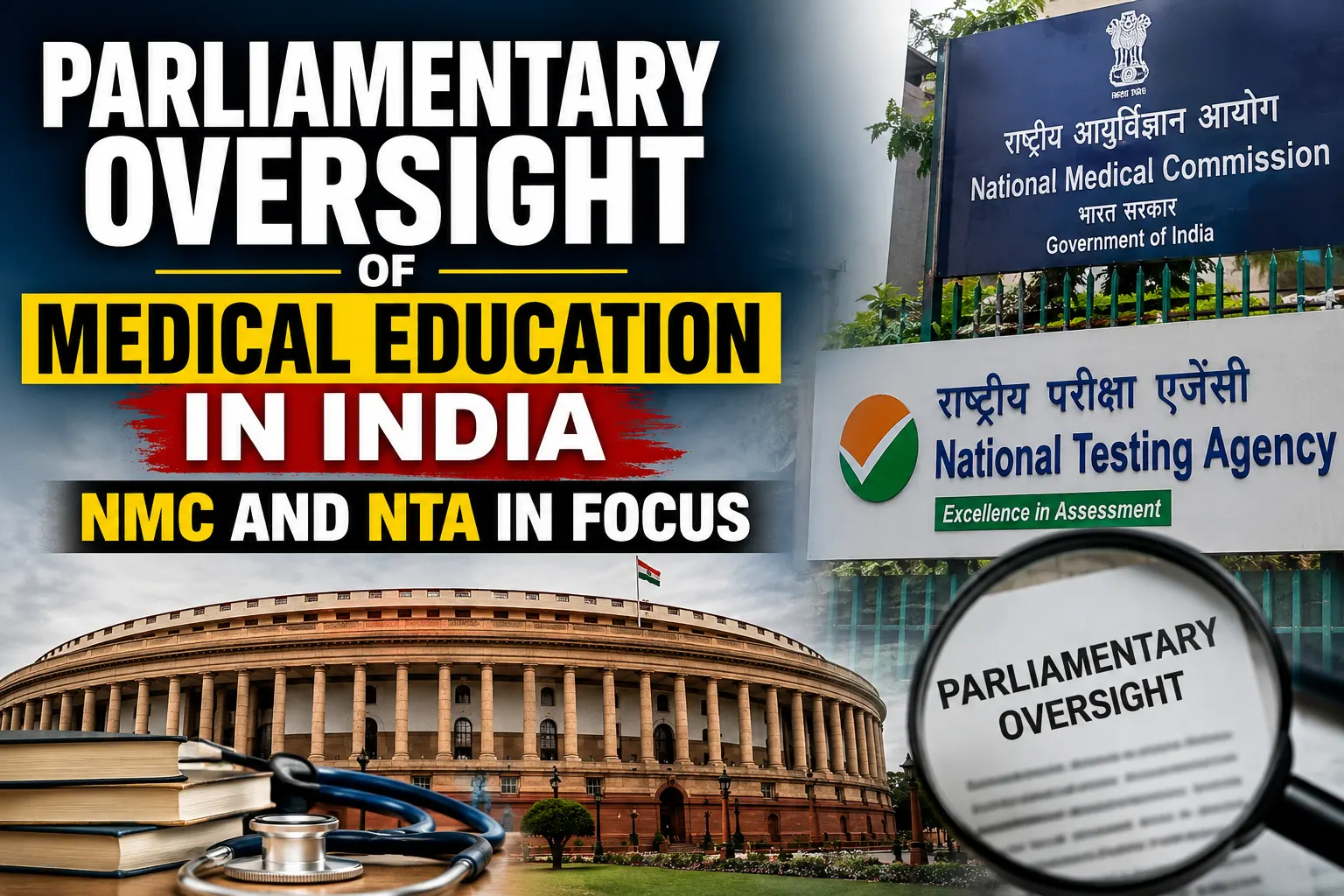
Over the last ten years, the transformation of medical education in India has been unparalleled. Policy changes such as abolishing the Medical Council of India (MCI) and establishing the National Medical Commission (NMC) as well as introducing the National Eligibility cum Entrance Test (NEET) as the one-entry test for all medical college admissions, have made the medical education system, more accountable, transparent, and based on merit.
Despite these changes, the medical education system in India has come under severe public and political criticism. Irregularities in the medical entrance exams, lack of transparency, and the inefficiency of the regulatory bodies have all been the cause of the criticism. Central to these debates are the National Medical Commission (NMC) and the National Testing Agency (NTA).
There has been a surge in demand for accountability on the part of the NMC and the NTA from parliamentary committees, lawmakers, medical federations, students, and parents. This demand has been directed toward the functioning of NMC and NTA, the existing safeguards, and the protective measures required.
This article examines the increasing parliamentary oversight for medical education in India, the changing role of the NMC and NTA, the new concerns of parliament members, and the potential impact of these issues on the medical aspirants in India.
Students and parents seeking regular updates on medical admissions often rely on MBBS Advisor for trusted guidance and information.
Parliamentary Oversight in India
Overseeing the parliament means that the parliament has the authority to control the management and review the operation of different ministries and departments in the government.
Oversight of the NMC protects:
- Public interests
- Constitutional mandates
The Parliamentary Standing Committees are the primary tool for oversight of the NMC.
These committees review:
- Grievances
- Proposals
- Requests
- Policies
- Actions
The committees stimulate the need for changes in policies and the restructuring of institutions.
The Changes in the Structure for Governing Medical Education
In the past few decades, India's medical education system has gone through some changes at the structural level.
For a long time, the Medical Council of India (MCI) was the only governing body that had control over:
- Approvals for medical colleges
- Setting of medical school curriculum
- Medical faculty
- Ethics
For a long time, there were concerns about the MCI's ineffectiveness and numerous reported cases of corruption which demanded the restructuring of the MCI.
After a prolonged discussion, the National Medical Commission Act, 2019 was passed, and the MCI was replaced by the National Medical Commission (NMC).
To find out more about the provisions of this Act, visit the National Medical Commission.
With greater emphasis on accountability and transparency, the NMC was operationalized in September 2020.
Medical aspirants can also explore admission-related resources through MBBS Advisor to stay informed about policy developments.
The NMC's Purpose
For the medical education system and the allied professions in India, the NMC is the top tier authority.
Its duties involve:
- Medical College recognition
- Approval of new medical colleges
- Control of medical education (both undergraduate and postgraduate)
- Development of competency-based curricula
- National Medical Register upkeep
- Standardization of ethics
- Assessment of institutions
The Commission works with autonomous boards to supervise most of medical regulation.
These are:
- Undergraduate Medical Education Board
- Postgraduate Medical Education Board
- Medical Assessment and Rating Board
- Ethics and Medical Registration Board
With these in place, NMC intends to innovate medical education with respect to uniformity of standards of all medical schools.
The Growth of the National Testing Agency (NTA)
The NTA, founded in 2017, is responsible for the execution of entrance examinations on a national level.
For further information, please visit the National Testing Agency.
Prominent examinations conducted by the NTA are:
- NEET-UG
- CUET
- JEE Main
- UGC NET
Within medical education, NTA is responsible for the NEET-UG examination, which is the singular examination for entry into medical schools in India.
Alongside this, the NEET examination system has altered the framework of medical entrance examinations by establishing a singular entrance system focused on merit.
The Focus of Parliament on Medical Education
Parliament's focus on medical education has grown due to a wide array of causes.
Most importantly, medical education and practice are of concern to most of the populace.
Increasing Numbers of Applicants
For the NEET, three million students are competing for medical program placements.
Examination Controversies
Integrity issues surrounding examinations, alleged paper leaks, and worries about the fairness and consistency of procedures have become the subject of public discourse.
Lawmakers have shown increased interest in the following:
- Security frameworks
- Protection of personal information
- Procedures on the lodging and handling of complaints
- Procedures for the processing and releasing of results
Expansion of Medical Colleges
The rapid increase in medical colleges in India has raised concerns in Parliament about whether the expansion has included mechanisms for quality protection.
Caring for Students
Concerns about mental health, exam-related stress, access to counseling, and fairness in education have emerged on the policy agenda.
Parliamentary Standing Committee Reviews
Parliamentary Standing Committees meet to summon officials from the ministries and statutory bodies to explain the policies and administrative actions.
Typical issues include the following:
- Readiness of Institutions
- Administration of Exams
- Compliance with Regulation
- Adequacy of Infrastructure
- Initiatives for Training and Development
Recommendations made by committees are not legally binding, but they have significant influence on subsequent reforms and policies. They are an important mechanism for ensuring democracy.
NMC and Parliamentary Oversight
Since its inception, the NMC has received both acclaim and criticism.
Commonly discussed areas during oversight include the following:
Quality of Education
The increasing number of medical seats has raised concerns about the adequacy of Quality of Education. Rates of Fulfillment of Faculty, Infrastructure of Institutions, and Adequacy of Clinical Exposures are common concerns.
Evaluation Procedures
The move away from traditional methods of Evaluation toward Evaluation Procedures that are largely Technology Driven has been the subject of debate. Proponents argue that technology has made the procedures more transparent, while opponents argue that they are devoid of the real context.
Curriculum Reforms
Feedback related to competency-based medical education has positively received by many stakeholders.
However, anxiety persists regarding their implementation across all institutions.
Medical Workforce Planning
Parliamentarians have advocated for the need to match the expansion of education with the expansion of the workforce.
NTA and Examination Integrity
There has been a lot of interest regarding the NTA's management of the national examinations, particularly in the following areas:
Security Protocols
Lawmakers have requested information on:
- Security of question papers
- Monitoring of examination centers
- Cybersecurity
- Encryption
Grievance Redressal
Students want to know more about the mechanisms for:
- Technical complaints
- Results discrepancies
- Complaints about the examination
Transparency Measures
Discussions in the committee have focused on the need to communicate to the public to retain their confidence.
Capacity Management
To manage the logistics of having millions of candidates, plans and resources for contingencies are needed.
NEET and Medical Admissions
In many ways, NEET has changed the medical admissions framework in India. Its proponents claim that NEET:
- Has reduced the number of entrance examinations
- Has formalized and improved the selection process
- Has made the process more transparent and fair
Critics, on the other hand, cite problems related to:
- Coaching
- Language
- Rural disadvantage
- Examination stress
The goal of parliamentary oversight is to take into consideration and balance all of these concerns and strive for equity.
Students can learn about the exam from the website of the National Testing Agency.
Many candidates also use MBBS Advisor to understand counselling procedures and medical admission pathways.
Medical Education Infrastructure in India
India has made great strides in expanding its medical education infrastructure.
According to recent updates from the National Medical Commission, India has seen an unprecedented increase in the number of opened medical colleges and MBBS seats.
Some of the goals of this advancement aim to:
- Alleviate the shortage of qualified medical practitioners
- Increase the populations access to healthcare
- Decrease disparities
- Increase regional healthcare workforce sustainability
Growth also requires stronger regulations.
Committees in Parliament have requested that quantity not be achieved at the expense of quality.
Global benchmarks maintained by organizations such as WHO and international directories like WDOMS continue to highlight the importance of maintaining quality standards in medical education.
Student Perspectives and Public Expectations
The student body of a massive medical education system is a key stakeholder.
Some of the more prominent hurdles that aspirants have included in past feedback are:
- Fair testing
- Predictable policies
- Timely scheduling of career counseling
- Accurate information
- Mental health resources
Parents have their own expectations. They want efficient, effective, and transparent operations from medical colleges.
Increased legislature engagement is an indication of the fulfillment of expectations of society as a whole.
Students frequently turn to MBBS Advisor for updated information regarding medical admissions and counselling.
Ensuring Institutional Accountability
Strong institutions are built on public trust.
Accountability measures should ensure that regulatory bodies:
- Justify decisions
- Address administrative errors
- Optimize operations
- Improve practices based on stakeholder engagement
Legislative oversight should not be strictly punitive.
Rather, it should be intended to improve governance.
Positive checks and balances on an institution can increase its ability to operate and adapt.
Discussion of Proposed Future Reforms
There are a myriad of frequent proposals put forth to address key issues.
Some of these proposals include:
Robust Safeguards for Testing
Better cybersecurity and logistics would promote greater trust in securing national testing.
Enhanced and Consistent Communication
Regular outreach to communicate policies and procedures would promote greater trust and reduce uncertainty.
Transparency Grievance Procedures
Improved trust can be achieved with greater accessibility and effectiveness of grievance procedures.
Data-Driven Regulation
Monitoring technology can identify shortfalls in medical institutions.
Mental Health Support
Counseling resources are available to help manage stress related to examinations for some students.
Balancing Expansion and Excellence
India confronts an intricate situation.
The nation must look to:
- Grow opportunities for medical training,
- Keep educational quality,
- Uphold fairness in access,
- Maintain the integrity of medical examinations, and
- Foster trust in medical services.
Achieving this will require the collective efforts of regulators, policy makers, educators, health care professionals, and students.
One part of this overarching governance system is parliamentary oversight.
Additional guidance and updates related to these developments can also be accessed through MBBS Advisor.
Conclusion
India’s medical education stands at a critical place in history.
The two institutions, the NMC and the NTA, shape the future of healthcare education and workforce development.
As the Parliament expands oversight with greater intensity to put a sharper focus on open accountability and effectiveness of institutions, no system is perfect.