 Russia
 Belarus
 Georgia
 Kazakhstan
 Kyrgyzstan
 Uzbekistan
 China
China Nepal
Nepal Bangladesh
 Poland
 Romania
 Slovakia
 Hungary
 N. Macedonia
 Vietnam
 Canada
 Armenia
 UK
UK Australia
 USA
USA Ireland
 Germany
 New Zealand
 Italy
Italy France
 Singapore
 Netherlands
 Sweden
 Switzerland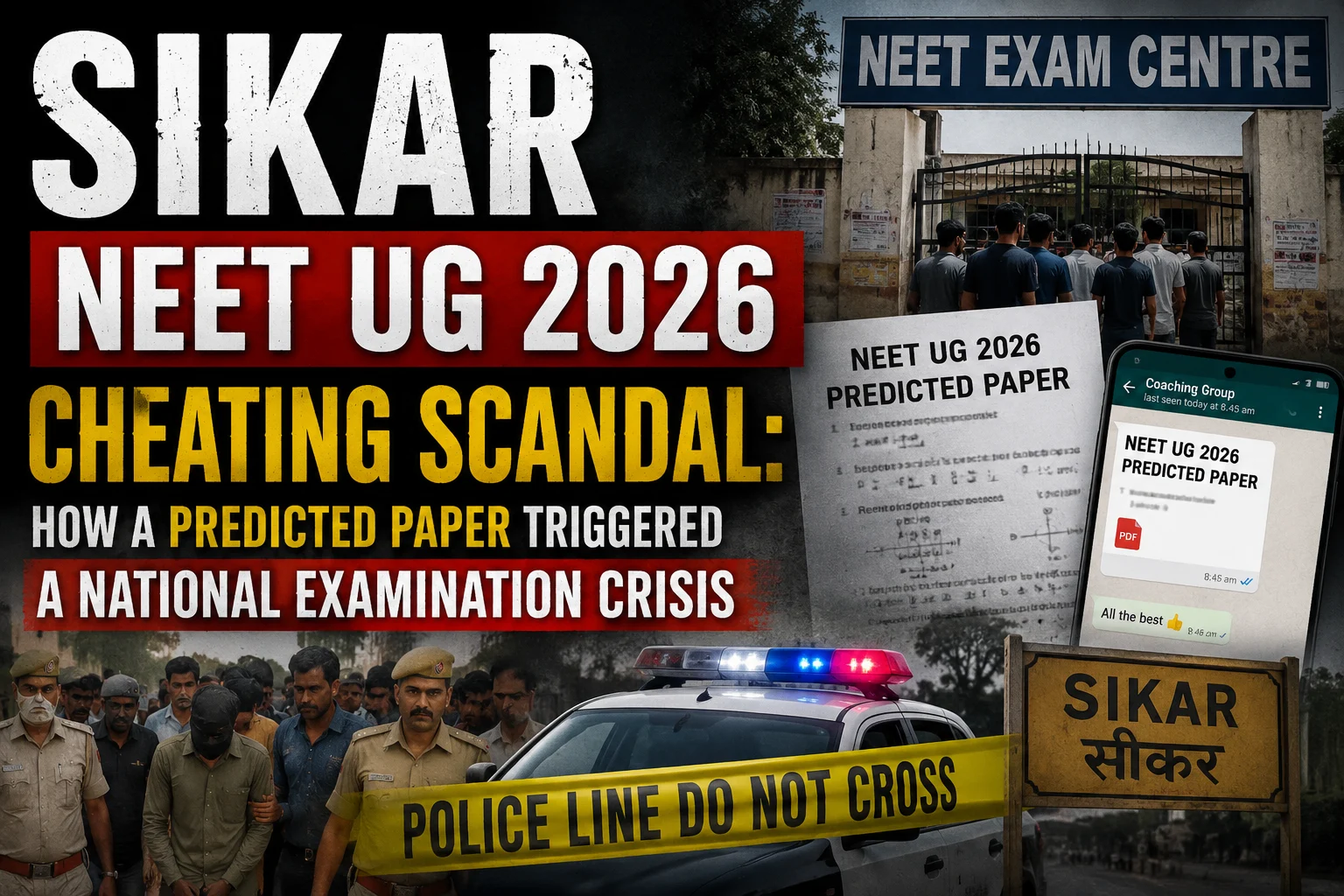
The 2026 Sikar city cheating scandal, which emerged during India’s national unified undergraduate medical entrance exam NEET UG, directly ignited a full credibility crisis in India’s medical entrance exam system.
As a well-known national medical exam preparation hub in India, Sikar, located in the state of Rajasthan, draws hundreds of thousands of aspiring test-takers each year to gather and prepare for the exam.
The controversy began as nothing more than a so-called "exclusive predicted exam paper" that circulated privately among candidates in the lead-up to the test.
Only after conclusive evidence emerged post-exam proving this predicted paper matched a large share of the official exam’s real questions did authorities launch a full in-depth investigation, which ultimately led to the official cancellation of all 2026 NEET UG exam sessions linked to the incident.
Investigation Findings by Rajasthan SOG
Core clues compiled by Rajasthan’s Special Operations Group (SOG), the team that led the investigation into the case, revealed layer by layer that this was not an isolated, accidental leak of test content.
Rather, it was a large-scale, organized cheating network that covered:
- Test content leakage
- Cross-channel dissemination
- Tiered distribution through intermediaries
SOG’s investigation spanned:
- Cash transactions
- Digital payment records
- Private communications between intermediaries
- Links between local coaching institutions and admissions counselors
The investigation reconstructed the complete funding and operational chain of the cheating network.
How the Fraud Network Operated
The scammers deliberately exploited test-takers’ anxiety over gaining admission to higher education.
They made false promises to candidates who paid substantial fees, including:
- Guaranteed high scores
- Exclusive practice question banks
- Internal exam information
- Assured admission opportunities in medical colleges
Using this structured fraud framework, the network generated massive illegal profits.
The operation involved extensive coordination among multiple actors and exposed the harmful practice of monetizing students’ admission-related anxiety.
Its impact caused serious damage to the fairness of India’s national public examination system.
Sikar’s Role as a Major Exam Preparation Hub
As one of Rajasthan’s fastest-growing exam preparation centers, Sikar hosts thousands of students every year preparing for national competitive examinations, including the NEET examination.
In 2026, the question paper leak controversy emerging from the region quickly attracted nationwide attention.
A local special investigation task force was the first authority to release updates regarding verification progress.
The task force carried out:
- Interrogations
- Searches
- Detentions
Throughout the investigation, authorities maintained a neutral approach and avoided extending liability beyond verified suspects.
The probe focused only on identified networks and core suspects rather than broadly accusing all educational institutions operating in the region.
Discovery of a Cross-State Transmission Network
During the verification process, investigators discovered that the question leak operation had developed a mature cross-state transmission chain.
States linked to the network included:
- Rajasthan
- Haryana
- Maharashtra
- Kerala
Individuals involved allegedly distributed stolen questions through:
- Encrypted PDF files
- Private online groups
- Digital communication platforms
These findings strengthened the conclusion that the incident represented organized and coordinated misconduct rather than isolated individual actions.
Transfer of the Investigation to the CBI
The case was later transferred to the Central Bureau of Investigation (CBI).
The CBI announced five major investigation priorities:
- Suspected beneficiaries
- Financial transactions
- Digital evidence
- Communication records
- Cross-state connections
To date, dozens of local individuals in Sikar have reportedly undergone questioning.
The investigation aims to identify:
- Individuals responsible for transmitting leaked papers
- Recipients of leaked content
- Funding arrangements behind the operation
- The full scale of the organized network
Impact on Candidates and Public Trust
The significance of this case extends far beyond the question leak itself.
It directly affects the security and fairness of national examinations across India.
Every year, hundreds of thousands of candidates spend months or years preparing for competitive examinations.
Question paper leaks undermine public confidence in examination systems and create significant challenges for honest candidates.
Four Major Challenges Faced by Candidates
Honest candidates generally face:
- Emotional pressure
- Uncertainty regarding exam outcomes
- Competitive anxiety
- Loss of confidence in merit-based admissions
The cancellation of the 2026 NEET examination and subsequent investigations directly affected millions of rule-abiding students nationwide.
Many candidates reportedly turned to educational counseling platforms such as MBBS Advisor to explore alternative academic planning options.
Illegal Practices Exposed by the Scandal
The Sikar controversy exposed four major categories of illegal activities within parts of the admission ecosystem:
- Paid rank guarantee schemes
- Early access to examination papers
- Reselling leaked exam materials
- Unqualified candidates obtaining admissions through improper means
These practices threaten both educational integrity and public trust in professional education.
Guidance for Medical Aspirants
In response to these developments, students planning to apply for medical programs in India are encouraged to:
- Follow legal admission pathways
- Verify all information through official sources
- Avoid individuals claiming access to exam papers
- Reject guaranteed-rank or guaranteed-admission schemes
- Use trusted educational guidance services when planning admissions
Strengthening Examination Security
The public debate surrounding this incident has generated strong calls for stronger examination security measures.
Industry experts have proposed five key reforms:
1. Upgrade Digital Monitoring Systems
Strengthen surveillance and digital monitoring infrastructure at examination venues.
2. Enhance Question Paper Encryption
Improve question paper encryption technologies and security protocols.
3. Strengthen Printing and Distribution Controls
Implement stricter oversight throughout the printing, transportation, and distribution process.
4. Establish Real-Time Monitoring Mechanisms
Create continuous monitoring systems capable of identifying suspicious activities during examination operations.
5. Build Rapid Investigation Frameworks
Develop specialized rapid-response mechanisms for detecting and investigating examination-related violations.
Medical Education Compliance and Transparency
The controversy has also renewed discussions about medical education governance and transparency.
India’s statutory medical education regulator, the NMC, carries responsibility for maintaining educational standards and regulatory compliance.
Medical institutions should also maintain recognition standards consistent with the WDOMS and internationally recognized medical education frameworks associated with the WHO.
These standards help support educational quality, degree recognition, and professional accountability.
Public Reaction and Systemic Concerns
This incident triggered strong public reactions across India.
Many observers argue that long-standing regulatory weaknesses contributed to declining public confidence in high-stakes examinations.
As concerns over transparency and fairness intensified, the controversy evolved into a broader debate about accountability, examination security, and institutional trust.
Conclusion
The Sikar NEET UG 2026 cheating scandal represents more than a single examination controversy.
It exposed vulnerabilities in examination security systems, highlighted the risks posed by organized cheating networks, and intensified scrutiny of regulatory oversight mechanisms.
For students, the key lesson remains clear: pursuing medical education through legitimate examination and admission processes is essential for protecting both educational opportunities and long-term professional credibility.
Strengthening examination security, ensuring transparent investigations, enforcing strict regulations, and promoting ethical admissions practices will remain critical to restoring trust in India’s medical education system.