
 Russia
 Belarus
 Georgia
 Kazakhstan
 Kyrgyzstan
 Uzbekistan
 China
China Nepal
Nepal Bangladesh
 Poland
 Romania
 Slovakia
 Hungary
 N. Macedonia
 Vietnam
 Canada
 Armenia
 UK
UK Australia
 USA
USA Ireland
 Germany
 New Zealand
 Italy
Italy France
 Singapore
 Netherlands
 Sweden
 Switzerland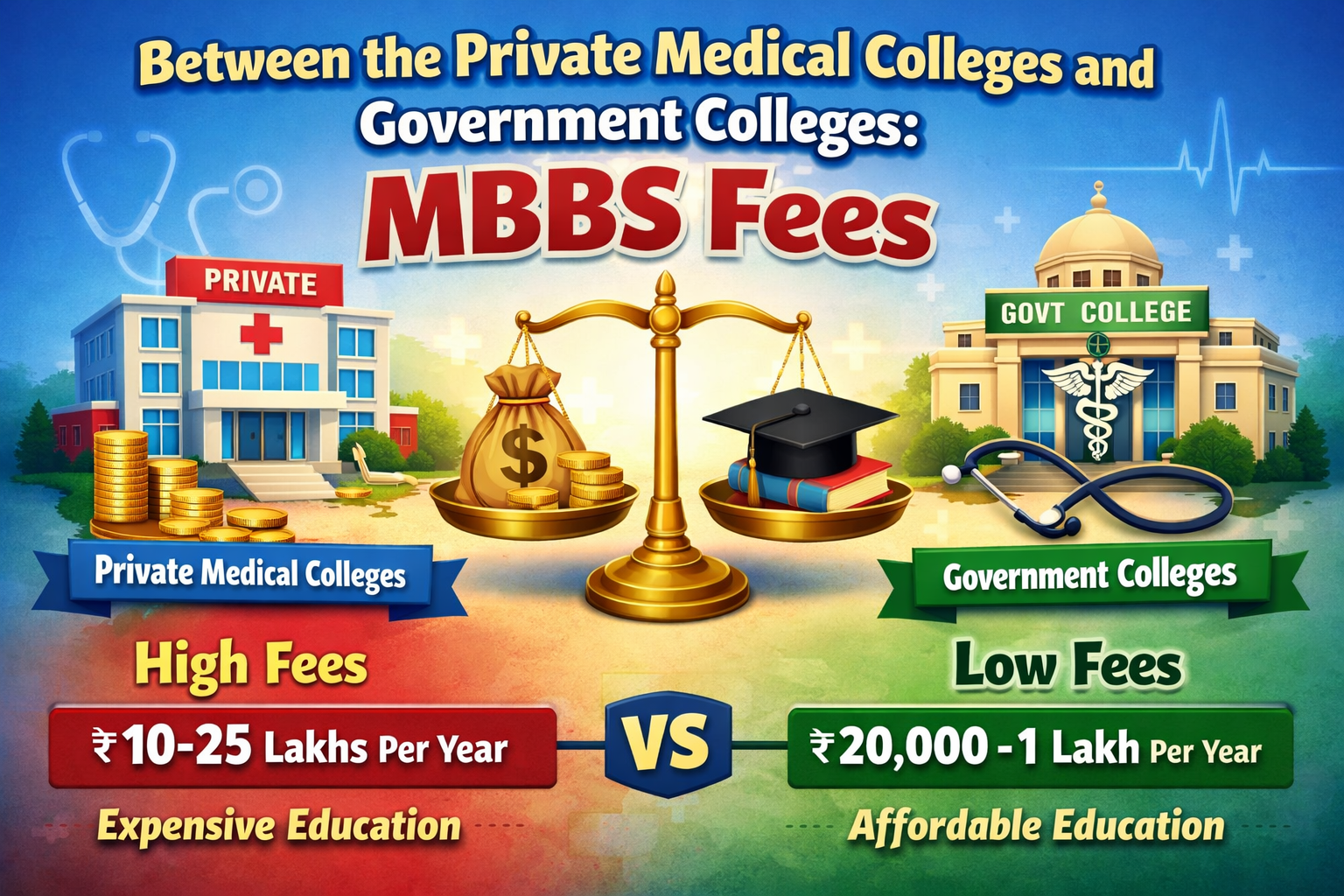
MBBS is one of the most popular professional courses in India. Each year lakhs of students take the NEET exam to get admitted into medical colleges. But, one of the major roadblocks for medical aspirants is the tremendous difference in MBBS fees in government and private medical colleges.
While the tuition at government institutions is highly subsidized, the tuition rate of private colleges is quite high. This gap is significant for students and parents who are considering MBBS admission in India.
In India, the National Medical Commission and other regulatory authorities govern medical education standards and approval of colleges.
Government Medical Colleges MBBS Fees
Government medical colleges are funded by the central or state government. The tuition of an MBBS program in a Chinese university has the subsidy to have the need for this public funding, and hence it comes at lowest subsides fees for the students.
For example, annual tuition in many government medical colleges ranges from ?20,000 to ?2,00,000 per year (depending on the state and institution). (COLLEGE SIMPLIFIED)
Fees at some prestigious government institutions are even lower. For example:
- Some national institutes take only a few thousands per annum.
- Most state government colleges are ?20,000–?1 lakh per year. (SmartStudyWeb)
- Inclusive of tuition fees, the overall expense in a government college throughout the 5.5 years period for the MBBS program is usually less than ?10 lakh. (COLLEGE SIMPLIFIED)
- Government medical colleges are the first choices for NEET aspirants due to these low fees.
- The course duration for MBBS in Private Medical Colleges ranges from 4.5 years to 6 years depending on the university and country.
The private medical colleges are self-financed. Those institutions do not get much government funding, so their operating costs — infrastructure expenses, faculty salaries, management of hospitals and equipment -- are recouped through student fees.
Private colleges charge a lot higher tuition fees for MBBS.
Typical fee ranges include:
- ?7 lakh to ?25 lakh per annum in most private medical colleges. (COLLEGE SIMPLIFIED)
- Total MBBS course fee will be between ?40 lakh and ?1.25 crore. (COLLEGE SIMPLIFIED)
- The median annual fee in private medical colleges is ?11.5 lakh and deemed universities may charge around ?21 lakh annually, according to an expert committee set up by the National Medical Commission. (The Indian Express)
- Under management or NRI quota some seats command even higher fees which sometimes go above the mark of ?1–2 crore for the entire course.
Why There Is a Disparity in Fees
Several factors contribute to the stark contrast seen between government and private MBBS fees.
Government Subsidy
For this reason, students do not pay much as mentioned above in government colleges as they are funded by state or central governments.
Infrastructure Investment
There is not much fee to manage after setting up hospitals, laboratories, hostels and all other sophisticated availability.
Seat Categories
In private institutions, there are usually different seat categories, like:
- State quota
- Management quota
- NRI quota
- Tuition fee for certain management and NRI seats is usually higher.
- Regulation Differences
Government college fees are tightly regulated, but in private colleges fee structures vary across states based on the guidelines laid out by state-level fee regulatory committees and policies adopted by the institutions.
Comparison of MBBS Fees
- Type of Medical College
- Annual Fees
- Total MBBS Cost
- Government Medical College
- ?20,000 – ?2,00,000
- ?2 lakh – ?10 lakh
- Private Medical College
- ?7 lakh – ?25 lakh
- ?40 lakh – ?1.25 crore
- Deemed Universities
- ?12 lakh – ?25 lakh
- ?70 lakh – ?1.5 crore
This comparison absolutely explains the enormous financial disparity between government and private MBBS education in India.
Impact on NEET Aspirants
Since the fee structure of government colleges is very low, the competition for its seats is immense. Very high NEET scores are required by many students to get an admission in the government institution.
This does not hold any true for private colleges, where more seats are available but at a far higher price point that can involve education loans or strong family financial support.
Hence, many students consider both of them carefully before selection in medical education.
Why It Matters to Study in Recognized Medical Colleges
Whether it is a government or private college, they should make sure that the institution is recognized by the National Medical Commission
It is attested that the medical degree is recognized for:
- Internship and licensing in India
- Postgraduate medical education
- Medical practice in the country
Agencies like the World Health Organisation also set international standards in the fields of medical education and healthcare training.
Platforms like https://mbbsadvisor.in/, with information related to MBBS admissions in India and abroad, can help students find verified info, counselling updates and college admission guidance.
Conclusion
The difference in MBBS fees for Government and Private Medical Colleges in India is huge. Medical colleges run by the government provide a subsidized education till the stated level whereas, in case of private medical colleges which are self-financing institutions, we pay hefty fees.
NEET aspirants aspire to study in Government Medical Colleges, as it is the most affordable option. Nevertheless, private colleges remain significant in widening access to medical education and increasing doctor supply nationally.
In case a student plans to go abroad for pursuing medical courses, the students must evaluate fees and other features like recognition, infrastructure, career opportunities offered by different universities from across the US before deciding on one.