 Russia
 Belarus
 Georgia
 Kazakhstan
 Kyrgyzstan
 Uzbekistan
 China
China Nepal
Nepal Bangladesh
 Poland
 Romania
 Slovakia
 Hungary
 N. Macedonia
 Vietnam
 Canada
 Armenia
 UK
UK Australia
 USA
USA Ireland
 Germany
 New Zealand
 Italy
Italy France
 Singapore
 Netherlands
 Sweden
 Switzerland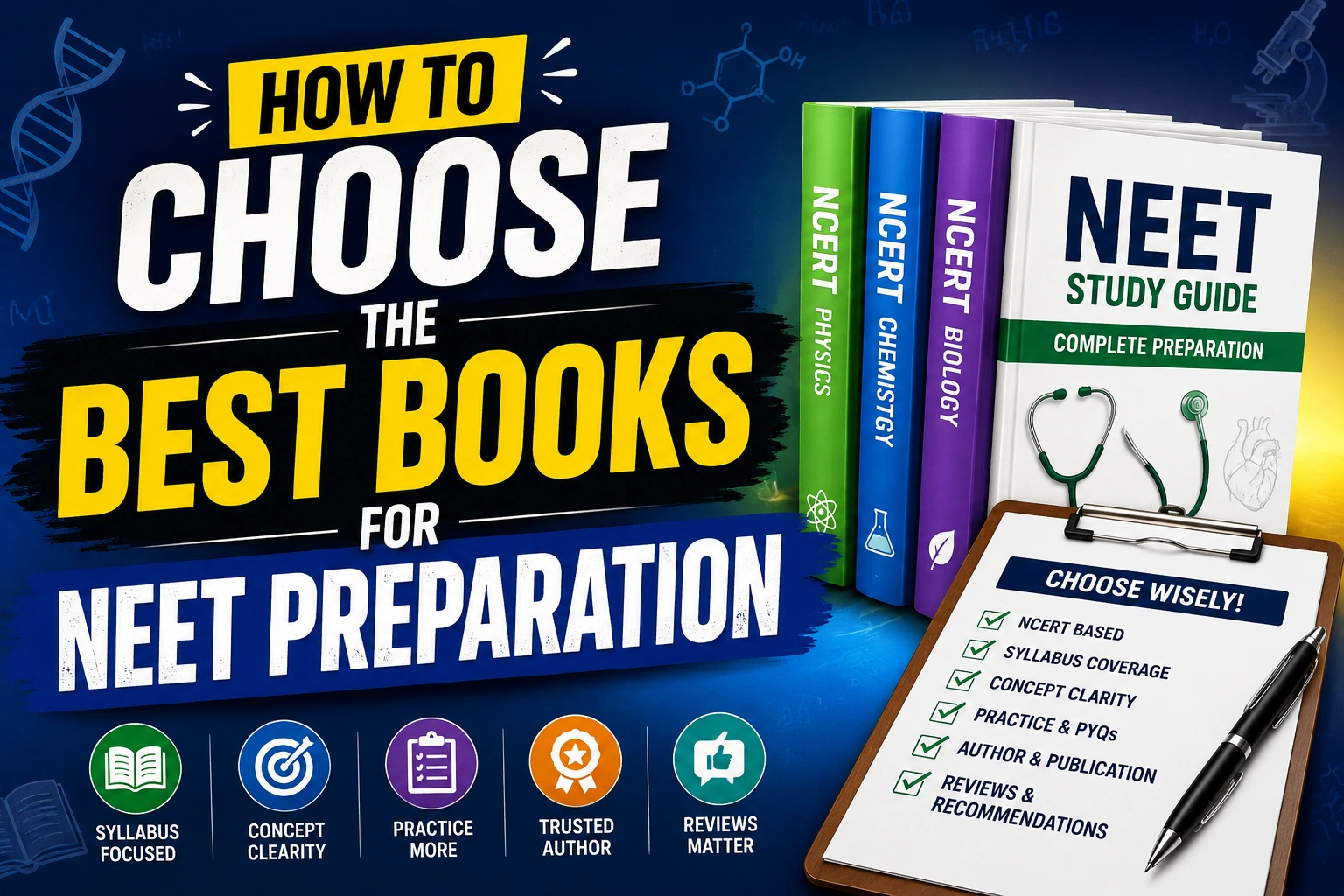
Introduction
For many students, the National Eligibility cum Entrance Test (NEET) is the gateway to a promising career in medicine and healthcare. Each year, aspiring doctors across the country face off against one another for access into MBBS, BDS, AYUSH, and other allied medical courses. High scores in NEET require dedication, a smart approach to studies, frequent revisions, and selecting the best study material.
One of the common things we see in toppers is that they do not study from numerous books. Instead, they focus on a handful of good-quality books, revise repeatedly, and solve countless questions.
Students who want complete guidance on exam strategy, eligibility, syllabus, and counselling can visit NEET Guide. For rank prediction and admission planning, students can use the NEET Rank Predictor available on MBBS Advisor.
Importance of Selecting the Right Books for NEET
Many students believe that more books mean better preparation, but toppers strongly disagree. The best strategy is limited books + maximum revision.
Good study material should:
- Simplify concepts
- Provide examples and illustrations
- Include practice questions
- Contain previous year questions
- Follow updated syllabus
NCERT remains the foundation of preparation for NEET.
NCERT: First Preference of All NEET Toppers
NCERT textbooks are the backbone of NEET preparation.
- Biology: Direct NCERT-based questions
- Chemistry: Inorganic heavily NCERT-based
- Physics: Strong conceptual foundation
Students should revise NCERT multiple times and make short notes for quick revision.
Biology Books Preferred by NEET Toppers
Biology carries the highest weightage in NEET.
Recommended approach:
- NCERT Biology (Class 11 & 12)
- MCQ practice books
- Previous year question banks
Focus on diagrams, terms, and NCERT lines.
Chemistry Books Preferred by Toppers
Chemistry includes Physical, Organic, and Inorganic sections.
- Physical Chemistry: numerical practice
- Organic Chemistry: reaction mechanisms
- Inorganic Chemistry: NCERT mastery
NCERT remains essential for scoring well in NEET Chemistry.
Best Physics Books for NEET Recommended by Toppers
Physics is often the most challenging section in NEET.
Students should focus on:
- Concept clarity
- Formula sheet preparation
- Regular numerical practice
- Previous year questions
Why NEET Toppers Recommend Previous Year Papers
Solving previous year papers helps students:
- Understand exam pattern
- Improve speed
- Identify important topics
- Reduce mistakes
This is essential for scoring well in NEET.
Mock Tests: Essential Part of NEET Preparation
Mock tests help simulate real exam conditions and improve performance.
After tests, students can use the NEET Rank Predictor to estimate their expected rank.
How NEET Toppers Use Books Effectively
Toppers:
- Complete NCERT first
- Make short revision notes
- Practice MCQs daily
- Revise weak areas repeatedly
Mistakes Students Make in Book Selection
Common mistakes include:
- Using too many books
- Ignoring NCERT
- Random book selection
- Not completing one book fully
Value of Legitimate Medical Education Resources
Medical aspirants must rely on authentic sources:
- World Health Organization (WHO): WHO
- National Medical Commission (NMC): NMC
- World Directory of Medical Schools (WDOMS): WDOMS
These are important for medical career planning after NEET.
Importance of Guidance After NEET Exam
After qualifying NEET, students must focus on:
- Counselling process
- College selection
- Fee structure
- Admission strategy
Complete guidance is available on MBBS Advisor.
Balanced Book Strategy for NEET Preparation
Successful strategy:
- NCERT first
- One reference book per subject
- Regular mock tests
- Continuous revision
Conclusion
The best NEET preparation strategy is not about using many books but using the right books effectively.
NCERT remains the foundation of NEET preparation, supported by selective reference books and consistent practice.
With proper guidance from platforms like MBBS Advisor and tools like the NEET Rank Predictor, students can improve their chances of securing admission in top medical colleges.
For international medical planning, students should always verify institutions through WHO, NMC, and WDOMS.