 Russia
 Belarus
 Georgia
 Kazakhstan
 Kyrgyzstan
 Uzbekistan
 China
China Nepal
Nepal Bangladesh
 Poland
 Romania
 Slovakia
 Hungary
 N. Macedonia
 Vietnam
 Canada
 Armenia
 UK
UK Australia
 USA
USA Ireland
 Germany
 New Zealand
 Italy
Italy France
 Singapore
 Netherlands
 Sweden
 Switzerland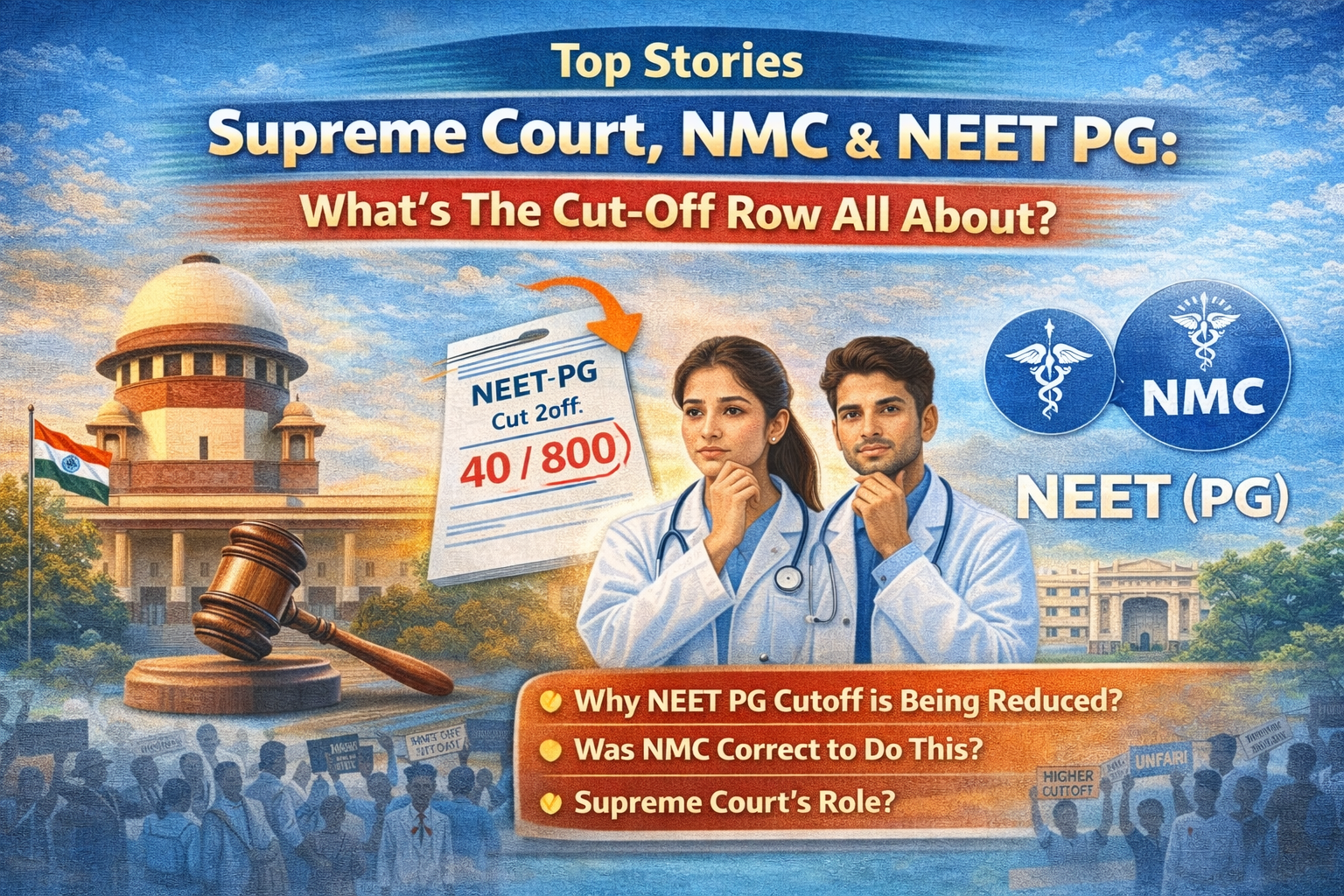
The NEET PG cut-off and the recent controversy over it has been a matter of national concern, drawing attention of several important institutions including the Supreme Court & National Medical Commission (NMC). Merit vs seat utilization debates, frequent changes in qualifying percentiles and revised eligibility rules have left thousands of postgraduate medical aspirants beleaguered. JUDICIARY’S, REGULATOR’S AND EXAMINATION AUTHORITIES ROLE: FOR A CLEAR PERCEPTION OF THIS MATTER I mean, they track policies relevant to your admission updates through MBBS Advisor.
Timeline of Events of NEET PG Cut-Off Controversy
NEET PG is the single entrance exam to get admission in MD and MS courses in India. Traditionally, this has been followed by fixing a minimum qualifying percentile after which only the eligible candidates enter postgraduate training. Yet even in recent years authorities have made multiple revisions of the cut-off after results are out, because they need to fill empty chairs.
This has created controversy. And those who passed under more stringent criteria felt the merit value had become diluted even as students who initially didn’t qualify became suddenly eligible. The putative cut-off litigation became an academic jurisprudential issue, when petitions were filed questioning whether such revisions violate any academic standards or compromise patient safety.
Role of the Supreme Court
When education-related policy decisions are challenged, the Supreme Court is a major player. In NEET PG cut-off case, Court considered whether the principles of merit and fairness are violated by reducing qualifying percentile?>
Important issues presented to the Court included:
- Does lowering the cut-off compromise standards within postgraduate medical education?
- Whether academic standards should be relaxed in light of emergency healthcare needs
- If repeated revisions kindle uncertainty for students
The Court has largely tried to navigate between two competing priorities: safeguarding merit-based selection, and making sure that medical seats don’t go unfilled when the country needs more specialists. Its observations have informed how authorities conduct future cut-off decisions.
Introduction of NMC and its Role
Statutory regulator: The National Medical Commission is the statutory authority to regulate medical education in India. It defines eligibility conditions, training standards, and admission policies for mbbs and pg courses.
In the context of the cut-off dispute, NMC has justified its decisions by stating that:
- However, year on year a large number of PG seats remain vacant.
- Cut-off temporarily lowered to tackle doctor shortages
- More trained specialists are required for quality patient care
But critics say that pushing the cut-off too low could be at odds with the competence of future doctors. This tension between accessibility and quality is at the center of the dispute.
Impact on NEET PG Aspirants
The cut-off dispute has caused worry and confusion for students. Where a fixed percentile is required, many candidates prepare for years. It makes planning impossible when that cut-off is altered subsequent to results.
Major effects on aspirants include:
- Uncertainty about eligibility
- Delayed counselling schedules
- Policy uncertainty leading to psychological stress
- Worries that rankings based on merit are losing moneda
- Platforms like MBBS Advisor help students make sense of these changes by elucidating how updated cut-offs impact the possibility of counselling and seat allocation.
The Core Debate: Seat Vacancy Vs Merit
The crux of the matter is, whether leaving PG seats vacant is better or lowering cut-offs to fill them up. Proponents of cut-off relaxation say that:
- Empty chairs are wasted taxpayers’ money
- India urgently needs more specialists
- Short-term loosening does not decrease standards permanently
Opponents argue that:
- High academic competence is required for postgraduate medical training
- Lowering the cut-offs might jeopardize patient safety
- Such continued relaxations communicate a wrong message to students
- There is no easy answer to the debate, which is why judicial oversight has become necessary.
International Recognition and Licensing Concerns
A further layer to the disagreement concerns global endorsement of medical qualifications. The need for global mobility and credibility in medical degrees
Key systems involved include:
- The World Directory of Medical Schools, an authoritative listing of all recognized schools around the world)
- FMGE is a licensing examination for foreign medical graduates coming to India
- A perception of lower domestic standards might impact the international reputation of Indian postgraduate qualifications. This makes adherence to strict training norms even more important.
Legal and Ethical Implications
Maharashtra's cut-off dispute is not just an administrative issue, it has also become an ethical one. It raises questions such as:
- Should academic benchmarks give way to healthcare needs?
- Is that fair to students who qualified under stricter standards?
- Increasing numbers while maintaining quality?
The Supreme Court’s engagement helps make sure these questions get aired in a transparent rule of law context, instead of being resolved by executive branch authorities alone.
Why Students Must Stay Informed
Medical education policy changes often follow a fast track. For students with no prior knowledge, the only google search will result in a failed career because they are not aware of the latest changes on date. Trusted guidance platforms such as MBBS Advisor keep the aspirants on track regarding NEET PG rules, counselling updates, and court directions.
Students also benefit from understanding the regulatory roles:
- Plan exam preparation realistically
- Avoid misinformation
- Make informed counselling choices
Final Thoughts
The NEET PG cut-off controversy signifies a larger battle between ensuring an access-oriented disparity in education while also fulfilling the healthcare demands of the nation. But the Supreme Court balances fairness (in accordance with the Constitution) while the National Medical Commission tries to balance standards and workforce demands. The relevance of international recognition and licensing is emphasized by systems such as the World Directory of Medical Schools and FMGE.
For aspiring medical professionals, the tale is stark: stay abreast of the machinations shaping medical education policy and preparing for licensing exams will be an ongoing process that does not stop after graduation or board certification. To help make sense of all these uncertainties, students would do well to read trusted sources like MBBS Advisor as they seek guidance on planning their medical careers.