 Russia
 Belarus
 Georgia
 Kazakhstan
 Kyrgyzstan
 Uzbekistan
 China
China Nepal
Nepal Bangladesh
 Poland
 Romania
 Slovakia
 Hungary
 N. Macedonia
 Vietnam
 Canada
 Armenia
 UK
UK Australia
 USA
USA Ireland
 Germany
 New Zealand
 Italy
Italy France
 Singapore
 Netherlands
 Sweden
 Switzerland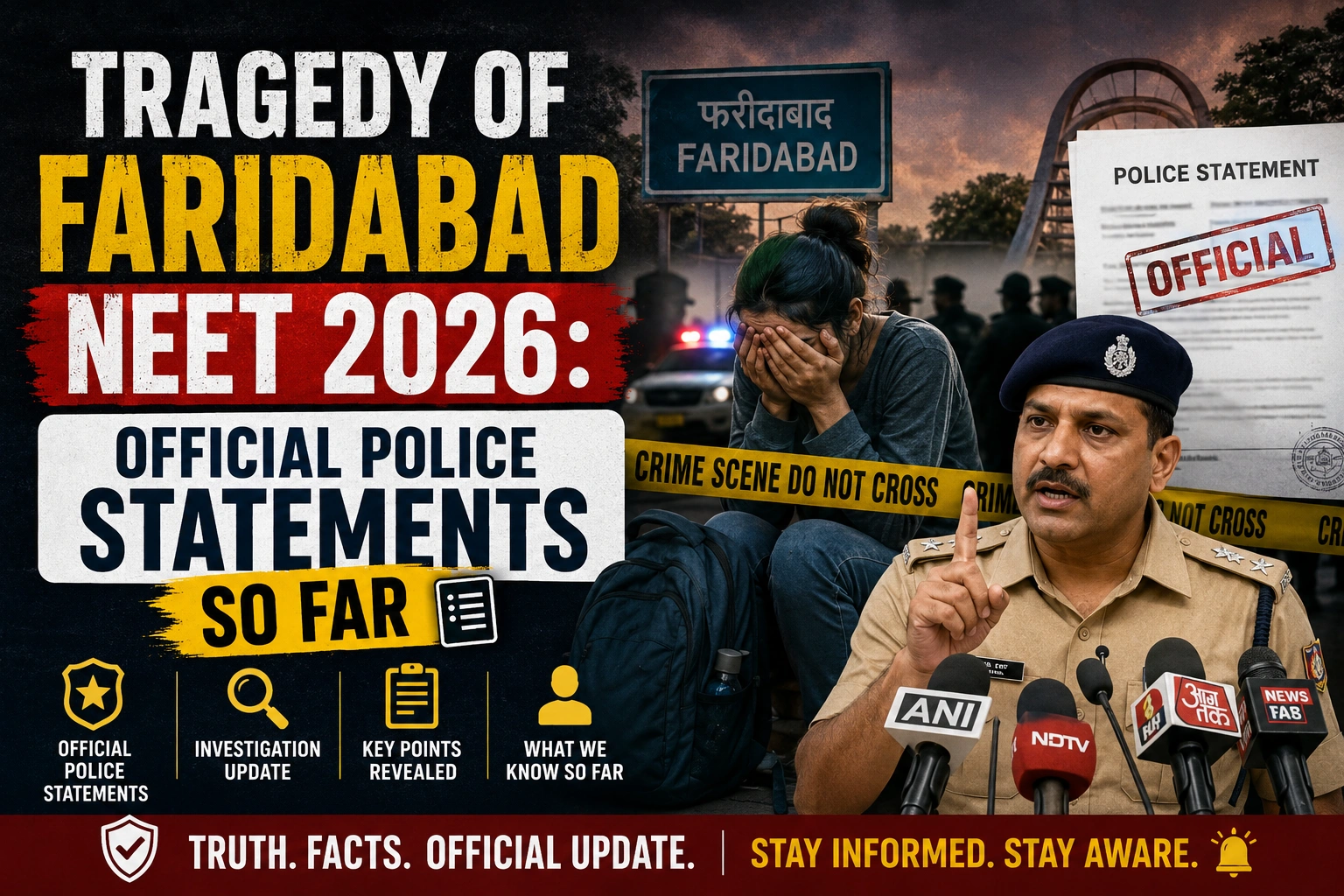
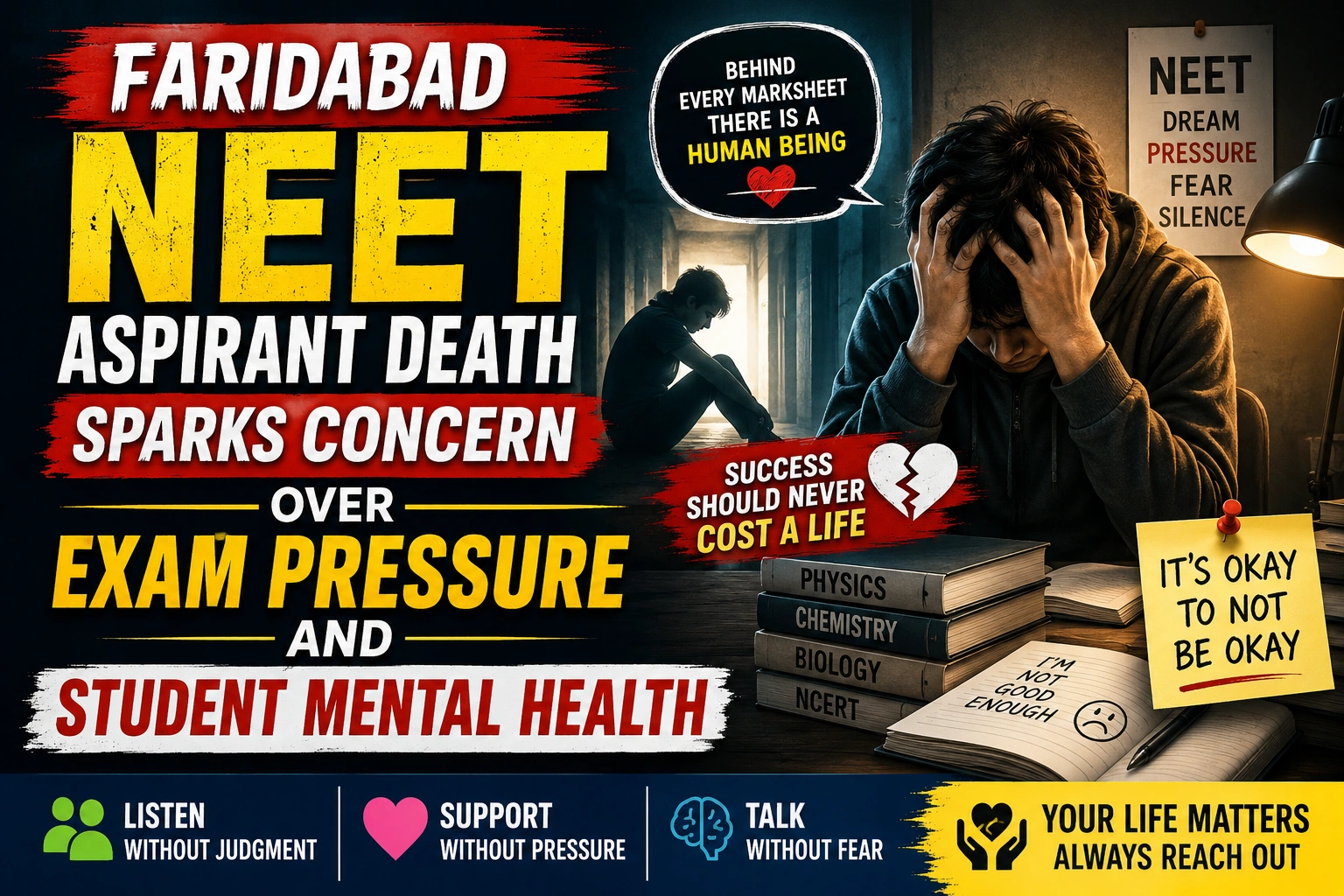
The Faridabad NEET 2026 tragedy is a primary topic of discussion among NEET aspirants, their parents, and educators across India. Following this unfortunate event, discussions have proliferated surrounding the concerns of student mental health, examination pressures, and the need to verify social media information, as well as ensuring that reliance is placed on credible information during crises.
Following the incident, a myriad of unsubstantiated claims were posted across the social media spectrum. In turn, the judiciary requested that the public refrain from posting unverifiable claims and stated that the investigation would rely solely on substantiated claims. This article intends to explain what has been officially articulated by the police, the need for students to avoid speculation, and the lessons this incident holds for NEET aspirants.
Medical examination aspirants may use the MBBS Advisor to obtain confirmed information regarding NEET, counseling and admission alerts, the NEET Rank Predictor, and MBBS opportunities abroad.
What Occurred in the Faridabad NEET 2026 Tragedy?
News of the Faridabad NEET tragedy became public due to reports of a deceased NEET aspirant. As was to be expected, news reports were published, and a plethora of assumptions and claims began to spread across social media platforms, some of which were investigatory in nature.
The response to this situation was almost always emotional, especially among the student population, the majority of whom were experiencing examination stress. Despite this, investigators have repeatedly stressed that the public should avoid drawing conclusions prior to the official completion of their investigation.
Police have asked everyone to extend their patience while evidence is collected before responding to any of the statements made online.
What Made the Incident Get So Much Media Coverage
NEET is one of the most competitive exams in India, with over two million students attempting it every year. Something happening to anyone connected to an exam that influences admissions to the field of medicine gets the media’s attention the most.
The case in Faridabad got even more attention because of the following reasons:
- The case was connected to an aspiring student for one of the medical entrance exams.
- Information of the case was posted and snapped up by the media and the public.
- Multiple reports of the case appeared, each one different, quickly.
- The public, students and parents alike, were anxious and restless due to the media’s coverage.
- Officials still asked the public to avoid speculating until official statements were released.
What is Known from Official Police Statements
So far, from what has been released to the public, police have focused on verifying facts and have not responded to the media’s coverage.
From these statements, police said that:
- The case is still under investigation.
- Evidence is collected in a forensic manner.
- Witness statements, particularly those of the family, are being taken.
- Where necessary, digital evidence is being collected and examined.
- Evidence for the case is being collected in a forensic manner.
- Police asked the public and the media to not post or spread false statements that may affect the case or the family.
- For the time being, police have said to treat officially posted statements as the only true statements.
Why Rumors Arise After These Incidents
In the current information age, evidence and statements are available in real time and spread at the speed of light.
Regrettably, inaccurate information spreads quicker than verified information. Some examples of how images, distributions, statements and even news reported as official can spread faster than the truth include:
- Social media users posting or reposting because of an emotional reaction.
- Posting or reposting images because they are sensational and unverified.
- Posting or reposting news because of an emotionally edited or sensational video.
- Posting or reposting a statement and attributing it to an official source.
It is because of the spread of unverified or false information that police agencies advise the public to not repost messages unless they come from official government or police sources.
Why You Should Wait for the Official Investigation
Every criminal investigation or sensitive investigation is governed by law and follows a procedure. This procedure puts a mandate on the investigators to:
- Collect evidence and verify witness statements.
- Review and analyze forensic and digital evidence.
- Confirm time frames.
- Draft findings that are admissible to court.
Once the findings are made, and the investigators are ready to report to court, you may start to draw your own conclusions and report on the matter. In the meantime, keep in mind that social media is no substitute for criminal investigations.
Effects on Aspiring NEET Students
This type of event causes unnecessary social media interactions that only worsen mental health among students preparing for an important and competitive exam. The greatest impact is on students, as they are already dealing with the following:
- Strong academic pressure.
- Family expectations.
- Long study hours.
- Fear of failing.
- Uncertainty regarding their future career.
- The long and time-consuming process of seeking professional counseling.
In all of these situations, social media is not a source of verified information. Students should ignore social media and continue to focus their time and efforts on preparation and a healthy routine. It is also important to seek emotional support as required and not become overwhelmed due to social media.
NEET Mental Health
To ensure mental health and wellness are maintained, consistent preparation for NEET is important. Remember, one exam will not determine your future career. You may choose to attend government-sponsored medical school, a private one, or even study MBBS abroad.
- Study breaks.
- Regular sleep.
- Regular nutritious meals.
- Cut down social media.
- Talks with parents/mentors.
- Counseling.
Educational success is sustainable when the physical and emotional health of the student is well maintained.
How Students Should Verify NEET Information
Misinformation spread on NEET examinations, counseling, answer keys, predicted ranks, and admissions is highly prevalent every year.
It is suggested that students should verify information through authentic sources such as the following:
- MBBS Advisor (educational counseling)
- Student-centric NEET inquiries
- NEET Rank Predictor
- Predictions of ranks after the NEET exam
- National Medical Commission (NMC) notifications
- Announcements on NEET from the National Testing Agency (NTA)
- World Directory of Medical Schools (WDOMS)
- Recognized medical schools
- World Health Organization (WHO)
- Public health information
Clear of social media influencers and unofficial sites, as they can lead to misinformation.
What Parents Should Learn from This Incident
Parents can greatly alleviate examination stress.
In a family, talking about different career options should be as common as talking about the different ways to get higher scores in exams.
Parents can help by:
- Speaking and listening to children without being judgmental.
- Not constantly comparing their children with other children.
- Encouraging children to have realistic expectations.
- Supporting children in pursuing other career options.
- Providing psychological counseling if necessary.
A nurturing home helps students build emotional resilience during highly competitive exams.
There Are Multiple Career Paths After NEET
There is a common assumption among students that if they do not get a government-funded or Indian university MBBS seat, their options to study medicine and pursue a career in medicine are over.
This is untrue. There are many different paths available to students, and these paths vary greatly based on their scores, financial means, and preferences.
These options consist of the following:
- Government medical colleges.
- Private medical colleges.
- Deemed universities.
- State counselling opportunities.
- All India counselling.
- MBBS abroad in recognized universities.
Carefully evaluate each option available as opposed to making a hasty, emotional decision immediately following the results.
Avoid Rushing to Decisions Due to Social Media During an Emotional Incident
Social media will be full of opinions, emotional commentary, and assumptions during and immediately after a major event.
Students should evaluate whether social media commentary is based on:
- Official sources of information.
- Verified information.
- Police confirmation.
- Government statements.
- Credible news organization reports.
During emotionally charged situations, the public is expected to use more critical thinking skills.
Responsible Journalism and Public Awareness
When reporting sensitive events involving students, media organizations have a critical responsibility.
Reporting should:
- Safeguard the privacy of families.
- Not sensationalize.
- Factually report.
- Consider investigations.
- Promote awareness, not panic.
Reporting facts and not fiction can ease the anxiety of the millions of aspiring students who have taken the NEET.
Important Lessons for NEET Students
The Faridabad NEET 2026 tragedy confirms that it is important to trust verified information and not rumors. Police have stated that information is to be legally documented and investigations are to be done legally. Public claims should not be based on rumors.
The main, important lesson is really about students and the mental health and well-being of students, emphasizing that mental health and well-being should be equally prioritized and that students should seek help during difficult times.
More professionals and parents must come together to provide a supportive atmosphere to young aspirants at coaching centers for entrance examinations.
Students preparing for NEET should make use of reliable and real educational sources like MBBS Advisor that provide correct guidance and help with NEET, admission counselling, the NEET Rank Predictor, and legitimate MBBS opportunities abroad. Most importantly, news on related cases should mainly be followed through trustworthy official sources rather than unverified social media.