
 Russia
 Belarus
 Georgia
 Kazakhstan
 Kyrgyzstan
 Uzbekistan
 China
China Nepal
Nepal Bangladesh
 Poland
 Romania
 Slovakia
 Hungary
 N. Macedonia
 Vietnam
 Canada
 Armenia
 UK
UK Australia
 USA
USA Ireland
 Germany
 New Zealand
 Italy
Italy France
 Singapore
 Netherlands
 Sweden
 Switzerland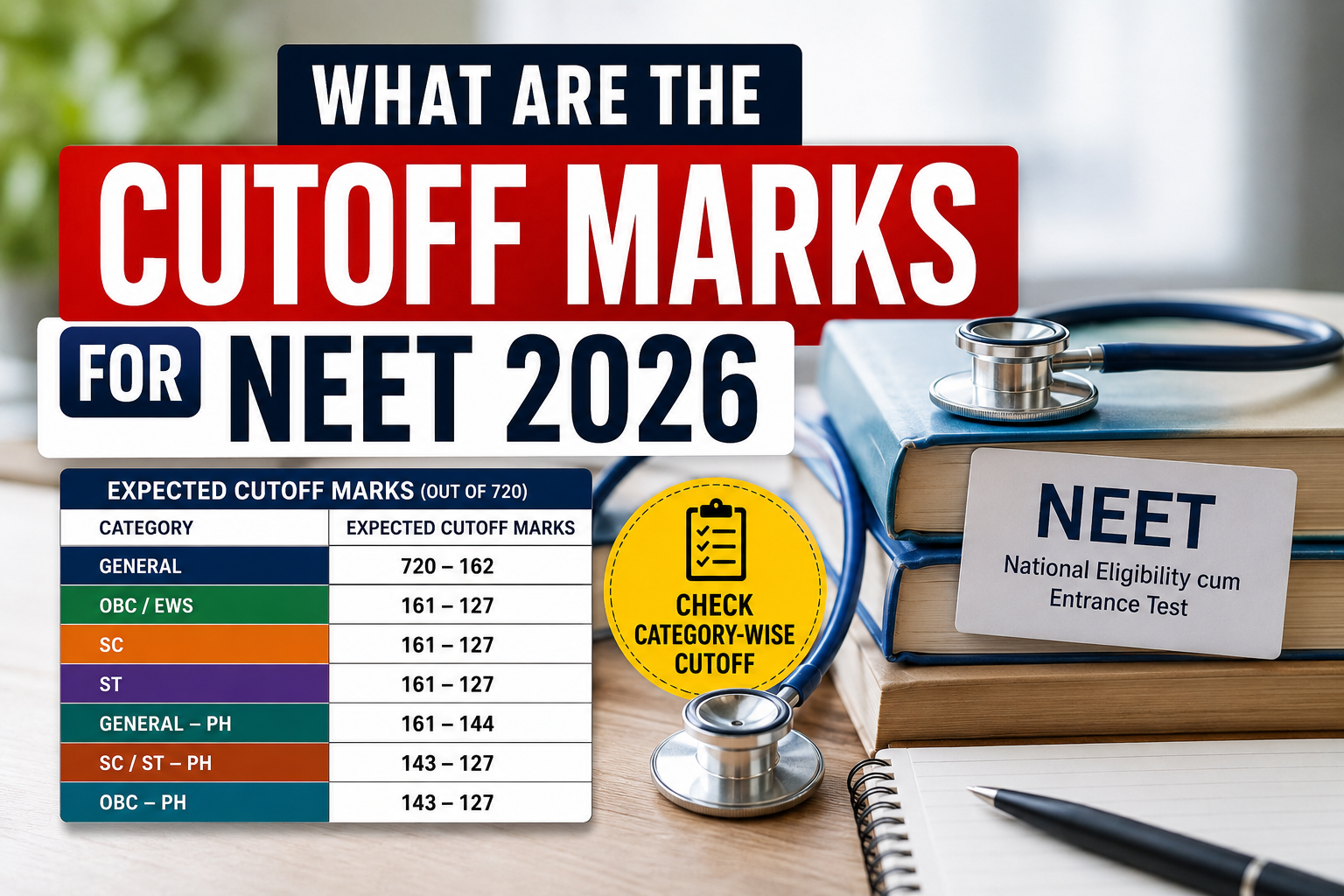
The NEET 2026 cutoff marks play an important role in the lives of medical aspirants to get admission into MBBS, BDS & other medical courses across various colleges in India. The cutoff is the least qualifying marks that need to be obtained in order to get selected for counselling and admission into a medical college.
NEET sees stiff competition every year as lakhs of students sit for the exam. Insights into the pattern of cutoffs that are anticipated will assist students in establishing their objective targets and preparing for the examination accordingly.
Pre-med students who want to get expert advice on counselling, admissions and MBBS opportunities ultimately turn to MBBS Advisor for reliable information and support.
What Is the NEET Cutoff?
NEET Cut Off is determined as the minimum qualifying percentile and score for different categories. It is published after the results are declared by NEET.
This cutoff will speak to a variety of factors, including:
- Number of candidates appearing
- Difficulty level of the exam
- Total available MBBS seats
- Reservation categories
- Overall student performance
These factors keep on changing and hence, the cutoff score also changes every year.
Expected NEET 2026 Cutoff Scores
The NEET 2026 cutoff expected range may be (according to past year trends):
- General (UR) – 50th Percentile – 720–160
- OBC – 40th Percentile – 159–125
- SC – 40th Percentile – 159–125
- ST – 40th Percentile – 159–125
- General-PwD – 45th Percentile – 159-140
These are scores calculated and can vary as per exam difficulty level and competition.
By taking a mock test or once the answer key is out, students can use this tool to estimate their estimated rank and admission chances with the NEET Rank Predictor.
NEET: Qualifying Cutoff vs Admission Cutoff
There are two types of cut off, many students get confused between qualifying cutoff and admission cutoff.
Qualifying Cutoff
This is the cutoff score for passing NEET and being eligible for counselling purposes.
Admission Cutoff
These are the real marks needed to get admission in a medical college. The cut-offs are often much higher in Government medical colleges as opposed to private colleges.
For example:
- Government MBBS colleges 600+ marks (expected)
- 500–550 marks in semi-government colleges
- Private colleges may see lower cutoffs comparatively
NEET 2026 Cutoff Factors
The following few important points decide the final cutoff marks:
Difficulty Level of the Exam
A slight dip in cutoff marks is likely only if NEET paper turns out to be difficult. Easier papers are likely to have higher cutoffs.
Number of Candidates
The more applicants are competing, the higher the cutoff is pushed up.
Availability of Seats
Cut off trends also depend on the availability of MBBS seats in all over India.
Reservation Policies
Cutoff ranges are influenced by reservation criteria based on the category.
Needless to say, the National Medical Commission sets medical education standards and regulates MBBS admissions in the country.
Globally NEET Cut off for MBBS Abroad
While students who score below government college cutoffs do look at international medical education options. Indian students are increasingly seeking places like Georgia, Kazakhstan and Uzbekistan as well as Nepal.
MBBS in Georgia can be opted for lower fees, world-ranked universities, and state-of-the-art infrastructure.
The global recognition of internationally accepted medical degrees as a result of studying at an international medical school abroad that are listed with WDOMS.
WHO also plays a major role in maintaining global standards of healthcare education.
Safe Score: Government MBBS Colleges
Students should aim for:
- Preparation with the right mindset is important so that you can hit your target score in CAT. 650+ marks required for best colleges & Universities
- 600 marks for decent government colleges
- State quota options for 550+ scores
However, students belonging to reserved categories can get admission at scores lower than the above-mentioned ones (depending on state and counselling).
Students who make regular use of the NEET Rank Predictor will be able to gauge their current level of preparation and get an idea of possible admission chances.
How to Score Better in NEET | Few Tips
Follow NCERT Thoroughly
NCERT textbooks form the core of NEET preparation, particularly for Biology and Inorganic Chemistry.
Practice Mock Tests
Taking regular Full Mock Tests at Regular intervals for Speed and mock tests on Complete pattern.
Revise Multiple Times
Revising every few days helps with retention and reduces chances of making mistakes during the test.
Analyze Mistakes
Keep an error notebook (you would also want to make sure you revise this regularly).
Focus on Time Management
When you come to the exam, many students are not able to score very well just due to improper usage of time during the exam.
At MBBS Advisor, students can get expert counselling & admission guidance for medical education in both India and abroad.
Avoid These Common Mistakes Students
- Ignoring NCERT books
- Asking a different subject at the last moment
- Not analyzing mock test performance
- Poor time management
- Excessive stress and comparison
But if students avoid these mistakes they can improve their rank and score maximum on the exam.
Conclusion
Factors such as competition, the difficulty level of the NEET exam and overall student performance will affect cut off marks for NEET 2026. The aspirants should target higher marks than the minimum cutoff in order to be on a much safer side.
Revising regularly, practicing test-taking through mock tests and executing an exam strategy are the essential pillars to crack NEET 2026.
But tools like the NEET Rank Predictor can help students get that estimate of their rank and assess their admission chances better.