 Russia
 Belarus
 Georgia
 Kazakhstan
 Kyrgyzstan
 Uzbekistan
 China
China Nepal
Nepal Bangladesh
 Poland
 Romania
 Slovakia
 Hungary
 N. Macedonia
 Vietnam
 Canada
 Armenia
 UK
UK Australia
 USA
USA Ireland
 Germany
 New Zealand
 Italy
Italy France
 Singapore
 Netherlands
 Sweden
 Switzerland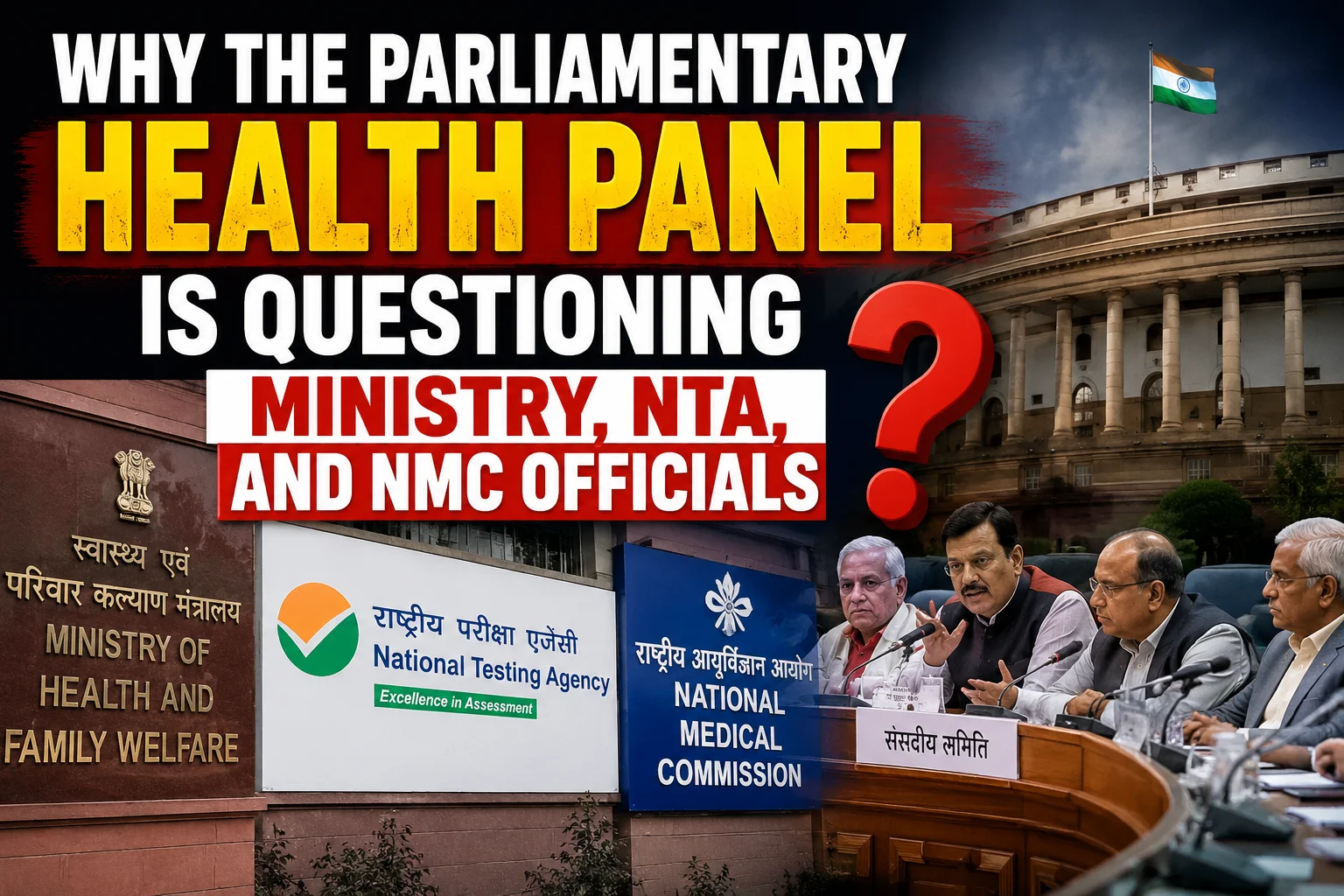
The National Eligibility cum Entrance Test (NEET-UG), taken by millions, is one of the most pivotal exams in India. For aspiring physicians, it is the first step toward a career in medicine. Every year, countless students dedicate years of preparation and invest enormous amounts of their time and money to gain entry into one of the highly coveted medical schools.
Unfortunately, these efforts have been mired in a growing list of challenges. Incidents such as examination delays and administration irregularities, leaks, and growing concerns of lapse in cybersecurity and transparency with respect to medical admissions have been some of the challenges to the trustworthiness of the medical entrance examinations in India.
Faced with such challenges, the Parliamentary Standing Committee on Health and Family Welfare have increased their scrutiny of medical entrance examinations and medical education. These committee members have summoned and questioned officials from the Ministry of Health and Family Welfare, the National Testing Agency, and the National Medical Commission.
Why is the Parliamentary Health Panel actually questioning these authorities? Why has this review been initiated? What could be the consequences on the students and the future of medical admissions in India?
This article examines the areas of concern for the Parliamentary Panel and the significance of this for medical education in India. Students seeking guidance regarding medical admissions often rely on resources such as MBBS Advisor to stay updated with admission-related developments.
Examining the Parliamentary Committee on Health
In India, the Parliamentary Standing Committee on Health and Family Welfare evaluates issues associated with:
- Public health programs
- Health services
- Medical training and health-related legislation
- Health regulatory and facilitative institutions
- The health ministry and the government’s health-related activities
The Committee includes Members of Parliament from varying political parties. It is one of the most significant Committees for the Oversight of Institutions under the Ministry of Health and Family Welfare.
The Committee’s recommendations are significant in the context of the policy, administrative, and legislative changes.
Why Did the Committee Call for a Hearing?
The Committee has expressed its intention to call for hearings for officials from the Ministries and the NTA and NMC, primarily due to the cumulative concerns that have arisen over the years.
The primary aim is to assess the degree of robustness, transparency, and student protection of the formal structure of the medical entrance exam system.
There are several issues of focus in this realm.
Concerns about the Integrity of the NEET Examination
Assuming there is integrity to the NEET examination process has proved most difficult.
Concerns about the process have included:
- Allegations of leaks, access to exam content, administration inconsistencies, delays with liaisons, and allegations of preferential treatment.
Though there have been various probes, the integrity of the examination system has been undermined.
Because NEET is destiny-defining for millions of candidates, the system’s scrutiny is justified when there are even the slightest irregularities.
The parliamentary panel wants to understand what preventative measures are in place to avoid these incidents, and if further changes to the system are needed.
2. Responsibility of the National Testing Agency (NTA)
The NTA conducts large, high-stakes examinations in India, including NEET.
It is said that the committee wants to look at:
- Protocols for NTA operations
- Examination security
- How vendors are selected
- Data management
- Response to emergencies
- Communication during emergencies
The goal of the committee is to understand the systems as a whole, and not just to place blame.
There are also concerns about whether the NTA has the necessary resources and technology to conduct large examinations.
3. Responsibility of the Ministry of Health and Family Welfare
The Ministry of Health and Family Welfare is also being investigated as they oversee medical education.
The parliamentary panel wants to know about:
- Supervision of entrance examinations
- Policy coordination with examination authorities
- How controversy was handled in policy
- How grievances of students were addressed
- How emergencies were handled
It is the job of the lawmakers to see if the ministry is not neglecting oversight in the medical education system.
4. Responsibility of the National Medical Commission (NMC)
The NMC is the regulator of medical education in India.
They are responsible for:
- Setting the standards of medical education
- Eligibility for medical education
- Medical colleges and their accreditation
- Increasing the number of seats
- Examinations and NExT
The parliamentary panel is assessing the NMC’s regulatory responsibilities.
Topics of the Review include:
- Procedures for admissions into medicine
- Regulations concerning examinations
- Openness in decision-making
- Stakeholder communication
- Collaboration with other bodies
The review shows greater issues of governance and accountability in the medical education system in India.
Students looking for expert counselling updates often follow MBBS Advisor for guidance related to medical admissions.
5. Student Anxiety and Public Confidence
The most serious impact of the examination disputes has been the effect of the controversy on the mental health of the student.
The extensive preparation for NEET often leads students to:
- Move away to receive specialized coaching
- Spend significant savings
- Postpone other career options
- Become concerned about the risk to academic performance
The ongoing disputes cause stress, anxiety about how the examinations will be conducted, loss of confidence in institutions, and concerns regarding the likely results of the examinations.
The parliamentary committee is believed to be mostly interested in restoring public confidence and shielding students from the undue risk and anxiety.
6. Examination Technology and Cybersecurity
Modern entrance examinations are highly reliant on technology, and cybersecurity is a concern.
The committee is reportedly assessing concerns regarding:
- The protection of digital examination infrastructure
- Data protection
- Examination software security
- Security of access control and other services
- Third party providers
Cybersecurity is rapidly becoming a key examination integrity issue.
7. Grievance Redressal
Students face numerous challenges concerning:
- Technical issues
- Correct documentation
- Examination center
- Results
- Counselling
The parliamentary panel is assessing whether the existent grievance mechanisms are:
- Available
- Understandable
- Time-bound
- Empathetic to students
- Transparent
Efficient grievance mechanisms are critical to lowering the anxiety of candidates.
8. Medical Admissions Transparency
Policymakers are also concerned with the admission process, beyond the examination.
Concerns related to the review include:
- Counselling systems
- Transparency in seat allocation
- Clarity of information
- Consistency of policies
- Clarity of communication in emergencies
Increasing transparency has the biggest impact on reducing speculation and misinformation.
Results of the Parliamentary Review
While parliamentary committees do not directly apply sanctions, their opinions have a lot of impact.
Results may include:
Refined Examination Procedures
Improved security procedures and examination monitoring may be implemented.
Organizational Changes
Changes may be implemented in the functioning of the examining organizations.
Investment in Cybersecurity
More funds may be allocated for secure digital protection.
Development of Student Support Systems
More effective grievance procedures may be developed.
Greater Transparency
There may be a commitment to ongoing communication to the public and disclosure.
Proposed Changes in Law
There may be a commitment to developing laws and regulations to ensure more accountability.
Consequences for NEET Aspirants
For current and future aspirants, the parliamentary review generates both concern and opportunity.
While the issues themselves have generated concern, the increased focus may lead to a more robust and transparent system.
Students need to keep in mind:
- NEET continues to be the only channel to enter MBBS.
- Students need to be prepared based on the timelines published by official agencies.
- Students need to trust official channels and authorized communications.
- Unsubstantiated communications and speculation need to be ignored.
- Maintain focus on studies and monitor the situation through official channels.
Students frequently consult MBBS Advisor to understand evolving admission policies and counselling updates.
Wider Impact on Medical Education
The parliamentary panel review confirms the trend to greater accountability in the medical education system in India.
Medical entrance examinations can have a significant impact on students and the following:
- Medical colleges
- Healthcare institutions
- Regulatory bodies
- Future healthcare workforce planning
Fairness and transparency become a national priority.
A reliable admission system increases the confidence of students, parents, educators, and society.
International standards highlighted by organizations such as WHO and global medical directories like WDOMS underscore the importance of maintaining credibility in medical education systems worldwide.
For broader insights into MBBS admissions and policy changes, aspirants also refer to MBBS Advisor.
Conclusion
The Parliamentary Standing Committee on Health and Family Welfare is inquiring about examination integrity, accountability of institutions, the security of information technologies, the welfare of students, and transparency of medical admissions to the Ministry of Health and Family Welfare, the National Testing Agency, and the National Medical Commission.
The trust of the medical community in the medical entrance system is a priority for the policymaker and is demonstrated by this committees work. The Committee will examine the current systems in place and determine any shortcomings to ensure that medical examinations in the future will be fair, secure, and transparent.
For the millions of NEET candidates, the challenges in the system are numerous, but the discussions that will follow are expected to provide institutional reforms, and a much more resilient and student-focused examination system in the country. Many aspirants continue to seek updates and expert guidance through platforms such as MBBS Advisor.