 Russia
 Belarus
 Georgia
 Kazakhstan
 Kyrgyzstan
 Uzbekistan
 China
China Nepal
Nepal Bangladesh
 Poland
 Romania
 Slovakia
 Hungary
 N. Macedonia
 Vietnam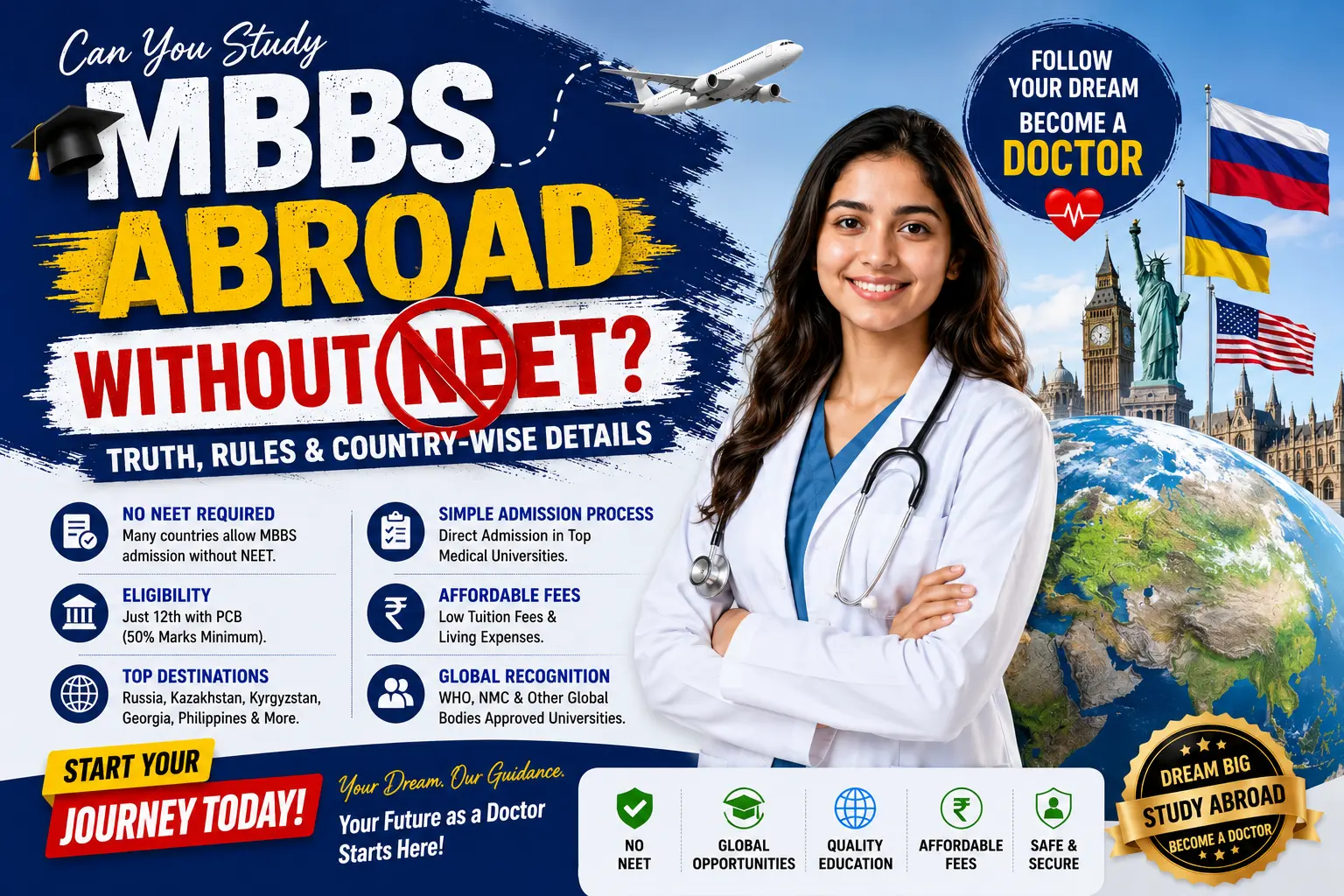
Pursuing MBBS in India is a dream for many, but NEET often proves to be a formidable challenge. Many Indian students, therefore, seek to study MBBS abroad as an alternative. Foreign universities accept international students without NEET. However, the NMC of India has its own set of stipulations. Hence, if you wish to come back to India and practice, then NEET is a requirement.
This article covers the realities of the situation, the official rules and regulations, and eligibility criteria for the different countries. If you have not received a desirable score in NEET and are looking for alternative options, and working on your plans as an alternative, you have come to the right place. For further information and personalized options on NEET, admissions India and abroad, visit MBBS Advisor for reliable consultation.
Understanding NEET and Its Role in Medical Education
The NEET (National Eligibility cum Entrance Test) is the gateway exam for MBBS aspirants within India. It is conducted by the NTA (National Testing Agency) and consists of the subjects Physics, Chemistry and Biology. It is a qualifying exam for all medical colleges within India (government or private) as a result of the limited number of seats and the high demand.
For students looking at international options, the initial scenario is a bit different. A number of international medical schools do not require NEET for admissions. They only consider marks from Class 12 (usually 50% and above in PCB), English language proficiency, and may conduct an internal entrance exam or an interview. However, this still does not eliminate the Indian regulations.
The focus should be on the difference between short travel opportunities and long lasting career prospects. You may be able to go abroad without NEET, but coming back to India to practice will likely be impossible without having qualified the NEET.
NMC Rules: The Official Perspective on MBBS Abroad
The National Medical Commission (NMC) oversees medical education in India. Through NMC guidelines (post-2018 and some revisions in the following years), any Indian citizen or Overseas Citizen of India (OCI), who is planning on going abroad to obtain a primary medical qualification, will have to qualify the NEET, as the NEET result will serve as an eligibility certificate.
Important aspects of the NMC guidelines include:
- After May 2018, NEET must be qualified for any student planning on going abroad to any foreign medical college.
- The NEET result is valid for a period of 3 years, which includes the duration of the medical course or any pre-medical or language course.
- Without qualifying the NEET, students will not be able to sit for the Foreign Medical Graduate Examination (FMGE) or the upcoming National Exit Test (NExT) to obtain a license to practice in India.
- The medical course undertaken abroad must be in line with the NMC requirements of a minimum of 54 months of medical training and a 12-month internship.
The aim of these guidelines is to ensure the quality of medical professionals in India and provide consistency. Many students who chose to disregard this advice have faced challenges in the future and remain unable to practice medicine, even after having completed their degree abroad. It is good to regularly check the NMC website for the most current updates.
Can you fully avoid NEET? Sort of, if you want to study abroad. But if you want to build a career in India, then obviously no. If your plan is to settle abroad for good (i.e. in the host country or elsewhere like the US or UK with the respective licensing exams), then NEET may not be needed. But the reality is that most Indian students keep India as their fallback.
Importance of WDOMS and Global Recognition
WDOMS (World Directory of Medical Schools) is the global list of Medical Schools maintained by the WFME and FAIMER. Just being listed in WDOMS does not mean recognition everywhere, but it is an important milestone.
For Indian students:
- When selecting a University, prioritize those listed in WDOMS, so your degree will be internationally valid, and will allow you to sit for the USMLE (USA), PLAB (UK), etc.
- For the FMGE/NExT, the NMC looks at WDOMS and other criteria.
- Always check the University on WDOMS prior to applying. Good consultants such as those at MBBS Advisor, recommend this as a way to not apply to unrecognized Universities.
Eligibility Criteria for MBBS Abroad (NEET and Non-NEET)
Most destinations have the following standard criteria:
- Age: 17 years as of 31 December in the year of admission.
- Academics: Minimum 50% aggregate in Class 12 PCB for General; 40% for SC/ST/OBC.
- Language: Use of English in India and most other countries requires TOEFL/IELTS or waiver. Some like Russia have no requirement if English is the medium used.
- NEET: Qualifying marks as per NMC to allow your return.
- Passport and other required documents.
Consider Medical fitness, police clearance, and financial proof. Use MBBS Advisor's NEET Rank Predictor tool to analyze your position and plan accordingly.
Country-Wise Insights to Study MBBS Abroad
Consider quality, cost and language when looking at popular destinations. Here’s a breakdown, looking towards the practical for Indian students.
Russia: Affordable Education, Many Indian Students
Programs that offer clinical training last 6 years. Tuition is $3,000–$6,000 per year. Living costs are $2,000–$3,000 per year. Kazan Federal University and Bashkir State Medical University are examples of WDOMS listed universities and of many that Russian hosts.
Without NEET angle, Indian students may get admission in Russian universities based on their 12th marks but to practice in India, NEET is essential. The winter months may be harsh but hostels and food are readily available. Degree recognition is for FMGE, ensuring most criteria are met. Infrastructure or facilities are reliable in major cities.
Georgia: Affordable and European
Georgia is another option south of the Russian border with mild climate, English tuitions, and fees of $4,000–$7,000 with duration of 6 years. Two examples of NMC friendly and WDOMS listed universities are Tbilisi State Medical University and David Tvildiani Medical University. Admission is easy, leaving low cost living, geographically southern European, and safe. NEET is still needed to return from NMC.
China: Language Barrier While Having New Infrastructure
China has many English language medical colleges and modern infrastructure. Tuition is affordable ($4,000–$8,000/year), but there is a language barrier during clinical rotations. Many universities are listed with WDOMS, but students should check their university’s NMC status. After COVID and with new regulations, check the status of every university.
Ukraine (Before the War and Current Situation)
Ukraine was very popular in medical education because of its cost and quality. Now, the continuing conflict makes this an undesirable option. Though many universities are still open, this is a safety concern. Check the latest safety notices.
Philippines: Alternate Path
The 5.5–7 year BS-MD program option (purely medical) has caused some of the same problems. Though the NMC has made a note of programs not meeting the 54 month MBBS threshold, many Indians have reported FMGE issues. Extreme caution and recognition checks are advised.
Other Options: Kazakhstan, Kyrgyzstan, Uzbekistan, Bangladesh and Nepal
Most Central, South-East Asia, and South Asia countries have education under 5,000 USD per year. They offer WDOMS listed, English language, or bilingual programs. They have similar cultures, particularly Bangladesh or Nepal. Always check NEET qualification for the NMC.
European/Western countries (UK, USA, Germany, etc.)
European/Western countries (UK, USA, Germany, etc.) charge over $20,000 per year for MBBS education. They have an additional entrance related exam (e.g. UCAT, BMAT, MCAT). They are an option if students want to have a comprehensive, successful career, with no primary focus on returning to India.
Studying Abroad: Pros and Cons
Pros:
- More Admission Opportunities – Having a medical license and limited seats, studying abroad increases the chances of accepting a medical student.
- Diverse Clinical Exposure – Studying abroad increases exposure to a variety of clinical practice areas.
- Affordable – Studying abroad is often cheaper than private medical schools in India.
- Learning Opportunities – Studying abroad provides a greater opportunity for students to learn new languages, cultures, and customs.
- Global Licensure – Studying abroad often provides an opportunity to practice in the host country or take a global licensure exam.
Challenges:
- Adjusting socially and understanding different customs.
- Variability in education quality — require in-depth study.
- Language barriers where clinical practice is not conducted in English.
- FMGE pass rates are low historically and are reported around 10-20% for foreign medical graduates making it difficult.
- Overall high expenditure including travel, visa, and stay.
- If laws change you assume regulatory risks.
Disciplined students in WDOMS listed medical colleges, qualified in NEET, and prepared for licensing exams have a lot of success to share.
Practical Tips for Students
- Qualify Your NEET: It’s a good idea to have it clear since it can be of help for getting admission to other countries.
- Study Different Universities: Make sure you are looking for WDOMS listing and NMC registration with good feedback from ex-students.
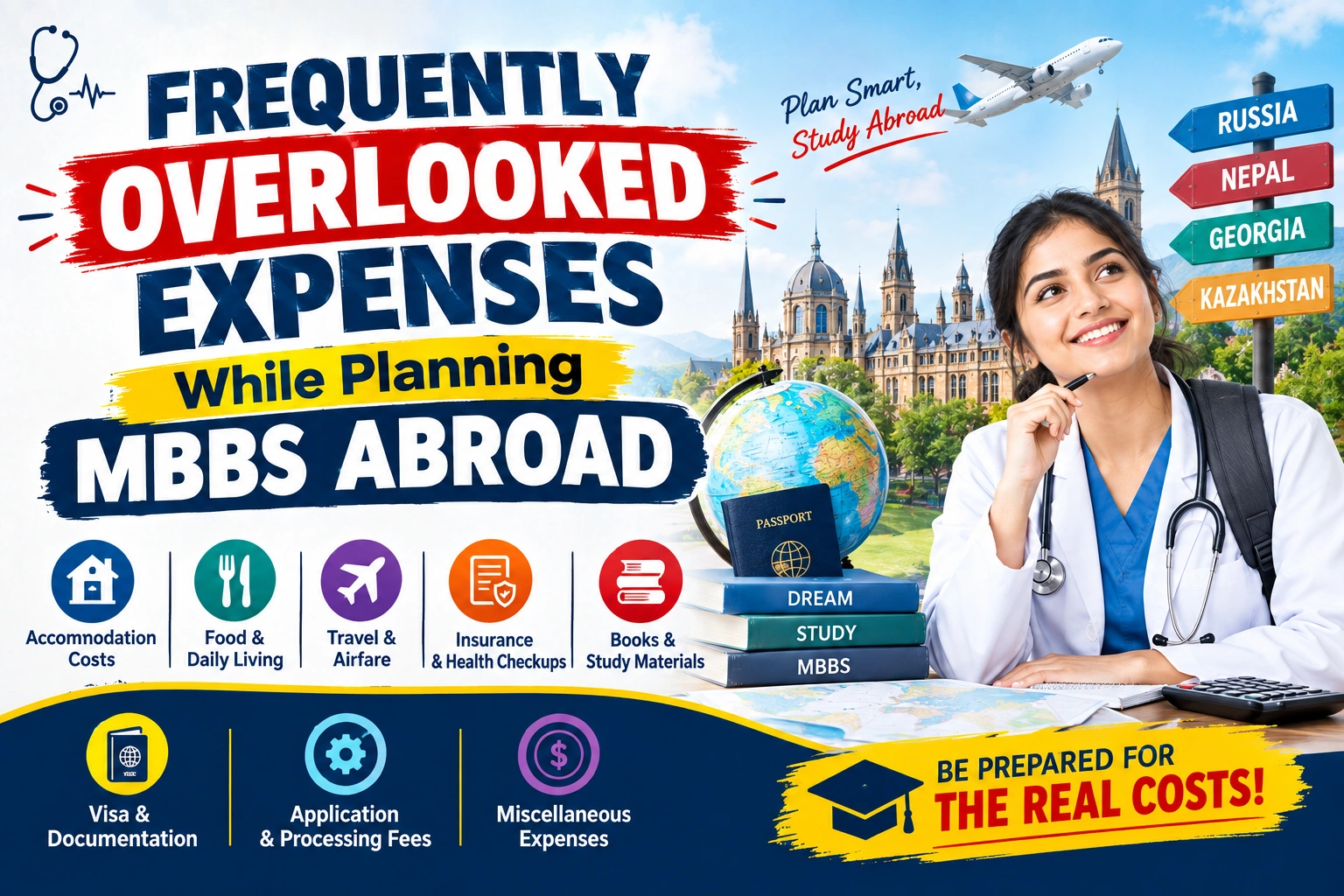
- Comprehensive Budget: Total expenses in a year can be around ?20-50 lakhs depending on the country with the stay, travel and visa included, and tuition fees.
- Consult Specialists: NEET updates, prediction for colleges and guidance to study abroad can be found in MBBS Advisor.
- Prepare Your Visa and Other Documentation: Medical Insurance is a prerequisite for most other countries.
- Plan Your Future After Graduation: You will have to appear for FMGE/NExT/open licensing exams unless you allow yourself to fulfill the internship in the country you will study in.
- Health and Safety: Check travel advisories for the country you will be studying from.
Future Prospects
The medical field is recession proof and an MBBS from abroad opens global possibilities. Most doctors pursue PG in India after clearing NEET-PG or take up Post Graduation abroad. Rising demand for healthcare means doctors are needed everywhere.
Strong foundations are a must. Avoid shortcuts.
Conclusion: Substantiate Your Decision
There are a few countries where it is possible to pursue your MBBS abroad without NEET. However, there are some drawbacks if you are an Indian student based on the NMC guidelines. In most cases, it is advisable to take the NEET exam if you want to pursue a career in Medicine either in India or abroad.
Evaluate your performance in the NEET exam using the NEET Rank Predictor and MBBS Consultant. Also, make sure you check the updates of the WHO. Focus on universities that are accredited and listed on the WDOMS.
Pursuing a career in medicine requires focus and hard work, but with the right strategy and planning, your goal of becoming a doctor is possible. You can start pursuing this goal today, so make the most of your options.