 Russia
 Belarus
 Georgia
 Kazakhstan
 Kyrgyzstan
 Uzbekistan
 China
China Nepal
Nepal Bangladesh
 Poland
 Romania
 Slovakia
 Hungary
 N. Macedonia
 Vietnam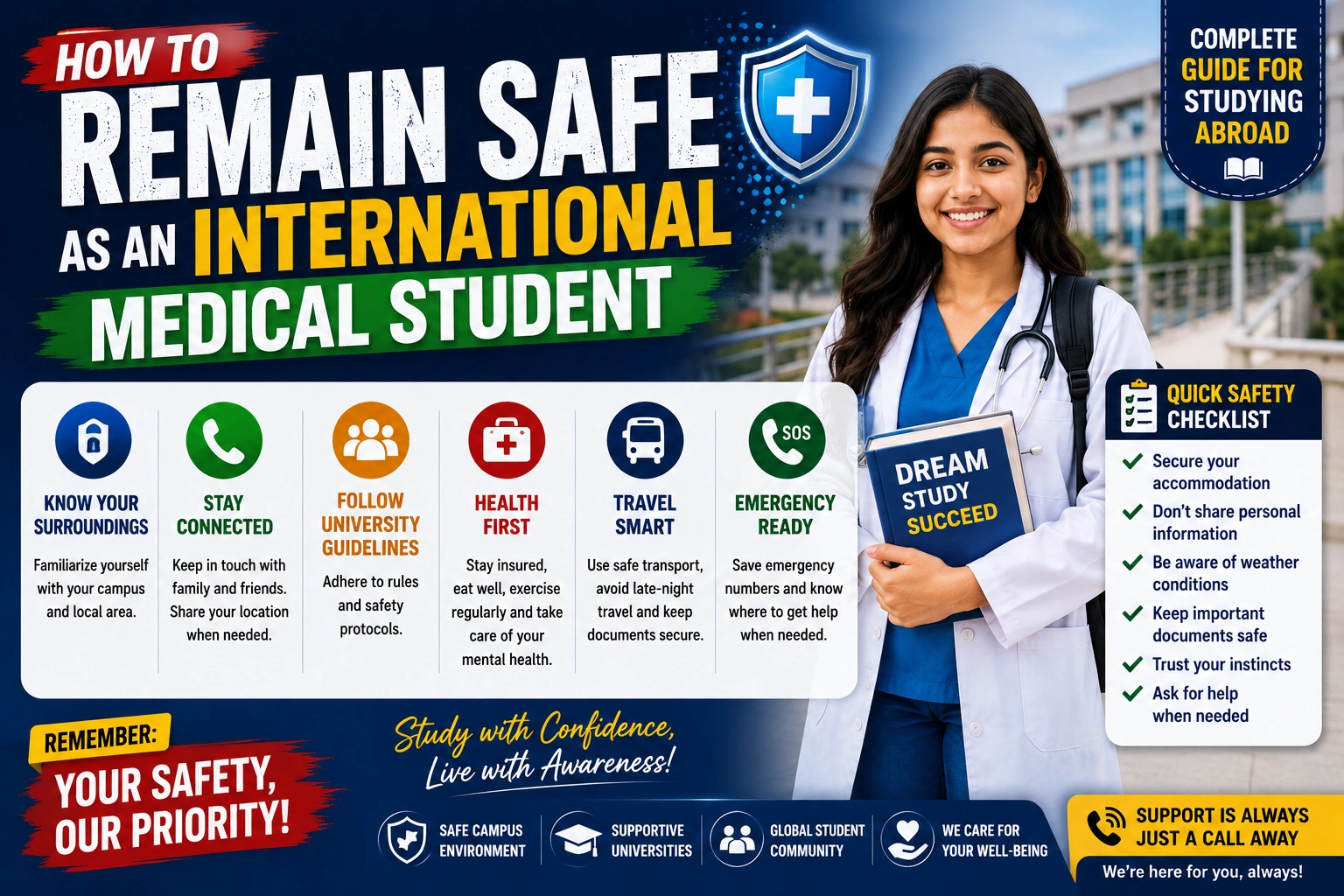
Thousands of Indian students dream of studying medicine overseas. Many Indian medical aspirants go to international medical school and universities due to low tuition fees, globally recognized medical programs, modern infrastructure and good opportunities for admission.
However, moving to a different country has its challenges like, culturally adjusting, keeping oneself safe (personally and medically), and of course, the demands of studying.
Students have to look beyond the best medical universities and lowest tuition fees when they go for their medical studies abroad. They should also explore the best ways to ensure their safety. Students have to be aware, plan, and make informed decisions in order to have a safe successful medical education abroad. It is important for the students to know the safety provisions when they are choosing their medical university abroad for their studies.
Before going for the final admission, students need to carry out their research on the Country, City, and the medical university they will live in for the next few years. Different countries have different cultures, laws, weather, and social environments. Understanding these can help students avoid troubles they can easily avoid.
Students should verify if the medical university is recognized by important global organizations. Also, students should understand the recognition of medical universities through the World Directory of Medical Schools (WDOMS) and WHO and the regulations published by the National Medical Commission (NMC) in India.
Working with reputable education consultancies like MBBS Advisor helps students when selecting universities, and ensures they know how to successfully complete each step in the application and documentation processes for studying Medicine abroad.
Stay Connected to Your Family and Stay Safe
One important habit for all international medical students is that they remain in contact with their families. For new students, moving away to a new country can become a stressful and lonely time, especially in the beginning.
Students must update their guardian/parents with glances of their routine, and daily progress in their academics and any possible stressors that they may be experiencing.
One should save emergency contact information on their phone and stay in contact with guardians/parents via calls or regular messages. Contact information of University staff, hostel staff, local emergency services, and the Indian Embassy in the country also should be saved in a contact list for convenience and safety.
Know the Local Legislation and Stay Safe
Having general awareness of local legislation is extremely important for all international students. International students must know that small, non-compliant acts are illegal and can result in serious issues. For example, one may be unaware of an informal/were-party etiquette which may violate local customs.
Being aware of local customs, dress, and etiquette will help medical students to build positive relationships with the local community and contribute to their personal safety. Medical students stay abroad for several years.
Safe accommodation is extremely important. Almost all foreign medical universities provide on campus hostels for international students.
Before confirming admission, students must gather information on hostel security, food, transport, and medical services.
A hostel must provide enough security, an access control system, emergency services, and the basic requirements for a comfortable living.
Students must ensure not to provide any personal information to strangers, they must abide by the rules of the hostel and the guidelines for the safety and health of occupants must be observed to maintain safety and hygiene in the hostel.
Maintain Good Health and Medical Precaution
Medical students are always on the run because of lectures, practice sessions, and clinical rotations. Therefore, good health and medical precaution of the students must be observed for successful completion of their studies.
Before travel, students must undertake all obligatory medical checks and ensure that they have all health documents. They must find out about the medical facilities available near the university or college.
They must observe a healthy lifestyle by proper nutrition, good sleep, and physical exercise and be able to control academic stress.
For students planning to pursue medical studies abroad after the medical entrance exams, sufficient planning can be done by visiting NEET Information Portal to know about the requirements.
Manage Your Finances Safely
For financial safety, responsible money management is very important for international students. They should avoid carrying huge amounts of cash and must use safe banking techniques.
Before traveling, students must know the rates of currency exchange, the cost of student living, monthly budgeting, the procedures of tuition payment, and emergency budgeting with financial planning.
A monthly budget helps an individual manage costs for food, accommodation, and living. Students must be cautious of online scams, fake requests for payments, and any financial offers by unknown persons.
Sharing Bank Details or Personal Documentation with Strangers is Risky Behavior
Familiarize yourself with Travel Safety Guidelines
Most traveling medical students engage in travel that serves an academic or recreational purpose, or is visiting based. While traveling, international students should use the basic travel safety guidelines.
It is unsafe to travel to unfamiliar places, alone, at late hours. Friends and roommates should be alerted of your traveling plans.
Maintaining the integrity of your personal identification documents is vital. Keeping scans or digital copies of passports and official documentation (admission or visas) and university ID is safest.
Avoid Admission and Education Scams
Knowledge of the admission procedure, as well as the criteria of reputable universities, and the recognition of universities is vital to avoid scams.
If tools like NEET Rank Predictor are utilized, the chances and outcomes of a medical education are apparent. Knowledge of procedure and criteria helps avoid scams.
Academic responsibility combined with safety provides the student the best outcomes for the medical education. Compliance with university guidelines and rules avoids academic burdens.
Students must keep records of their academics, attendance, and all university correspondence.
Emergency Preparedness for International Medical Students
The ability of a student to respond confidently when unforeseen circumstances arise is informed by the person’s level of preparation. Every student must have at least memorized the numbers of the emergency lines and the location of the university and the embassy’s support offices.
It is also prudent to have identification documents and essential papers in order as well as having a basic knowledge of some local language common phrases.
International students must be aware that support services for international students are available in all universities; they must therefore not refrain from interacting with the university officials.
Conclusion
To prepare yourself properly for a life-altering experience during your study of medicine outside of your country, you must be aware, responsible, and respectful of your new environment. While respectfully safe and responsible, communication with the family, management of finances, control of expenses, and following safety directives will make your journey even better.
Before admission, students must carefully examine the entirety of available options and choose a reputable university. For research on opportunities and the best ways to study medicine outside of one’s country, reliable sources, like MBBS Advisor, are available.
International medical education is not considered a success by merely obtaining a degree, but rather by gaining independence, confidence, and exposure to the world, while being safe and responsible.