 Russia
 Belarus
 Georgia
 Kazakhstan
 Kyrgyzstan
 Uzbekistan
 China
China Nepal
Nepal Bangladesh
 Poland
 Romania
 Slovakia
 Hungary
 N. Macedonia
 Vietnam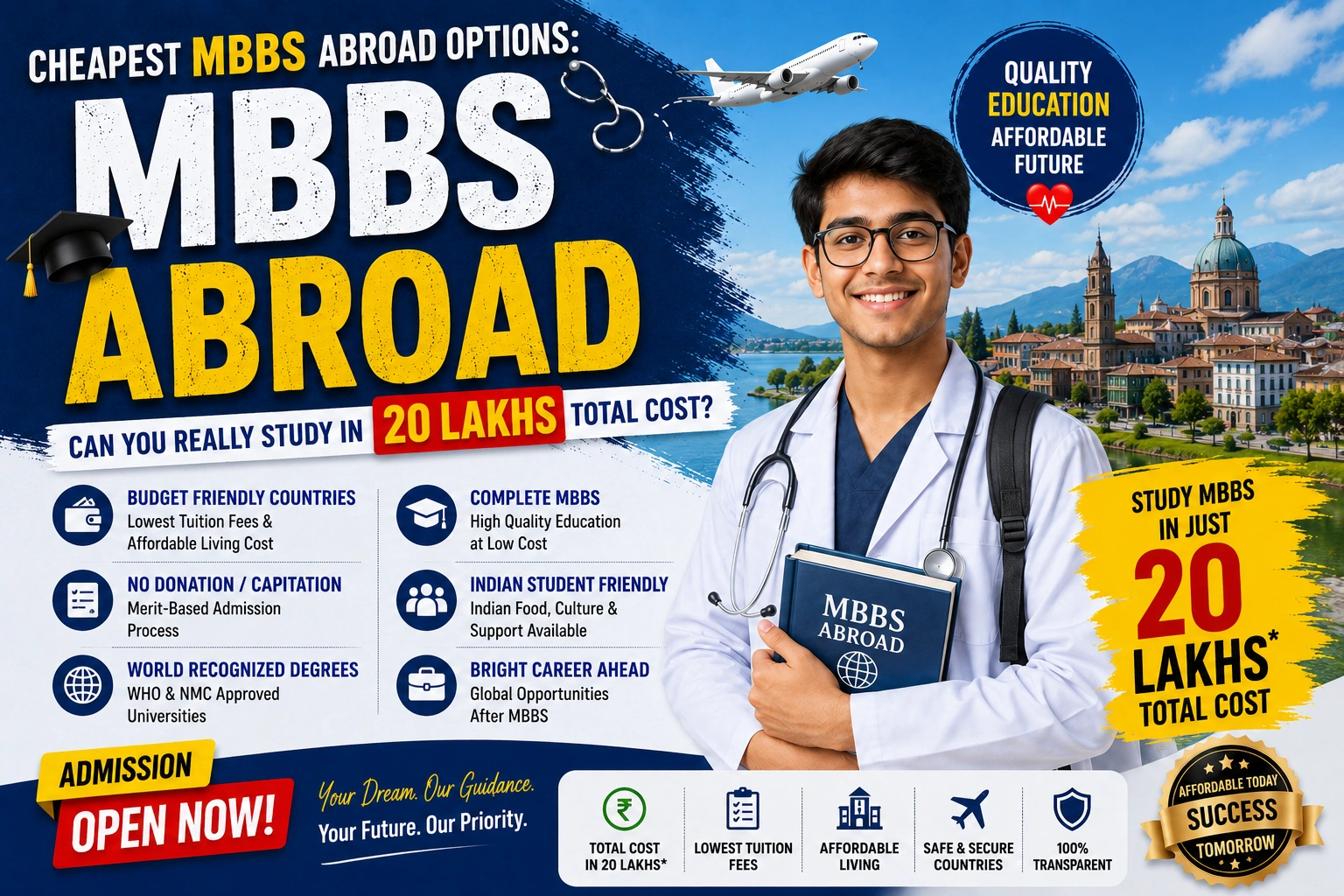
Obtaining an MBBS for approximately ?20 lakhs is possible when choosing selected countries and universities, as well as managing expenditures in a smart way. It is important to devise a plan for expenses related to tuition, cost of travel, cost of living, cost of the licensing exam, National Medical Commission (NMC), World Health Organization (WHO), and World Directory of Medical Schools (WDOMS) and their recognition. In this guide, you will be able to determine realistic low-cost MBBS countries, concealed expenses, and the best way to design an affordable plan based on the MBBS Advisor tools, as well as the NEET resources and the NEET rank predictor.
The rationale for MBBS overseas
There is a significant imbalance between the number of students taking the National Eligibility Entrance Test (NEET) (20 lakh) and the number of available seats (1 lakh) and this is the primary motivation of candidates in seeking university options abroad. There are a number of motivations for students in seeking university options abroad but the primary ones are:
- Less competitive NEET ranking (NEET ranking is not a requirement for some countries)
- Affordability (tuition costs are lower in some countries)
- Higher quality of education (infrastructure and global exposure)
- International (USMLE, PLAB, and other licensing exams)
The primary concern remains the affordability (cost) of an MBBS degree, and whether the full MBBS degree can cost less than ?20 lakhs.
The full ?20 lakhs cost approximately what?
What does this cost cover?
1. Tuition
This is the most significant cost. In some low-cost countries, annual tuition fees are approximately ?2.5 to ?5 lakhs.
2. Cost of Living
Cost of living (including housing, meals, transportation, and other utilities) is approximately ?1.5 -- 2.5 lakhs per annum depending on the city.
3. One-Time Costs
These costs include
- Initial medical insurance
- Costs associated with flights (travel)
- Visa
- Admission (also referred to as processing) and associated fees
- Settlement costs (may be a short-term or long-term cost)
4. Costs Involved
- NMC screening test (FMGE/NExT)
- FMGE coaching
- Document verification & attestation
5. Other Costs
- Books & Supplies, Labs, Exams
- Emergency Fund
- Buffer for Currency Fluctuations
Factoring everything in for 5/6 years (including your Internship), including all associated costs, it is certainly not easy, but possible to remain under ?20 Lakhs for some destinations.
Countries Where Studying MBBS is Less Than ?20 Lakhs
1. Kyrgyzstan
Tuition: ?2.5-3.5Lakhs per year
Living Costs: ?1.5 Lakhs per year
Total (6 years): ~ ?18-20 Lakhs
Recognition: WHO, WDOMS, NMC (if criteria met)
Pros:
- Inexpensive, courses in English, easy to get admission
Cons:
- Extremely cold winters, limited clinical exposure in some colleges
2. Kazakhstan
Tuition: ?3-4 Lakhs per year
Living Costs: ?1.8 Lakhs per year
Total: ~ ?19-22 Lakhs
Recognition: Many universities are in WDOMS
Pros:
- Excellent infrastructure and safe
Cons:
- Higher living costs in cities like Almaty
3. Uzbekistan
Tuition: ?2.8-3.8 Lakhs per year
Living Costs: ?1.5 Lakhs/yr
Total: ~?18-21 Lakhs
Recognition: Some NMC-approved universities
Pros:
- Affordable, developing medical education
Cons:
- Language barrier outside campus
4. Russia (Some Universities)
Tuition: ?3.5-5 Lakhs/year
Living Costs: ?2 Lakhs/year
Total: ~ ?20-24 Lakhs
Recognition: Many old, reputed WDOMS institutions
Pros:
- Excellent clinical training, strong global alumni
Cons:
- Cold climate, language
5. Bangladesh
Tuition: ?4-5 Lakhs/year (foreigner students)
Living Costs: ?1.5 Lakhs/year
Total: ~ ?20-23 Lakhs
Recognition: High NMC pass rates
Pros:
- Similar to Indian curriculum, Good FMGE
Cons:
- Limited seats, competitive admission
Note: Adding all associated costs, Nepal and Philippines typically exceed ?20 Lakhs.
NMC, WHO, WDOMS
National Medical Commission (NMC)
The NMC has imposed some regulations on Indian students who want to pursue an MBBS degree abroad:
- The length of the course must cover a minimum of 54 months plus 12 months of internship.
- The medium of instruction must be English.
- The University must be recognized by the medical council of the University’s home country.
- Graduates must qualify FMGE/NExT to practice in India.
Please make certain that the University of your choice is compliant with NMC before you pay the tuition fees.
World Health Organization (WHO) & WDOMS
The World Directory of Medical Schools (WDOMS) is a collaboration between the WHO and several other organizations. If your University is a member, this will give you a lot of credentialing leverage.
Please search for the University on the WDOMS website and confirm that the program is not listed as “not listed” or “pending”.
There are many low-cost Universities in Central Asia that are WDOMS-listed and provide good options for International Medical Education.
How NEET Fits into the Picture
The National Eligibility cum Entrance Test (NEET) is also a requirement for pursuing your MBBS abroad. NMC has made it a requirement for eligibility certification.
The following are the NEET minimum qualifying percentiles:
- 50th percentile for General
- 40th percentile for SC/ST/OBC
NEET scores are valid for 3 years with respect to overseas admissions.
You must qualify NEET to be eligible to attempt FMGE. Please consider using the NEET Rank Predictor on MBBS Advisor to predict your rank and calculate the prospective limits of your eligibility to Indian Medical Colleges. If your anticipated rank is greater than 1.5 lakh, overseas options should be considered.
Unseen Expenses that can Ruin your 20L Budget
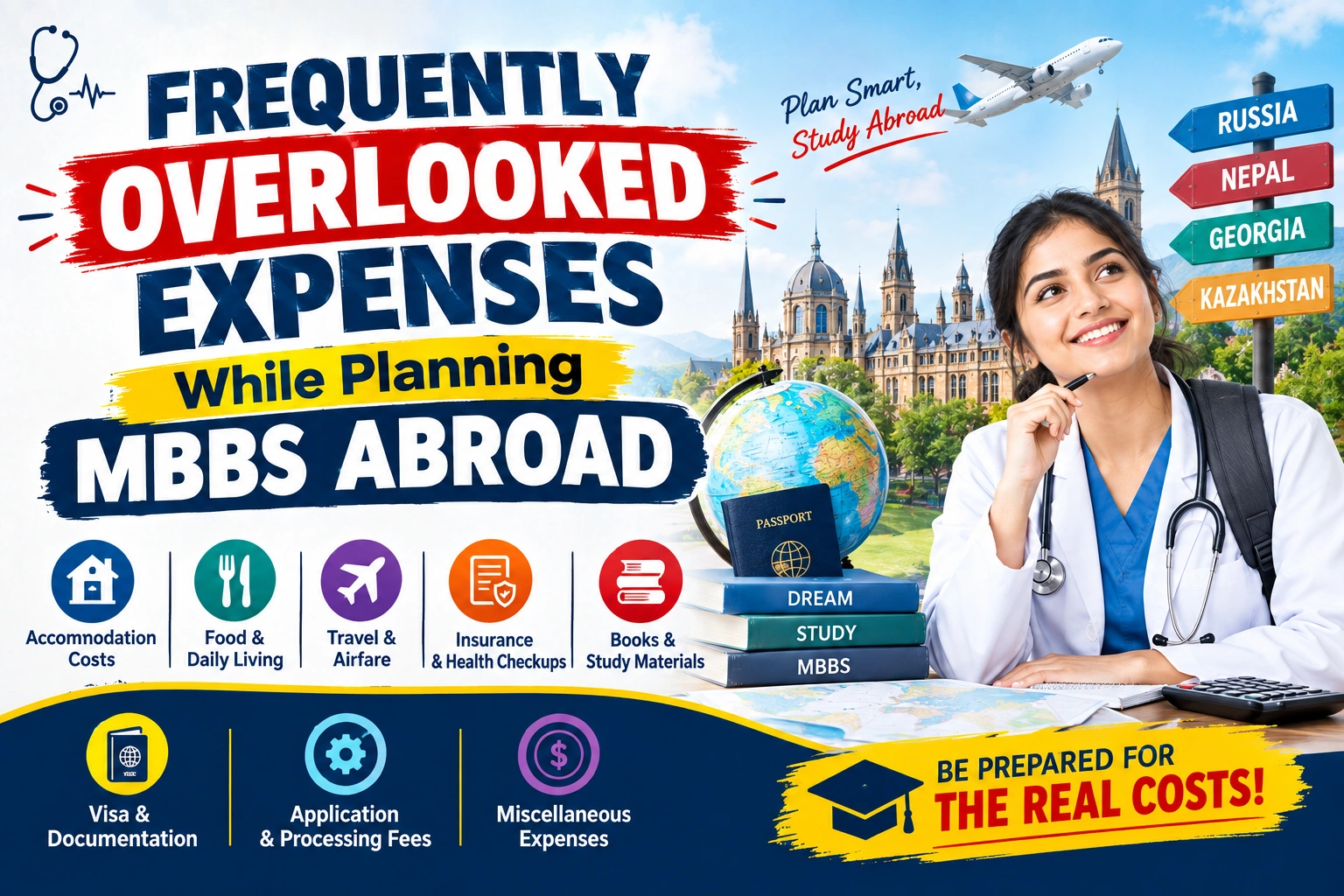
There are many indirect expenses prospective students tend to miss when budgeting for their International Medical Education. Some of these expenses are:
- FMGE Coaching: ?1 Lakhs – ?2 Lakhs ($3,000) (Joining a reputable institute)
- Travel expenses incurred while transiting during Pandemics with quarantine plus costs associated with testing and extra flights.
- Currency Fluctuation: Currency Depreciation affected by Ruble, Som, Tenge, etc.
- Re-exam Fees: You have to pay if you have to retake a semester or a licensing test.
- Internship Stipend: During compulsory internship, most nations pay no stipend.
Estimated budget should include a 10%-15% margin of error.
Step-by-Step Plan to Study MBBS Abroad Within ?20 Lakhs
Step 1: Qualify NEET
To be eligible for the NMC, you must qualify for the NEET with at least the minimum qualifying percentile, and keep your scorecard.
Step 2: Shortlist Affordable Countries
Choose between Kyrgyzstan, Kazakhstan, Uzbekistan, and selective Russian universities, and do not select private universities in expensive cities.
Step 3: Check for Recognition
Checklist:
- Is the university in WDOMS?
- Is the NMC compliance met regarding course/period of internship, and English?
- What are the FMGE results of that college for Indian students?
Step 4: Utilize Counseling Platforms
MBBS Advisor and others will provide:
- Advice on colleges within your budget and NEET rank, and assistance with applications, and your visa and travel arrangements, and orientation before you depart.
You can use their NEET rank predictor to help you decide if you will wait for Indian counseling or go abroad.
Step 5: Prepare a Realistic Budget
Budget yearly expenses: Year 1 is higher, and Year 2-5 is about the same, and Year 6 is about the same or higher for internship and FMGE prep.
To stay within budget, use a hostel, limit eating out, and buy only what you need.
Step 6: Start Preparing for FMGE Exam Early
You cannot start too early. The best time to start is in your 3rd year. Many students that delay preparing until the end have trouble passing.
Expectations: What is ?20 Lakhs Realistic To Obtain?
YES, but only if you are a responsible student, and it includes:
- Choosing universities with fee structures Less than ?3.5 lakhs/year
- Living frugally (shared accommodation, home-cooked meals)
- Avoidance of travelling to India frequently
- Having No major academic threats (repeats, backlogs)
Would mean, according to given criteria, that you have a budget of ?20 Lakhs. Then, with a budget of that estimate, you can travel to countries like Uzbekistan and Kyrgyzstan, which are economically stable and have low inflation making them great travel destinations. This would make the countries have the best value for travel.
What options do you have if ?20 Lakhs feels tight?
- 1. Delaying and Reattempting NEET
A higher rank guarantees a government seat in India at a cost of ?5-10 Lakhs. - 2. State Quota Private Colleges
Some states have less expensive private MBBS seats available through counseling. - 3. Education Loans
Many banks fund MBBS studies abroad with loans of ?20-25 lakhs at subsidized interest rates. - 4. Scholarships
Partial scholarships based on merit are available in a few universities of Kazakhstan and Russia.
Final Checklist Before You Decide
Use trusted platforms like MBBS Advisor to validate these points before committing.
Conclusion
Studying MBBS abroad within ?20 lakhs is achievable—but only with meticulous planning, realistic country selection, and strict budget control.
Be selective in your choices, develop careful strategic plans, and maintain self-control in the face of obstacles encountered as you progress along your chosen path.