 Russia
 Belarus
 Georgia
 Kazakhstan
 Kyrgyzstan
 Uzbekistan
 China
China Nepal
Nepal Bangladesh
 Poland
 Romania
 Slovakia
 Hungary
 N. Macedonia
 Vietnam
 Canada
 Armenia
 UK
UK Australia
 USA
USA Ireland
 Germany
 New Zealand
 Italy
Italy France
 Singapore
 Netherlands
 Sweden
 Switzerland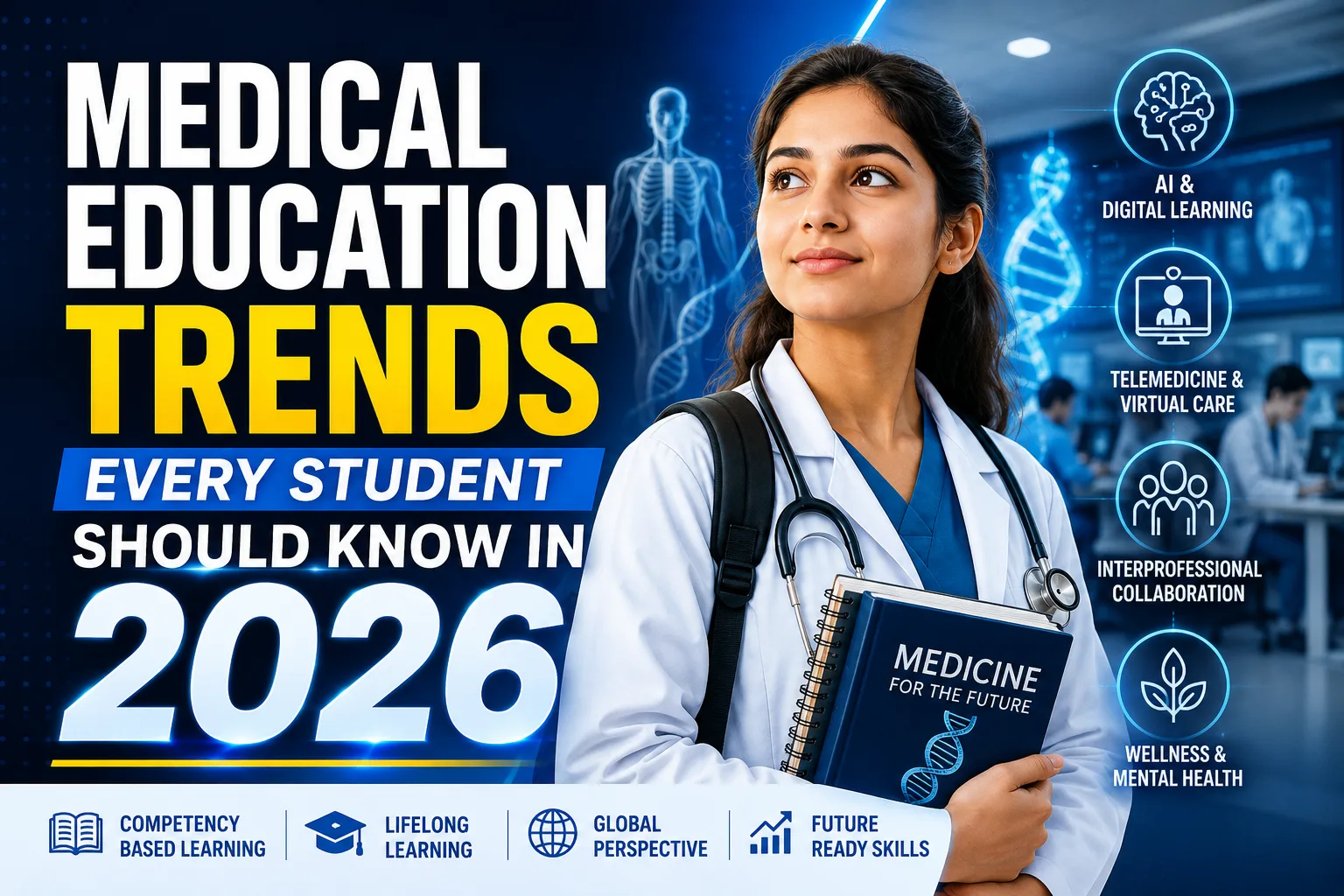
Global medical education is undergoing a historic, major transformation. For medical students who will enter the workforce in 2026, proactively keeping up with the core change trends of this transformation is a fundamental prerequisite to adapt to industry shifts, achieve academic success, and support long-term career development.
The core driving forces of this transformation span multiple dimensions, including technological innovation, evolving medical needs, advances in artificial intelligence, the widespread adoption of telehealth, and global healthcare challenges highlighted by the World Health Organization (WHO). The traditional medical education model that previously centered on classroom lectures and textbook learning is gradually being replaced by a new dynamic, technology-driven, patient-centered model.
The third-party platform MBBS Advisor provides medical students with informational support covering the latest developments in medical education, enrollment procedures, and international MBBS application opportunities.
Most of the students seeking consulting services through this platform prefer medical schools that integrate modern technologies.
Core Trends Transforming Medical Education
We have sorted out a list of core trends of this transformation:
Artificial Intelligence Integration
The first trend is the integration of artificial intelligence into medical education, whose practical applications cover six scenarios:
- Personalized learning pathways
- Automated assessment
- Intelligent tutoring systems
- Virtual patient simulation
- Adaptive learning platforms
- Clinical decision-making training
Existing external studies have verified the actual effectiveness of this AI-enabled teaching.
Personalized Learning Becomes the New Standard
The second trend is that personalized learning has become a new industry standard.
The four technologies supporting its implementation include:
- Learning analytics
- AI-driven recommendations
- Performance tracking
- Customized learning plans
Their effectiveness is also confirmed by external research.
We predict that personalized learning will become a standard component of global medical curricula in the future.
Competency-Based Medical Education (CBME)
The third core transformation trend is Competency-Based Medical Education (CBME), which will be interpreted in detail in subsequent sections.
To start, we first clearly distinguish the core differences between traditional medical education and Competency-Based Medical Education (CBME).
The implementation of Competency-Based Medical Education (CBME) aligns with reforms promoted by the National Medical Commission (NMC) to strengthen practical clinical training and competency assessment.
Five Core Transformation Trends in Contemporary Medical Education
Building on this, we sort out five core transformation trends in the contemporary global medical education field.
CBME as the Core Benchmark
The first trend, which serves as the core benchmark for all transformations, is CBME, whose core principles cover five items:
- Outcome-based education
- Practical skill assessment
- Continuous evaluation
- Clinical competency tracking
- Entrustable Professional Activities (EPAs)
This analysis of the benchmark is first embedded into the scenario of the MBBS Advisor platform that serves international medical students, to provide a clear training model reference for medical students planning to study abroad when selecting schools.
Telemedicine Training
The second trend is the popularization of telemedicine capabilities, whose implementation was accelerated by the global COVID-19 pandemic.
Its core training content includes five items such as:
- Virtual patient consultations
- Digital communication
- Remote patient assessment
- Telehealth workflows
- Online care delivery
Existing third-party research clearly points out that digital literacy and telemedicine readiness are core mandatory competencies for future licensed physicians worldwide.
Simulation-Based Learning
The third trend is the promotion of simulation-based learning, whose core tools cover five items:
- High-fidelity simulation mannequins
- VR/AR technologies
- AI-powered patient simulations
- Surgical simulators
- Clinical scenario training
Cited medical education research confirms that this learning method can effectively improve learners’ core competencies such as clinical reasoning and boost their confidence in practical operations.
Digital Learning Transformation
The fourth trend is the transformation to digital learning, whose core learning carriers include five items such as:
- Online lectures
- Virtual laboratories
- Digital resources
- Interactive learning platforms
- Remote collaboration tools
This transformation has four prominent advantages including flexibility.
This trend is also aligned once again with MBBS Advisor’s school selection service, helping applicants accurately assess the digital training strength of their target institutions.
AI Literacy Development
The last transformation direction is the cultivation of core AI literacy, whose complete list of core competencies will be elaborated in subsequent content.
Seven Emerging Trends in Global Medical Education
Currently, seven core transformative trends are emerging in the global medical education sector. Medical schools across all countries are simultaneously rolling out supporting implementation measures to meet the development needs of modern healthcare systems.
1. AI Education Across the Training Cycle
The first trend is the integration of artificial intelligence (AI) into medical education.
Citing external research, this direction requires that AI education be embedded throughout the entire training cycle of medical students to adapt to AI-enabled healthcare environments, covering core competencies including:
- Fundamentals of machine learning
- Assessment of AI-generated content
- Identification of algorithmic bias
- Medical data ethics
- Responsible use of AI in clinical settings
To date, numerous medical schools worldwide have developed dedicated AI teaching modules.
2. Strengthening Clinical Skills
The second direction is strengthening clinical skill development to match the practical requirements of modern healthcare.
This focus prioritizes honing abilities such as:
- Clinical reasoning
- Diagnostic decision-making
- Physician-patient communication
- Patient-centered care
- Team-based practice
In implementation, schools reduce the share of passive lectures, expand practical components including clinical rotations and simulation-based hands-on training, and integrate real-scenario application capabilities into core assessment indicators.
3. Interdisciplinary Education
The third trend is the rise of interdisciplinary education.
As modern healthcare relies on multi-professional collaboration, institutions have launched interdisciplinary training programs that organize medical students to learn alongside:
- Nurses
- Pharmacists
- Physical therapists
- Public health practitioners
- Healthcare administrators
This helps cultivate skills in:
- Teamwork
- Leadership
- Collaborative decision-making
These capabilities are recognized as core to high-quality patient care.
4. Data-Driven Medical Education
The fourth trend is data-driven medical education.
This approach relies on advanced learning management systems to:
- Generate performance data
- Track student progress
- Identify learning gaps
- Optimize curriculum design
- Support evidence-based teaching decisions
This trend will accelerate its implementation alongside the iteration of educational technologies.
5. VR and AR Technologies
The fifth trend is the development of virtual reality (VR) and augmented reality (AR) immersive technologies.
These tools have already been applied in scenarios such as:
- Anatomical visualization
- Surgical training
- Emergency simulation
They enable students to practice complex procedures repeatedly and receive immediate feedback.
Medical education experts project that these technologies will achieve gradual widespread adoption over the next decade.
6. Assessment System Transformation
The sixth direction is the transformation of assessment systems.
This replaces the traditional model centered on summative examinations and builds a modern system that includes:
- Continuous assessment
- Skills tracking
- Learning portfolios
This approach comprehensively evaluates student competence and guides long-term learning rather than short-term exam preparation.
7. Mental Health and Wellbeing Support
The seventh trend is strengthened support for students’ mental health and wellbeing.
Medical training is highly intensive, so student welfare has become a core concern for institutions across the globe, which are rolling out a series of supporting implementation measures to advance this priority.
Student Wellbeing and Global Opportunities
Global medical education is currently undergoing a profound transformation driven by technological iteration, upgraded healthcare demands, and educational innovation, and keeping pace with these trends has become a fundamental requirement for every medical student.
Mental Health Support Measures
At present, medical schools worldwide have reached a widespread consensus: the physical and mental health of medical students directly impacts their academic performance and long-term career development, and mental health is a core component of high-quality medical education.
Leading institutions have implemented four categories of support measures:
- Professional psychological counseling
- Full-cycle health programs
- Systematic stress management training
- Mutual-aid peer support systems
Global discussions on student wellbeing and healthcare workforce preparedness continue to receive attention from the World Health Organization (WHO).
Internationalization of Medical Education
At the same time, the internationalization of medical education is accelerating, and students can access four categories of international development opportunities:
- Intercollegiate exchange programs
- Global scientific research collaborations
- Cross-border clinical clerkships
- Standardized international practice pathways
Students planning international medical careers should verify institutional recognition through the World Directory of Medical Schools (WDOMS) before selecting a university.
The third-party platform MBBS Advisor connects students with eligible institutions around the world, removes barriers to international career paths, and helps future physicians expand their understanding of diverse healthcare systems and heterogeneous patient groups.
Ethics and Professional Development
New Ethics Training Modules
Faced with new ethical challenges brought about by technological development, institutions across countries have upgraded their ethics teaching content by adding five core modules:
- AI ethics
- Medical data privacy
- Patient information confidentiality
- Professional codes of conduct
- Digital professional literacy
These modules consolidate the core foundation of public trust in healthcare.
Lifelong Learning
In response to the rapid iteration of medical knowledge, institutions cultivate four types of lifelong learning habits starting from the early stage of training:
- Continuous professional development
- Evidence-based clinical practice
- Independent learning planning
- Ongoing professional qualification certification
This helps develop adaptability as a core professional skill.
The Future of Medical Education
In the future, medical education will also integrate six categories of innovative elements:
- Artificial intelligence
- Competency-oriented training
- Digital learning
- Telemedicine
- Simulation teaching
- Personalized learning systems
MBBS Advisor will also connect students with relevant cutting-edge resources to help medical students keep up with the pace of the industry’s transformation.
Conclusion
MBBS Advisor is specifically developed for students planning to pursue medical studies in India or overseas. It helps these students navigate the constantly changing landscape of medical education, enabling them to make informed career decisions.