 Russia
 Belarus
 Georgia
 Kazakhstan
 Kyrgyzstan
 Uzbekistan
 China
China Nepal
Nepal Bangladesh
 Poland
 Romania
 Slovakia
 Hungary
 N. Macedonia
 Vietnam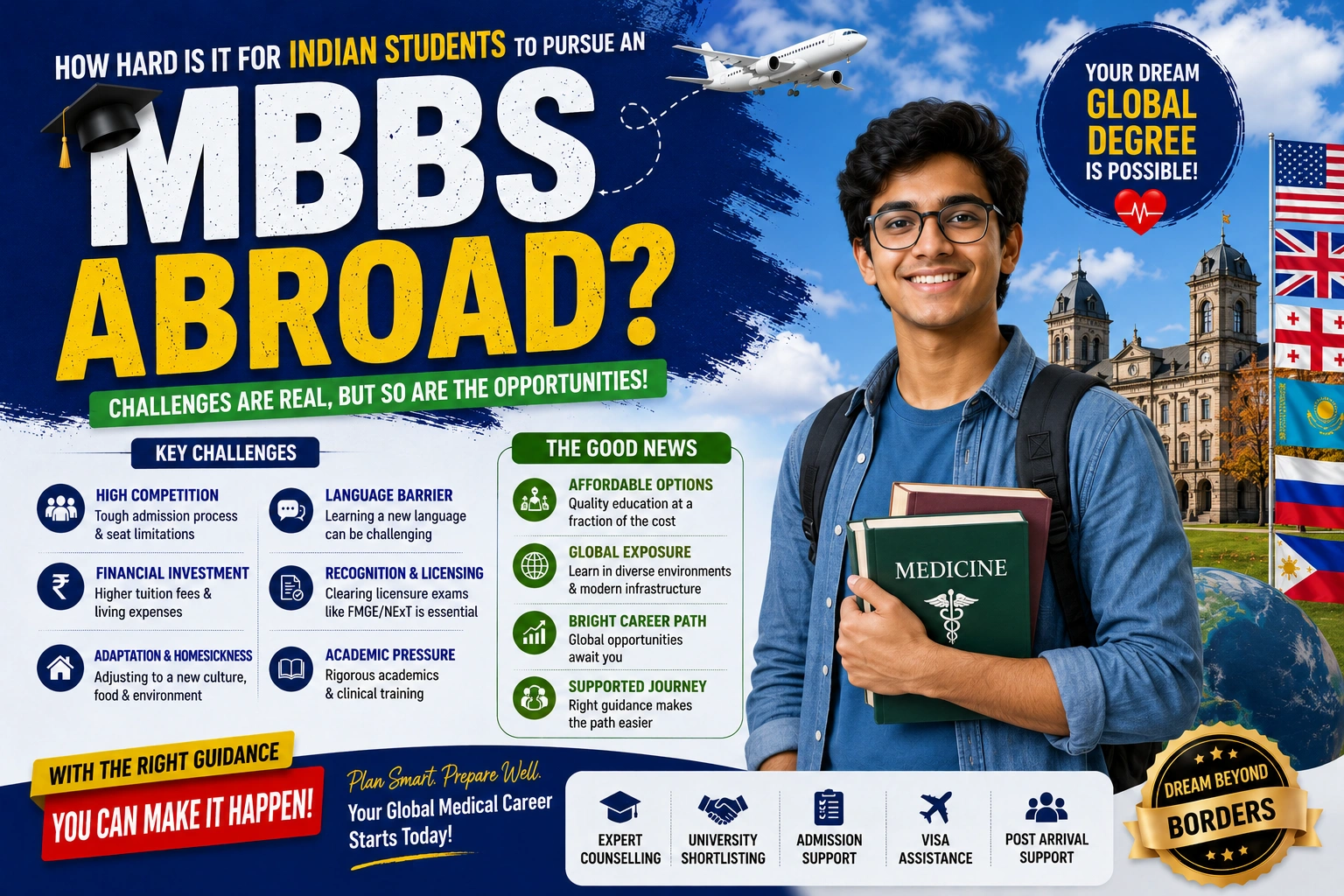
The number of students appearing for the NEET exam to gain admission into a medical college in India has reached in the hundreds of thousands. With India having only a limited number of MBBS seats and an ever-increasing rank cut-off, a striking number of students end up choosing to study MBBS abroad instead. There is one question that every parent and student has before making the final decision: how hard is it actually to study MBBS abroad for Indian students? Is going abroad a shortcut to becoming a doctor, or is it just as difficult as studying medicine in India?
One of the best answers to this question is that, unfortunately, no one of these answers is correct. There are MBBS programs abroad that are very difficult to pursue while others are just as difficult as pursuing a program in India. The difficulty associated with studying medicine abroad is more about your ability to be disciplined, the ability to speak a foreign language, and your ability to plan ahead as opposed to the difficulty of entrance examinations. There are some hurdles that will need to be overcome, such as cultural and licensing hurdles, but with the right attitude, a student will most likely be successful.
Why There is a Growing Demand for Studying MBBS Abroad Amongst Indian Students
Each year, lakhs of students qualify for NEET, but there are limited MBBS seats in Indian colleges. Most private colleges charge crores for a seat. Most middle-class families cannot afford these fees. Compared to India, countries like Russia, Georgia, Uzbekistan, Kyrgyzstan, and the Philippines offer MBBS programs that cost 20 to 25 lakh rupees that include all hostel and mess fees. This is a great incentive to study MBBS abroad.
There are even more incentives to study MBBS abroad.
- The NEET qualifying cut-off is much lower than studying in India.
- There are fewer counseling rounds.
- Most universities are Indian student friendly.
- Many universities teach in English.
The lower fees, the lower cut-offs, and the simpler admission process entice students to study abroad. MBBS abroad seems much simpler than studying in India, but the tricky part of studying MBBS abroad is when students land in a foreign country to study.
Academic Difficulties: Learning the MBBS Syllabus is Easier Abroad
This is where most of the confusion originates.
The MBBS programs that are offered in other countries are not all objectively easier than programs in India. Of the programs that are offered in Russia, China, and Central Asia, many of them have very intense and rigorous programs that meet the requisite standards of the World Health Organization (WHO) and the World Directory of Medical Schools (WDOMS) and other international standards. Anatomy, physiology, biochemistry, pathology, and pharmacology are covered in these programs with a lot of depth and may offer even more rigorous practical and viva examinations than programs in India.
Difference in Teaching Style
The difference that many people perceive between these universities and the Indian Universities is in the teaching style.
In many foreign universities, they place a lot of emphasis on self-study, research, and practicals as opposed to the teaching that is prevalent in the Indian coaching centered education, which relies a lot on classroom activity and note making.
There are a lot of students that place a lot of reliance on this coaching and thus struggle in these foreign universities, as they are expected to read and refer to books, participate a lot in practicals, as well as clear semester examinations that are highly restrictive and provide little to no opportunity for attempting again.
Language Challenges
There are added challenges, as many of these foreign universities do not conduct all of their programs in English.
A lot of the universities of the countries that are favored by Indian students for MBBS conduct a lot of their programs in the vernacular.
So, students that want to do MBBS abroad in countries like Russia, Georgia, Kyrgyzstan, China, etc. and think that they will be doing the program in English, will have to learn those languages, as patient contact in the clinical years will involve a lot of interactions in the vernacular, and will be a big academic burden.
The NEET Connection: Why It Still Matters
There are a lot of customs that are prevalent in the medical education system in India that people think will not be applicable when they move abroad for their education. One such thing is NEET.
This is wrong.
According to the existing National Medical Commission (NMC) regulations, Indian students wishing to enroll in medical schools outside India have to qualify for NEET at the prescribed minimum qualifying percentile, irrespective of the country or the university of their choice.
A student who does not have a valid NEET qualifying status is not eligible to take the Foreign Medical Graduate Examination (FMGE) in the future. This means that the student will not be allowed to practice medicine in India after coming back to India.
This is why the NEET Rank Predictor and similar tools, even for students who plan to go abroad for other reasons, are helpful tools because they allow students to gauge their likely scores, assess whether it is realistic to expect them to secure a government allotment through NEET, and assess whether their plans to go abroad to study medicine is a more rational plan as opposed to a panic decision based on their poor NEET score.
Too many students choose the path of studying MBBS abroad without a thorough assessment of their NEET score, and end up regretting not pursuing the Indian options more seriously.
Recognition and Approval: The Most Important and Most Neglected Challenge
One of the most difficult things about studying MBBS abroad is not at all academic, but rather of an administrative and a regulatory nature.
Not all foreign Medical Universities are eligible to be automatically registered to practice medicine in India.
The university must be part of the World Directory of Medical Schools (WDOMS), the only internationally recognized directory of Medical Schools that is jointly published by the World Federation for Medical Education and FAIMER.
WDOMS listing is important as it makes a graduate eligible to take the licensing exams of several countries, including India’s FMGE, now the National Exit Test (NExT) as per NMC guidelines.
It is unfortunate that many students are offered misleading advice by overzealous education consultants.
They promote universities that are either not listed or have limited WDOMS listing.
For this reason, the most important, yet most commonly neglected, step is to check the status of a university through official channels.
In the long run, a degree from a university that is not recognized or poorly approved can be a dead end to a student’s career, however smooth the admission process seems.
Students and parents are strongly urged to check the recognition of universities through the NMC and WHO before making any decisions to study abroad.
Life Outside the Classroom: The Real Struggle
Without a doubt, the most challenging aspect of pursuing an MBBS abroad for Indian Students are the experiences that are not part of the academic lectures.
Moving to a new country at the age of eighteen or nineteen, and often for the first time leaving the family, creates new and different types of pressures that no exam preparation can ever get someone ready for.
Common Challenges Faced by Students
One of the first new experiences of pressure is the extreme cold.
Countries like:
- Russia
- Georgia
- Kyrgyzstan
- Many parts of China
have extremely cold winters, some that are well below freezing for long periods of time.
Indian students who come from urban environments with warm climates often find the first winter in colder climates exhausting.
In particular, vegetarian students from India struggle to find vegetarian options.
As a result, vegetarian students often resort to fast and instant food.
Students often opt to reserve food in their hostels, which can cause negative health and lifestyle impacts.
Homesickness usually becomes a major factor for students after arriving and settling into their new environments.
Often in the initial phase, students find it difficult to manage stress, especially with the combined pressure of academics, and the overwhelming feeling of isolation.
In response to this, some universities offer more support for their international students, while others offer little to no support and their international students must navigate systems independently.
Depending on the country students choose to study in, safety and stability can often be a concern.
Recent political changes have affected the stability of some countries and have even forced the evacuation of students, most notably the Indian students in Ukraine.
These changes also can disrupt class schedules and academic commitments.
Financial Reality: Cheaper, But Not Simple
The cost of obtaining an MBBS in some countries is substantially lower than the cost of private MBBS programs in India.
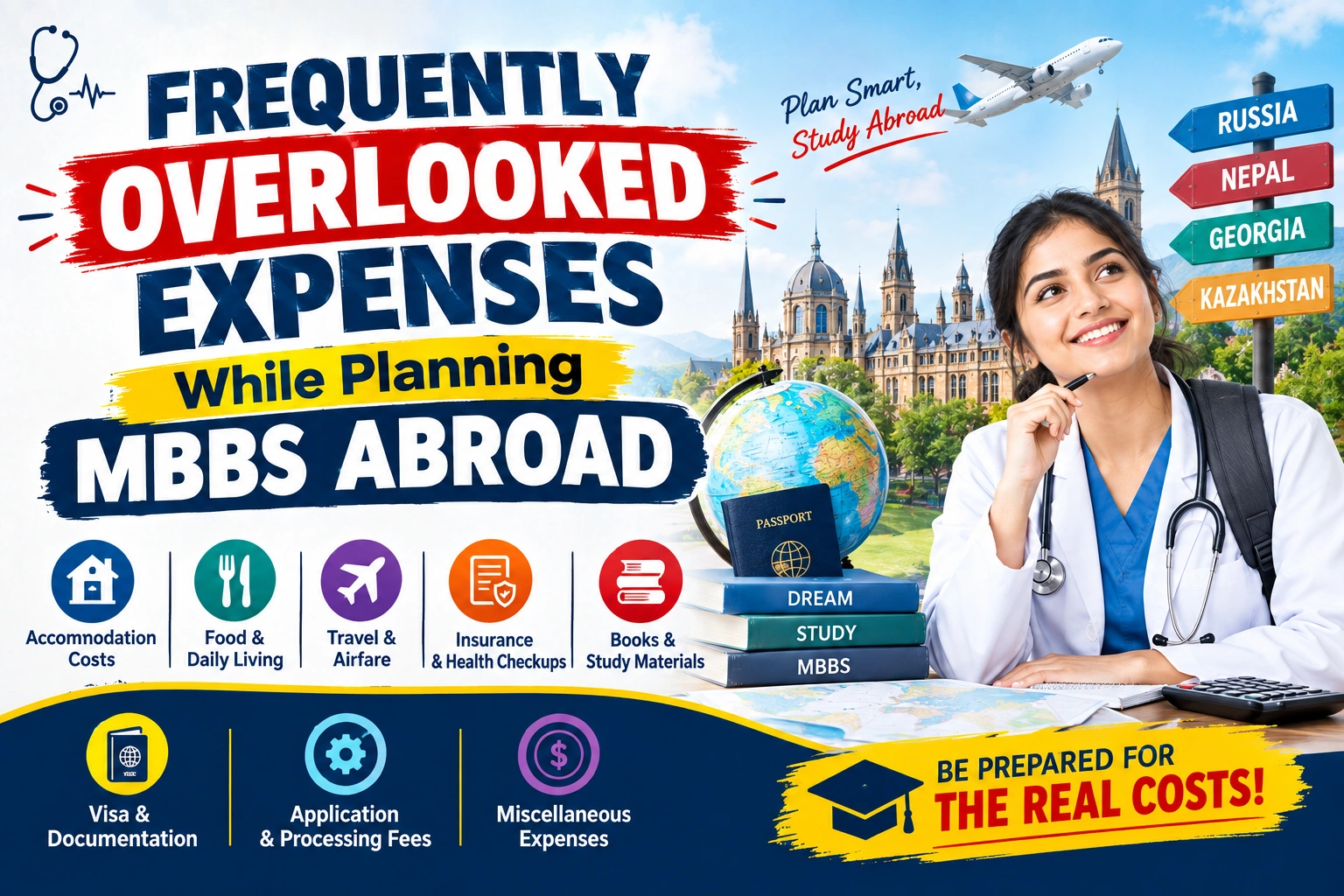
However, there are many hidden costs of studying abroad that Indian private institutions do not have.
Additional Expenses
Costs incurred will be for:
- Visa processing
- Health insurance
- Accommodation deposits
- Flights home during breaks
- Other travel, transportation, and living expenses
which vary by country.
For families who pay tuition in 5-to-6-year installments, an additional burden is the depreciation of the rupee affecting the cost of tuition, which will be significantly higher by the end of the payment plan than initially assumed.
Families need to include in the budget the additional cost and time for coaching and practice to be able to work in India, as you cannot practice in India with a foreign MBBS.
This is a cost and time that families need to include after the 6 years of the course which is not included in the original budget.
The Biggest Hurdle: What Comes After Graduation?
This is where students struggling to get MBBS Abroad realize how truly difficult this experience has been.
After an Indian student completes an MBBS course abroad, they cannot immediately begin practicing.
They must return to India to clear the licensing exam, which was previously the FMGE but is now part of the exit exam for Indian and foreign medical graduates, as established by the National Medical Commission (NMC).
This exam has a lower clear rate than most students anticipate.
This is in part because foreign medical universities do not align with the Indian medical curriculum in many areas.
NEET aspirants who treat their foreign MBBS education as the shortcut to their dream career have found the final licensing exam to be the most challenging part of the journey.
A lot of aspirants complain that the final licensing exam is tougher than the NEET.
The key to success is a serious and consistent approach toward exam preparation throughout your MBBS years — not just crammed preparation during the summer after you return.
Is MBBS Hard Abroad?
The answer is a qualified yes.
The MBBS program offered by many foreign universities is not necessarily harder to complete than in any of our Indian universities.
No doubt, the lower competition for entry into these universities is an advantage, especially when compared to the highly competitive NEET exam.
The actual challenge lies in:
- Adapting to a new lifestyle in a foreign country.
- Handling the language barrier.
- Ensuring the credibility of your new degree.
- Modernizing your lifestyle to cope with loneliness.
- Clearing a tough licensing exam in your home country.
Students who choose to study MBBS abroad with realistic goals, conduct their own research and select WDOMS-listed NMC-approved universities, exercise self-discipline, and have a passion for medicine do well.
Students who do not conduct due diligence and select low-cost NMC-approved universities as an easy substitution for NEET, are the students who fail and find themselves in a difficult situation many years after making these choices.
Conclusion
If you're a parent or student who is currently making this decision, this article advises you on the best first step: use a dependable NEET Rank Predictor to determine where your score actually stands, and then do a cost/benefit analysis of what a medical seat in India versus overseas would actually mean for you in terms of financial costs, professional recognition, and the impact on your career.
The MBBS Advisor site and the dedicated MBBS Abroad guide can help parents and students ignore the sales pitches from consultants and make a factual decision based on research instead of a pressure situation or a fear of missing out.
There are many valid reasons for Indian students to pursue the overseas MBBS option.
Thousands of successful and currently practicing Indian doctors working overseas have taken this route.
Like any other medical education, an overseas MBBS program requires an attitude of seriousness, discipline, and commitment.
Add to that the challenges of cultural adjustments and compliance with medical regulations in overseas countries, and you can see how this path can be a challenge.
The best way to ensure that this undertaking is manageable and not truly difficult is to prepare for the journey with realistic expectations of what obstacles you may encounter.