 Russia
 Belarus
 Georgia
 Kazakhstan
 Kyrgyzstan
 Uzbekistan
 China
China Nepal
Nepal Bangladesh
 Poland
 Romania
 Slovakia
 Hungary
 N. Macedonia
 Vietnam
 Canada
 Armenia
 UK
UK Australia
 USA
USA Ireland
 Germany
 New Zealand
 Italy
Italy France
 Singapore
 Netherlands
 Sweden
 Switzerland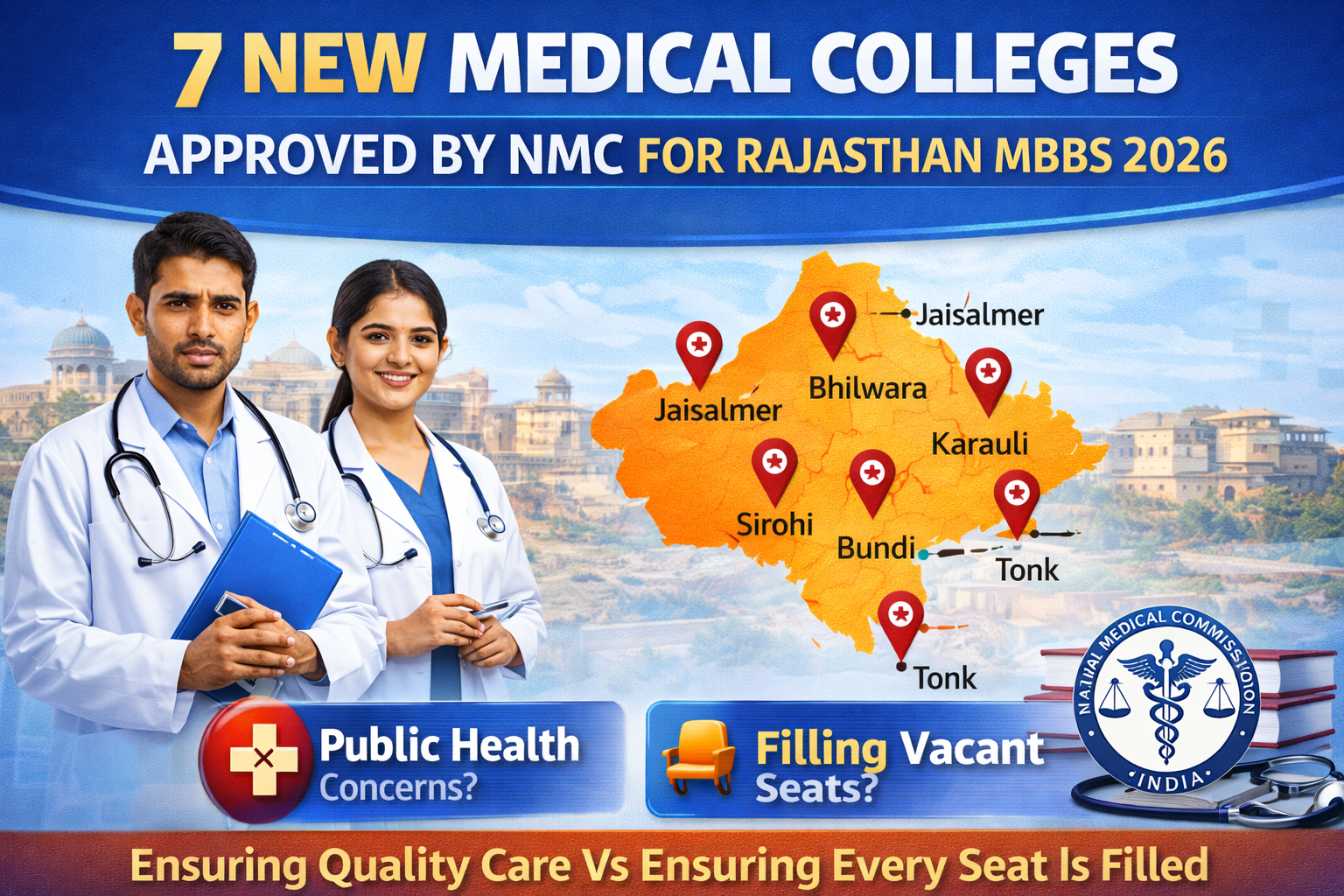
Rajasthan is adding more medical colleges to its pool of Institutions, as there's lots of demand for Med Councils there. In view of this along with limited availability of medical services in the state, 7 new MBBS medical colleges have been approved by the state for the academic session 2026. The expansion is in line with a national plan to increase the number of medical colleges while ensuring that enough standards set by the nmc and global health priorities, as established by the who
These new colleges will increase the annual MBBS seat matrix considerably, creating new avenues for NEET UG 2026 aspirants. Students can refer to mbbs advisor for focus admission related queries or counselling plans or cutoffs prediction and document needed.
Why New Medical Colleges Matter
India has an enduring lack of healthcare workers — more so in rural, less developed areas. There, it will help in addressing that gap:In Rajasthan, the number of medical colleges is being increased.
MBBS seat increase for state and all-India quota
Teaching hospitals and healthcare delivery
The Future of Everything, Technology, Business and Jobs
Help young students pursue a career in medicine
All medical colleges are governed by the nmc, and it ensures compliance on infrastructure standards, faculty norms, curriculum and education code.
Seven of the New Medical Colleges in Rajasthan (2026)
The government and government-aided institutions below have been approved to admit MBBS students from 2026 cycle:
- Government Medical College, Baran
- Government Medical College, Banswara
- Government Medical College, Chittorgarh
- Government Medical College, Dausa
- Government Medical College, Jhunjhunu
- Government Medical College, Sirohi
- Government Medical College, Dholpur
These colleges cater to diverse geographic areas — from tribal hinterlands to semi-urban centres — making premier medical education more accessible for local students and communities.
Seat Intake and Distribution
Every new college is launched first with the normal 100 MBBS seats. Intake may increase over time in each department as faculty members become stronger, and with nmc's further approval.
Seat distribution is as per the national and state counselling norms:
15% All'india Quota (AIQ)
[1] Rajasthan candidates: 85% State Quota
Reservation according to state government policy
The performance in NEET UG 2026 and the state domicile status are crucial factors in seat allotment.
Admission Process (NEET UG 2026)
NEET UG 2026 will be the gateway for all MBBS Programs including these new colleges. The general procedure looks something like this:
- Take and qualify NEET UG 2026
- Counselling Registration (AIQ + State Quota)
- Document verification
- Choice filling and locking
- Seat allotment and reporting
- The nmc determines eligibility, exam format and qualifying criteria. Ensure all candidates meet minimum qualifying percentile levels.
- Aspirants can check mbbs advisor
- for knowledge associated with detailed counselling strategy, cutoff prediction and choice-filling tips.
Fee Structure: What to Expect
Most new government medical colleges are set up under subsidized fee structure compared to private institutes:
- Government Colleges (Approximate, Per Year)
- Tuition: ?60,000 – ?90,000
- Hostel & Maintenance: ?20,000 – ?40,000 (Additional)
Fees differ from college to college and can be updated as per recommendations by the state fee committee. At the same time, unlike some private colleges with exorbitant tuition fee slabs, government colleges continue to be a realistic choice for most families.
Clinical Training and Healthcare Exposure
Students pursuing MBBS at these new colleges will get:
- Involvement with clinical training in affiliated teaching hospitals
- Gain practical experience handling patients in OPD, IPD and emergencies
- Comprehensive rotations through major clinical and non-clinical departments
- Competency-Based Medical Education and Skills Development
The nmc prescribes minimum hospital bed strength, patient load and departmental requirements. These parameters also ensure that students are exposed to enough clinical cases, and this is in accordance with Global Healthcare standards advocated by the who.
Advantages of In-depth Learning in Newly Established Medical Institutes
There are clear benefits to both students and communities when approval for a new medical college is given:
- For Students
- More likely to get into a school near where you live
- Less competitive than established universities
- Government fee structures
- Emerging clinical exposure opportunities
- For Communities
- Improved local healthcare infrastructure
- Increased specialist availability over time
- Improved public health and preventive services
Medical students regularly engage in community outreach, health camps and rural postings — activities to enhance both scholastic learning and social responsibility.
Challenges and Considerations
As new colleges grow their capacity, students need to look out for:
- Quality of clinical exposure during initial years
- Faculty recruitment and retention
- Consistent regulatory compliance
- Infrastructure build-up timelines
The nmc expects during inspections and in renewals of recognition to monitor these elements.
Conclusion
06:00 PMThe approval of new MBBS medical colleges in Rajasthan for 2026 marks a major milestone in the healthcare education landscape of the state. The widening of seats and availability of quality training not only improves medical infrastructure but also leads to a larger number of students pursuing MBBS in the country, thus aiding in boosting the doctor population ratio which is already significantly low in India.
A NEET UG 2026 candidate should qualify the exam, aware of counselling regulations and streamline choices to emerge victorious over others in the race for admission. Preparing with trusted and effective mbbs advisor platforms can help during counselling.
As such colleges commence their academic journey, they also add to India’s long-term healthcare capacity — a core objective of both the nmc framework and the whole vision for equity in high-quality medical education.
Web Title: 7 new medical colleges approved by nmc for rajasthan mbbs 2026
Rajasthan is adding more medical colleges to its pool of Institutions, as there's lots of demand for Med Councils there. In view of this along with limited availability of medical services in the state, 7 new MBBS medical colleges have been approved by the state for the academic session 2026. The expansion is in line with a national plan to increase the number of medical colleges while ensuring that enough standards set by the nmc and global health priorities, as established by the who
These new colleges will increase the annual MBBS seat matrix considerably, creating new avenues for NEET UG 2026 aspirants. Students can refer to mbbs advisor for focus admission related queries or counselling plans or cutoffs prediction and document needed.
Why New Medical Colleges Matter
India has an enduring lack of healthcare workers — more so in rural, less developed areas. There, it will help in addressing that gap:In Rajasthan, the number of medical colleges is being increased.
MBBS seat increase for state and all-India quota
Teaching hospitals and healthcare delivery
The Future of Everything, Technology, Business and Jobs
Help young students pursue a career in medicine
All medical colleges are governed by the nmc, and it ensures compliance on infrastructure standards, faculty norms, curriculum and education code.
Seven of the New Medical Colleges in Rajasthan (2026)
The government and government-aided institutions below have been approved to admit MBBS students from 2026 cycle:
- Government Medical College, Baran
- Government Medical College, Banswara
- Government Medical College, Chittorgarh
- Government Medical College, Dausa
- Government Medical College, Jhunjhunu
- Government Medical College, Sirohi
- Government Medical College, Dholpur
These colleges cater to diverse geographic areas — from tribal hinterlands to semi-urban centres — making premier medical education more accessible for local students and communities.
Seat Intake and Distribution
Every new college is launched first with the normal 100 MBBS seats. Intake may increase over time in each department as faculty members become stronger, and with nmc's further approval.
Seat distribution is as per the national and state counselling norms:
15% All'india Quota (AIQ)
[1] Rajasthan candidates: 85% State Quota
Reservation according to state government policy
The performance in NEET UG 2026 and the state domicile status are crucial factors in seat allotment.
Admission Process (NEET UG 2026)
NEET UG 2026 will be the gateway for all MBBS Programs including these new colleges. The general procedure looks something like this:
- Take and qualify NEET UG 2026
- Counselling Registration (AIQ + State Quota)
- Document verification
- Choice filling and locking
- Seat allotment and reporting
- The nmc determines eligibility, exam format and qualifying criteria. Ensure all candidates meet minimum qualifying percentile levels.
- Aspirants can check mbbs advisor
- for knowledge associated with detailed counselling strategy, cutoff prediction and choice-filling tips.
Fee Structure: What to Expect
Most new government medical colleges are set up under subsidized fee structure compared to private institutes:
- Government Colleges (Approximate, Per Year)
- Tuition: ?60,000 – ?90,000
- Hostel & Maintenance: ?20,000 – ?40,000 (Additional)
Fees differ from college to college and can be updated as per recommendations by the state fee committee. At the same time, unlike some private colleges with exorbitant tuition fee slabs, government colleges continue to be a realistic choice for most families.
Clinical Training and Healthcare Exposure
Students pursuing MBBS at these new colleges will get:
- Involvement with clinical training in affiliated teaching hospitals
- Gain practical experience handling patients in OPD, IPD and emergencies
- Comprehensive rotations through major clinical and non-clinical departments
- Competency-Based Medical Education and Skills Development
The nmc prescribes minimum hospital bed strength, patient load and departmental requirements. These parameters also ensure that students are exposed to enough clinical cases, and this is in accordance with Global Healthcare standards advocated by the who.
Advantages of In-depth Learning in Newly Established Medical Institutes
There are clear benefits to both students and communities when approval for a new medical college is given:
- For Students
- More likely to get into a school near where you live
- Less competitive than established universities
- Government fee structures
- Emerging clinical exposure opportunities
- For Communities
- Improved local healthcare infrastructure
- Increased specialist availability over time
- Improved public health and preventive services
Medical students regularly engage in community outreach, health camps and rural postings — activities to enhance both scholastic learning and social responsibility.
Challenges and Considerations
As new colleges grow their capacity, students need to look out for:
- Quality of clinical exposure during initial years
- Faculty recruitment and retention
- Consistent regulatory compliance
- Infrastructure build-up timelines
The nmc expects during inspections and in renewals of recognition to monitor these elements.
Conclusion
06:00 PMThe approval of new MBBS medical colleges in Rajasthan for 2026 marks a major milestone in the healthcare education landscape of the state. The widening of seats and availability of quality training not only improves medical infrastructure but also leads to a larger number of students pursuing MBBS in the country, thus aiding in boosting the doctor population ratio which is already significantly low in India.
A NEET UG 2026 candidate should qualify the exam, aware of counselling regulations and streamline choices to emerge victorious over others in the race for admission. Preparing with trusted and effective mbbs advisor platforms can help during counselling.
As such colleges commence their academic journey, they also add to India’s long-term healthcare capacity — a core objective of both the nmc framework and the whole vision for equity in high-quality medical education.