 Russia
 Belarus
 Georgia
 Kazakhstan
 Kyrgyzstan
 Uzbekistan
 China
China Nepal
Nepal Bangladesh
 Poland
 Romania
 Slovakia
 Hungary
 N. Macedonia
 Vietnam
 Canada
 Armenia
 UK
UK Australia
 USA
USA Ireland
 Germany
 New Zealand
 Italy
Italy France
 Singapore
 Netherlands
 Sweden
 Switzerland
Over the past decade, the understanding of overseas MBBS study among Indian students, parents, and even many education practitioners has undergone a complete, dramatic shift. Where this path was once only viewed as a backup option for students who failed to gain admission to Indian domestic medical schools, it has now become a core higher education advancement strategy actively planned by thousands of Indian students to access affordable, globally recognized high-quality medical education.
As one of the countries with the largest pool of prospective medical students worldwide, India sees millions of candidates sit for the NEET medical entrance exam each year in pursuit of medical licensure, while the number of admission spots at domestic medical schools is far insufficient to match the scale of qualified test-takers. According to recent industry analysis data, more than 1.2 million NEET-qualified candidates cannot secure a domestic MBBS spot, and this persistent supply-demand gap continues to push students to pursue overseas study.
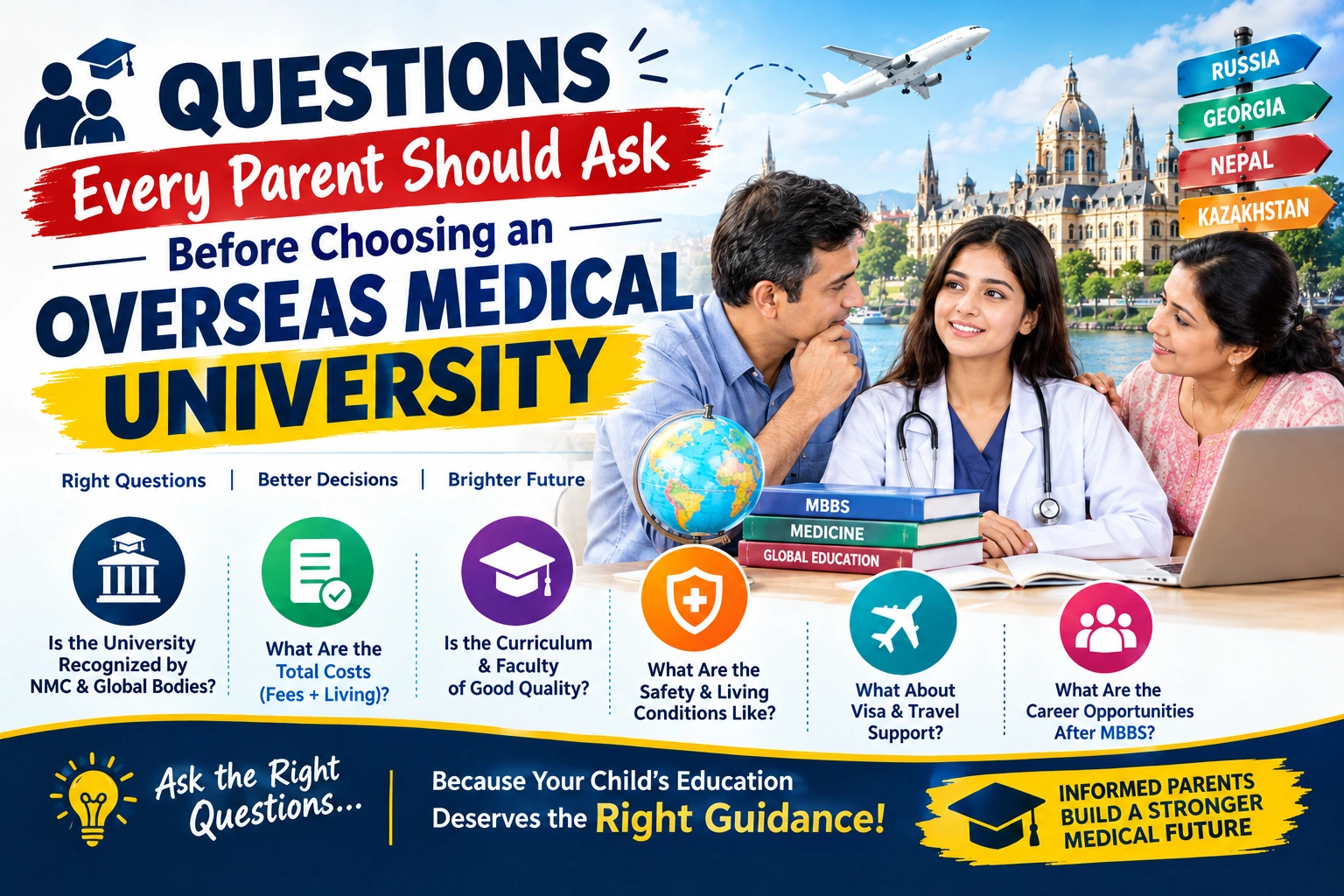
Currently, Russia, Georgia, Kyrgyzstan, Kazakhstan, Uzbekistan, Bangladesh, Nepal, and the Philippines are the top overseas study destinations for Indian medical students. Their popularity directly confirms that studying medicine abroad has long shed its backup status to become a mainstream path.
Why Overseas MBBS Was Once Considered a Backup Option
The old misconception that "studying medicine abroad is a choice for applicants who failed domestic exams" stemmed from four core causes:
- Extremely fierce competition for spots at Indian public medical schools
- Insufficient public understanding of overseas medical education
- Limited access to information on international institutions
- Low visibility of success stories of foreign-educated medical graduates
When Indian students choose schools today, they cross-compare six core dimensions:
- Education quality
- Clinical practice resources
- Global degree recognition
- Tuition costs
- Career development opportunities
- Research infrastructure
Many students who could gain admission to domestic private medical schools also actively select overseas institutions, viewing this choice as a better long-term investment.
Education guidance platforms such as MBBS Advisor not only help students sort out opportunities and compare institutions to make decisions in the early stage, but also effectively accelerate this shift in perceptions by providing transparent information on institutional qualifications, accreditations, costs, and employment outcomes.
Today, pursuing an overseas Bachelor of Medicine and Bachelor of Surgery (MBBS) degree is no longer a backup plan for Indian students; instead, it has become the mainstream top choice among India’s medical student population.
Five Core Reasons Why Overseas MBBS Has Become Mainstream
Economic Cost Advantage
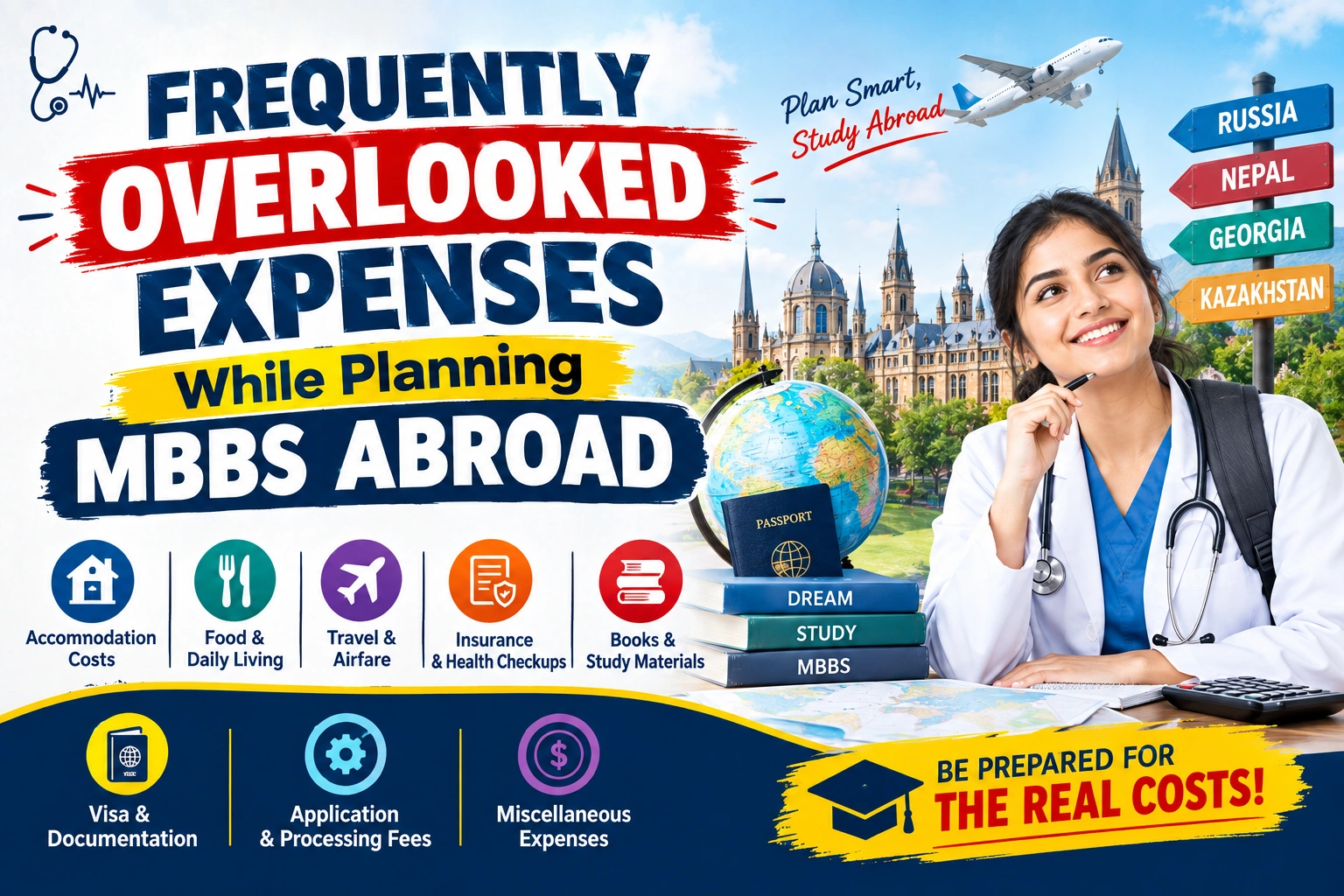
The first and most decisive driver is economic cost. This study estimates that the total cost of attending a private medical college in India, including tuition, accommodation, development fees, miscellaneous fees and other related expenses, exceeds 6 million to 10 million Indian rupees, a sum ordinary middle-class families cannot afford.
By contrast, the total cost of attending an internationally accredited overseas medical university is only a small fraction of that of India’s private medical schools. These overseas institutions also offer low tuition, standardized accommodation, regulated clinical training, and diverse international exposure, which directly pushed overseas MBBS programs from a backup option to the first choice for most students.
International Degree Recognition
The second driver is degree recognition. Most overseas medical universities are listed in the WDOMS, so their graduates can take global medical licensing exams and apply for postgraduate study abroad.
Indian students’ criteria for evaluating universities have also evolved: in earlier years, they only prioritized geographic location, but now they first assess core indicators such as international accreditation, clinical quality, research opportunities, and graduate career outcomes.
Reduction of Information Barriers
The third driver is the sharp reduction in information barriers. Twenty years ago, Indian students had extremely limited channels to access information about overseas universities.
Today, they can not only independently look up university rankings, course structures, current student reviews, medical licensing requirements in different countries, the exam performance of overseas graduates on India’s Foreign Medical Graduate Examination (FMGE) and National Exit Test (NExT), and a school’s accreditation status, but also use professional tools such as MBBS Advisor to compare universities across countries.
This allows them to make rational, data-backed study-abroad decisions and greatly reduce related uncertainty.
Global Career Opportunities
The fourth driver is growing demand for international career opportunities.
Today’s Indian medical students aim to practice in a wide range of countries, including India, the United States, the United Kingdom, Australia, Canada, Germany, and multiple Middle Eastern nations.
They can pursue career pathways such as:
- United States Medical Licensing Examination (USMLE)
- General Medical Council (GMC) license from the UK
- Australia’s national medical licensing exam
A globally recognized medical degree is the core key that unlocks these multi-path career development opportunities.
Better Clinical Training Than Commonly Assumed
The final driver is the correction of long-held misconceptions. Previously, the general public widely believed that studying medicine overseas offered insufficient clinical training.
In reality, most overseas universities rely on their affiliated hospitals and connected medical networks to provide students with ample clinical practice opportunities, which has completely eliminated the core concern of Indian families.
Changing School Selection Priorities Among Indian Students
Current Indian medical students applying to pursue overseas medical degrees select schools across six mainstream medical specialties:
- Internal medicine
- Surgery
- Pediatrics
- Obstetrics and gynecology
- Emergency medicine
- Community medicine
A core shift has taken place in their school selection logic: they no longer screen institutions based on stereotypes, and instead use access to practical clinical training opportunities as their core evaluation criterion.
Leading global medical education assessment systems have also simultaneously listed clinical contact hours and the depth of partnership between a medical school and local hospitals as core evaluation indicators for overseas medical schools.
Five Factors Supporting Better Decision-Making
NMC Guidelines Improve Transparency
First, India’s NMC released four school selection review standards covering required course duration, internship requirements, English-medium instruction, and clinical training standards, to improve the transparency of school selection.
Third-party platform MBBS Advisor assists students in matching with compliant schools, eliminating information gaps in school selection at the policy level.
Growing Alumni Success Stories
Second, thousands of Indian doctors who studied abroad are now practicing globally, so students can access four groups of alumni:
- Practicing physicians
- Specialist doctors
- Researchers
- Hospital administrators
A large body of successful cases has broken the historical stigma around studying medicine overseas, establishing a decision-making reference at the social level.
Digital Technology Expands Access
Third, digital technology provides students with five types of accessible resources:
- Participating in virtual university fairs
- Joining online seminars
- Contacting alumni
- Obtaining online learning resources
- Joining global medical communities
This removes geographical barriers to reduce students’ anxiety about studying abroad and equalizes the threshold for accessing information at the technical level.
Focus on Long-Term Career Outcomes
Fourth, students’ decision-making has shifted from focusing solely on admission eligibility to centering on five core career-related issues:
- FMGE pass rate
- Accessible clinical exposure
- A school’s international recognition
- Postgraduate advancement options
- Eligibility to take global licensing exams
Relying on MBBS Advisor to evaluate long-term career outcomes, students have completed a fundamental mindset shift.
Greater Awareness of Licensing Exams
Fifth, students’ understanding of the FMGE and National Exit Test (NExT) professional licensing exams has improved substantially.
They generally prioritize three core school selection dimensions:
- Course quality
- Clinical experience
- Exam preparation
The significant gaps in FMGE scores among graduates from different schools and countries have further pushed students to choose schools cautiously, leading to an overall improvement in the decision-making quality of prospective medical students.
The Growing Role of Professional Guidance Platforms
As demand among Indian students to pursue overseas undergraduate MBBS programs continues to surge, the education consulting and guidance industry focused on this vertical niche has grown in tandem.
In early years, students planning to study medicine abroad could only access information through scattered channels such as commercial advertisements and word-of-mouth accounts from relatives and friends, which failed to meet their four core school-selection needs:
- Verifying institution qualifications
- Coordinating visa processes
- Calculating study-abroad costs
- Planning internship pathways
Today, the vast majority of families turn to the systematic support of professional agencies.
The full-process school-selection service launched by vertical service platform MBBS Advisor was created precisely to respond to this shift in demand.
Changing Attitudes Among Parents
Attitudes among parent groups have also undergone a clear evolution.
They have long abandoned the early outdated perception that overseas MBBS is a fallback for students who failed to gain admission to domestic higher education and now widely recognize its four core advantages:
- Globally transferable academic credentials
- Internationally aligned training standards
- Diverse employment options
- Abundant clinical resources
Currently, the segment still faces four core challenges:
- Difficulty in distinguishing compliant qualifications
- Cross-border information asymmetry
- High student adaptation costs
- Uncertainties over degree certification
In response, India’s official regulatory body, the National Medical Commission (NMC) has specially issued supporting application guidelines and qualification review specifications.
Conclusion
Six core factors that will support the industry’s sustained future growth have gradually emerged, including the widening supply-demand gap for domestic medical degrees and the flexible training cycles of overseas universities.
In this analysis, we dismantle the long-held misconception that "overseas MBBS is merely a backup option for domestic higher education," and formally establish its new positioning: it has now become the mainstream strategic first choice for middle-class Indian families planning their children’s medical career paths.