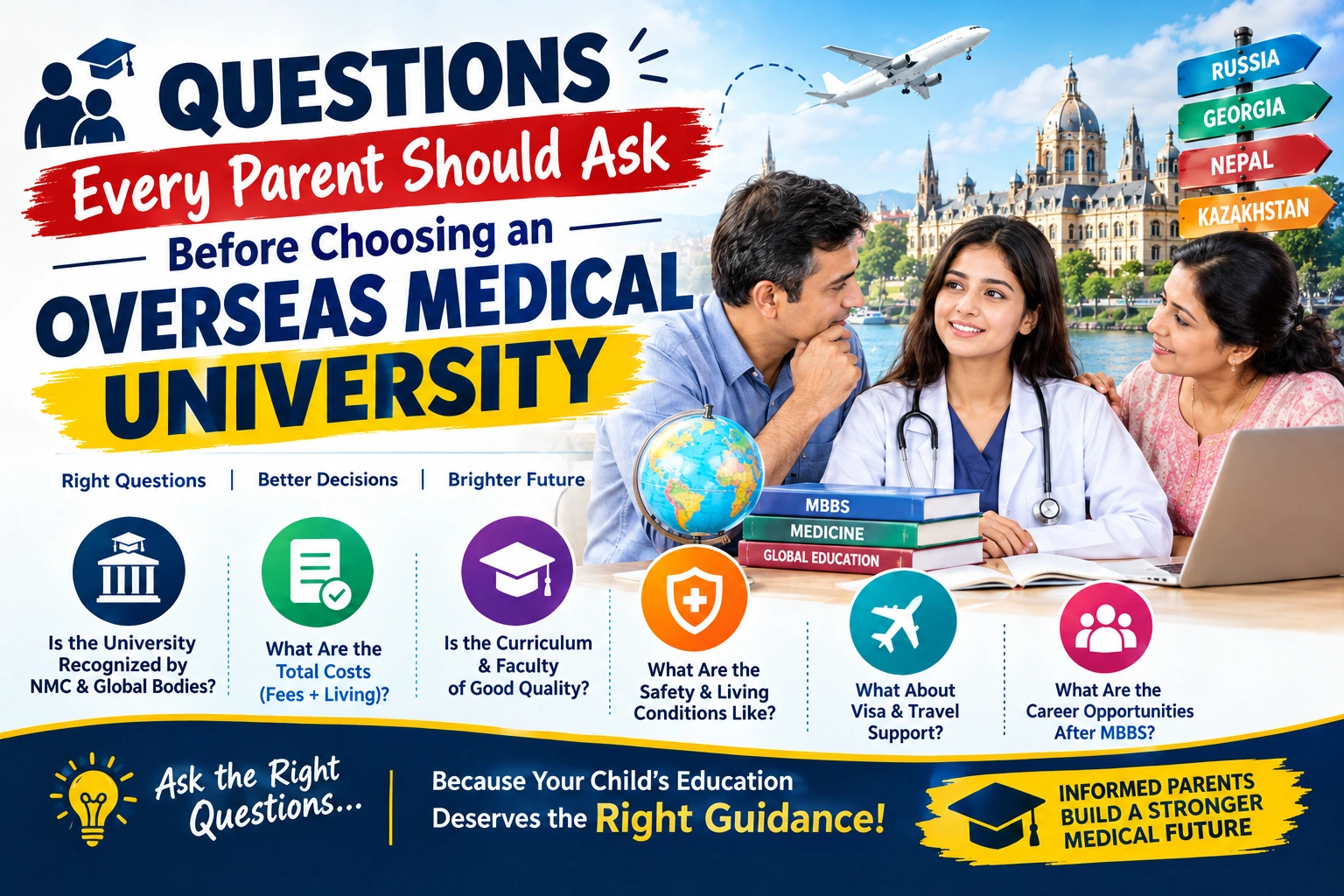
 Russia
 Belarus
 Georgia
 Kazakhstan
 Kyrgyzstan
 Uzbekistan
 China
China Nepal
Nepal Bangladesh
 Poland
 Romania
 Slovakia
 Hungary
 N. Macedonia
 Vietnam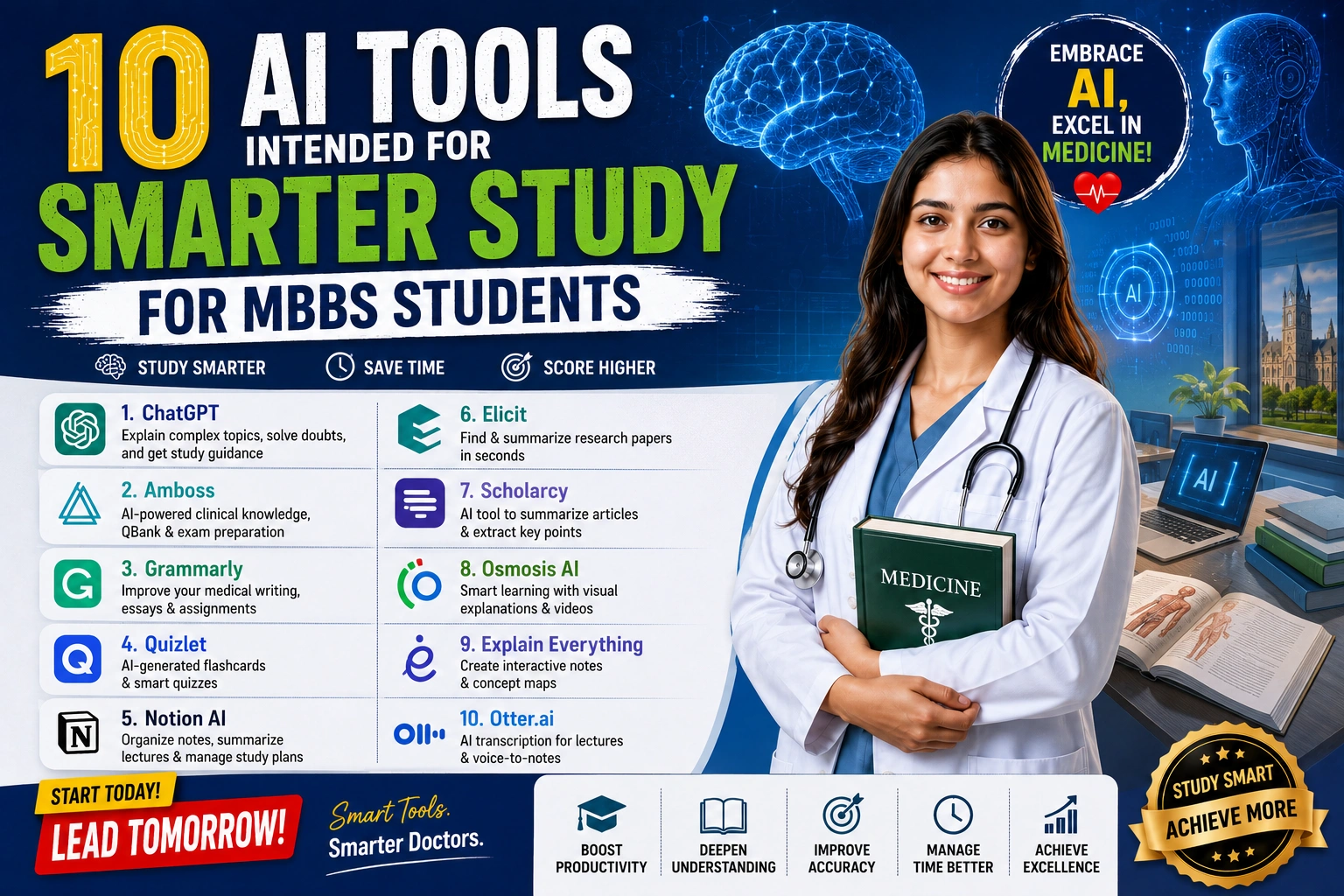
In the field of medical education, the disruption caused by Artificial Intelligence (AI) has accelerated. Students enrolled in MBBS are required to undertake the arduous task of sifting through and managing huge volumes of data and clinical information, in addition to preparing for a slew of challenging and competitive examinations, revising difficult concepts, and familiarizing themselves with the latest medical practices and guidelines. Relying on traditional study methods will no longer help students catch up with the syllabus.
With the help of useful AI tools, medical students can save considerable time, enhance their understanding of the concepts, and create study aids like summaries and flash cards, as well as solve clinical case scenarios and prepare for entrance and licensing examinations.
Responsible use of AI during your MBBS preparatory years, whether through the NEET exam or your actual medical studies, will improve your academic performance. While using AI, students are encouraged to complement its use with legitimate educational platforms for medical guidance, such as MBBS Advisor, to receive credible information on MBBS admission pathways to India and overseas. Students may also use the NEET Rank Predictor to gauge their probable ranking before assessing their admission options.
Why AI is Becoming a Necessity for MBBS Students
The enormous amount of information that students are required to learn and retain in the field of medical education is unlike any other education system. Students are required to learn several subjects, such as anatomy and physiology as well as surgery, medicine, pediatrics, pharmacology, gynecology, pathology, radiology, and microbiology, at the same time.
Artificial Intelligence tools modernize study methods by personalizing the learning experience. Students are literally able to save hours by having textbook information and other data presented to them in structured formatted notes and learning resources, in addition to having their questions answered. Class notes can even be supplemented with learning aids like quizzes and other resources that are readily available in a variety of formats, from textual to the more visual.
AI can be a great supplement for students when used in conjunction with established learning resources and tools such as guidance from instructors, clinical practice, and comprehensive medical guidelines.
1. ChatGPT – Your Personal Medical Study Assistant
For MBBS students, one popular new study aid is ChatGPT. It is a great tool for explaining complex concepts of medical study in an easier to understand way. This tool is great in the study of anatomy, pathology, physiology, and even pharmacology.
Common uses of ChatGPT for students include:
- Simplifying a difficult concept
- Creating revision notes
- Explaining mechanisms of disease
- Generating MCQ's
- Creating questions for an exam
- Summarizing long study materials
- Understanding clinical situations
It is especially useful for quick understanding when preparing for an exam.
2. Google Gemini – Research and Medical Information Assistant
Another great study aid tool for MBBS students is Google Gemini. It is efficient in helping students locate and understand relevant medical information.
This tool excels in:
- Research assistance
- Summarization of medical literature
- Explanation of medical and clinical images
- Clinical and academic reasoning support
- Assistance in Clinical and Academic Writing
- Preparation of Clinical and Academic Presentations
3. Perplexity AI – Source Learning
Perplexity AI is excellent for medical students who want evidence for the information they need. This tool provides citations and supports research. It is excellent for fast medical research.
Benefits of Perplexity AI include:
- Citation-supported answers
- Research assistance
- Pharmaceutical information
- Mechanism of disease with clinical correlations
- Summary of disease entities
- Information on recent medical research
4. Notion AI – Smart Notes for MBBS Students
Note-taking is one of the largest barriers to success in Medical School.
Notion AI helps students streamline all their study materials in one place including subjects, lecture notes, revision schedules, and clinical postings.
Some of its useful features are:
- Automatic note summarization
- Revision planning
- Daily study tracking
- To-do lists
- Lecture organization
- Clinical log management
It minimizes the time spent on the organization of study materials.
5. Quizlet AI – Smarter Study Flashcards
Medicine is a field of study that involves the memorization of a large vocabulary of terms, names of drugs, structures and classifications of diseases. Quizlet AI is a tool that helps the student create advanced study flashcards and aids the student in using the method of active recall.
It can be used to study any of the following subjects:
- Anatomy
- Pharmacology
- Histology
- Biochemistry
- Microbiology
- Medical terminology
6. Anki with AI Add-ons – Ultimate Spaced Repetition
Anki is regarded as one of the best learning platforms by medical students all over the globe and the AI add-ons have made the creation of flashcards easier and quicker.
Its features are:
- Automatic flashcard creation
- Spaced repetition (which aids retention)
- Quick revision
- A tailored learning schedule
A large number of students have used Anki to assist them in their studies during and post the completion of their MBBS and in preparation for licensing exams.
7. Grammarly – Medical Writing Made Easy
Students who study medicine have to write reports and papers regularly.
Grammarly is able to assist in the following areas:
- Grammar
- Sentence structure
- Clarity
- Writing from the academic and professional standpoint
While this tool doesn’t replace a proofreader, it improves the writing without a doubt.
8. Elicit AI – The Future of a Literature Review
With the evolution of the modern medical school curriculum comes the inclusion of research as a vital component.
Elicit AI helps students to do the following:
- Search for papers
- Summarize articles
- Compare studies
- Identify the gaps in research
- Understand the evidence
This tool is especially helpful for students who are doing research for a dissertation, a thesis, or a systematic review.
9. Microsoft Copilot – Productivity for Medical Students
Microsoft Copilot brings productivity apps to the next level with integrated AI for Word, Excel, PowerPoint, and more.
The tools offer students the ability to:
- Make presentations
- Summarize documents
- Organize study schedules
- Draft reports
- Prepare projects
Patients that are working on seminar presentations will save a lot of time when using one of these tools.
10. Med-PaLM and Emerging Medical AI Platforms
The development of Med-PaLM and similar systems show how AI is being designed with an emphasis on healthcare education and the teaching of clinical skills and reasoning.
Some of these systems may offer:
- Clinical decision support
- Medical question answering
- Explanation of medical conditions
- Practice of diagnostic reasoning
- Support for learning in an evidence-based way
The continued development of these systems demonstrates the innovative and exciting means of enhancing the teaching of medical skills and clinical reasoning through the use of AI.
How AI Helps During NEET and MBBS Preparation
Use of AI tools has even started to seep into the time before students enter medical college. During NEET preparation tools may be used to explain biology concepts, create quizzes, simplify chemistry reactions, and solve physics numericals with step-by-step explanations.
These tools help students manage the academic load during all the professional years of medicine. Students can even use the NEET Rank Predictor tool to help determine their admission chances prior to participating in counseling.
AI Cannot Replace Clinical Learning
Even with the rapid advancement of AI and its capabilities, nothing can replace real-life patient interactions, bedside teaching, cadaver dissection, lab work, or hospital postings.
The medical field is an education that is based on experiential learning. Students should use AI tools to augment their learning in conjunction with verified resources, faculty, and global medical standards.
Recommended Trustworthy Sources for All MBBS Students
- World Health Organization (WHO)
- National Medical Commission (NMC)
- National Eligibility cum Entrance Test (NEET)
- World Directory of Medical Schools (WDOMS)
They provide official information pertaining to medical education and licensing, as well as public health and accredited medical institutions.
Picking the Right MBBS College is Important
You should never underestimate the importance of selecting the right medical college, even the most advanced AI is of little help in this regard.
Students need to make appraisal on the following areas before making an admission decision:
- NMC recognition
- Listing in WDOMS
- Level of clinical exposure
- Quality of the faculty
- Availability of good internship opportunities
- Adequate hospital infrastructure
- TUITION and HOUSING
- Safety of the campus
- FMGE/NExT preparatory assistance
Students aspiring to study MBBS in India and abroad must obtain adequate counseling from reliable education professionals.
For comprehensive information about MBBS admission assistance and medical educational consultancy related to latest updates on inter-country comparisons, university selections, counseling, eligibility and fee issues, visit the MBBS Advisor.
Guidelines to the Responsible Use of AI During MBBS
The use of AI in medical education can prove to be very valuable when the user is prudent. AI at no time should be the exclusive tool relied upon to provide answers. Accuracy must be confirmed and validated from an authoritative source.
Some methods of responsible AI use are:
- Refer to standard medical textbooks.
- Cross-check with WHO and NMC.
- Use AI as a tool to gain understanding of concepts, not as a substitute for rote memorization.
- Practice previously asked questions.
- Attend all your classes and clinical rotations.
- Revise thoroughly with your own notes and use flashcards.
- Never submit AI generated assignments as your own, you should aim to understand the concepts.
AI used in this manner and in combination with traditional methods of medical education can promote the learning of the user and also practicing medicine with due diligence.
Conclusion
The use of AI is revolutionizing the methods of study, preparation and revision for medical students in the MBBS program.
Tools such as ChatGPT, Gemini, Perplexity AI, Notion AI, Quizlet AI, Anki, Grammarly, Elicit AI, Microsoft Copilot, and upcoming medical AI platforms can enhance productivity and optimize the learning process.
Conceptual understanding, discipline, and hands-on clinical experience are all crucial for achieving your career goals in the practice of medicine. AI should be considered a really useful tool and assistant that enhances the medical learning process. AI is not a replacement for textbooks, teachers, or clinical experience.
Combining the best educational resources, whether for your NEET prep or your expected NEET score prediction with the NEET Rank Predictor, or MBBS admission opportunities with MBBS Advisor, with modern AI tools, can make your learning process effective, and help you develop the skills necessary for an outstanding medical practice.