 Russia
 Belarus
 Georgia
 Kazakhstan
 Kyrgyzstan
 Uzbekistan
 China
China Nepal
Nepal Bangladesh
 Poland
 Romania
 Slovakia
 Hungary
 N. Macedonia
 Vietnam
 Canada
 Armenia
 UK
UK Australia
 USA
USA Ireland
 Germany
 New Zealand
 Italy
Italy France
 Singapore
 Netherlands
 Sweden
 Switzerland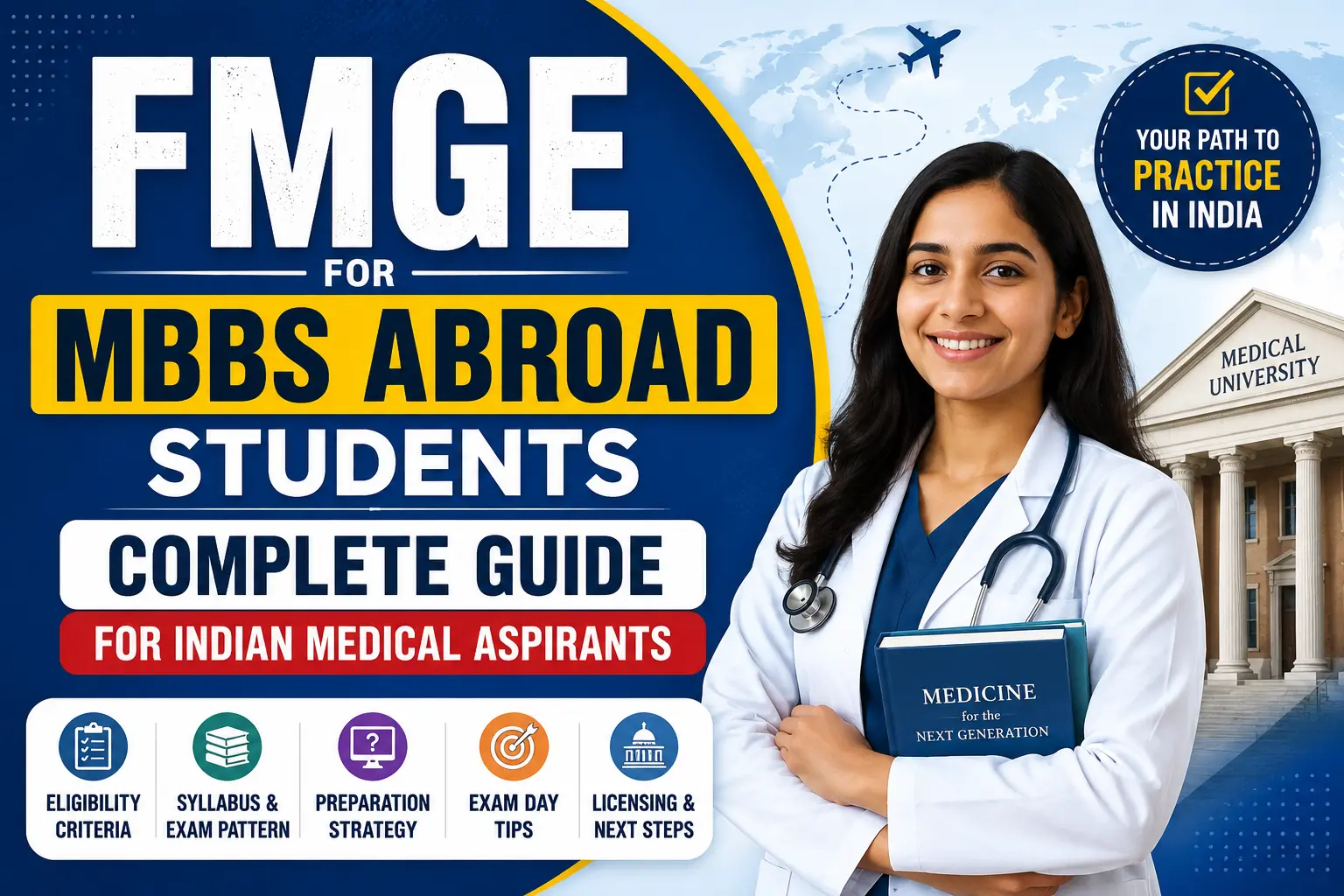
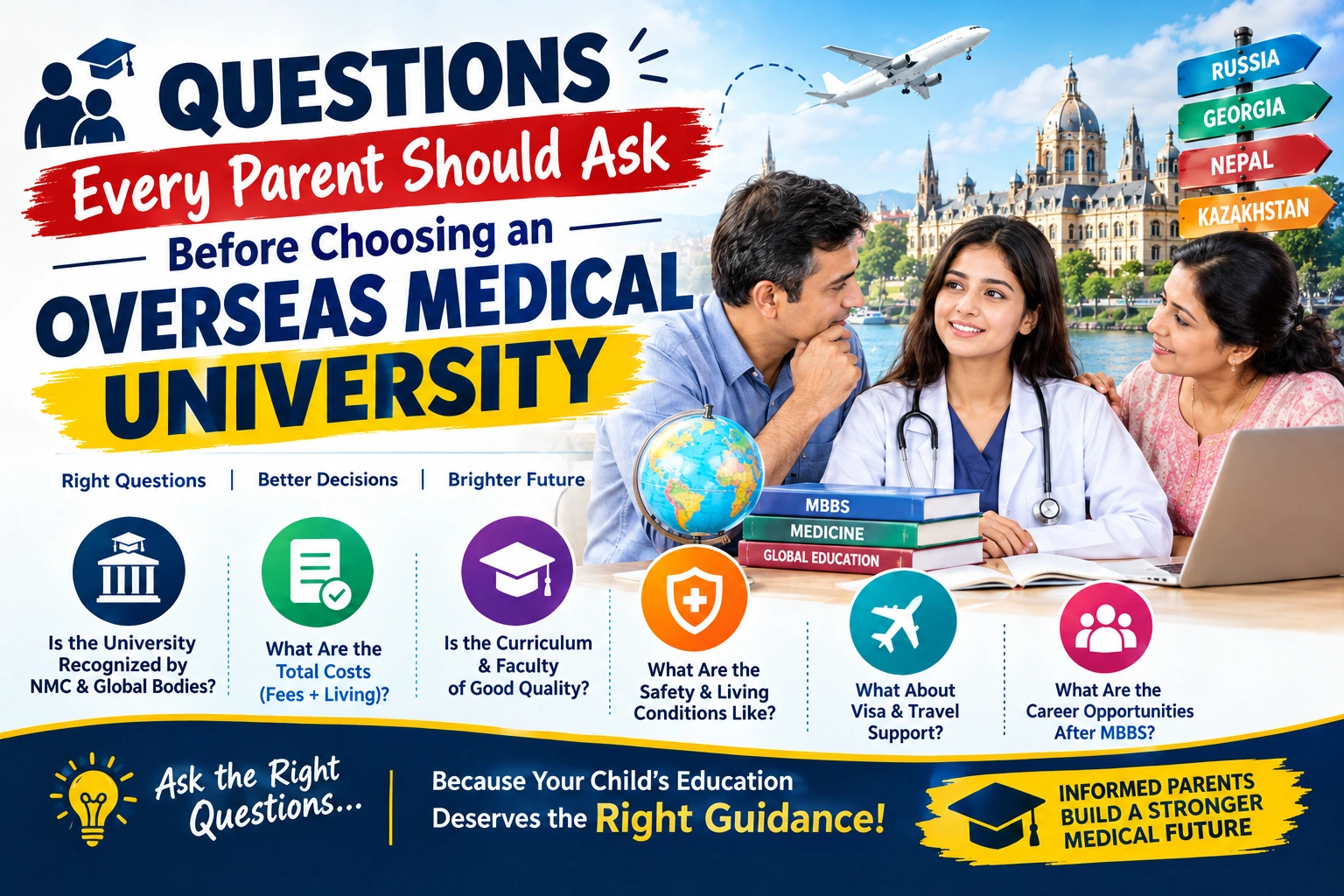
Every year, thousands of Indian students travel to 8 countries including Russia, Kyrgyzstan, and Kazakhstan to pursue a Bachelor of Medicine and Bachelor of Surgery (MBBS) degree.
The core motivation for students choosing to study medicine overseas is:
- The limited number of seats at India’s domestic public medical colleges
- The fierce competition in the national unified NEET
- The prohibitively high tuition fees at India’s private medical colleges, which most families cannot afford
However, many students only focus on surface-level factors such as admission requirements, university rankings, dormitory conditions, and tuition fees when selecting a school.
They completely overlook the FMGE, the core threshold that determines whether they can practice medicine in India.
In fact, a large number of students only learn about the actual requirements of this exam after completing their entire degree program.
This article will next break down the core content of the FMGE for international medical students:
- Its official definition
- The reasons behind its persistently low pass rate
- The latest regulatory requirements
- Common mistakes made by students
- How to improve career development outcomes through scientific planning
We also advise all students to consult reliable professional consulting platforms such as MBBS Advisor before choosing a university, because school selection directly affects eligibility to register for the FMGE and performance on the exam.
What Is FMGE and Why Is It Important?
The FMGE is a licensing examination hosted by the National Board of Examinations in Medical Sciences (NBEMS).
It is open to all Indian citizens and Overseas Citizens of India (OCI) who have obtained an overseas medical degree and wish to practice medicine in India, and it is a mandatory requirement to obtain registration qualifications from India’s national medical regulatory authority.
An overseas MBBS degree does not automatically grant the right to practice medicine in India.
Candidates must pass the FMGE or other official qualification mechanisms introduced in subsequent regulations to register and practice medicine.
Therefore, academic planning must start before enrollment.
Why School Selection Directly Affects FMGE Success
When choosing a school, students must not only focus on cost-effectiveness, but also take into account:
- Academic quality
- Clinical resources
- Whether the target institution meets India’s regulatory requirements
This exam is essentially a quality screening mechanism, which ensures that the competence of overseas medical students matches that of India’s domestic medical students, and aligns with the regulatory framework of equal requirements for education, training, and internships proposed by the NMC.
All applicants must fully assess the qualifications of their target university before enrolling.
Key University Factors to Verify Before Admission
MBBS Advisor, which provides specialized guidance for Indian students planning to pursue medical degrees overseas, first reminds all prospective applicants that before submitting university applications, they must individually verify core elements of their target institutions, including:
- Educational accreditation
- Curriculum design
- Internship arrangements
- Clinical training resources
Why FMGE Pass Rates Are So Low
The core context for this prerequisite is the extremely low pass rate of the Foreign Medical Graduate Examination (FMGE) that plagues nearly all Indian foreign medical graduates.
In recent years, the pass rate for each exam cycle has only stayed between 10% and 25%, and some cycles even recorded a pass rate of just 18% to 24%.
This extremely low passage rate is the core driver that compels all international students to complete sufficient research prior to selecting a university.
Four Major Causes of FMGE Failure
MBBS Advisor further breaks down the four core factors leading to FMGE failure:
- Insufficient clinical exposure during overseas study
- Misalignment between the curriculum studied and India’s domestic medical framework
- Barriers stemming from substandard professional language proficiency
- Delayed initiation of exam preparation
NMC Regulations for Foreign Medical Graduates
The organization then outlines the four mandatory hard requirements stipulated in 2021 by India’s National Medical Commission (NMC) in its regulations for foreign medical graduates seeking licensing:
- A minimum medical program duration of 54 months
- A required 12-month internship
- Educational credentials equivalent to India’s domestic MBBS standard
- A passing score on the licensing exam to apply for permanent medical practice registration
Due to the rigorous and complex nature of the new regulations, most Indian students studying medicine overseas rely on MBBS Advisor’s professional guidance to sort through these requirements.
Meanwhile, the quality of overseas medical schools varies widely across the globe, so all prospective students must complete an item-by-item assessment of their target institutions’ accreditation and training capacity, to proactively avoid various risks related to university selection.
Step-by-Step FMGE Roadmap for MBBS Abroad Students
This article focuses on all Indian candidates planning to study medicine overseas and required to take India’s Foreign Medical Graduate Examination (FMGE).
It sorts out action guidelines covering the full process from school selection to obtaining a medical license, to help readers quickly grasp core information.
Verify University Recognition Before Admission
Before enrollment, candidates must first verify that their target school is included in the WDOMS and meets India’s regulatory requirements.
They can use the MBBS Advisor platform to screen for eligible schools, avoid being misled by schools’ marketing language, and never take low tuition as the core standard for school selection.
Risks of Choosing a University Based Only on Tuition
Focusing solely on low tuition will create six major long-term risks:
- Insufficient academic preparation
- Lack of access to clinical opportunities
- Failure in the FMGE
- Delays in applying for a practice license
- Additional tutoring costs
- High uncertainty in career development
When Should FMGE Preparation Begin?
When preparing for the FMGE, candidates must correct the common misconception that preparation only starts after graduation; preparation must begin in the first year of enrollment.
Habits Followed by Successful FMGE Candidates
The universal practices of past successful candidates are:
- Building a solid foundation of subject concepts
- Using standard Indian textbooks
- Practicing multiple-choice questions (MCQs) regularly
- Following an FMGE-exclusive study plan
- Participating in official review programs
Clinical Competence and New Regulatory Expectations
The latest policy from India’s National Medical Commission (NMC) emphasizes practical clinical competence.
Students who completed part of their studies online must make up the required practical coursework.
Candidates should prioritize accumulating experience in:
- Patient interaction
- Clinical rotations
- Case discussions
- Hospital-based practical training
Rather than only focusing on theoretical exam preparation.
Four Common FMGE Misconceptions
Misconception 1: Any MBBS Degree Abroad Allows Practice in India
The truth is that all regulatory and licensing requirements must be met to qualify for practice.
Misconception 2: FMGE Is an Easy Examination
Historical pass rates prove it is extremely challenging.
Misconception 3: Low Tuition Means Better Value
Teaching quality and clinical resources are far more important than tuition.
Misconception 4: Preparation Can Wait Until Graduation
Early preparation greatly improves the pass rate.
Why FMGE Coaching Alone Is Not Enough
FMGE tutoring only serves an auxiliary role and cannot replace high-quality undergraduate education.
The most successful candidates combine four core elements:
- Institutional training
- Self-directed study
- Clinical experience accumulation
- Structured review
Candidates must never rely solely on tutoring to fill gaps in their undergraduate education, as failing the FMGE will also bring severe negative career impacts.
Practical Challenges Faced by MBBS Abroad Students
Indian students planning to pursue an undergraduate medical degree (Bachelor of Medicine, Bachelor of Surgery, MBBS) abroad must first confront five core practical pressures:
- Many need to take practice-related exams multiple times to pass
- This greatly extends the timeline before they can officially start their medical careers
- The current Indian medical licensing framework is updated and regulated by the NMC
- The FMGE remains the core threshold for practicing medicine in India
- The exam continues to have a persistently low pass rate
For this reason, when choosing a school, you must not focus only on tuition fees; you need to prioritize the target institution’s academic quality, regulatory compliance, and clinical resources.
Seven Mandatory Checks Before Studying MBBS Abroad
Before studying abroad, you must complete 7 mandatory verifications:
- Verify the accreditation credentials of your target university
- Confirm it meets all NMC requirements
- Assess the quality of its clinical training
- Research the institution’s FMGE preparation resources
- Clarify the internship rules required by India
- Review the real experiences of past and current enrolled students
- Seek professional consulting
You may also rely on the MBBS Advisor platform, which provides full-process consulting covering school selection, application, and regulatory compliance.
Six Habits That Improve FMGE Success
To prepare for the FMGE, you should develop 6 practical habits:
- Focus on understanding the concepts behind core knowledge points
- Complete all required clinical rotations
- Keep practicing MCQ test questions
- Use Indian local medical textbooks
- Start dedicated FMGE preparation early
- Participate in clinical case discussions
Conclusion
Students who clarify relevant rules in advance and make long-term plans are more likely to pass the FMGE and obtain a medical license to practice in India, and your dream of practicing medicine overseas can be fully realized.