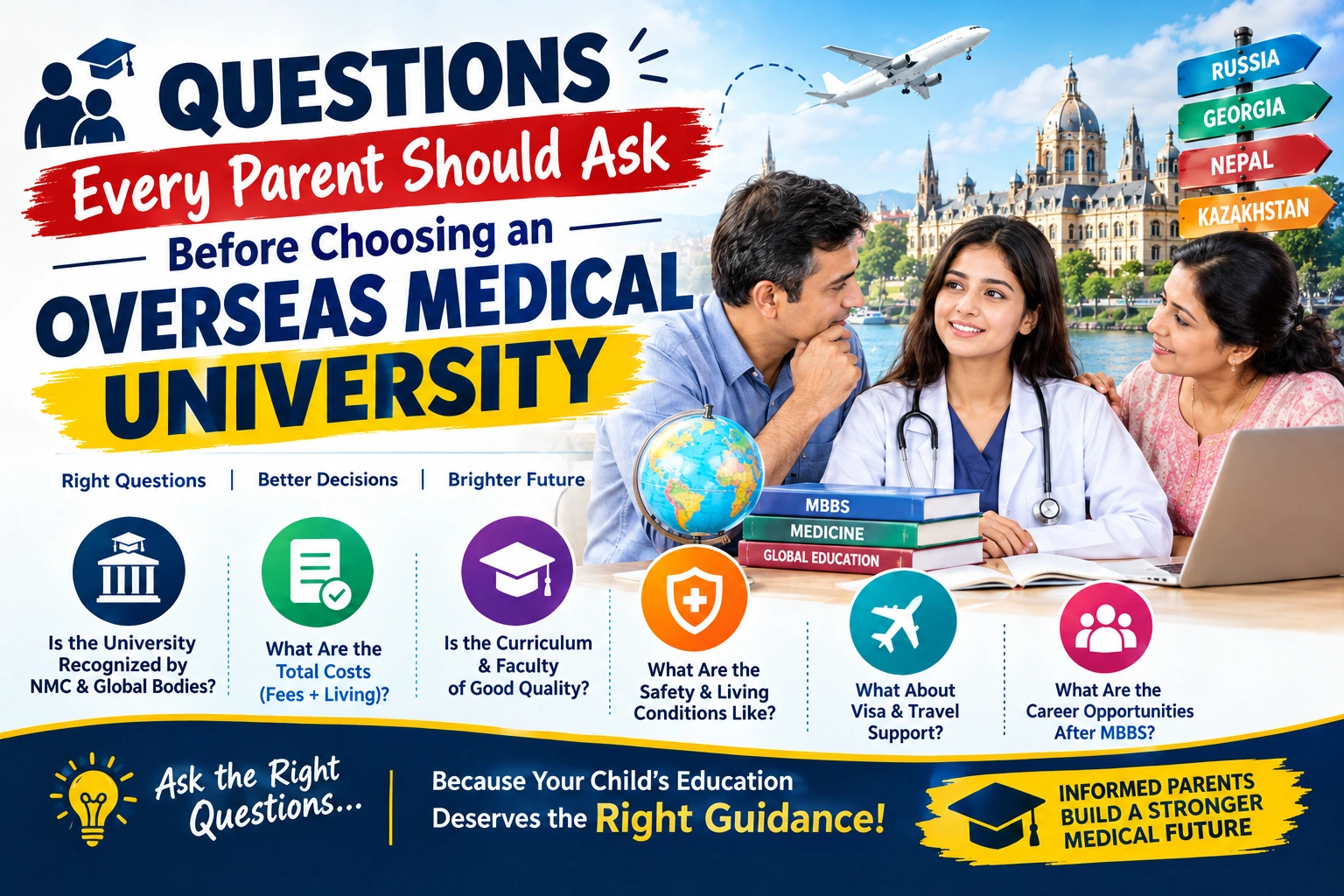
 Russia
 Belarus
 Georgia
 Kazakhstan
 Kyrgyzstan
 Uzbekistan
 China
China Nepal
Nepal Bangladesh
 Poland
 Romania
 Slovakia
 Hungary
 N. Macedonia
 Vietnam
 Canada
 Armenia
 UK
UK Australia
 USA
USA Ireland
 Germany
 New Zealand
 Italy
Italy France
 Singapore
 Netherlands
 Sweden
 Switzerland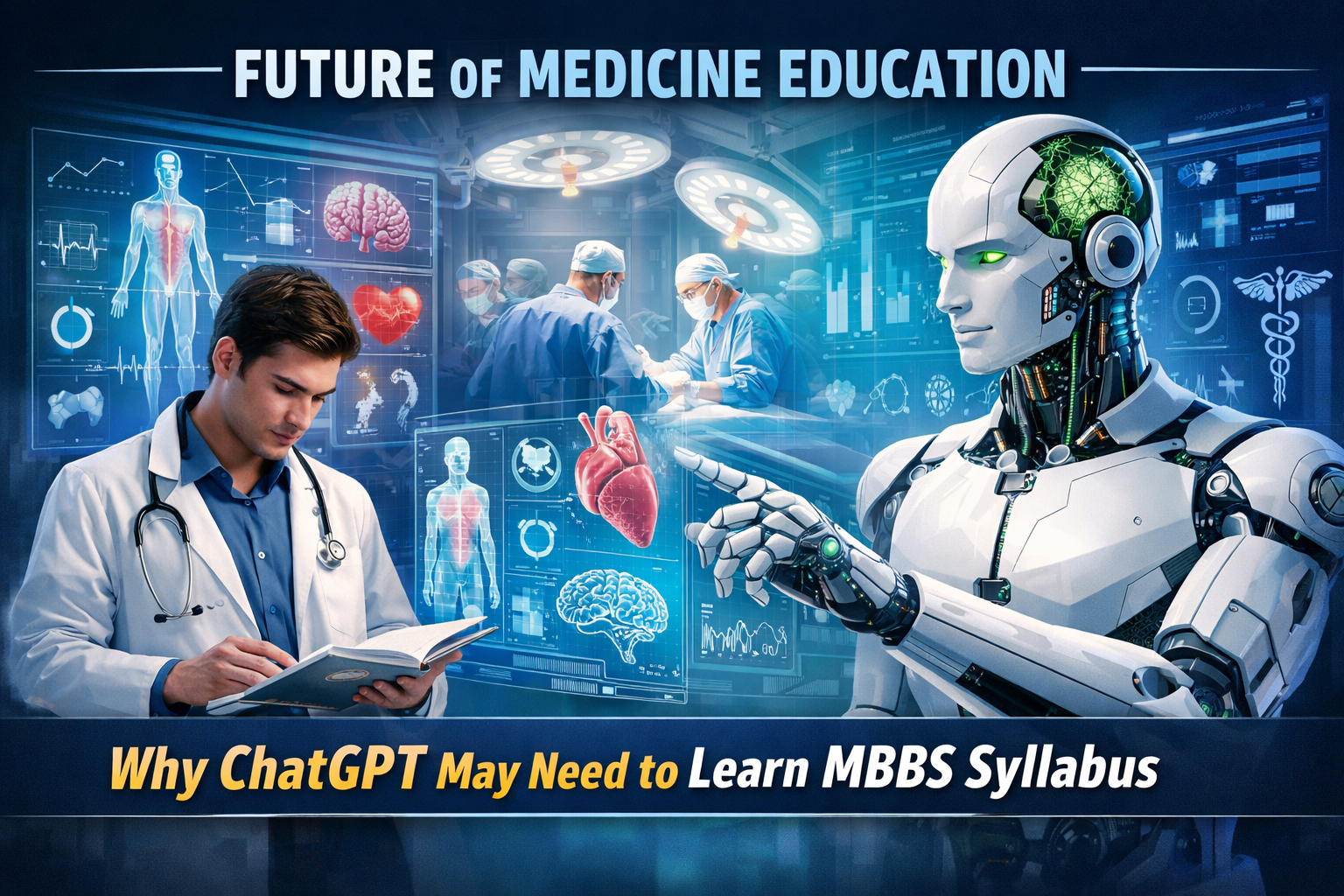
AI is evolving rapidly, particularly in relation to medical education and healthcare delivery. An Overview: More than just another tool, AI in MBBS programs is proving to be the disruptive force that is redefining how students study and develop as future healers. This trend toward greater integration of AI in medical education is being facilitated by this growing trend across India and the world, with support from global as well as national bodies like the World Health Organisation (WHO) and National Medical Commission (NMC).
Transitioning from Traditional to Smart Medical Education
The way MBBS has been taught historically, it would be lectures, books and then a skill learnt in hospital. Luckily, artificial intelligence is bringing about an age of intelligent, data-driven learning systems. Such systems track student progress and adapt the delivery of material based on specific learning needs.
AI-powered platforms help students:
- Subjects in which you have weak points, such as Anatomy, Physiology and Biochemistry
- Receive personalized study plans
- Practice with intelligent mock tests
- Track progress through predictive analytics
- It is a more effective method for exam preparation like NEET and university tests.
- AI-Driven Learning Tools and Technologies
- Adaptive Learning Platforms
AI-empowered platforms tailor study resources based on a student’s performance. With time, as these systems become better trained over time, the learning becomes increasingly personalized and precise.
Virtual Reality and Augmented Reality
VR and AR have made access to 3D anatomy and surgical simulations available to medical
AI-Powered Chatbots and Assistants
They provide instant academic assistance, answer questions and help with revision. They are ubiquitous learning partners, democratizing education.
Smart Assessments
They use AI tools to make quizzes, grade responses and provide real-time feedback. They also predict exam results so that students can practice more strategically.
Revolutionizing Anatomy and Surgical Training
Those are the building blocks of MBBS: Anatomy and surgery. AI has introduced innovative solutions:
- Virtual Dissection Labs: Experience Practice and No Cadaver Dependency
- Virtual surgical procedure: Feedback of accuracy and technique in real-time
- Organs: 3D Visualization Tools — can help students comprehend the complexity of organs
- Such initiatives truly bridge the divide between theory and practice.
- AI in Clinical Education and Diagnosis
- Clinical exposure is the best part of MBBS, but even AI trembles this experience. AI systems assist in:
- X-ray and MRI radiological images have been read
- Laboratory reports and patient records
- We suggest potential diagnoses and treatment options
- Integrating these tools into their courses will enhance students' diagnostic-accuracy and clinical-reasoning skills. They also gain exposure to contemporary healthcare technologies implemented in hospitals worldwide.
- Significance of AI in Medical Research
- The impact of AI on how medical students conduct research and the practice of evidence-based medicine. It enables:
- Lightning fast access to world medical literature
- Automated summarization of research papers
- Analyze large data sets for trends
- Support for Clinical Trial and Data Analysis
This allows students to conduct quality research with much greater ease and keeps them up-to-date on advances in the medical industry.
Telemedicine and Digital Healthcare Expansion
Artificial Intelligence powered telemedicine platforms are assisting in extending healthcare reach especially in rural and remote areas. The future physicians trained by AI will also be able to:
- Conduct remote consultations
- Use AI-based symptom checkers
- Manage patient data digitally
- Provide care that is more accurate and speedier
In a country like India, where healthcare resources are still disparate, this is particularly relevant.
The Importance of human touch in doctor patient relationship
Ai is not a doctor but just a super assistant. Doctors will be able to collaborate with AI for better health outcomes. Mechanically repetitive tasks like data entry and preliminary analysis will be automated, allowing doctors to dedicate more time to patient care.
New Career Opportunities After MBBS Graduation:
- Clinical AI Specialist
- Medical Data Analyst
- Digital Health Consultant
- Telemedicine Expert
- Healthcare Technology Advisor
- Understanding AI gives doctors an advantage in clinical and non-clinical settings.
- Human Touch vs Machine Intelligence
Now it's hard to say how much or little these developments can cause good (or bad) to our world, but one thing is certain, there are many parts of being human that we cannot allow technology to touch i.e empathy and compassion(beside knowing the line from right/wrong). Other things — like the doctor-patient relationship — will always require a human touch.
The most effective model in healthcare will be a hybrid of:
- AI’s accuracy and speed
- Doctor’s experience and empathy
- Challenges and Limitations
So, even though it does have potential benefits, there are a number of challenges with AI integration into MBBS education:
Data Privacy Issues
This way, they know that they are meeting compliance requirements surrounding sensitive patient data and adhering to ethical standards when it comes to dealing with that information.
Infrastructure Gaps
Most of the institutions have not yet gotten a hold on machine learning, and even less got their hands on data till October 2023.
Curriculum Limitations
The National Medical Commission is slowly working on updating medical curricula based on AI training — no small feat, more a continuous process.
Risk of Over-Dependence
Degrading of Not So Useful Skills: By relying on AI, very crucial skills such as critical thinking and making decisions might degrade.
Ethical Considerations in AI Healthcare
AI also poses significant ethical challenges, including:
- Accountability in AI-based decisions
- Bias in algorithms
- Transparency in treatment recommendations
- The next step is training medical students on the clinical, ethical and responsible use of AI as it evolves.
Future Outlook
In this post, different technologies are going to be discussed that will affect the MBBS courses in future. AI is going to be a core of world health systems, it's not just World Health organization but there are many others in the line.
In the coming years:
- AI will become omnipresent in medical education
- Doctors will use AI to make faster, more accurate decisions
- But we will have more interactive and globalised medical training
Conclusion
AI Is Transforming MBBS Education To Be More Personalized, Practical, Synthesized It promotes learning and consolidation of clinical knowledge and gives rise to new career opportunities. But at its heart, medicine is still human care.
The future belongs to doctors who can marry their medical training with technological know-how. Utilization of AI will enable future healers to deliver effective, accurate and empathetic health solutions in an increasingly digital world.
Future of Medicine Education: Why ChatGPT Bay Need to Learn MBBS Syllabus
AI is evolving rapidly, particularly in relation to medical education and healthcare delivery. An Overview: More than just another tool, AI in MBBS programs is proving to be the disruptive force that is redefining how students study and develop as future healers. This trend toward greater integration of AI in medical education is being facilitated by this growing trend across India and the world, with support from global as well as national bodies like the World Health Organisation (WHO) and National Medical Commission (NMC).
Transitioning from Traditional to Smart Medical Education
The way MBBS has been taught historically, it would be lectures, books and then a skill learnt in hospital. Luckily, artificial intelligence is bringing about an age of intelligent, data-driven learning systems. Such systems track student progress and adapt the delivery of material based on specific learning needs.
AI-powered platforms help students:
- Subjects in which you have weak points, such as Anatomy, Physiology and Biochemistry
- Receive personalized study plans
- Practice with intelligent mock tests
- Track progress through predictive analytics
- It is a more effective method for exam preparation like NEET and university tests.
- AI-Driven Learning Tools and Technologies
- Adaptive Learning Platforms
AI-empowered platforms tailor study resources based on a student’s performance. With time, as these systems become better trained over time, the learning becomes increasingly personalized and precise.
Virtual Reality and Augmented Reality
VR and AR have made access to 3D anatomy and surgical simulations available to medical
AI-Powered Chatbots and Assistants
They provide instant academic assistance, answer questions and help with revision. They are ubiquitous learning partners, democratizing education.
Smart Assessments
They use AI tools to make quizzes, grade responses and provide real-time feedback. They also predict exam results so that students can practice more strategically.
Revolutionizing Anatomy and Surgical Training
Those are the building blocks of MBBS: Anatomy and surgery. AI has introduced innovative solutions:
- Virtual Dissection Labs: Experience Practice and No Cadaver Dependency
- Virtual surgical procedure: Feedback of accuracy and technique in real-time
- Organs: 3D Visualization Tools — can help students comprehend the complexity of organs
- Such initiatives truly bridge the divide between theory and practice.
- AI in Clinical Education and Diagnosis
- Clinical exposure is the best part of MBBS, but even AI trembles this experience. AI systems assist in:
- X-ray and MRI radiological images have been read
- Laboratory reports and patient records
- We suggest potential diagnoses and treatment options
- Integrating these tools into their courses will enhance students' diagnostic-accuracy and clinical-reasoning skills. They also gain exposure to contemporary healthcare technologies implemented in hospitals worldwide.
- Significance of AI in Medical Research
- The impact of AI on how medical students conduct research and the practice of evidence-based medicine. It enables:
- Lightning fast access to world medical literature
- Automated summarization of research papers
- Analyze large data sets for trends
- Support for Clinical Trial and Data Analysis
This allows students to conduct quality research with much greater ease and keeps them up-to-date on advances in the medical industry.
Telemedicine and Digital Healthcare Expansion
Artificial Intelligence powered telemedicine platforms are assisting in extending healthcare reach especially in rural and remote areas. The future physicians trained by AI will also be able to:
- Conduct remote consultations
- Use AI-based symptom checkers
- Manage patient data digitally
- Provide care that is more accurate and speedier
In a country like India, where healthcare resources are still disparate, this is particularly relevant.
The Importance of human touch in doctor patient relationship
Ai is not a doctor but just a super assistant. Doctors will be able to collaborate with AI for better health outcomes. Mechanically repetitive tasks like data entry and preliminary analysis will be automated, allowing doctors to dedicate more time to patient care.
New Career Opportunities After MBBS Graduation:
- Clinical AI Specialist
- Medical Data Analyst
- Digital Health Consultant
- Telemedicine Expert
- Healthcare Technology Advisor
- Understanding AI gives doctors an advantage in clinical and non-clinical settings.
- Human Touch vs Machine Intelligence
Now it's hard to say how much or little these developments can cause good (or bad) to our world, but one thing is certain, there are many parts of being human that we cannot allow technology to touch i.e empathy and compassion(beside knowing the line from right/wrong). Other things — like the doctor-patient relationship — will always require a human touch.
The most effective model in healthcare will be a hybrid of:
- AI’s accuracy and speed
- Doctor’s experience and empathy
- Challenges and Limitations
So, even though it does have potential benefits, there are a number of challenges with AI integration into MBBS education:
Data Privacy Issues
This way, they know that they are meeting compliance requirements surrounding sensitive patient data and adhering to ethical standards when it comes to dealing with that information.
Infrastructure Gaps
Most of the institutions have not yet gotten a hold on machine learning, and even less got their hands on data till October 2023.
Curriculum Limitations
The National Medical Commission is slowly working on updating medical curricula based on AI training — no small feat, more a continuous process.
Risk of Over-Dependence
Degrading of Not So Useful Skills: By relying on AI, very crucial skills such as critical thinking and making decisions might degrade.
Ethical Considerations in AI Healthcare
AI also poses significant ethical challenges, including:
- Accountability in AI-based decisions
- Bias in algorithms
- Transparency in treatment recommendations
- The next step is training medical students on the clinical, ethical and responsible use of AI as it evolves.
Future Outlook
In this post, different technologies are going to be discussed that will affect the MBBS courses in future. AI is going to be a core of world health systems, it's not just World Health organization but there are many others in the line.
In the coming years:
- AI will become omnipresent in medical education
- Doctors will use AI to make faster, more accurate decisions
- But we will have more interactive and globalised medical training
Conclusion
AI Is Transforming MBBS Education To Be More Personalized, Practical, Synthesized It promotes learning and consolidation of clinical knowledge and gives rise to new career opportunities. But at its heart, medicine is still human care.
The future belongs to doctors who can marry their medical training with technological know-how. Utilization of AI will enable future healers to deliver effective, accurate and empathetic health solutions in an increasingly digital world.