 Russia
 Belarus
 Georgia
 Kazakhstan
 Kyrgyzstan
 Uzbekistan
 China
China Nepal
Nepal Bangladesh
 Poland
 Romania
 Slovakia
 Hungary
 N. Macedonia
 Vietnam
 Canada
 Armenia
 UK
UK Australia
 USA
USA Ireland
 Germany
 New Zealand
 Italy
Italy France
 Singapore
 Netherlands
 Sweden
 Switzerland
As a study abroad guidance service focused on Indian students applying for overseas MBBS programs, MBBS Advisor sorts out the current industry landscape, answers widespread questions at the opening of this paper, and will systematically debunk common public misconceptions about studying medicine abroad, to help Indian families aspiring to pursue a medical career make informed decisions.
According to estimates from third-party industry sources, more than 20,000 Indian medical students choose to pursue an MBBS degree overseas each year due to limited domestic medical education resources.
There are seven core drivers pushing them to study abroad:
- Fierce competition for seats at India’s domestic public medical colleges
- Exorbitant tuition fees at private Indian medical schools
- Low tuition at overseas institutions
- Opportunities to gain an international perspective
- Modern teaching infrastructure
- Globally recognized degrees
- Full English-taught programs
Currently, Russia, Kyrgyzstan, Kazakhstan, Georgia, Uzbekistan, Tajikistan, and the Philippines are all popular destination countries for Indian students studying medicine abroad.
Major Concerns Indian Students and Parents Have About MBBS Abroad
Many students and parents share four common concerns:
- Whether it is safe to study medicine overseas
- Whether their degree will be recognized in India
- Whether they can secure good jobs after graduation
- Whether foreign educational institutions are credible
The National Medical Commission (NMC), India’s national medical regulatory body, issued the Foreign Medical Graduate Licentiate Regulations 2021 (FMGL Regulations 2021), which clearly stipulate that as long as the institution a student attends is listed in the WDOMS, a compliant overseas MBBS degree is fully valid.
The first misconception this paper will debunk is exactly the claim that "overseas MBBS degrees are invalid in India", and the paper will go on to debunk all other remaining common misunderstandings one by one.
Six Common Misconceptions About MBBS Abroad
Many people hold a number of stereotypical views about pursuing an MBBS degree overseas.
This article will debunk six common misconceptions one by one.
Misconception 1: Only Academically Weak Students Study MBBS Abroad
The first misconception is that “only academically underperforming students choose to study MBBS abroad.”
In fact, the core reason Indian students opt for overseas medical schools is the extreme shortage of medical seats in their home country.
Every year, millions of candidates sit for the NEET exam, yet only a tiny number can secure admission to public medical colleges.
Even candidates with solid NEET scores may fail to obtain access to low-cost enrollment due to intense competition, making overseas institutions a financially viable alternative for many families.
Moreover, studying medicine overseas imposes extremely high requirements on students’ adaptability, self-discipline, cross-cultural adjustment skills, independent living abilities, and academic dedication.
Studying medicine is inherently highly demanding, regardless of which country a student chooses to attend.
Other Common Misconceptions
Next, we will clarify the remaining five misconceptions in sequence:
- That all overseas medical universities are safe and officially recognized
- That overseas MBBS programs are easier than those offered in India
- That international students face safety hazards overseas
- That overseas MBBS graduates are ineligible to practice medicine in India
- Other related misunderstandings
We reference the compliance requirements and public warnings about non-compliant institutions released by India’s NMC to remind all readers that they must avoid unqualified institutions.
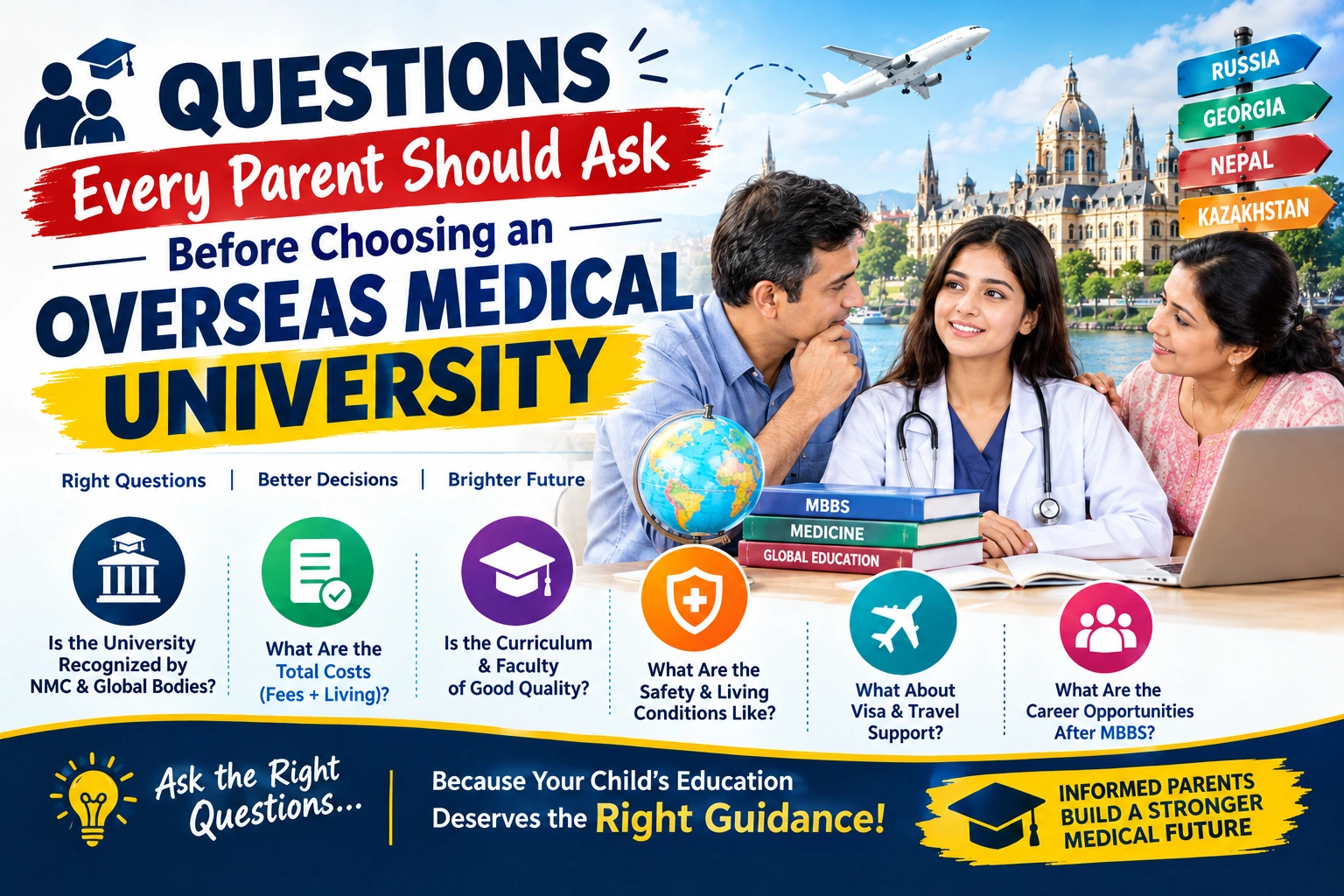
How to Choose a Recognized Medical University Abroad
When selecting a school, core dimensions to verify include:
- The institution’s accreditation
- Clinical resources
- Language of instruction
- Internship arrangements
- Graduate development outcomes
We also recommend using reliable tools such as MBBS Advisor to support school selection.
Currently, popular study-abroad destinations for Indian students include:
- Kyrgyzstan
- Georgia
- Russia
- Kazakhstan
- Uzbekistan
Most legitimate institutions in these countries offer dedicated support packages for international students.
Can MBBS Graduates from Abroad Practice in India?
As long as overseas graduates meet the requirements set out in the NMC’s Foreign Medical Graduate Licentiate (FMGL) regulations, they can legally practice medicine in India.
This paper sorts out the license compliance requirements, common misconceptions, and overseas study challenges related to returning to practice medicine in India for Indian students planning to pursue an overseas Bachelor of Medicine, Bachelor of Surgery (MBBS), the undergraduate medical degree.
FMGE and NExT Requirements
The core compliance prerequisite that must first be clarified is:
The Foreign Medical Graduate Examination (FMGE), overseen by the National Board of Examinations in Medical Sciences (NBEMS), is the core pathway for foreign medical graduates to apply for medical practice registration in India.
Applicants must also comply with relevant regulations for the upcoming National Exit Test (NExT).
As long as these licensing exam requirements are met, studying medicine abroad will not hinder anyone from obtaining a licensed physician qualification in India.
Four More Misconceptions About MBBS Abroad
Misconception 2: MBBS Abroad Is Always Cheaper
The fact is that costs vary drastically across countries and institutions.
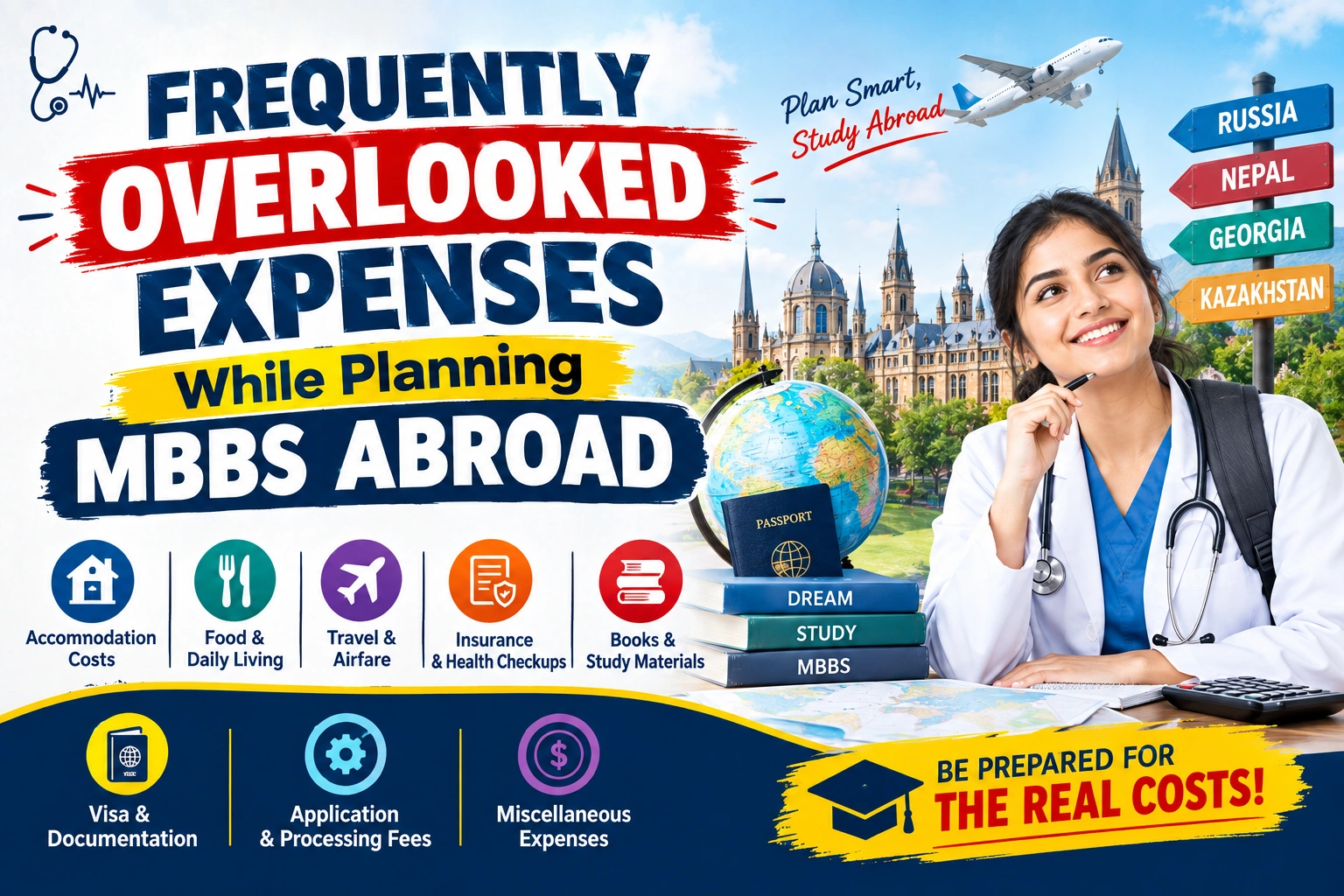
Students must calculate the full cost, including:
- Tuition
- Accommodation
- Meal fees
- Transportation
- Insurance
- Visa fees
While the cost of most overseas MBBS programs is lower than that of private medical schools in India, it is never acceptable to only focus on tuition, so sound financial planning is critical.
Misconception 3: All Universities Offer Fully English-Taught Programs
The fact is that only a majority of institutions offer such programs.
India’s NMC has previously warned that language barriers may harm academic outcomes and eligibility to practice medicine.
Students must verify three core sets of language requirements:
- In-class instruction
- Clinical training
- Patient interaction
Some countries require local language proficiency for the clinical phase of study, and students can screen for compliant programs via MBBS Advisor.
Misconception 4: MBBS Abroad Students Lack Clinical Practice Opportunities
The fact is that resource access varies drastically across institutions.
High-quality institutions provide four core resources:
- Teaching hospitals
- Clinical rotations
- Patient interaction opportunities
- Hands-on skills training
The NMC places particular emphasis on adequate clinical training when evaluating foreign medical qualifications, so students must verify their target school’s affiliated hospital resources and annual patient volume before enrolling.
Misconception 5: NEET Is Not Required for MBBS Abroad
The fact is that for Indian students who intend to return to India to practice medicine, regardless of whether their overseas institution requires NEET for admission, they must pass the exam to meet NMC requirements.
Ignoring this rule will lead to severe medical registration issues.
Common Adaptation Challenges Faced by Students Abroad
Finally, students must also prepare in advance to address four common adaptation challenges:
- Cultural adaptation
- Climate adaptation in mainstream study destinations such as Central Asia and Eastern Europe
- Local language learning required for clinical practice
- Homesickness stemming from living far from home
Five Decision-Making Modules for MBBS Abroad Aspirants
If you are an Indian medical student planning to pursue an MBBS degree overseas, your most critical upfront preparation is to begin studying in advance for the licensing exam required to practice medicine in India.
This is the core compliance prerequisite for you to work as a physician in your home country after completing your overseas studies.
Below, we organize information on five core modules in the order you would make your study-abroad decisions.
All reference resources and regulatory tools used for verification are clearly marked with their sources, so you can directly access and cross-check them.
Module 1: Compliance and Recognition Requirements
The first module covers background compliance requirements.
In addition to the aforementioned licensing exam, you must first clarify the basic recognition thresholds that India’s medical regulatory body sets for overseas medical schools.
Module 2: School Verification and Safety Standards
The second module lays out safety and compliance verification standards for overseas medical schools, consisting of 6 actionable screening dimensions.
These dimensions cover core factors including:
- Institutional qualifications
- Certification validity
- Recognition by Indian regulators
Allowing you to assess your target schools one by one.
Module 3: Key Benefits of Studying MBBS Abroad
The third module details 5 core study-abroad advantages of overseas MBBS programs, available to you after you carefully select a compliant school.
These benefits include:
- Large-scale academic resources
- Graduate school progression pathways
- Tuition cost ranges
Key advantages that most medical schools in India cannot match.
Module 4: Understanding Real Risks
The fourth module clarifies safety boundaries.
To address the widespread misconception that the entire overseas MBBS sector carries risks, we debunk this myth: only schools that fail to pass the 6 screening standards outlined earlier face compliance risks.
The vast majority of schools that go through standard, rule-based screening meet the regulatory requirements of both countries.
Module 5: Practical Implementation Roadmap
The final module presents an actionable implementation path.
First, you can:
- Compile a list of target schools
- Complete the initial screening of each school using the 6 standards
- Launch targeted preparation for the licensing exam
This framework breaks down the complex study-abroad decision-making process into steps that any prospective student can execute, and it is designed entirely around the core needs of Indian aspiring medical students.
Final Conclusion
The Overseas Bachelor of Medicine and Bachelor of Surgery (MBBS) program is neither a shortcut for studying abroad nor inherently risky; it is solely a growth opportunity for students who meet three categories of preconditions.