 Russia
 Belarus
 Georgia
 Kazakhstan
 Kyrgyzstan
 Uzbekistan
 China
China Nepal
Nepal Bangladesh
 Poland
 Romania
 Slovakia
 Hungary
 N. Macedonia
 Vietnam
 Canada
 Armenia
 UK
UK Australia
 USA
USA Ireland
 Germany
 New Zealand
 Italy
Italy France
 Singapore
 Netherlands
 Sweden
 Switzerland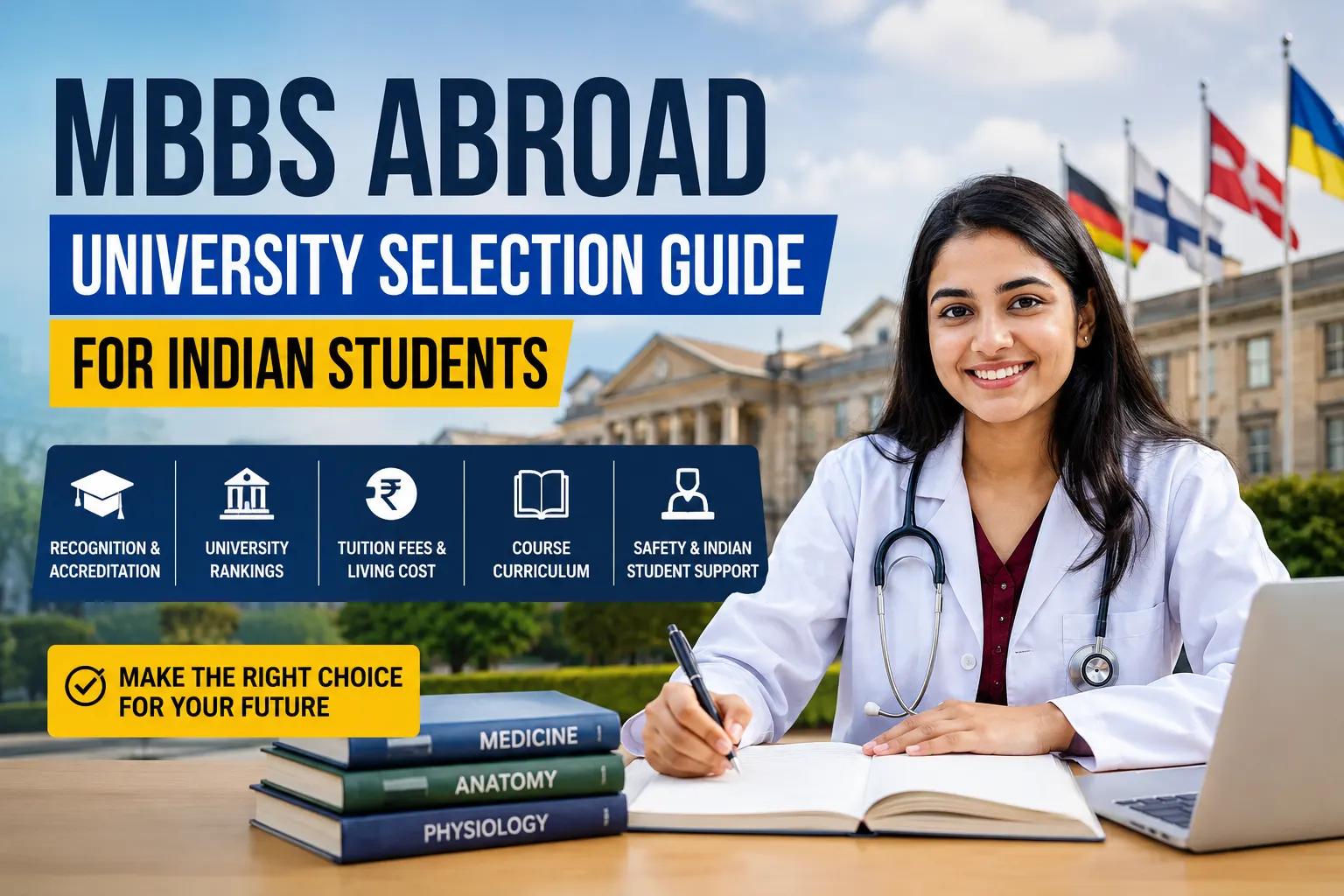
For Indian international students seeking to pursue an MBBS degree overseas, the correctness of their university choice directly determines the starting point of their entire medical career.
Yet the current industry harbors a number of unignorable pitfalls: a large share of overseas medical schools actively market to Indian students, but not all of these institutions meet the academic, clinical, and regulatory standards required to support students’ professional development.
Worse, many profit-driven unethical agents only focus on enrollment numbers and commissions to recruit students, paying no attention to students’ long-term development at all.
As a third-party consulting platform, MBBS Advisor has always drawn a clear line between itself and these irresponsible agents.
It takes students’ long-term career success as its core goal, proactively removes all unqualified overseas medical schools, and helps students prevent various risks they may face in the future.
Why University Screening Is Extremely Important
We have found that many Indian international students fall into the misconception of treating low tuition fees as the sole criterion for university selection, which makes university screening even more necessary.
Our screening system is strictly grounded in the authoritative requirements of the World Health Organization (WHO), the World Directory of Medical Schools (WDOMS), and India’s National Medical Commission (NMC).
Its core assessment covers:
- Education quality
- Eligibility for medical licensing exams
- Preparation support for FMGE and NExT
- Clinical resources
- Global recognition
- NMC compliance
Universities Rejected During the Screening Process
We reject all institutions that fail to meet standards in the first round of screening.
These rejected universities generally have critical flaws:
- Insufficient program length
- No mandatory internships
- Lack of clinical resources
- Fully online medical programs
- Weak hospital partnerships
- Low patient intake volumes
- Insufficient clinical rotations
- Outdated laboratory facilities
Universities with excessively low FMGE pass rates will directly undermine students’ ability to practice medicine.
We have always opposed the wrong approach of using low tuition fees as the only standard for choosing a university, adhere to a screening logic centered on students’ long-term career development, and never compromise for short-term interests.
Major Risks Students Face While Applying Abroad
For Indian students planning to apply for domestic and overseas Bachelor of Medicine, Bachelor of Surgery (MBBS) programs, nonstop new risks arise along their path to higher education.
Some overseas institutions have:
- Weak academic standards
- Lack qualified teaching staff
- Unreasonable curriculum structures
- Insufficient support for further study preparation
Worse still, some agencies:
- Fabricate international accreditations
- Use misleading ranking claims
- Advertise full English-medium instruction while conducting clinical training in local languages
This creates severe language mismatch problems for international students.
Additionally, some regions hosting these institutions may carry hidden risks of:
- Political instability
- Unsafe environments
Common Mistakes Made by Students and Agencies
Not only do many agencies in the study-abroad consulting industry fall into the misstep of prioritizing only user traffic and blindly chasing enrollment volumes, but many Indian students themselves often make decisions based solely on:
- Tuition fees
- Advertising content
This makes them highly vulnerable to scams and poor-quality universities.
MBBS Advisor’s Student-Focused Solutions
As a consulting platform focused exclusively on serving Indian MBBS applicants, MBBS Advisor has always adhered to the core principle of prioritizing quality and has launched a series of targeted solutions.
NEET Rank Predictor Tool
The platform has rolled out the NEET and NEET Rank Predictor tool, which helps students estimate their ranks during the planning stage to match themselves with suitable medical education pathways.
Qualification Verification System
For qualification verification, the platform strictly reviews accreditations from the World Directory of Medical Schools (WDOMS) and relevant official education bodies.
It immediately rules out all institutions with questionable qualifications and prioritizes institutions that offer:
- Full English-medium instruction
- Complete language support during clinical practice
Environment & Safety Assessment
For environmental assessment, the platform conducts a thorough review across five dimensions:
- Political stability
- Student safety
- Housing quality
- Availability of Indian meals
- Local support systems
Five Core Risks Students Can Avoid
This framework helps students fundamentally avoid five major risks:
- Unrecognized degrees
- Obstacles to obtaining a medical practice license
- Substandard education quality
- Uncertain career development
- Financial losses
Conclusion
The platform urges students to make informed decisions with the support of reliable consulting platforms, with the core goal of connecting every applicant to high-quality, globally recognized medical education that aligns with their long-term career development.
Making fully informed decisions can help students avoid major future development risks.