 Russia
 Belarus
 Georgia
 Kazakhstan
 Kyrgyzstan
 Uzbekistan
 China
China Nepal
Nepal Bangladesh
 Poland
 Romania
 Slovakia
 Hungary
 N. Macedonia
 Vietnam
 Canada
 Armenia
 UK
UK Australia
 USA
USA Ireland
 Germany
 New Zealand
 Italy
Italy France
 Singapore
 Netherlands
 Sweden
 Switzerland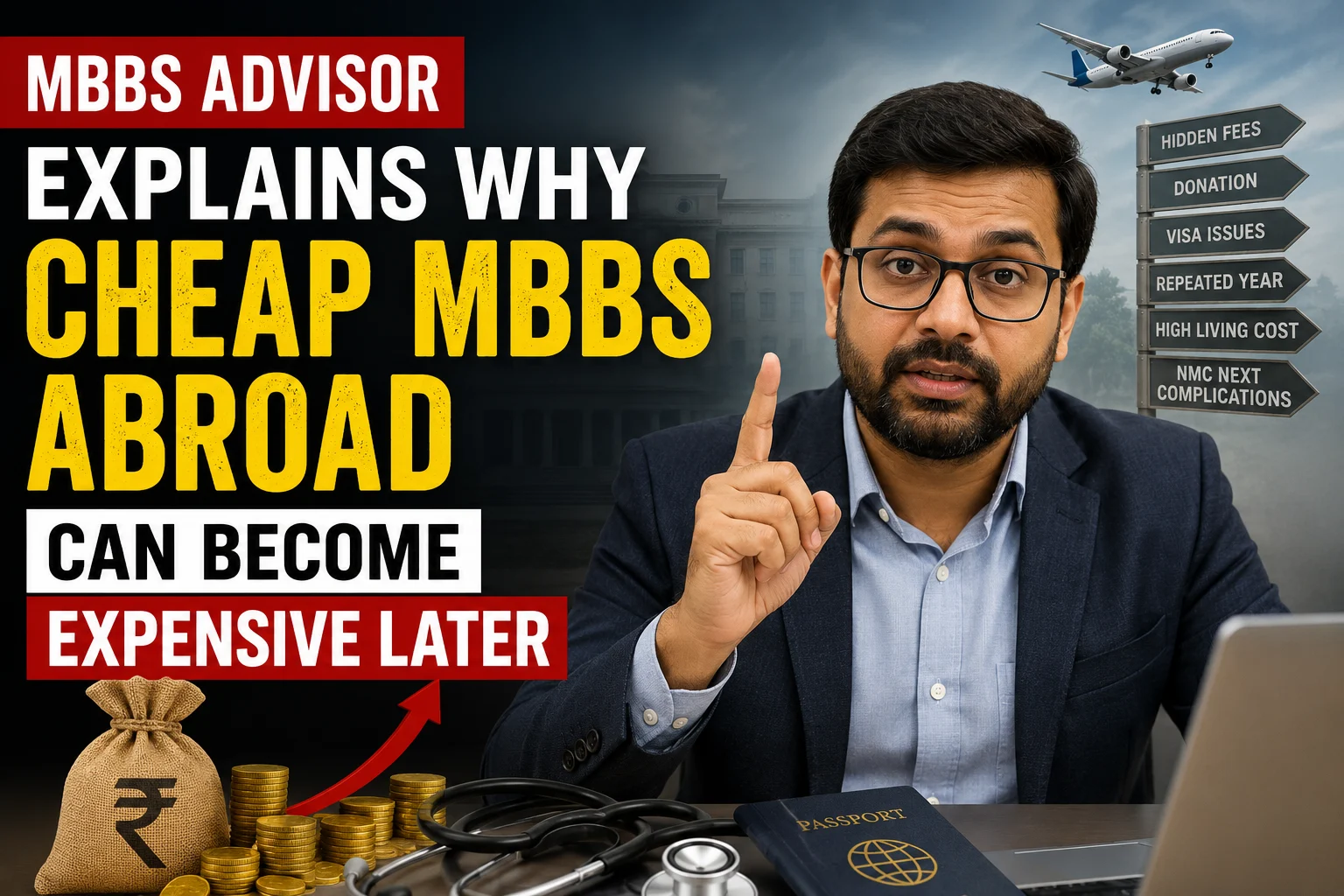
For Indian students and their parents who plan to pursue a Bachelor of Medicine, Bachelor of Surgery (MBBS) degree overseas, selecting the right university is one of the most important career decisions. The first step is to avoid falling into the low-price trap and understand the hidden risks behind extremely cheap overseas MBBS programs.
Currently, private medical colleges in India charge extremely high tuition fees and face intense admission competition. Every year, thousands of Indian students choose to study abroad because government medical seats remain limited and difficult to secure. Many overseas medical colleges attract applicants using “low tuition fees” as their primary marketing strategy. However, if students consider tuition fees as the only factor while choosing a university, they may face serious long-term financial, academic, and career-related consequences.
Before selecting any institution, applicants must carefully verify five core dimensions:
- Institutional recognition
- Internship quality
- Licensing exam eligibility
- Infrastructure quality
- Career development opportunities
School Selection Pitfall: The Hidden Cost Trap
Many overseas institutions advertise only their first-year tuition fees and promote claims such as “Complete your MBBS for under 15 lakh rupees.” However, these advertisements often hide multiple additional expenses that appear throughout the 5–6 year course duration.
Hidden Expenses Students Often Ignore
Students usually face the following additional costs:
- Accommodation and meal expenses
- Visa renewal fees
- Medical insurance charges
- Internship fees
- Licensing exam coaching fees
- Language training expenses
- Travel costs
- Legal and documentation fees
As a result, the total cost of the program rises significantly over time. Professional consulting organization MBBS Advisor advises students and parents to calculate the complete long-term educational expense before making any admission decision.
Clinical Risks in Low-Cost Universities
One of the biggest problems with low-cost medical universities is poor clinical internship infrastructure. Medical education is not limited to classroom learning; students must develop strong practical skills during their training.
Core Clinical Skills Every Medical Student Must Learn
- Doctor-patient communication
- Hospital rotation experience
- Clinical case analysis
- Emergency medical practice
- Internship-based clinical training
Unfortunately, many low-cost institutions fail to provide adequate practical exposure. Such universities often have:
- Low patient flow
- Outdated hospital infrastructure
- Limited clinical training opportunities
- Weak internship systems
These shortcomings create serious career barriers for students, including:
- Difficulty preparing for FMGE/NExT exams
- Weak clinical competency
- Problems during postgraduate entrance preparation
- Failure in international licensing examinations
According to the standards promoted by the World Health Organization (WHO), students must verify the clinical training quality and hospital resources of any institution before enrollment.
Licensing Exam Risks for Indian Students
All Indian medical students returning from overseas universities must qualify licensing examinations before practicing medicine in India.
Important Licensing Exams
- FMGE (Foreign Medical Graduate Examination)
- NExT (National Exit Test)
Official announcements from the National Medical Commission (NMC) indicate that graduates from low-quality overseas institutions often have very low FMGE pass rates. Repeated exam attempts increase both financial burden and career delay.
For Indian students planning to pursue an overseas MBBS degree, the priority should always be obtaining a valid medical practice license in India rather than choosing the cheapest possible university.
Hidden Financial and Career Costs of Poor University Selection
Many students only calculate visible expenses such as tuition fees and hostel charges. However, several hidden costs appear later during the educational journey.
Additional Hidden Costs Include
- Extra coaching expenses for FMGE/NExT
- Delayed graduation timelines
- Additional language course fees
- Career time loss
- Family financial pressure
A large number of Indian students spend several additional lakhs after graduation while trying to obtain their medical practice license in India.
MBBS Advisor strongly recommends:
- Prioritizing university quality
- Avoiding decisions based only on low tuition fees
Five Core Risk Areas Students Must Verify
1. Compliance Risk
India’s official regulatory authority, the National Medical Commission (NMC), has strict eligibility requirements for overseas medical programs.
Before enrolling, students must confirm that the university satisfies standards related to:
- Program duration
- Internship structure
- Language of instruction
- Clinical training quality
- Curriculum format
Non-compliant universities may disqualify graduates from obtaining medical registration in India.
2. Weak Infrastructure in Low-Tuition Universities
Many low-cost overseas universities lack properly equipped affiliated hospitals. As a result, students receive limited patient exposure and weak clinical practice opportunities.
Before selecting a university, students should verify:
- Number of hospital beds
- Patient volume
- Internship framework
- Practical training resources
- Quality of clinical rotations
Professional guidance platforms like MBBS Advisor can help students analyze these details carefully.
3. Language Barrier Expenses
Some universities claim to provide full English-medium instruction but use local languages during clinical training and patient interaction.
This creates major difficulties for Indian students, including:
- Communication problems during internships
- Learning disruption
- Additional language training expenses
- Delayed academic progress
Students must verify the language requirements for both classroom teaching and clinical rotations before admission.
4. Rising Living Expenses
Many advertisements focus only on tuition fees and hide increasing living expenses and currency fluctuation risks.
Students studying in countries facing inflation or economic instability may experience rapidly increasing costs related to:
- Accommodation
- Transportation
- Food
- Utilities
- Daily necessities
Poor financial planning often places families under severe economic pressure.
5. Illegal Agent and Consultancy Traps
Many unauthorized agents make false promises such as:
- “100% FMGE pass guarantee”
- “Medical license without exams”
- “Guaranteed PG admission”
- “No internship requirement”
Students must understand that medical licensing in India depends only on:
- University compliance status
- Personal academic performance
- Licensing exam qualification
There are no shortcuts to obtaining a valid medical license.
The National Medical Commission (NMC) has repeatedly warned students to independently verify the accreditation and compliance status of overseas medical institutions before applying.
MBBS Advisor’s Recommended School Selection Framework
MBBS Advisor provides structured guidance to help students identify compliant and high-quality overseas MBBS institutions.
Qualification Verification
Students must verify whether the target university is listed in the World Directory of Medical Schools (WDOMS).
Failure to verify accreditation can create major problems such as:
- Ineligibility for FMGE/NExT
- Career development restrictions
- Licensing barriers
- Problems in postgraduate admissions
Tuition Warning
Extremely low tuition fees are often linked with poor educational infrastructure.
Medical universities must provide:
- Laboratories
- Teaching hospitals
- Clinical exposure
- Research facilities
- Practical training systems
- Modern academic infrastructure
Weak infrastructure negatively impacts both education quality and future career opportunities.
Internship Quality Matters More Than Low Tuition
Clinical internship quality should always be prioritized over low fees.
During internships, students must gain experience in:
- Clinical diagnosis
- Patient communication
- Emergency care
- Hospital practice
These skills are mandatory under NMC regulations for overseas medical graduates.
Long-Term Risks of Poor Universities
Low-quality institutions may initially appear affordable but often create severe long-term career problems.
Major Risks Include
- Weak clinical skills
- Licensing exam failure
- Degree recognition issues
- Delayed career growth
- Financial loss
MBBS Advisor recommends choosing universities based on long-term professional success rather than short-term fee savings.
Final School Selection Checklist
Before finalizing any overseas MBBS university, students should verify:
- NMC compliance
- WDOMS listing
- Clinical internship quality
- Language of instruction
- Total long-term expenses
- Infrastructure standards
- Student support systems
Overseas low-cost MBBS programs may appear attractive initially, but students and parents must avoid assuming that low tuition means the entire program is affordable.
Conclusion
Medicine is a long-term professional investment. Students should focus on choosing the right university rather than simply choosing the cheapest option.
Reliable guidance platforms like MBBS Advisor help students avoid common admission pitfalls and make informed decisions based on quality, compliance, and long-term career success.
For official verification and updates, students may also refer to: