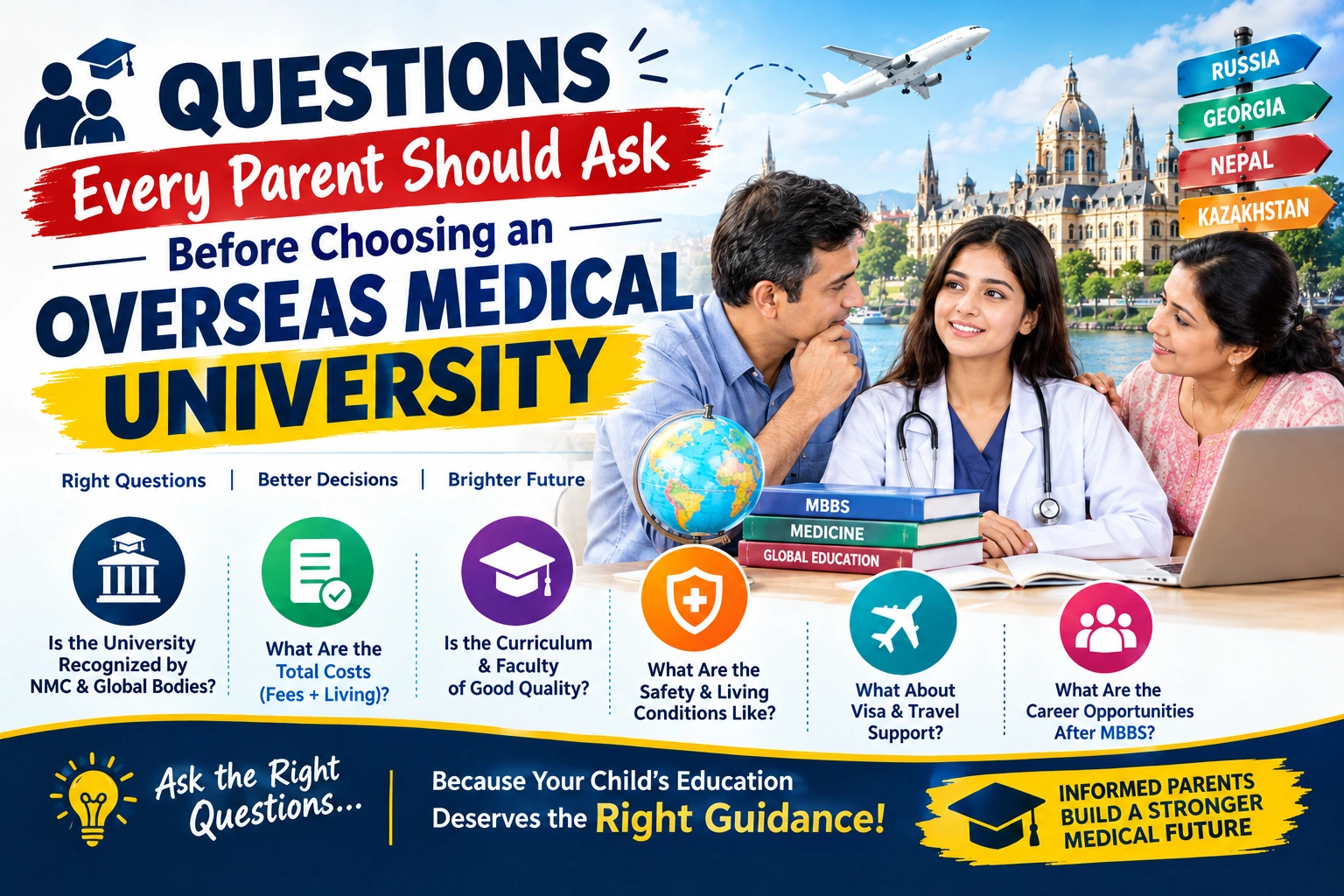
 Russia
 Belarus
 Georgia
 Kazakhstan
 Kyrgyzstan
 Uzbekistan
 China
China Nepal
Nepal Bangladesh
 Poland
 Romania
 Slovakia
 Hungary
 N. Macedonia
 Vietnam
 Canada
 Armenia
 UK
UK Australia
 USA
USA Ireland
 Germany
 New Zealand
 Italy
Italy France
 Singapore
 Netherlands
 Sweden
 Switzerland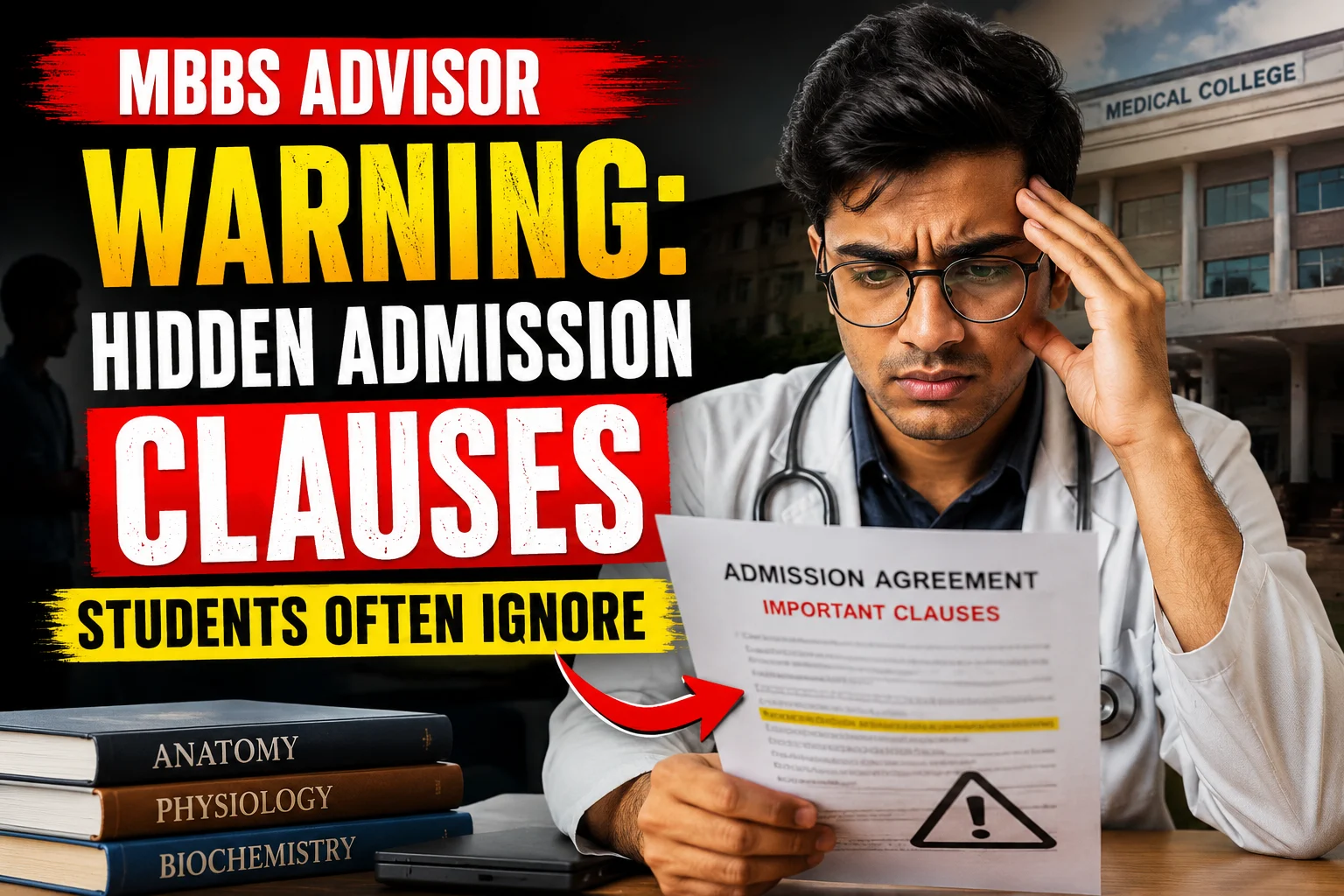
Every year, thousands of Indian international students applying for overseas Bachelor of Medicine, Bachelor of Surgery (MBBS) programs only focus on obvious application criteria such as tuition fees, university rankings, and dormitory facilities.
They completely overlook hidden admission clauses embedded in university agreements, admission documents, and India’s domestic regulatory rules.
Ignoring these clauses often leads to serious problems when these students return to India to apply for medical licenses and begin practicing medicine.
Citing a recent announcement from Indian regulatory authorities, a large number of students only discover the requirements in these hidden clauses after they complete all their academic studies.
This has triggered multi-faceted disruptions including:
- Blocked qualification verification
- Inability to secure internship placements
- Ineligibility to register for the licensing exam
- Failed degree authentication
In response, experts from MBBS Advisor uniformly recommend that all applicants review every admission-related clause one by one before paying tuition or signing any official documents.
Common Misconceptions About MBBS Abroad Admissions
First, we must correct a widely spread misconception among these international students:
Receiving an admission letter does not automatically grant a person medical practice qualification in India.
The five core advantages that universities and study abroad agents often use to attract students are:
- Low tuition
- Simple application processes
- No sponsorship requirement
- Fast visa approval
- English-medium instruction
Corresponding to these, there are six core dimensions of easily overlooked hidden clauses:
- Licensing qualification requirements
- Internship requirements
- Language training requirements
- Obligations to take additional exams
- Transfer restrictions
- Refund policies
Two Major Hidden Clause Misconceptions
Next, we will first break down two major misconceptions about core hidden clauses, leaving the third core clause to be expanded on in a later section.
Misconception 1: Overseas MBBS Automatically Meets Indian Regulations
Many students mistakenly assume that an overseas MBBS degree naturally meets the regulatory requirements of India’s NMC.
In fact, they must verify in advance whether their target university’s curriculum design and clinical training hours meet the set standards.
Misconception 2: Any Internship Location Is Acceptable
Many people ignore the NMC’s certification requirements for overseas internship locations.
Internship experience at uncertified locations cannot be used to support a medical practice application.
We will detail the specific risks of the third core hidden clause in subsequent content.
Same University and Same Country Requirement
Note to all international students preparing to travel abroad to pursue a Bachelor of Medicine and Bachelor of Surgery (MBBS):
All medical academic training, clinical rotations, and internship programs must be completed at the same institution and in the same country that awards your degree.
This is a unified compliance requirement set by medical regulatory authorities across all countries, which corrects the widespread common misconception among many international students that they can later transfer to another location to complete their internship.
We recommend that you proactively request written clarification documents from your target institution before enrollment, covering details including:
- Internship location
- Duration
- Qualifications of affiliated hospitals
- License recognition
Core Compliance Risk Clauses in Overseas Medical Schools
Clause 4: Additional Licensing Requirements
Pay attention to additional licensing requirements for practicing medicine abroad.
Some institutions fail to clearly inform students that a graduation diploma alone does not allow them to practice medicine directly.
You must contact the regulatory authority of your intended practice location in advance to verify license application requirements.
Clause 5: Non-Refundable Enrollment Fee Traps
Guard against traps involving non-refundable enrollment fees.
Many institutions deliberately conceal their fee refund rules.
You must request a written breakdown of all fees and the refund policy, stamped with the institution’s official seal, in advance.
Clause 6: Hidden Accommodation and Living Costs
Take note of hidden accommodation and living costs.
Some institutions force students to accept high-priced mandatory on-campus housing.
You must calculate all mandatory expenses in advance.
Clause 7: Enrollment Beyond Approved Capacity
Verify whether the institution engages in the illegal practice of enrolling students beyond its approved capacity.
This will drastically reduce your access to clinical practice resources.
You must cross-check the annual enrollment quota published by local regulatory authorities.
Clause 8: Online or Hybrid Learning Compliance
Confirm the compliance boundaries of online or hybrid learning.
Some course formats are not recognized by the medical regulatory authority of your intended practice location.
You must verify the compliance of the institution’s teaching model in advance.
Clause 9: False Licensing Guarantees
Guard against false advertising that “guarantees you will obtain a medical practice license”.
Both professional study abroad advice from MBBS Advisor and official warnings from India’s NMC explicitly state that no guaranteed license application pathway exists.
You must verify the authenticity of any promotional content.
Clause 10
Clause 10 has not been elaborated on at this time.
WDOMS Is Important but Not the Only Requirement
Many applicants planning to pursue an undergraduate medical degree (Bachelor of Medicine, Bachelor of Surgery, MBBS) overseas share a common cognitive bias.
When selecting a target school, they treat whether their chosen institution is listed in the WDOMS as the sole qualifying criterion, believing that inclusion in this directory eliminates all potential risks.
In fact, while WDOMS listing is indeed the core foundational standard for the compliance of overseas medical schools, it is far from the only requirement for school selection.
Two High-Frequency School Selection Mistakes
There are two high-frequency mistake types among current applicants that frequently lead to pitfalls.
Mistake 1: Ignoring Global Medical Education Standards
Applicants completely ignore the official global medical education quality standards linked to the WHO, and use tuition level as the core basis for choosing a school.
Mistake 2: Blind Dependence on Agents
Applicants rely entirely on application agents and conduct no independent verification work.
Four common pitfalls of untrustworthy agents are particularly worthy of vigilance:
- Incomplete information
- False promises
- Undisclosed additional fees
- Vague pathways to obtain medical practice qualifications
Pre-Enrollment Verification Checklist
Applicants can cross-check each item against the compiled 8 actionable pre-enrollment self-verification checklist one by one, or seek auxiliary support from MBBS Advisor.
Conclusion
In the final analysis, most core risks in overseas MBBS applications stem from overlooked implicit clauses such as internship requirements, school qualification details, and extra charges.
Applicants must abandon a herd mentality, complete full-scope compliance verification, and avoid suffering heavy financial losses of hundreds of thousands of yuan.
Students should also ensure that their admission planning remains aligned with the requirements of NEET, regulatory guidelines, and future licensing pathways before making any final enrollment decision.