 Russia
 Belarus
 Georgia
 Kazakhstan
 Kyrgyzstan
 Uzbekistan
 China
China Nepal
Nepal Bangladesh
 Poland
 Romania
 Slovakia
 Hungary
 N. Macedonia
 Vietnam
 Canada
 Armenia
 UK
UK Australia
 USA
USA Ireland
 Germany
 New Zealand
 Italy
Italy France
 Singapore
 Netherlands
 Sweden
 Switzerland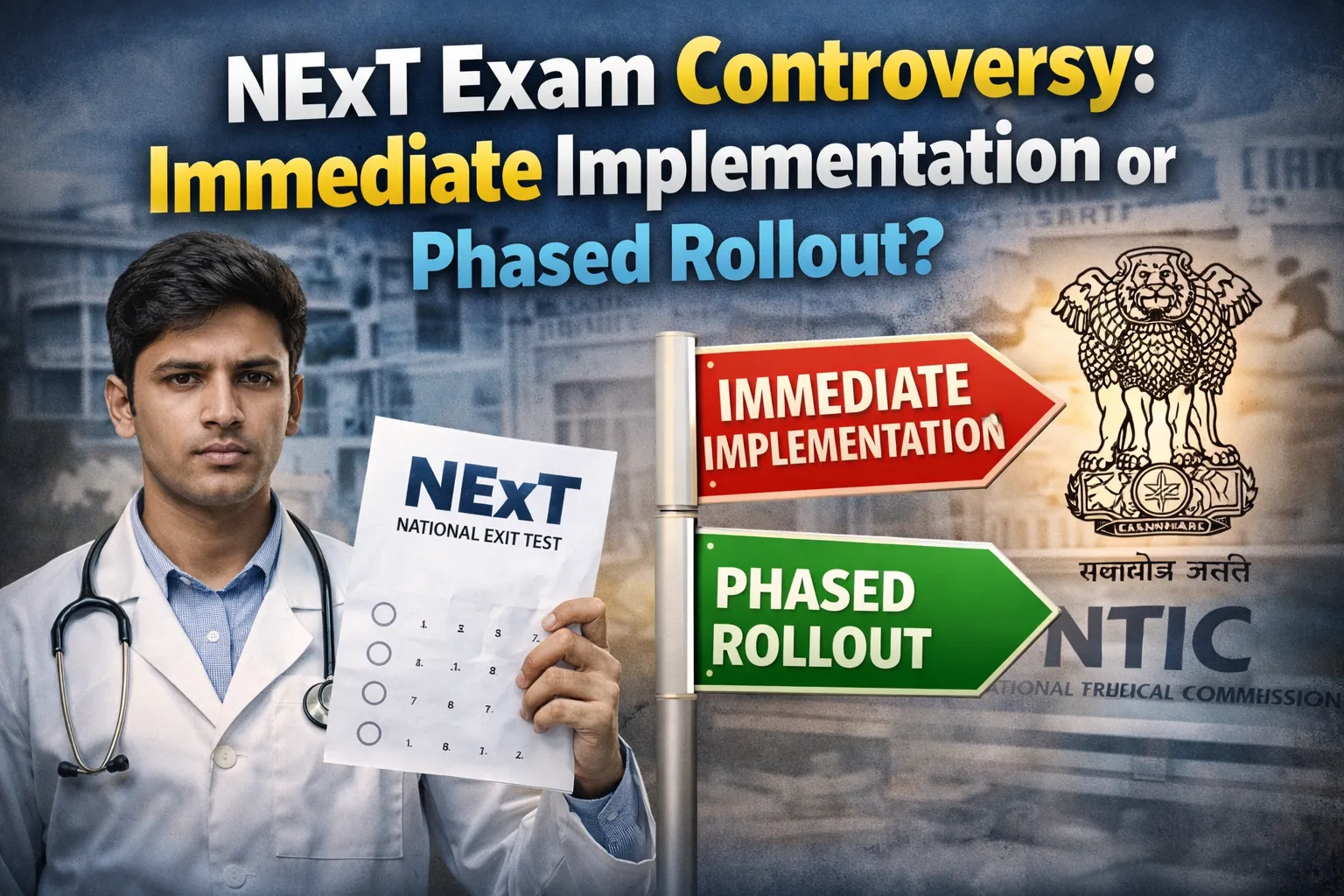
The debate around the NExT (National Exit Test) has become one of the most important discussions in India’s medical education system. Proposed by the National Medical Commission, NExT is designed to act as a common final-year MBBS exam, licensing test, and postgraduate entrance exam.
While the objective is clear—standardization and transparency—the key question remains: Should NExT be implemented all at once or introduced phase-wise? This is especially crucial for aspirants planning their careers, often with guidance from a trusted mbbs advisor.
What is the NExT Exam?
The National Exit Test (NExT) is a proposed reform that aims to replace:
- Final-year MBBS examinations
- NEET -PG entrance exam
- Foreign Medical Graduate Examination (FMGE)
Its goal is to create a unified assessment platform for all medical graduates—both from India and abroad.
Global bodies like the World Health Organization advocate for standardized medical evaluation systems to ensure consistent healthcare quality worldwide.
Why Is NExT Controversial?
Despite its advantages, NExT has sparked concerns among students and educators:
Lack of Clarity
Students have highlighted confusion around exam patterns, syllabus, and marking schemes. A sudden rollout without clear guidelines may create uncertainty.
Increased Pressure
Since NExT combines licensing and PG entrance, one exam will determine both practice eligibility and career progression—raising stress levels significantly.
Infrastructure Readiness
Not all colleges are equally equipped. A one-time implementation could disadvantage students from under-resourced institutions.
Transition Challenges
Globally, reforms in institutions listed under the World Directory of Medical Schools are usually introduced gradually to ensure smooth adaptation.
One-Time Implementation: Pros & Cons
Advantages
- Immediate standardization across the country
- Elimination of multiple exams
- Transparent and merit-based system
Disadvantages
- Sudden pressure on current batches
- Limited preparation time
- Risk of system inefficiencies during initial stages
While this approach benefits long-term reform, it may disrupt students currently in the system.
Phase-Wise Implementation: A Practical Approach
A phased rollout is widely supported by experts and policymakers.
Benefits
- Provides adaptation time for students
- Allows colleges to upgrade infrastructure
- Reduces confusion and anxiety
- Enables testing and refinement of the system
This method aligns with global best practices for implementing major educational reforms.
Impact on Indian & Foreign MBBS Students
NExT will affect both Indian students and those studying abroad.
Countries like Georgia have become popular due to affordability and global recognition. However, with NExT:
- Foreign graduates must clear NExT to practice in India
- Selecting NMC-compliant universities becomes essential
- Preparation must align with Indian standards
Students exploring options like MBBS in Georgia often benefit from lower costs and globally recognized degrees.
This makes proper guidance from a reliable mbbs advisor more important than ever.
What Do Experts Recommend?
Most experts suggest a balanced and gradual approach:
- Pilot testing before full-scale implementation
- Clear syllabus and exam structure
- Equal infrastructure development
- Transition support for existing students
The National Medical Commission has also indicated ongoing discussions, suggesting flexibility in rollout strategy.
Key Challenges to Address
For NExT to succeed, several issues must be resolved:
- Uniform teaching standards across colleges
- Transparent communication of exam format
- Fair and unbiased evaluation
- Mental health support for students
Addressing these concerns is essential to avoid unintended negative impacts.
Final Verdict: Which Approach is Better?
While a one-time rollout offers faster reform, a phase-wise implementation is the more practical and student-friendly approach. It ensures:
- Better preparedness
- Reduced stress
- Equal opportunities
Medical education is a high-stakes field, and reforms must prioritize both quality and student well-being.
Conclusion
NExT is set to transform India’s medical education landscape. Its goals align with global standards supported by organizations like the World Health Organization, but its success depends heavily on how it is implemented.
For students, staying informed and seeking guidance from a trusted mbbs advisor is crucial during this transition.
Whether introduced all at once or gradually, one thing is certain — NExT will redefine the future of medical careers in India.