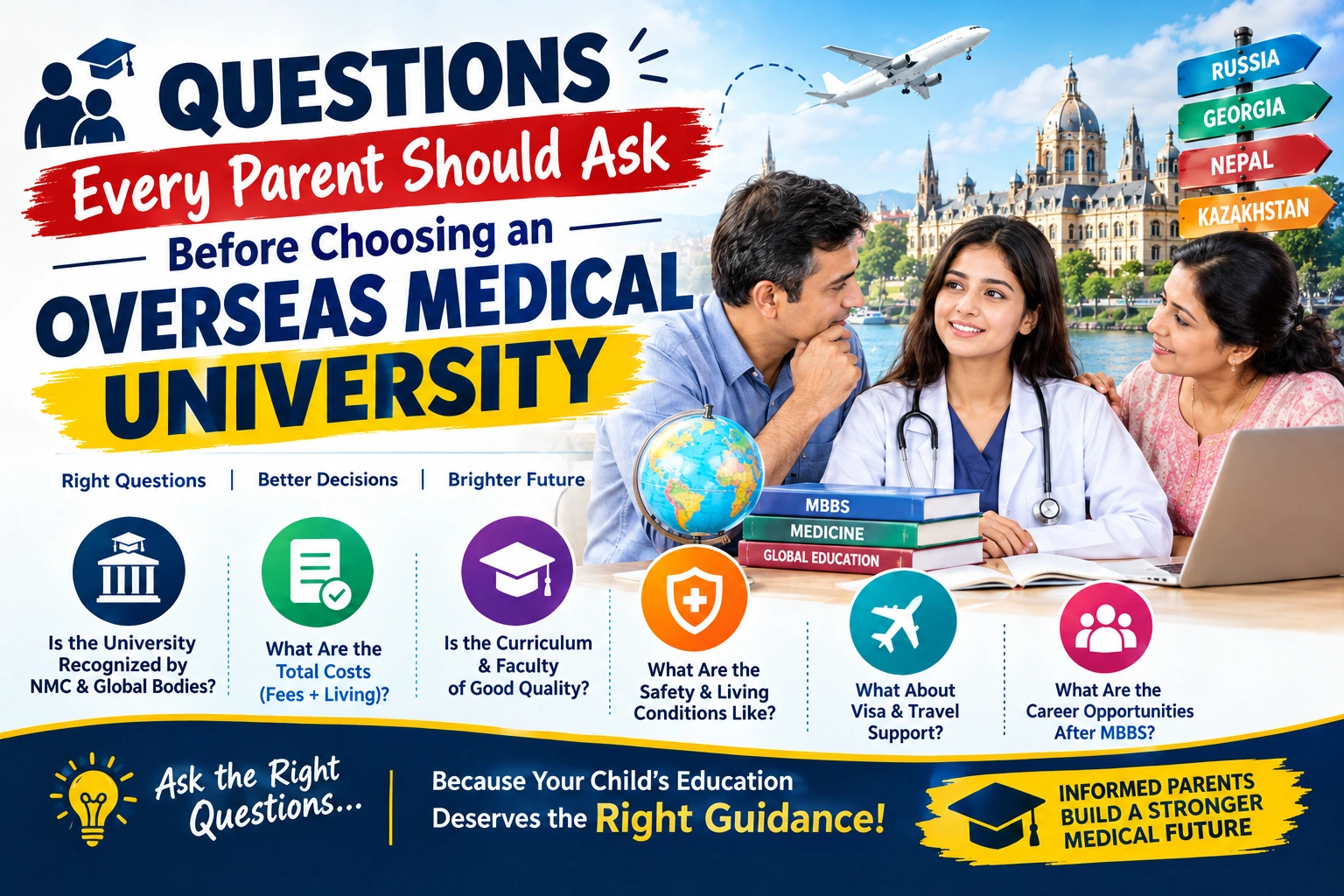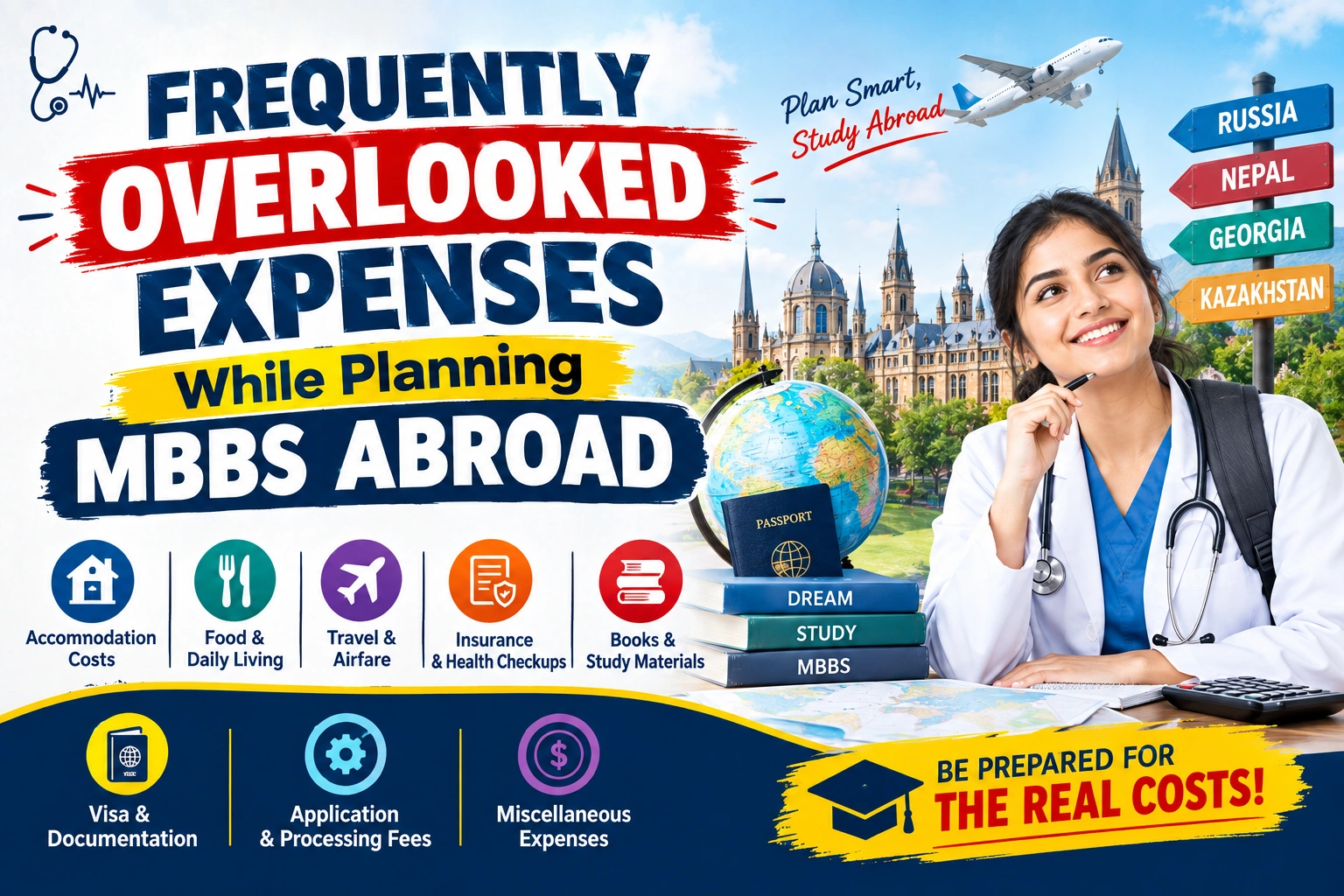
 Russia
 Belarus
 Georgia
 Kazakhstan
 Kyrgyzstan
 Uzbekistan
 China
China Nepal
Nepal Bangladesh
 Poland
 Romania
 Slovakia
 Hungary
 N. Macedonia
 Vietnam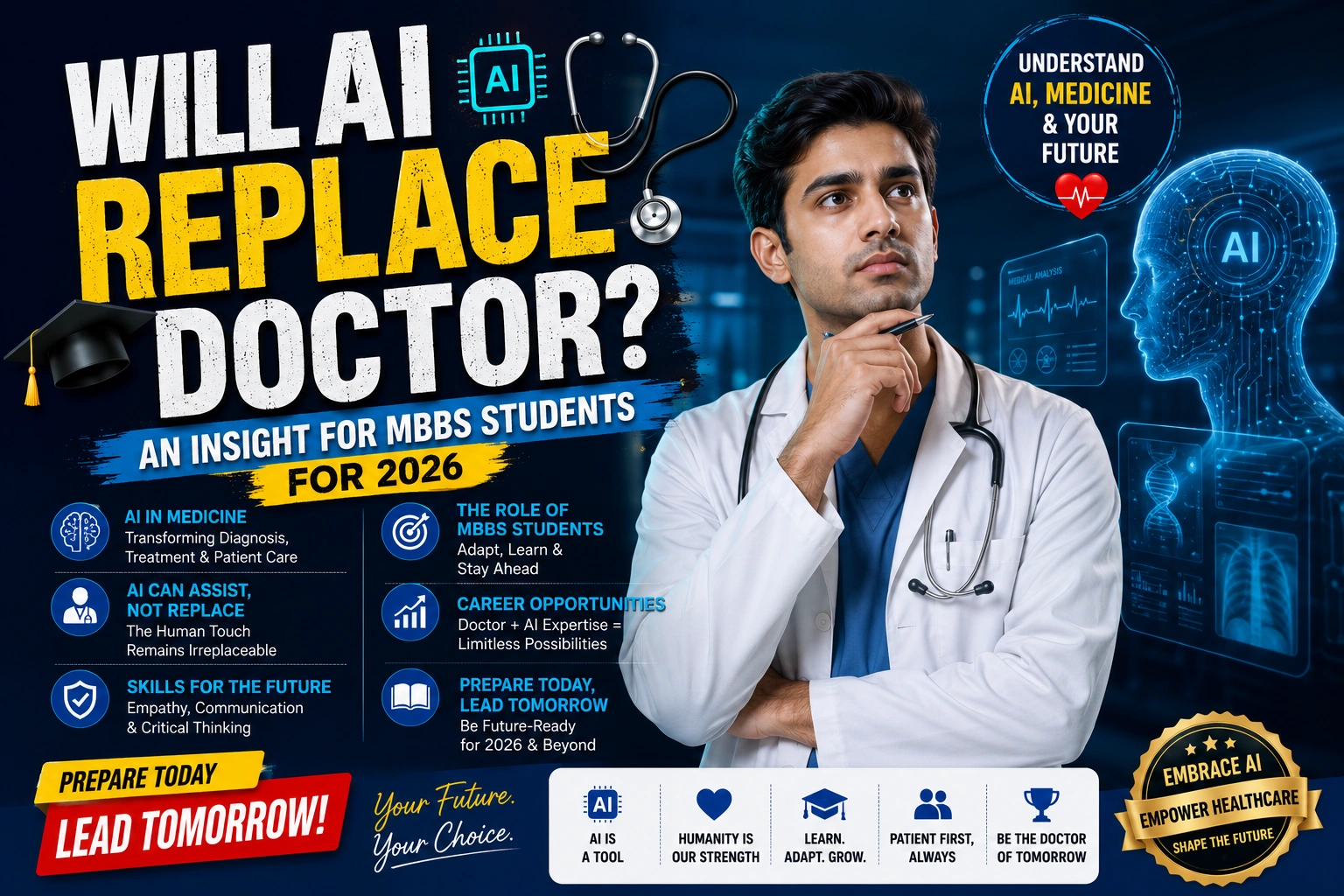
Healthcare as a sector is undergoing rapid change, and the speed of this change is outpacing every other sector. The scope of AI in medicine is vast. AI has a major role to play in everything from recognizing conditions through medical imaging, helping physicians with clinical notes, predicting clinical outcomes, and much more. Due to the burgeoning role of AI in medicine, many of the future medical practitioners and MBBS students have begun to contemplate a burning question: Will Artificial Intelligence replace doctors?
The simple and straightforward answer is a resounding no. Many aspects of the medical profession will eventually change and be augmented with AI; However, this will not result in the profession being replaced. The reality is that in 2026 the biggest opportunity for MBBS students is designing pathways to collaborate with AI systems, as opposed to competing with them.
Candidates preparing for and/or competing in the NEET and MBBS candidates need to appreciate that future physicians will have to integrate medical and technological knowledge, communication skills, and ethical decision-making. The first step to achieve this goal is to select the right medical institution. Students can gain some foresight about potential admission outcomes before counseling with a NEET Rank Predictor.
Why Is AI so Beneficial for Healthcare?
The volume of data healthcare generates on a daily basis is staggering. Data includes patient histories, labs, MRIs, CTs, X-Rays, pathology slides, data from wearable devices, and electronic medical records.
AI’s data analysis and pattern recognition will always be superior compared to humans. There are many uses for artificial intelligence at hospitals; it can assist with disease screening, manage hospital systems, and monitor patients. It can also be used in the research of drugs and aid robotic surgeries.
AI can only provide suggestions based on recorded data. It does not have the ability to understand the emotions, culture, beliefs, or ethics of the patient in the way a doctor does. Because of this shortcoming, doctors will always be the most important members of a health care system.
Is AI Able to Fully Replace Doctors?
AI creating fear of job loss for doctors is reasonable, but it fails to comprehend how complicated of a profession medicine is.
Medicine is not simply diagnosing patients. Doctors have to develop a rapport with a patient, counsel the patient's family, provide and explain the treatment, attend to sudden emergencies, and make decisions that will impact the patients life when all seems uncertain.
AI can be integrated in support of each of those processes, but does not have the capacity to take on the role of practitioners.
Even some of the top healthcare organizations in the world such as the WHO say that AI should be made to adapt to the healthcare systems in a way that it improves healthcare without creating a solution that would eliminate humans from bearing the responsibility for making clinical decisions.
To summarize, AI is adapting to be more of a smart assistant than a doctor replacement.
In what Ways is AI Assisting Healthcare Professionals?
AI has already provided many improvements for patient care, and it does so for many different branches of healthcare.
In radiology, AI is already able to assist practitioners in the identification of abnormalities in CT and X-ray images. In pathology, AI can help detect the presence of cancer cells and do so in a much quicker, and efficient, way. In cardiology, AI is able to analyze an ECG in a matter of seconds, and in dermatology, AI image-recognition programs are able to detect potentially harmful skin lesions.
AI is also able to assist the healthcare field in setting up appointments, reducing the amount of paperwork, helping manage patients, and predicting the probability of a patient needing to be placed in the ICU.
These technologies help streamline processes, giving doctors more time to spend on their patients.
Skills Every MBBS Student Should Learn in 2026
The future of medicine will belong to those doctors who are able to balance both medicine and technology. Rather than worrying about AI taking over, MBBS students should focus on the right skills for the future.
Build Strong Clinical Knowledge
AI or technology will not be able to help a doctor who has a poor understanding of anatomy, physiology, pathology, pharmacology, microbiology or medicine and clinical practice.
Even though AI may suggest something, its value is questionable if the doctor is not able to understand or interpret it.
Students should focus on learning about diseases rather than learning or memorizing convenient answers for exams.
Learn Medical Data Interpretation
Data is the backbone of healthcare today.
Doctors should learn how to piece together diagnostic data in the form of lab results, images, AI risk scores and most importantly, Electronic Health Records.
Comfort with medical data will be an asset that will serve throughout the career.
Understand AI Tools
Every MBBS student should have a fundamental understanding of the AI healthcare tools of:
- AI diagnosis
- Medical imaging and AI
- Clinical decision support systems and EHR
- AI in healthcare predictive tools
- AI in hospital management
Students do not need to be software engineers. They need to have a foundational understanding of how these tools play a role in patient care.
Develop Better Communication Skills
Patients do not walk into a hospital to see a healthcare provider for a prescription.
They want reassurance, empathy, and support.
Even the most advanced AI will not be able to provide the communication that is needed to replace the doctor.
MBBS students should ensure that they are developing effective communication skills because they are the tools that will be timeless and valuable.
Emphasize Ethical Considerations
AI will raise many important questions about ethics that need to be of concern.
Doctors have to balance ethical principles of patient privacy, informed consent, and accountability while determining if an AI recommendation is appropriate for a specific patient.
On the contrary, the AI era reinforces the importance of medical ethics.
The NMC promotes ethics, professionalism, and competency in medical education, and insists on the cultivation of responsible medical practitioners among future physicians.
Learn Research Methodology
The pace of change in medical research is astonishing.
AI has made everything from reading research papers to analyzing clinical data to identifying new drug candidates easier and quicker.
More research experience translates into better job offers for students, especially in fields related to medical and healthcare advancements.
What are the Medical Specialties that will have the Greatest Integration of AI?
AI is increasingly embraced in almost every medical specialty.
- Automated image analysis is used in Radiology.
- Digital slide analysis is employed in Pathology.
- Personalization in planning treatment for cancer patients is done in Oncology.
- Risk modeling in managing heart diseases is used in Cardiology.
- AI is used for screening of the retina in Ophthalmology.
- Image recognition of skin disorders is employed in Dermatology.
Despite the use of AI, specialists still assess every diagnosis and treatment recommendation.
AI makes things easier, but medical knowledge and skills are irreplaceable.
The Limitations of AI
AI has great capability, but it also has great shortcomings.
AI cannot appreciate the nuances of human emotions, offer comfort to a grieving family, make complex emergency decisions on the fly, or manage the unpredictable nature of clinical situations using the judgment that comes from years of medical training.
Every patient is more than just a data set. AI also lacks the human element that makes Doctors irreplaceable.
Should Considerations of AI Take the Future of Medical Practice into Account?
Absolutely not.
Healthcare needs are ever-increasing globally. Global demographic trends, the burden of an increasing number of chronic illnesses, developing healthcare infrastructure, and a growing awareness of preventive medicine are likely to fuel the demand even more.
Instead of cutting the demand for doctors, AI will likely make medicine more productive by eliminating redundant tasks.
In the future, the corporate world will likely prefer hiring doctors who can use AI optimally to medicine rather than the doctors who are technophobic.
How can MBBS Students Prepare Today?
Students entering the medical profession from the first day of medical school should try to adopt habits that will prepare them for the future.
They should:
- Stay current with medical journal articles.
- Acquire working knowledge of medical informatics and new healthcare technologies.
- Participate in research whenever possible.
- Develop communication, leadership, and soft skills.
- Practice critical evaluation of AI-generated clinical recommendations.
In addition, the MBBS candidates should stay current with the MBBS Advisor and have access to information on the NEET, counselling, MBBS admissions, and the NEET Rank Predictor, with which you can predict possible institutions to which you could be admitted based on your expected rank.
Why It's Critical to Select an NMC-Approved Medical College
No matter if students go to medical school in India or abroad, students need to choose schools that meet the new applicant and recognition criteria.
Make sure to confirm the medical school you are applying to meets the guidelines set by the National Medical Commission (NMC) and is listed in the WDOMS. Medical students should stay current on international health care standards set by the World Health Organization (WHO). These organizations also set medical education standards globally.
Making an informed choice today will have important implications on the licensing exams, the opportunities available after graduation, and career pathways.
Conclusion
Artificial Intelligence will transform medicine, but will not replace physicians. Rather, AI will create a new generation of healthcare professionals that possess both clinically relevant skills as well as an advanced skill set of the applicable technologies.
Success for those MBBS Students graduating in 2026, will include mastering medical science, AI-enabled healthcare, having a robust set of social and ethical skills, and the commitment to continuous learning.
Those students who dedicate themselves to NEET, utilize MBBS Advisor for dependable admission information, assess their counseling options with the NEET Rank Predictor, and validate medical schools at NMC, WHO, and WDOMS are preparing for an AI-advanced medical career. The future will not be designed by AI. Rather, the future will be designed by physicians with a commitment to the responsible use of AI while delivering the care that is most needed - timely, empathetic, and robust.