 Russia
 Belarus
 Georgia
 Kazakhstan
 Kyrgyzstan
 Uzbekistan
 China
China Nepal
Nepal Bangladesh
 Poland
 Romania
 Slovakia
 Hungary
 N. Macedonia
 Vietnam
 Canada
 Armenia
 UK
UK Australia
 USA
USA Ireland
 Germany
 New Zealand
 Italy
Italy France
 Singapore
 Netherlands
 Sweden
 Switzerland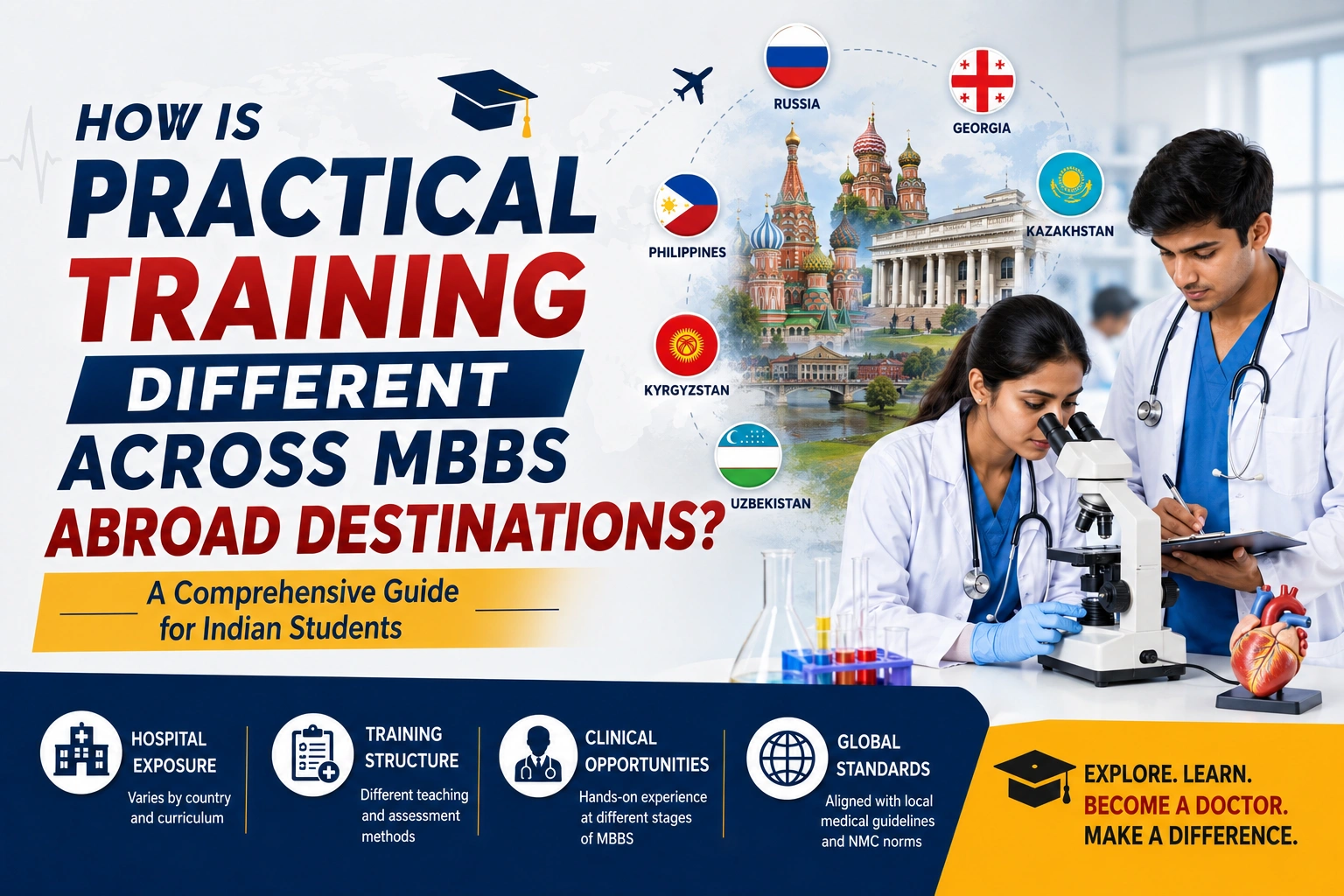
Tuition fees, university ranks, and admissions criteria are not the only factors you should consider when choosing a country for your MBBS abroad. The understanding of what the different countries offer in terms of practical training is important too, as it provides an understanding of the quality of medical education. Clinical skills can only be mastered through interaction with patients and practical experience in hospitals.
There are different models for practical training adopted by countries offering MBBS abroad. Some universities have a model that allows students to undertake clinical practical training early in their studies, while some other universities have a model that emphasizes classroom training in the early years of the program. Therefore, Indian students must understand the models of practical training in different countries before they make a decision.
There are lots of details about medical education in different countries and different medical universities located abroad. You can obtain all these details through MBBS Advisor and make an informed decision based on the clinical facilities different medical universities offer, amongst other things.
Importance of Practical Training in MBBS Abroad
Real clinic practice of the theories learned in lectures helps students to apply all the knowledge they have learned in practice to real health situations. During practice, students learn the whole process of diagnosis, the whole process of undertaking a procedure, and how to work under the guidance of a senior.
An efficient MBBS school should consist of the following:
- Hospital visits during medical school
- Exposure to different kinds of patients
- Opportunities to work in modern laboratories
- Rotations in large departments of the clinic
- The chance to meet and learn from senior doctors
- Opportunities to do internships
For Indian students, practical training is important as they prepare for their medical licensing exams and their future clinical practice. Students also have to confirm if their chosen universities comply with the guidelines published by the National Medical Commission (NMC) and maintain the required standards for international medical education.
Practical Training in Russian MBBS Universities
Russian medical universities are some of the top choices for Indian students pursuing MBBS overseas. Interestingly, Russian medical universities tend to have an integrated approach where knowledge is balanced with clinically oriented practice.
During the initial years, students focus on basic subjects like biological physics, human anatomy, and so on. There is a gradual increase in practical learning through laboratory practice and skill training.
In subsequent years, students receive clinical practice in affiliated teaching hospitals. During this period of clinical practice, students are allocated to the following departments:
- Internal Medicine
- Surgery
- Pediatrics
- Gynecology
- Emergency Medicine
Many universities have hospitals where students get to observe real medical cases. However, students have to learn the local language as clinical practice is usually done in Russian.
The presence of big hospitals and varying medical cases makes Russia a good destination for practical medical exposure.
Practical Training in Georgian Medical Universities
Georgia has gained popularity as a destination for lower priced, quality, and English medical education among Indian medical aspirants.
The Georgia medical training system begins in basic medical sciences and progresses through clinical sciences. Many universities have simulation laboratories where students practice medical procedures before they enter the hospital.
Clinical training includes:
- Hospital-based learning
- Learning how to perform examinations on patients
- Discussing medical cases
- Rotating through hospital departments
Medical universities in Georgia emphasize active participation by students during clinical training.
It is important to check the recognition status of a medical university through the World Directory of Medical Schools (WDOMS) ,WHO or other similar reliable sources before enrolling in any institution.
Practical Training in Kazakhstan
As for Kazakhstan, it has also gained popularity among Indian students due to cost effective education coupled with the growing medical infrastructure.
Kazakhstan follow a similar practical training model combining classroom education with hospital based training. During clinical years, the first authorised visits to hospitals are made by medical students.
Students learn:
- How to diagnose
- How to take a medical history
- Conduct a medical exam
- Surgical and other types of observations
- Community-based health care
There is also a network of government teaching hospitals where students have the opportunity to observe and assist doctors.
As with most countries, patients can only be communicated with in the local language. This is why students are encouraged to learn the local language in order to enhance their clinical training.
Practical Training in Nepal
Nepal has a system of medical education which is similar to India and therefore, is culturally comfortable for Indian students.
Studying MBBS in Nepal shares a similar cluster of diseases and patients with India and the experience of healthcare delivery adds to the learning of the students.
Students undertake hospital postings, clinical rotations, and internships and receive exposure to the delivery of primary healthcare in rural areas.
Despite cultural differences, communication with patients is easier for Indian students when compared to several other foreign countries.
Clinical Experiences During MBBS in China
China has a number of universities that offer MBBS for international students and have English medium instruction. These universities have modern facilities and hospitals.
Chinese medical universities provide clinical training through the following avenues:
- Simulation Centers
- University Affiliated Hospitals
- Clinical Departments
- Research Based Medical Education
Students gain exposure to a large number of patients as China has a vast health care system. Learning Mandarin can help students overcome some of the challenges that come with clinical training as patient interactions become easier.
Students should also analyze whether the university meets minimum international standards and regularly revised standards.
Differences in Practical Training in Different Countries
Each country that offers MBBS has a unique approach to clinical learning that can be understood based on the following:
Early Clinical Exposure
Clinical Training that includes patient care and hospital visits is introduced by some countries, whereas others focus on theory before clinical exposure.
Hospital Infrastructure
Countries that have an advanced health care system provide better hospital infrastructure and access to advanced medical treatments, specialized departments and equipment.
Patient Interaction Learning
Language is the bedrock of practical training. If students can communicate with patients easily, they tend to have an easier clinical learning experience.
Internship Opportunities
Different countries have different internship structures. Students should understand the duration of internships, available hospitals, and licenses required when selecting a country.
Licensing Requirements After MBBS Abroad
Students who study MBBS abroad do not become doctors upon return. They should fulfill the requirements of the medical authorities of India.
Candidates should refer to the NEET and other regulatory sites to know about the current examination requirements, rules, and medical registrations.
NEET Rank Predictor helps students understand their potential for medical college admissions.
How to Choose the Right MBBS Abroad Destination for Practical Training
The following are some considerations a student should make before choosing a country or a university.
- University Recognition and Accreditation
- Quality of Hospital Affiliations
- Opportunities for Clinical Training
- The Ability to Train with Real Patients
- Language Barriers
- Structure of Internship
- Past Student Experiences
A lower priced university which may provide less clinical training may not provide the same career benefits as a slightly higher priced university which provides strong hospital facilities.
Conclusion
Students should understand that different countries have different levels of clinical practice, teaching, and exposure due to different levels of healthcare infrastructure and languages. All of these factors combine to provide the level of practical training recruitment in medicine demands.
Russia offers comprehensive clinical exposure, Georgia has teaching methods and simulation based learning, Kazakhstan developing infrastructure and Nepal has cultural affinity to India, and China has developed healthcare.
Choosing an MBBS destination based just on the cost is not advisable. The universities must be evaluated on the basis of hospital facilities, practical training opportunities, and future career care needs.
When students choose a country with developed clinical exposure, it helps the students develop confidence in their medical skills and professional clear sightedness - all of which are critical for a successful medical career.