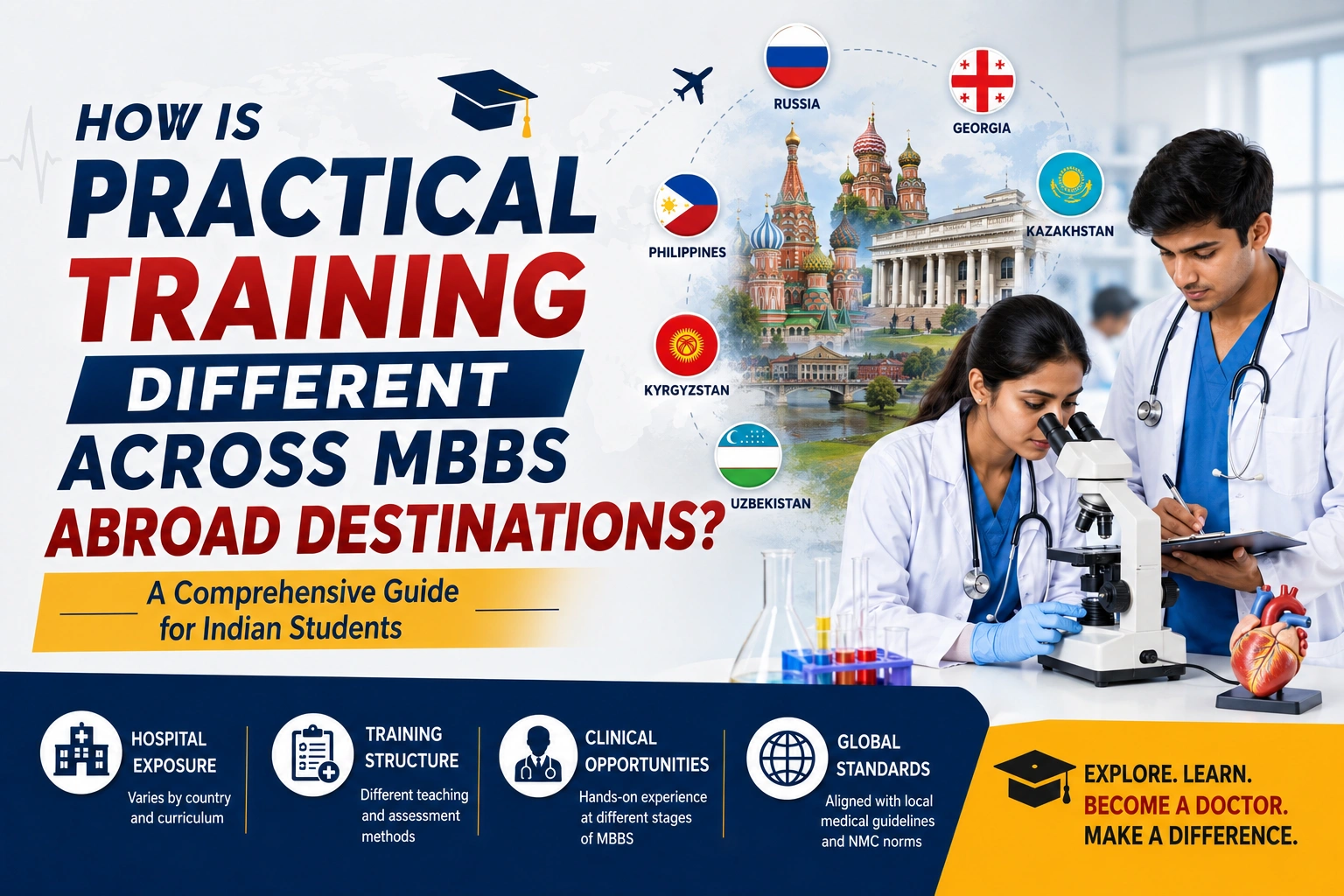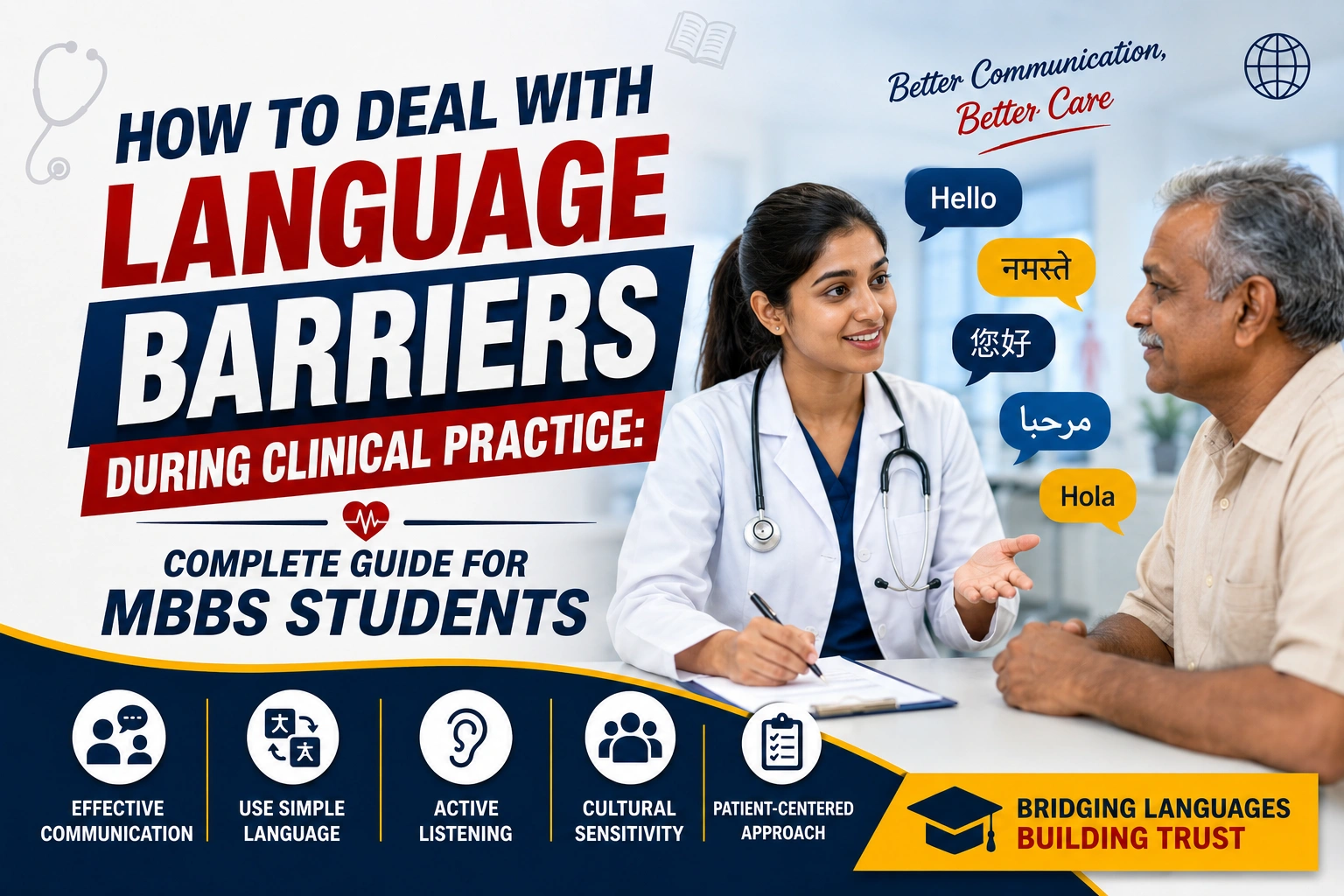
 Russia
 Belarus
 Georgia
 Kazakhstan
 Kyrgyzstan
 Uzbekistan
 China
China Nepal
Nepal Bangladesh
 Poland
 Romania
 Slovakia
 Hungary
 N. Macedonia
 Vietnam
 Canada
 Armenia
 UK
UK Australia
 USA
USA Ireland
 Germany
 New Zealand
 Italy
Italy France
 Singapore
 Netherlands
 Sweden
 Switzerland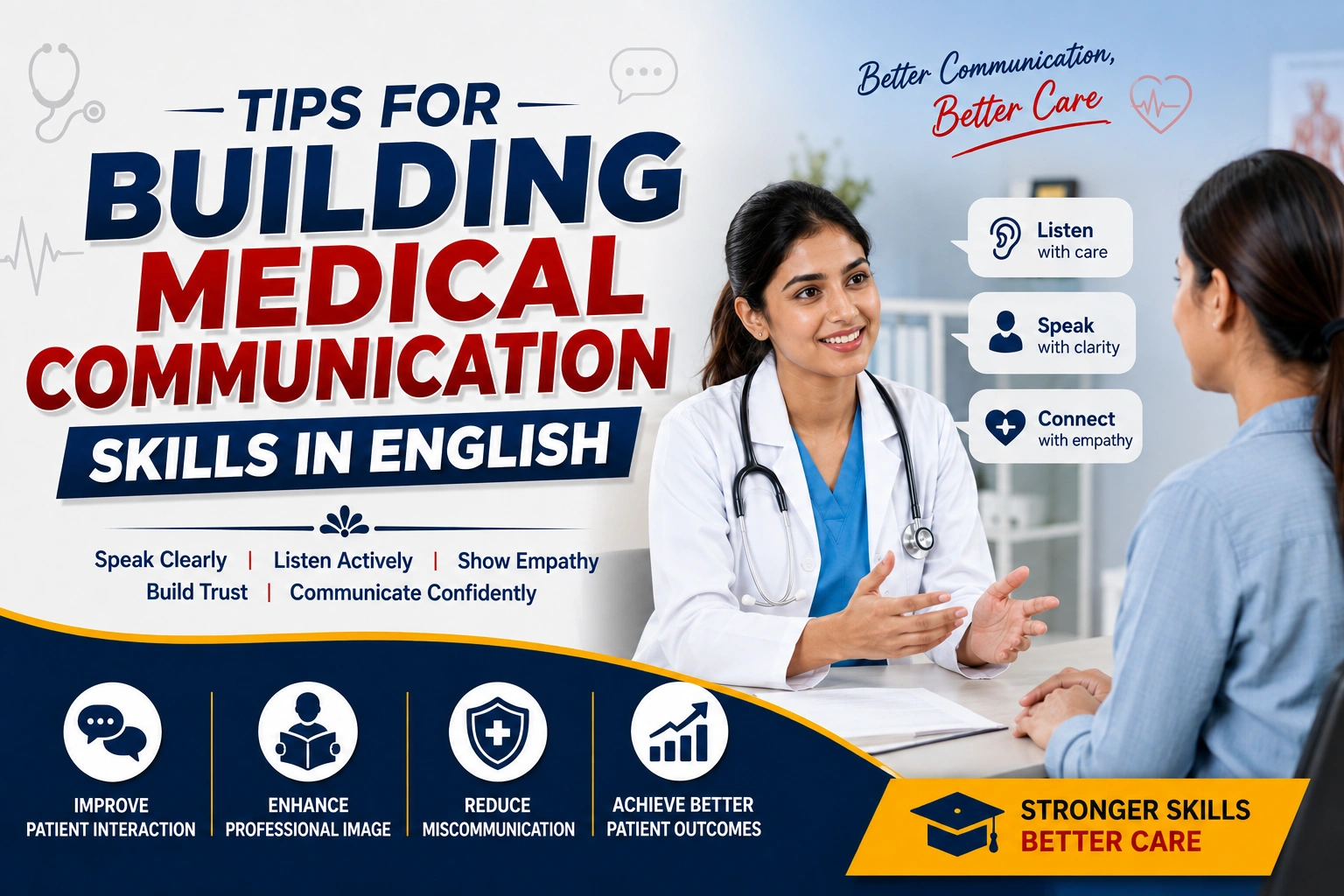
Being a doctor involves much more than understanding anatomy and physiology, and involves being able to communicate with patients and colleagues. This is especially true for aspiring MBBS students and is perhaps the most crucial part of their academic journey and future practice. The use of English is ubiquitous in medical literature, research, international conferences, and other forms of health communication. Better medical English promotes understanding of complex medical concepts, helps with communication with patients, and, wider still, helps with the clinical rotations.
To help prepare students better for a potential career, there are additional resources provided by MBBS Advisor regarding medical school and career education, and preparation for entrance examinations. All of these resources help potential students understand the alternatives available to them, and assist them in making informed decisions regarding studying medicine in India, as well as other countries.
Importance of Medical Communication Skills
Effective medical communication involves much more than simply explaining complicated medical issues to a patient and listening to their response. A doctor must be able to explain clearly and concisely the implications of a particular finding without causing the patient more anxiety and without causing confusion to the patient.
Miscommunication between the doctor and the patient causes frustration and anxiety, which often leads to an inaccurate diagnosis and hinders the treatment process. Effective communication builds trust, increases the accuracy of diagnosis and treatment, and improves the healing process.
For the development of medical students, communication skills are necessary for:
- Taking a patient’s history
- Performing physical examinations
- Delivering case presentations
- Conducting medical interviews
- Participating in team discussions involving allied health professionals
- Participating in research and academic presentations
Early development of these skills will enhance the confidence of medical students.
Tips to Build Medical Communication Skills in English
1. Create a Solid Medical Vocabulary
Improving medical English requires a solid vocabulary in the field of healthcare. Medical students should focus on learning terminology well beyond a hospital environment. This includes terminology used in clinical talks and textbooks as well.
Understanding the practical use of a term is far more efficient when students learn how doctors use various terms in talking to patients.
Several strategies are available to improve medical vocabulary. These include, but are not limited to, the following:
- Daily reading of medical journals and articles.
- Creating a personal medical vocabulary notebook.
- Learning common medical abbreviations.
- Practicing medical terminology through conversations.
Resources targeted at NEET also assist students in preparing for the civil service examination.
2. Make Medical Content in English a Regular Part of Your Reading
There’s a lot of truth to the advice to read every day. English reading of medical content should be incorporated into the daily schedule of all medical students.
Excellent sources of medical content include the following:
- Textbooks for medical school
- Published medical research
- Articles on healthcare
- Written medical cases
- Published international medical reports
Textbooks and published case reports guide students in developing their reading and vocabulary of the structure of sentences and the use of terminology within a professional framework.
Students should check reliable health organizations, like the World Health Organization (WHO), for accurate health information and resources on global health.
3. Daily Practice of Spoken English
Many students are able to understand English, but have trouble speaking it. This can be solved by daily spoken English practice.
To improve spoken English, medical students can:
- a) Have English speaking practice with classmates
- b) Practice talking about medical topics
- c) Practice doctor-patient conversations
- d) Practice active participation in group discussions
- e) Practice speaking English and criticizing their own speech
4. Learning to Communicate with Patients
The communication style of a physician that explains the situation and the plan to a patient in a way that is clear and easy to understand builds trust and comfort with the medical plan and procedure.
This includes:
- a) actively listening to the patient
- b) asking appropriate questions
- c) avoiding as much medical jargon as possible
- d) keeping empathy and patience front and center
- e) explaining treatments
Generally, if there is medical jargon that is difficult for a patient to understand, doctors should explain the medical jargon in more straightforward terms.
5. Developing Listening Skills
Listening is far more important than speaking in medical practice.
The following should be listened to:
- a) patient’s symptoms
- b) medical history
- c) patient’s concerns/expectations
- d) healthcare provision team
Improving listening skills is simply developing practice, and can be done through watching medical interviews, attending online medical lectures, and listening to healthcare discussions in English.
6. Watch Medical Videos and Lectures in English
Listening to medical content in English is helpful for beginner level students in understanding English professional expressions, pronunciation, and vocabulary used in medical settings. Instances of English medical content include, medical lectures, interviews of medical practitioners, demonstration videos, clinical podcasts, etc. While listening to medical content in English, students are expected to take note of some examples, and try to use the phrases noted during their conversation to improve their communication.
7. Participate in Clinical Discussions and Presentations
Communication skills related to medical practice improve during the clinical training. Active discussions and presentations help students gain confidence.
Cardinal activities include,
- Presenting patient cases
- Explaining medical conditions
- Discussing treatment
- Answering questions
These activities prepare students for what to expect in a clinical setting and how important communication is.
8. Understand Medical Ethics and Professional Communication
Doctors must strike a balance and communicate professionally whilst being responsible and mindful of their patients' rights to privacy.
Communication related to the practice of medicine includes,
- Being professional
- Being respectful
- Being honest
- Maintaining confidentiality
Students should become familiar with the guidelines established by the National Medical Commission (NMC), which defines medical education and professional standards in India.
9. Use Technology for Language Improvement
Technology now helps students to practice English communication skills, and medical English through various applications, online dictionaries, learning videos, online medical community forums, etc.
10. Practise Writing Medical Reports
Medical reports come in many formats: patient case reports, clinical reports, research reports, case summaries, journal articles etc. Through practice, the finer aspects of medical writing can be learned to convey information in an organized and professional manner.
Students must:
- Have correct grammar
- Have clear and concise sentence structure
- Know appropriate medical terminology
- Be organized in the presentation of information
Role of English Communication Skills for Students Studying MBBS Abroad
For students pursuing international medical education, English communication skills are essential. Many of the universities that offer medical programmes teach in and through English.
Students Studying MBBS Abroad Need English for:
- Understanding instruction
- Verbal intercourse with professors
- Interaction with foreign students
- Communication while treating patients during the clinical practice
Research is essential for prospective students for foreign medical universities. Recognition and quality of the curriculum are among the significant factors that should be prioritized. Information on quality and recognized medical universities can be found on the World Directory of Medical Schools (WDOMS).
Potential students may use the NEET Rank Predictor tool and understand their possibilities of admission and define their medical career.
Common Obstacles in Medical English
Most students have barriers that slow their learning. The most common barriers are:
- Focus on grammar at the expense of communication
- Fear of speaking English
- Vocabulary learning by memorization
- Ignored pronunciation
- Listening skills ignored
Practice is the best way to learn to communicate effectively.
Conclusion
It is equally important to have medical knowledge and be an excellent communicator to become a successful healthcare professional. A doctor that can communicate well not only understands patients’ problems but also is able to provide treatment and explain it to the patient.
Medical students should begin developing their English communication skills during the early stages of their education. Practicing speaking, reading with a focus on developing medical terminology, and clinical discussion skills all provide benefits that can be seen in the future.
Communication skills will help aid the success of students during their medical studies, whether they are pursuing a degree at a medical school in India or through an MBBS abroad. Through permanent study efforts, every medical student can cultivate the ability to communicate with confidence in the field of medicine.