 Russia
 Belarus
 Georgia
 Kazakhstan
 Kyrgyzstan
 Uzbekistan
 China
China Nepal
Nepal Bangladesh
 Poland
 Romania
 Slovakia
 Hungary
 N. Macedonia
 Vietnam
 Canada
 Armenia
 UK
UK Australia
 USA
USA Ireland
 Germany
 New Zealand
 Italy
Italy France
 Singapore
 Netherlands
 Sweden
 Switzerland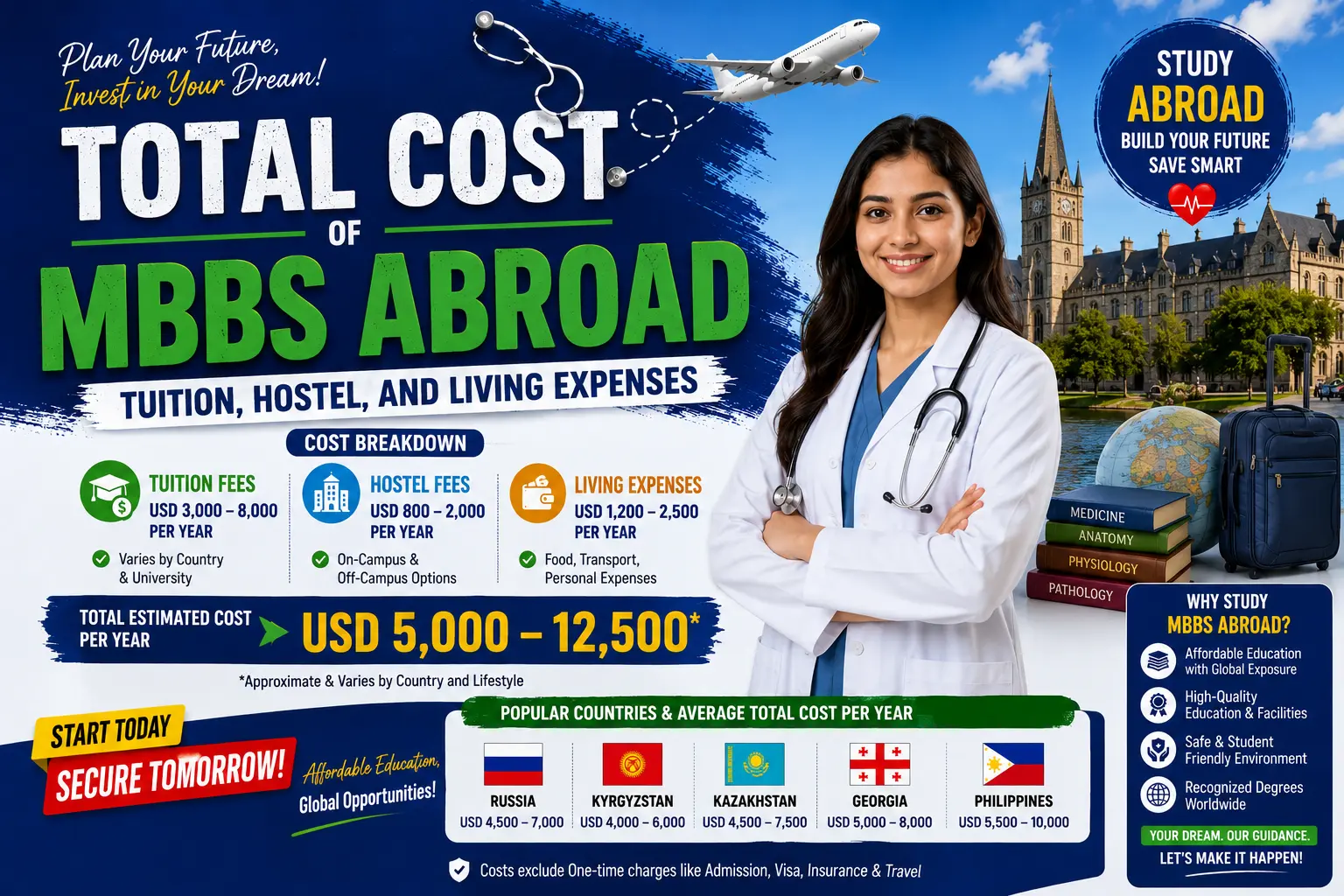
MBBS programs abroad have become an appealing alternative to Indian medical colleges. Indian students have begun flocking to MBBS programs abroad to escape the fierce competition and overwhelming pressure associated with Indian medical colleges. There is an added benefit, too. MBBS programs abroad are oftentimes less expensive than Indian programs. For students who are not too familiar with the MBBS admission process abroad, MBBS Advisor and similar websites offer great resources. A thorough analysis of the costs associated with pursuing MBBS abroad in comparison to its benefits is essential before making this life-changing decision.
When entering the MBBS program abroad, tuition is not the only expense. There are hostel accommodations, daily living expenses, visas, insurance, travel, and more costs that are associated with what is typically a 5 to 6 year commitment. The costs can be overwhelming, especially when incorporating the NMC requirements, the recognition of the WDOMS, and the NEET eligibility to ensure the degree is valid to practice medicine in India. The most recent accessible research of 2026 is incorporated in this guide to help you save money when possible and plan ahead.
Things to Keep in Mind About Studying MBBS Abroad and Eligibility Requirements
Because MBBS seats in India require significant donations and cost ?50 lakhs to ?1.5 crores, Indian students look to other countries for medical study opportunities. Studying abroad provides students access to quality medical education and international experience for ?15-45 lakhs over the course.
To have your degree recognized by the NMC, the program must have a minimum of 54 months of academic studies, 12 months of internship in the same institution, and must have been conducted and completed in English, with ample opportunities for clinical training. The medical school must be listed in the WDOMS in order to verify the legitimacy of the medical school for the FMGE/NExT licensing examinations.
For Indian students who plan to practice in India after studying abroad, you will need to qualify the NEET exam. Many countries have fewer NEET score requirements so long as the exam is passed. The NEET section of MBBS Advisor clarifies eligibility requirements with an easy rank predictor.
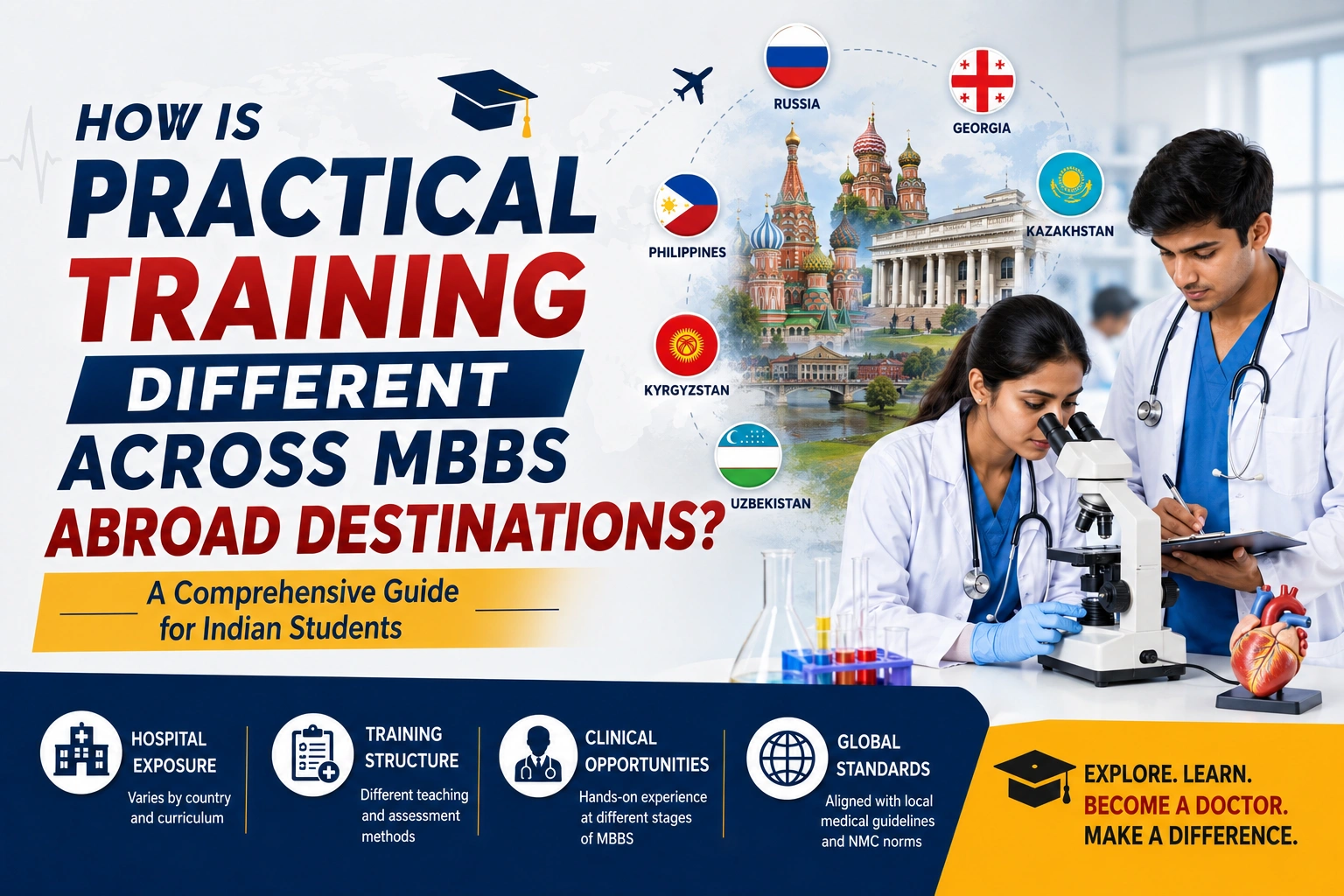
Students commonly go to Russia, Georgia, Kazakhstan, Uzbekistan, and the Philippines, as they have NMC and WDOMS-listed programs that are taught in English and have high FMGE pass rates with the right preparation.
Analysis on Global Education Costs
Covers multiple regions and their differing tuition costs. Some universities charge as little as ?6 lakh per year, ultimately lower than Indian private college costs.
Russia
Indian students prefer schools like Bashkir State Medical University and Northern State Medical University due to their infrastructure and opportunities for clinical work. Annual tuition for Russian universities is ?3–6 lakhs, with the total cost for a 6 year program ranging from ?18–35 lakh.
Georgia
Educational programs in Georgia cost ?4–8 lakhs per year. European quality education with a secure healthcare environment is provided at Tbilisi State Medical University with low overall costs.
Kazakhstan, Uzbekistan, and Kyrgyzstan
Kazakhstan, Uzbekistan, and Kyrgyzstan in Central Asia have even lower tuition costs. Annual tuition costs can be as low as ?2.5 lakhs. Kazakh National Medical University and Samarkand State Medical University have good program recognition through the WHO and NMC.
Philippines
The Philippines is attractive due to its English language program, as well as its tuition costs being in the range of ?20–35 lakh and the USMLE-oriented curriculum.
These are ballpark costs and may change due to the exchange rate. Check the costs with reliable resources like MBBS Advisor. They work with universities that have clear tuition costs and may only have one-time fees like ?50,000–2,00,000 for admission.
Less competitive students looking for more opportunities abroad may benefit from these services.
Hostel and Accommodation Costs: Key Factors
International students typically have tuition and hostel costs as separate components in their financial breakdown. University hostels may charge between ?20,000–1 lakh on an annual basis depending on the country and the number of students per room (between 2–4).
Russian university hostels may charge between ?10,000–50,000 depending on basic and comfortable choices. Georgia and Kazakhstan charge in the same range and may be ?25,000–65,000. Private rentals often exceed hostels and charge ?7,000–25,000 per month in capital cities. For reasons of cost and a sense of community, students may prefer hostels.
Hostel costs over a 6 year period may be around ?1.5–6 lakhs. If students choose university housing, it is a significantly lower cost and also provides a housing solution that is closer to classes while ensuring safety for students who are away from home. Costs for housing may be impacted by the amount of heating that may be required in the Russian and Kazakhstan winters.
Daily Living and Food Costs
Living costs include:
- Food
- Transport
- Utilities
- Internet
- Laundry
- Personal expenses
Students typically spend around ?15,000–30,000 per month, averaging ?1–2 lakhs annually or ?6–12 lakhs over the course.
Food expenses are the most significant. If students stay in hostels or have access to a shared kitchen, they can spend around ?8,000–15,000 on food. This brings food costs significantly lower as students can find a local market or an area with an Indian grocery store. If a student is eating out, this can bring food costs to ?20,000+. The Philippines and Georgia have relatively lower costs when compared to the rest of Western Europe.
Transportation costs around ?2,000–5,000 if students are using the public transport system. Combined costs of utilities and internet may be around ?3,000–6,000. In a colder climate, students may also need to factor in a one-time cost of clothing for the winter that can be around ?10,000–20,000.
Budgeting realistically prevents surprises, and many students find after the initial settling down period that budgeting between ?20,000–25,000 monthly is feasible through a combination of resource sharing and utilizing student discounts.
Also Some Other Extra/Hidden Expenses
There are other costs apart from the basic expenses.
Visa and Insurance
The initial student visa and subsequent renewals may cost between ?5,000–20,000. Health insurance, which is often mandatory, may run between ?30,000–1 lakh a year.
Travel
The cost of a flight from India is ?30,000–80,000 for a round trip. Traveling home each year can therefore add significantly to overall expenses.
Books, Equipment, and Academic Fees
The first year of studying may require a substantial upfront cost of between ?20,000–50,000 for books, laboratory equipment, and other necessities.
Pre-Departure Expenses
The cost of document attestation and apostille, medical tests, and counseling services (which are often free and available through MBBS Advisor) may bring the total to between ?1–2 lakhs.
FMGE/NExT Preparation
Better licensing success may require an FMGE/NExT coaching program costing an additional ?1–2 lakhs over the course of the program.
Miscellaneous Expenses
- Leisure activities
- Emergencies
- Bank account setup
- SIM card purchase
It is advised to budget an additional 10–15% over the total combined expenses.
Considering all of these expenses, the total cost for a quality program may be between ?20–50 lakhs, depending on your destination and lifestyle. This is still significantly more economical than Indian private options.
Country-Wise Cost Comparison and Total Estimates
Russia
Tuition, hostel, and living expenses may total between ?30–50 lakhs.
- Tuition: ?20–35 lakhs
- Hostel: ?2–4 lakhs
- Living: ?8–12 lakhs
Georgia
Living may cost a little more, but with excellent academics, the total expense may range between ?25–45 lakhs.
Kazakhstan, Uzbekistan, and Kyrgyzstan
Often the most affordable destinations, with all-inclusive costs between ?20–35 lakhs.
Philippines
Total estimated cost ranges between ?25–40 lakhs, with advantages in language and clinical exposure.
These estimates represent moderate spending patterns and may vary depending on lifestyle and exchange rates.
Strategies to Successfully Implement Cost Management
- Enrol in universities listed in the WDOMS and approved by the NMC.
- Reduce food costs by staying in university hostels and using self-catering facilities.
- Use your NEET Rank Predictor to choose universities suitable for your score and budget.
- Plan your finances with your parents and explore education loans and scholarships.
- Limit unnecessary trips back home.
- Build connections with local students.
- Work with consultants who provide transparent support before departure and after arrival.
- Keep track of inflation and currency exchange rates throughout your course.
The Cost and the Long-Term Return
For a relatively small investment compared to many private medical colleges in India, students gain access to modern infrastructure, international exposure, and diverse medical practices.
Graduates from recognized universities often perform well in FMGE/NExT and have multiple opportunities for international postgraduate education.
Many services, including MBBS Advisor, provide continued support beyond university selection and NEET guidance by helping students understand international medical education pathways.
Conclusion
Many students find studying MBBS abroad to be a better financial choice than pursuing the same degree in expensive private colleges in India. With sufficient research on the NMC, WDOMS, WHO, and NEET frameworks, along with trusted guidance, students can make confident and informed decisions.
To get started, check out MBBS Advisor for a complimentary consultation, learn more about NEET, and take advantage of their NEET Rank Predictor to help plan your next steps. Finding safe, economical solutions and having the proper guidance can help you achieve your dream of becoming a doctor while managing costs effectively.